
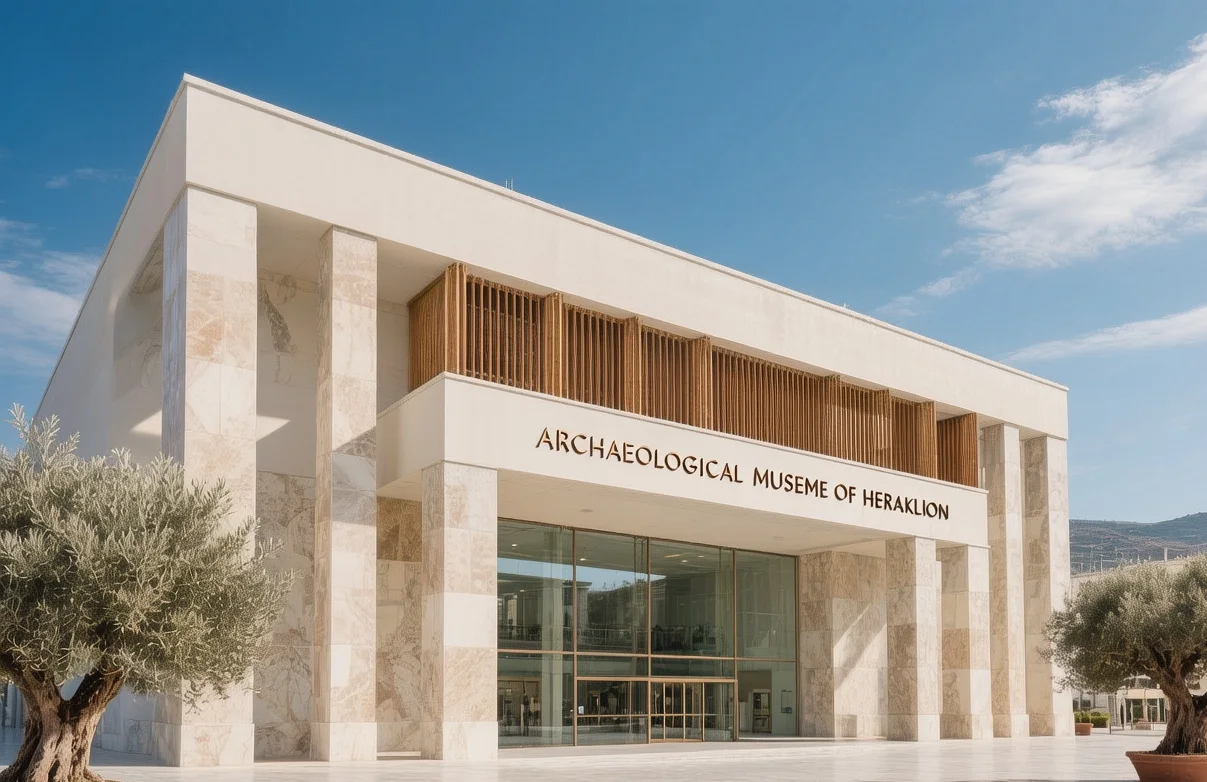
Heraklion Archaeological Museum: Where Minoan Treasures Meet Modern Curation
The morning sun filters through the museum's skylights as you step into the Heraklion Archaeological Museum, where the air carries the faint mineral scent of ancient stone mingled with climate-controlled preservation and the distant murmur of travelers discovering Bronze Age wonders. Before you unfolds the world's most comprehensive collection of Minoan civilization artifacts—over 10,000 objects spanning 9,000 years of Cretan history, displayed across 27 meticulously curated galleries that guide you chronologically from Neolithic settlements to Roman-era Crete. The only sounds are the soft echo of footsteps on polished marble floors, the gentle hum of environmental controls protecting fragile frescoes, and the whispered explanations of guides sharing stories of bull-leaping acrobats, palace administrators, and artisans who created masterpieces over three millennia ago. This extraordinary institution—housed in a purpose-built modern structure completed in 1971 and recently renovated—solves a fundamental human need: the desire to understand our earliest advanced European civilization through tangible connections to the people who pioneered art, architecture, and maritime commerce. Standing before the vibrant Bull-Leaping fresco or the intricate gold bee pendant, you understand: the Heraklion Archaeological Museum matters because it preserves and interprets humanity's shared ancestral heritage—a place where archaeological discovery, scholarly research, and public education converge to create an experience that transcends ordinary museum visits and awakens profound wonder about the roots of Western civilization.
Why Heraklion Archaeological Museum Embodies Minoan Legacy
The Heraklion Archaeological Museum represents one of the world's most significant repositories of Bronze Age culture—a institution that solved the fundamental challenge of preserving, studying, and presenting the extraordinary archaeological heritage of Minoan Crete while making it accessible to global audiences. Established in 1908 and housed in its current purpose-built facility since 1971, the museum safeguards artifacts excavated from Knossos Palace, Phaistos, Malia, Zakros, and over 200 additional Cretan sites, creating an unparalleled narrative of Europe's first advanced civilization that flourished between 3000 and 1100 BCE.
The museum's curatorial significance lies in its chronological organization: 27 galleries arranged across two floors guide visitors through nine millennia of Cretan history, with the ground floor dedicated to Neolithic, Early Minoan, and Middle Minoan periods (3000–1600 BCE), while the upper floor showcases Late Minoan palatial culture (1600–1100 BCE) and subsequent historical periods. The collection includes over 10,000 artifacts: the iconic Bull-Leaping fresco depicting acrobats vaulting over charging bulls, the exquisite gold bee pendant demonstrating Minoan metallurgical mastery, the Phaistos Disc with its mysterious undeciphered script, and the Snake Goddess figurines revealing religious practices that influenced later Greek mythology. Advanced conservation techniques—including climate-controlled display cases maintaining 20°C and 55% relative humidity, UV-filtered lighting to protect fragile pigments, and seismic-resistant mounting systems—ensure that these irreplaceable treasures remain preserved for future generations while remaining accessible to contemporary visitors.
Today, the museum fulfills multiple roles: it serves as a research center for international scholars studying Minoan civilization, an educational resource for understanding Bronze Age Mediterranean culture, and a contemplative space where visitors confront the sophistication of early European society. The ongoing digital initiatives—including 3D scanning of artifacts, virtual reality reconstructions of palace interiors, and multilingual audio guides in 12 languages—demonstrate how modern technology can enhance appreciation of ancient heritage. Every artifact displayed connects you to craftsmen, priests, administrators, and artists who believed that beauty, order, and innovation could flourish on a Mediterranean island—a reminder that human creativity has deep, remarkable roots in our shared past.
The Best Time to Experience Heraklion Archaeological Museum
Timing transforms a visit to the Heraklion Archaeological Museum from routine cultural stop to immersive journey into Bronze Age sophistication. The optimal windows stretch from May 18–June 12 and September 15–October 20, when temperatures hover between 18–25°C (64–77°F), atmospheric clarity allows comfortable travel between the museum and archaeological sites, and visitor numbers remain manageable enough for unhurried contemplation of the extensive collections. During these shoulder seasons, you'll experience comfortable conditions for exploring the two-floor exhibition while capturing photographs in the soft, filtered light that reveals fresco details and artifact textures without glare.
Arrive precisely at 8:30–9:30 AM when the gates open—this early arrival delivers minimal crowds, optimal lighting conditions in the galleries, and the mental freshness needed to appreciate the museum's chronological narrative. The museum operates Tuesday through Sunday from 8:30 AM to 3:00 PM (winter) and 8:00 PM (summer), with Monday closures except during peak season. Allow 2.5–3 hours for a comprehensive visit; the audio guide (€4) significantly enhances understanding of Minoan culture and artifact significance. Winter months (November–February) offer profound solitude and dramatic natural light through the museum's skylights, though temperatures drop to 10–14°C (50–57°F) and some galleries may have reduced lighting for conservation purposes.
Avoid July 15–August 31 unless absolutely necessary: temperatures regularly exceed 30°C (86°F), cruise ship excursions from Heraklion port create crushing midday crowds that diminish contemplative exploration, and the combination of heat and humanity makes extended gallery visits uncomfortable. Also skip Greek Orthodox Easter week and major public holidays when domestic tourism swells visitor numbers. For the most current information on hours, special exhibitions, and conservation updates, always check the official Greek Ministry of Culture portal at https://www.heraklionmuseum.gr/ before your visit.
Approximate Budget for a 7-Day Trip
Crete offers exceptional value for travelers seeking profound cultural experiences combined with Mediterranean beauty. The following breakdown reflects mid-range travel—comfortable boutique accommodations in Heraklion or nearby villages, authentic Cretan taverna dining, and comprehensive exploration of the Heraklion Archaeological Museum and greater Crete—based on current pricing for a single traveler.
- Accommodation: €80–€180 per night in Heraklion city center or Knossos area (€560–€1,260 total). Budget studios start at €45; luxury sea-view suites run €250+.
- Food: €40–€65 per day total. Breakfast: €6–€10 (Greek coffee €3, bougatsa pastry €2.50, fresh fruit €4). Lunch: €12–€20 (Greek salad €8, dakos €10, grilled octopus €16). Dinner: €20–€35 (lamb kleftiko €18, fresh fish €22, Cretan wine €6/glass, dessert €7).
- Transportation: €110 total. Ferry from Athens: €45–€75 one-way (€90–€150 round-trip). Local bus to Knossos: €2.50 per ride. Car rental: €35/day. Occasional taxi rides: €12–€25 each.
- Attractions: €90 total. Heraklion Archaeological Museum entry: €12 (or €20 combined ticket with Knossos Palace). Knossos Palace: €15. CretAquarium: €10. Day trip to Spinalonga: €35.
- Miscellaneous: €110 total. Water/snacks €5/day, handmade pottery €40–€100, local olive oil €15, archaeological guidebooks €15, tips €25.
Total: €1,400–€2,000 for 7 days (excluding international airfare and Athens-Crete ferry)
7 Essential Heraklion Archaeological Museum Experiences
- Begin with the chronological journey: Enter through the ground floor and follow the museum's carefully designed chronological pathway from Neolithic settlements (7000 BCE) through Early and Middle Minoan periods. Morning light filters through skylights, illuminating pottery, tools, and figurines that reveal daily life in pre-palatial Crete. Allow 45 minutes for this foundational level; the English-language audio guide (€4) provides essential context for understanding Minoan cultural evolution.
- Contemplate the Bull-Leaping fresco: Ascend to the upper floor's palatial galleries and locate the iconic Bull-Leaping fresco depicting acrobats vaulting over charging bulls—a ritual that may have held religious significance. The vibrant colors—Egyptian blue, cinnabar red, and ochre yellow—were created using mineral pigments that bonded with wet plaster over 3,500 years ago. Spend 15 minutes studying the dynamic composition and cultural symbolism; notice how the fresco's reconstruction preserves the original artistic intent while stabilizing fragile fragments.
- Study the Snake Goddess figurines: Examine the famous faience figurines depicting a goddess holding serpents—symbols of regeneration and divine power in Minoan religion. The intricate details: the flounced skirt, exposed breasts, and elaborate headdress reveal Minoan artistic sophistication and religious iconography that influenced later Greek mythology. Visit between 10:00–11:00 AM when natural light reveals the faience's subtle color variations most clearly.
- Decode the Phaistos Disc mystery: Locate the enigmatic clay disc discovered at Phaistos Palace, featuring 241 symbols stamped in spiral arrangement that remain undeciphered despite over a century of scholarly effort. The disc's unique manufacturing technique—individual symbols pressed into soft clay before firing—demonstrates technological innovation. Allow 10 minutes to contemplate this archaeological puzzle; the museum's interpretive panel explains competing theories about its purpose and meaning.
- Admire the gold jewelry collection: Explore the museum's extraordinary display of Minoan goldwork: the exquisite bee pendant from Malia featuring granulation techniques still unmatched today, intricate signet rings depicting religious scenes, and delicate diadems that adorned palace elites. The craftsmanship—achieved with Bronze Age tools—reveals metallurgical knowledge centuries ahead of contemporary European societies. Visit between 2:00–4:00 PM when gallery lighting enhances the gold's luminous quality.
- Experience the palace reconstruction galleries: Walk through the upper floor's dedicated spaces featuring architectural elements, frescoes, and artifacts from Knossos, Phaistos, Malia, and Zakros palaces. The chronological arrangement reveals how Minoan palace culture evolved over four centuries, with each site contributing unique artistic and engineering innovations. Allow 40 minutes to appreciate the comparative display; the museum's floor plan helps orient visitors to each palace's geographical location on Crete.
- Photograph the museum's architectural harmony: Position yourself in the central atrium at 3:00–4:00 PM when afternoon light creates dramatic patterns through the skylights onto the marble floors and display cases. The museum's modernist design—featuring clean lines, natural materials, and strategic lighting—complements rather than competes with the ancient artifacts. Use a wide-angle lens (24mm) to capture the spatial harmony, or focus on details like the interplay of light on faience surfaces.
3 Hidden Gems Most Travelers Miss
- The Conservation Laboratory Viewing Area: Behind the main galleries, a glass-walled conservation laboratory allows visitors to observe conservators at work preserving fragile frescoes, pottery, and metal artifacts using cutting-edge techniques. Watching a specialist clean a 3,500-year-old pigment or stabilize a corroded bronze reveals the meticulous science behind archaeological preservation. Access: Visible from the upper floor corridor between 10:00 AM–2:00 PM weekdays; no appointment needed. Most visitors focus on displayed artifacts and miss this intimate glimpse into ongoing heritage stewardship. Observe quietly without flash photography to respect the conservators' concentration.
- The Museum's Digital Archive Kiosk: Tucked near the exit, an interactive digital station provides access to the museum's complete catalog of over 10,000 artifacts—including high-resolution images, 3D models, and scholarly research not displayed in physical galleries. The interface allows visitors to explore artifacts by period, site, material, or theme, creating personalized research pathways. Access: Located in the ground floor lobby; free with museum admission. Allow 20 minutes to appreciate the collection's full scope. Best visited at 4:00–5:00 PM when crowds have thinned and you can explore at your own pace.
- The Rooftop Terrace with City Views: Accessible via a discreet staircase near the upper floor restrooms, a small rooftop terrace offers panoramic views of Heraklion's old town, the Venetian harbor, and Mount Juktas—the sacred mountain visible from Knossos Palace. The elevated perspective provides geographical context for understanding how Minoan civilization interacted with Crete's landscape. Access: Open during museum hours; no additional fee. Best visited at 5:00–6:30 PM when golden hour light illuminates both the city and distant archaeological sites. Bring a light layer—afternoon breezes can be cool at elevation.
Cultural & Practical Tips
- Photography guidelines: Personal photography without flash is permitted throughout most galleries; however, some special exhibitions may restrict photography to protect light-sensitive artifacts. Tripods require advance permission from museum staff (+30 2810 278740). The best light for artifact photography occurs during mid-morning (10:00 AM–12:00 PM) when natural skylight complements gallery illumination.
- Footwear and comfort: The museum features polished marble floors that can become slippery; wear shoes with good grip. The chronological layout involves gentle slopes and occasional steps between galleries; allow extra time for careful navigation. Comfortable clothing is recommended as gallery temperatures are maintained at 20°C (68°F) for artifact preservation.
- Audio guide strategy: The museum offers audio guides in 12 languages for €4 (students €2). The 90-minute tour includes expert commentary on major artifacts and Minoan cultural context. Download the free museum app beforehand for supplementary content, or rent the guide at the entrance desk. The audio guide proves invaluable for understanding the chronological narrative and artifact significance.
- Local phrases: Kalimera (kah-lee-MEH-rah) = Good morning; Efharisto (ef-hah-REE-stoh) = Thank you; Parakalo (pah-rah-kah-LOH) = Please/You're welcome; Signomi (see-GNO-mee) = Excuse me. Using these greetings earns warm smiles from museum staff and Cretan locals.
- Combined ticket strategy: Purchase the €20 combined ticket to include both the Heraklion Archaeological Museum and Knossos Palace. The ticket remains valid for three days and offers significant savings versus individual admissions. Validate your ticket at the first site visited; staff will stamp it for subsequent entry.
- Accessibility considerations: The museum is fully wheelchair accessible with elevators serving both floors, tactile exhibits for visually impaired visitors, and wheelchairs available free at the entrance (advance reservation recommended: +30 2810 278740). All galleries feature benches for rest; the chronological layout minimizes backtracking for visitors with mobility considerations.
- Seasonal adjustments: Summer visits benefit from the museum's climate-controlled environment—a welcome respite from Cretan heat. Winter brings occasional rain; the museum's covered entrance and coat check provide convenience. Spring (March–May) offers comfortable temperatures for combining museum visits with outdoor archaeological site exploration.
Conclusion: Travel with Understanding, Not Just Checklists
The Heraklion Archaeological Museum demands more than a hurried walkthrough and a souvenir postcard—it asks for your curiosity, your reflection, your willingness to stand before a 3,500-year-old fresco and imagine the hands that painted it, the beliefs that inspired it, the centuries that preserved it. When you trace the dynamic lines of the Bull-Leaping scene or contemplate the intricate goldwork of Minoan artisans, you participate in a dialogue across millennia: the ongoing conversation about how human cultures express power, beauty, and belief through art and architecture. This is not passive tourism; it is active engagement with history, archaeology, and the enduring power of human creativity.
Responsible travel here means understanding that every artifact represents a fragment of cultural identity, every fresco a piece of a larger narrative about who we are and where we come from. Move slowly through the galleries. Sit on the benches provided and simply look. Let the climate-controlled environment reveal details that flash photography would obscure. Support the museum's mission by purchasing your ticket, respecting conservation guidelines, and sharing not just images but understanding when you return home.
This is not a warehouse of antiquities but a living argument for cultural continuity—a place where ancient Crete speaks directly to the modern world. The chronological arrangement reminds us that perspective shifts with time, that understanding deepens when we follow a narrative rather than jump between highlights. Take the time to complete that journey. Let the artifacts reveal themselves gradually, as they have for centuries. The museum will still be here tomorrow, but your opportunity to see it with fresh eyes exists only in this moment. Choose understanding over haste, connection over completion, and carry not just photographs but a deeper appreciation for the enduring power of human civilization across deep time.