
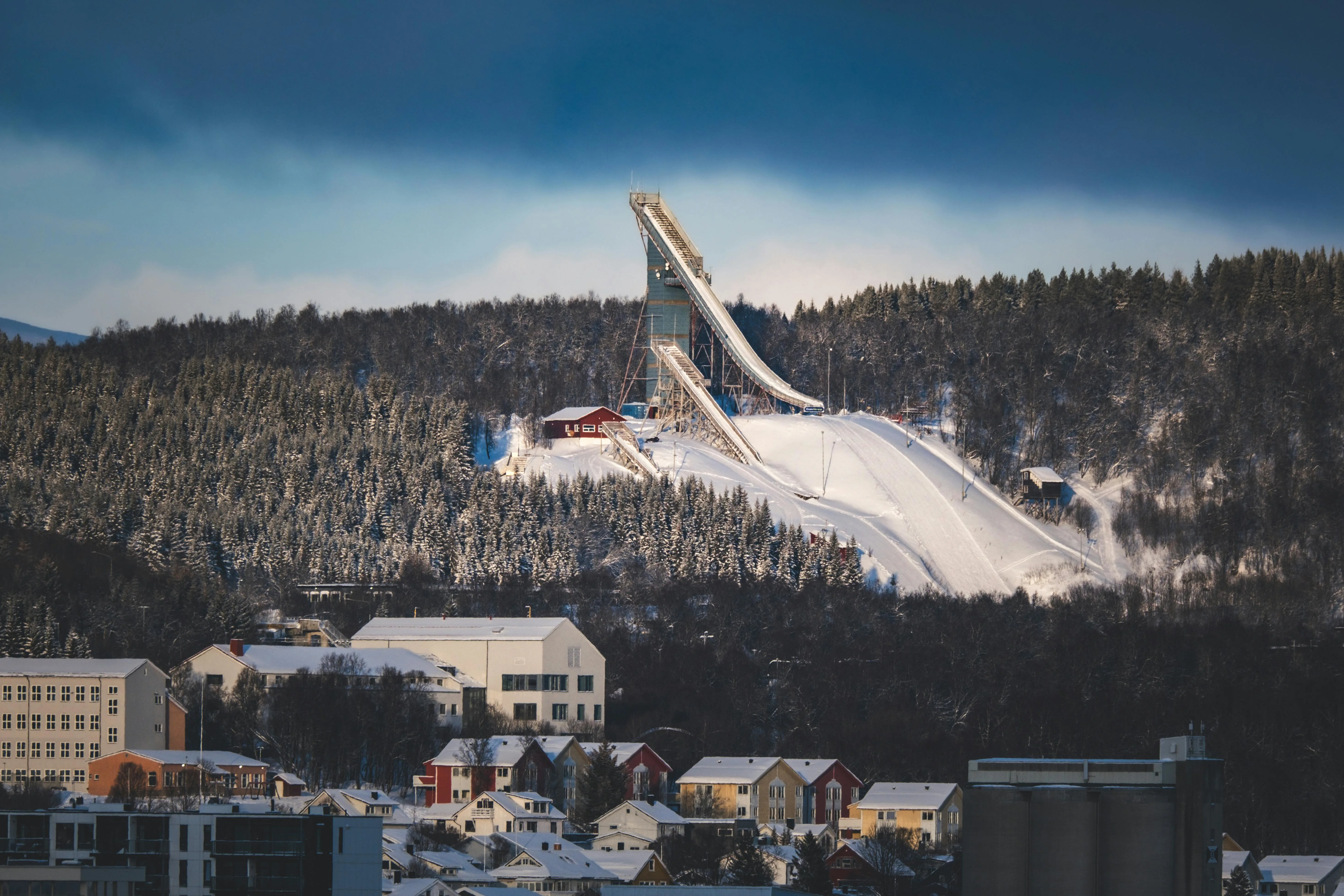
Holmenkollen Ski Jump Alpine Engineering Meets Norwegian Winter Tradition
The wind howls softly at 134 meters (440 feet) above the ground, carrying the crisp scent of pine needles and frozen snow as you stand on the observation deck of the Holmenkollen Ski Jump. Below, the city of Oslo sprawls like a miniature model across the fjord, its colorful rooftops contrasting with the dark green of the surrounding Marka forest. You grip the steel railing, feeling the vibration of the structure—a modern lattice of weathering steel designed to withstand Arctic gales—while imagining the roar of 50,000 spectators that echoes here during World Cup competitions. This iconic tower, reconstructed in 2010 by JDS Architects, rises from a hillside that has hosted ski jumping since 1892, making it the oldest continuous sporting venue in the world. The light is pale and clear, typical of a Nordic winter day, illuminating the takeoff ramp where athletes launch themselves into the void. In 2026, as digital simulations replace physical experiences, the Holmenkollen Ski Jump matters because it remains a testament to human courage and engineering—a place where you can confront the vertigo of the jump firsthand, reminding us that some heights are meant to be climbed, not just viewed on a screen.
Why Holmenkollen Ski Jump Embodies Norwegian Winter Culture
The Holmenkollen Ski Jump is not merely a sports venue; it is the spiritual home of Norwegian skiing, a culture so deeply ingrained that every child is born with skis on their feet. The site solves a fundamental historical need: providing a stage for skihopping (ski jumping), a sport Norway dominates globally. The first competition here took place in 1892, attended by 10,000 spectators; today, the modern structure hosts the FIS Ski Jumping World Cup annually. The current tower, completed in 2010 after a controversial demolition of the 1992 structure, stands 134 meters tall with a hill size (HS) of 134 meters, engineered using 2,700 tons of steel. This engineering feat ensures stability in winds up to 100 km/h while minimizing visual impact through its slender, curved profile.
Beneath the jump lies the Ski Museum (Skimuseet), the oldest of its kind globally, established in 1923. It houses 4,000 years of skiing history, from ancient wooden skis found in bogs to modern carbon-fiber racing equipment. The museum fulfills an educational need, preserving the evolution of winter sports technology. In 2026, the complex continues to serve as a multifunctional hub: it is a museum, a sporting arena, and a public viewpoint. The structure's design allows visitors to take an elevator to the top of the tower, democratizing the view once reserved only for jumpers. It stands as a symbol of friluftsliv (open-air life), proving that high-performance sport and public accessibility can coexist. The jump is not just steel and wood; it is a monument to the Norwegian relationship with winter—a season not to be endured, but celebrated.
The Best Time to Experience Holmenkollen Ski Jump
For the quintessential winter experience with snow and potential competitions, target December 15–March 15. During this window, temperatures range from -5 to 4°C (23–39°F), and the surrounding trails are perfect for cross-country skiing. The jump hill is operational for training, and you might witness athletes practicing on the plastic matting or real snow. For panoramic views without snow, visit June 15–August 20. Temperatures range from 15–22°C (59–72°F), and daylight extends to 18 hours. The best light for photography occurs between 10:00 AM–12:00 PM when the sun illuminates the city below without creating harsh shadows.
Avoid February 1–15 if you dislike crowds: this period often coincides with the World Cup competition, causing ticket sell-outs and restricted access to certain areas. Also avoid visiting during heavy fog, common in November, when visibility from the tower drops below 100 meters. For real-time event schedules and ticket availability, check www.holmenkollen.com or call +47 22 92 22 00. Weather forecasts are available via Yr.no. Note that the Ski Museum opens at 9:00 AM daily, but the tower elevator may close during high winds (>15 m/s) for safety.
Approximate Budget for a 7-Day Trip (2026)
Oslo remains one of Europe's pricier capitals, reflecting Norway's high standard of living. This budget assumes mid-range travel with 3-4% inflation adjustment from 2024 baselines. Prices are estimated in Euros (€); local currency is Norwegian Krone (NOK). Costs reflect Oslo city center and Holmenkollen areas.
- Accommodation: €180–€280 per night for a double room in a 3-star hotel in Sentrum or Majorstuen. Budget hostels (Anker Hotel): €65–€85 per bed. Upscale options (The Thief): €350–€550 per night.
- Food: €85–€125 per day per person
- Breakfast: €18–€25 (hotel buffet with bread, cheese, jam)
- Lunch: €25–€40 (café sandwich €32, fish soup €38, or grocery picnic €24)
- Dinner: €42–€70 (restaurant main: lamb €50, fish €48, pasta €38; add €16 for beer)
- Transportation:
- Train (Airport–City): €20 one-way, €35 round-trip
- T-Bane Line 1 (City–Holmenkollen): €4 one-way, €13 day pass
- Car rental (7 days): €650–€850 including fuel
- Fjord cruise: €75–€110
- Attractions:
- Holmenkollen Ski Jump + Museum: €24 adults, free under 18
- Zipline Experience: €35
- Vigeland Sculpture Park: Free
- Munch Museum: €22
- Guided City Tour: €30
- Miscellaneous:
- Souvenirs: Mini ski jump €20, wool sweater €110, book €35
- Coffee and waffle: €12
- Travel insurance (7 days): €50–€70
- eSIM data plan: €25–€35
Total for 7 days (mid-range, per person, double occupancy): €2,150–€2,750
Budget travelers can reduce costs to €1,400–€1,700 by staying in hostels, cooking meals, and using public transport. Luxury seekers should budget €5,000+ for boutique hotels and fine dining at restaurants like Maaemo.
6 Essential Holmenkollen Ski Jump Experiences
- Ride the Tower Elevator: Enter the base of the jump and board the panoramic elevator. The ascent takes 45 seconds, rising 116 meters to the observation deck. Step out onto the glass floor for a vertigo-inducing view straight down the ramp. The view encompasses Oslo, the fjord, and the forest. Visit at 10:00 AM for clearest visibility. Spend 20 minutes on the deck. The wind is significant here; hold onto hats. It is the only way to appreciate the jumper's perspective. Photography is allowed without flash.
- Explore the Ski Museum: Located beneath the jump. Open daily 9:00 AM–5:00 PM. This museum houses 4,000 years of skiing history. View ancient wooden skis from the Viking Age and modern Olympic gear. The exhibition on polar exploration features equipment from Amundsen and Nansen. Entry is included with the jump ticket. Allow 90 minutes for a full visit. Audio guides are available in English. It provides essential context for the structure above.
- Try the Zipline: For the adventurous, ride the zipline from the top of the jump. It runs parallel to the landing hill, reaching speeds of 80 km/h (50 mph). The ride lasts 30 seconds but feels like flying. Open May–September, weather permitting. Cost is €35 extra. Safety gear is provided. Minimum age is 8 years. It is the closest you can get to jumping without training. Book in advance online. A thrilling adrenaline rush.
- Walk the Cross-Country Trails: The area surrounding the jump is a hub for langrenn (cross-country skiing). In winter, rent skis at the base shop. Trails are groomed daily. The loop around Holmenkollen takes 1 hour. It is free to access the trails. In summer, the paths are used for hiking. The air is fresh with pine scent. It offers a local perspective on winter sport. Respect the grooming; do not walk on ski tracks.
- Visit Holmenkollen Chapel: Located 5 minutes walk from the jump. This wooden stave church dates to 1903 (rebuilt 1996 after arson). Open for visits 10:00 AM–4:00 PM. The interior is simple and serene. It is often used for weddings. Entry is free; donations welcome. It is overlooked by tourists focused on the jump. The contrast between modern steel and ancient wood is striking. A quiet spot for reflection. Photography is allowed without flash.
- Dine at the Panorama Restaurant: Located at the top of the tower. Open 11:00 AM–9:00 PM. Serve traditional Norwegian food with a view. Order the fish soup or reindeer stew. Prices are higher than city average (€35–€50 per main). Reserve a window table for sunset. It is the only restaurant at this elevation. The experience combines dining with sightseeing. Dress code is smart casual. A memorable way to end the visit.
3 Hidden Gems Most Travelers Miss
- Kongeplassen (The King's Seat): Located on the hillside opposite the jump. This is where the Royal Family sits during competitions. Access via the hiking trail behind the museum. Open daily. The view from here looks directly at the jumpers in flight. It is overlooked because most visitors stay at the base. The bench is unmarked but well-worn. Best visited during training sessions to watch jumps from afar. Free access. A unique spectator perspective.
- The Old Jump Ruins: Behind the modern tower, remnants of the 1992 jump structure remain visible. Located in the forest behind the landing hill. Access via the marked nature trail. The concrete foundations are overgrown with moss. It is missed because it is not on the main tour. The ruins show the evolution of the site. Visit at 3:00 PM when light filters through trees. A quiet historical footnote. No appointment needed.
- Frognerseteren Walk: Take the T-Bane one stop further to Frognerseteren. Walk back to Holmenkollen along the ridge. The path takes 45 minutes. It passes through dense forest and offers city views. It is missed because tourists turn back at Holmenkollen. The trail is well-marked with red T-paint. Best visited in autumn when leaves turn gold. Free access. A peaceful nature experience away from crowds.
Cultural & Practical Tips
- Footwear: Wear sturdy walking shoes with grip. The paths can be icy in winter. The observation deck is metal and slippery when wet. In summer, sneakers are acceptable. In winter, rent spikes at the base. Your safety is your responsibility. The elevation makes it windier than the city. Dress in layers.
- Cashless Society: Norway is nearly cashless. Bring a credit/debit card with chip-and-PIN. Most places do not accept cash. Mobile payment (Vipps) is ubiquitous but requires a Norwegian number. Stick to cards as a visitor. ATMs are available but rarely needed. Inform your bank of travel plans to prevent blocks. Tickets are best purchased online.
- Useful Phrases:
- "Takk" (tahk) = Thank you
- "Unnskyld" (oon-shool) = Excuse me
- "Hvor er toalettet?" (voor ehr toa-let-et) = Where is the toilet?
- "Snakker du engelsk?" (snak-ker doh eng-elsk) = Do you speak English?
- Photography Guidelines: Photography is allowed throughout the complex. Tripods are prohibited on the observation deck during peak hours. Respect other visitors; do not block views for extended shots. The best light is morning. Use a polarizing filter to reduce glare on snow. Ask before photographing individuals. Drones are prohibited without permission.
- Weather Preparedness: Weather changes rapidly. Pack a waterproof jacket even in summer. Temperatures can drop quickly at elevation. Umbrellas are useful but wind can break them. Dress in wool; it stays warm when wet. Check Yr.no hourly forecasts. Indoor areas provide shelter during downpours. The tower may close in high winds.
- Transportation: Take the T-Bane Line 1 from Nationaltheatret. The ride takes 30 minutes. Tickets are valid for bus, tram, and T-Bane. Buy a 24-hour pass for €13. The station is directly below the jump. No need for taxis. The service runs every 10 minutes. Last train returns around 1:00 AM. Plan accordingly.
- Accessibility: The museum and tower are fully wheelchair accessible. Elevators connect all levels. Wheelchairs can navigate the observation deck. Assistive listening devices are available for tours. Book assistance in advance via +47 22 92 22 00. Toilets are accessible on all floors. The outdoor paths are paved but can be uneven.
Conclusion: Travel with Reverence, Not Just Checklists
The Holmenkollen Ski Jump is not a theme park ride; it is a monument to human flight carved in steel. In 2026, as tourism becomes increasingly transactional, this tower demands a slower, more reflective pace. Travel here not to tick a box but to honor the courage of those who launch from the top. Feel the wind; hear the silence of the forest; understand that this structure represents a century of winter tradition. Leave only footprints on the deck; take only the inspiration that limits are meant to be tested. When you descend back to the city, carry the view with you. For in the end, the true value of this place is not the photo you post, but the perspective you gain—that from great heights, the world looks small, and our fears, like the jump itself, are conquerable.