
Hornstrandir Nature Reserve Arctic Wilderness Meets Iceland's Last Frontier
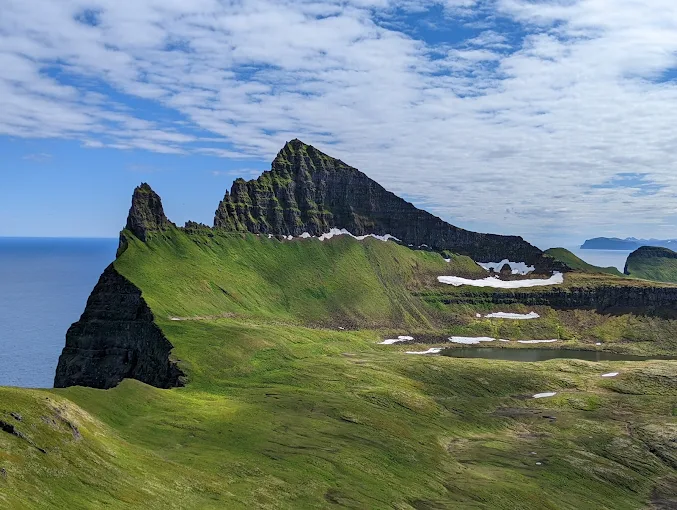
The silence hits you first—a profound, almost unsettling quiet broken only by the lap of Arctic waves against black pebble beaches and the distant cry of an Arctic tern. It's 11:30 PM on July 14th, yet the sun hangs low on the horizon, casting long amber shadows across 589 square kilometers of untouched tundra. You've just stepped off the Westfjords Adventures boat at Hesteyri, the abandoned whaling station that now serves as the gateway to Hornstrandir Nature Reserve, Iceland's northernmost wilderness. No roads lead here; no power lines cut the skyline; no permanent residents have called this place home since 1970. What remains is 227 square miles of raw, unfiltered nature: 400-meter sea cliffs that plunge into the Greenland Sea, valleys carpeted in purple crowberry and Arctic thyme, and the shy Arctic fox—melopus—that roams these hills with no fear of humans. In 2026, as overtourism transforms Iceland's accessible regions into crowded photo opportunities, Hornstrandir stands as one of Europe's last true wildernesses, a place where you don't just visit nature—you submit to it. This is why you come now: to experience Iceland as it existed before roads, before cameras, before the world discovered what solitude truly means.
Why Hornstrandir Embodies Iceland's Untamed Soul
Hornstrandir isn't merely a nature reserve—it's Iceland's most ambitious conservation success story, a 589-square-kilometer testament to what happens when humans step aside and let nature reclaim its dominion. Established as a protected area in 1975 under the Icelandic Nature Conservation Act, the reserve encompasses the entire Hornstrandir peninsula, stretching from the dramatic Hornbjarg cliffs in the west (417 meters tall, among Europe's highest sea cliffs) to the remote Hælavíkurfjall mountain in the east. The Icelandic Environment Agency (Umhverfisstofnun) manages this territory with one primary directive: preserve complete wilderness character while allowing limited, low-impact human access.
The peninsula's history reveals why this place matters. For over 1,000 years, from the Norse settlement era (circa 870 CE) through the 20th century, Hornstrandir supported small fishing communities scattered across isolated fjords. The 1940s brought mechanization and urbanization; by 1970, the last permanent residents—sheep farmers in the Veiðileysufjörður valley—abandoned their homesteads. The land, exhausted by centuries of grazing, began its slow recovery. When the reserve was designated in 1975, it solved a critical problem: how to protect Iceland's most vulnerable Arctic ecosystem while honoring the cultural heritage of abandoned settlements. Today, the Icelandic Institute of Natural History monitors 12 permanent research plots tracking vegetation recovery, fox populations, and seabird colonies.
The technical achievement of Hornstrandir lies in its complete lack of infrastructure: no roads (the nearest paved surface is 40 kilometers away in Ísafjörður), no bridges, no marked trails with wooden boardwalks. What exists are faint sheep tracks, overgrown stone foundations, and 47 abandoned farmsteads slowly being reclaimed by moss and willow. The reserve fulfills a profound human need in 2026: the craving for genuine wilderness in an era where "remote" has become a marketing term. With only 800-1,200 visitors annually (compared to 2 million at Iceland's Golden Circle), Hornstrandir delivers what conservation biologist E.O. Wilson called "biophilia"—the innate human attraction to wild, living systems. Here, you encounter nature not as a spectator behind glass, but as a participant in an ecosystem that operates on geological time, indifferent to your presence yet transformed by your respect.
The Best Time to Experience Hornstrandir
Access to Hornstrandir Nature Reserve operates within a narrow seasonal window dictated by Arctic weather, boat schedules, and wildlife behavior. The only viable period runs from June 15 to August 25, when boat operators from Ísafjörður and Bolungarvík maintain regular service. Within this window, the optimal dates are July 5–August 10, when temperatures reach their peak at 8–13°C (46–55°F) and daylight stretches to 20+ hours, giving you maximum hiking time. The midnight sun peaks around June 21, but this period brings unpredictable fog and lingering snow patches above 200 meters elevation.
For photographers and wildlife enthusiasts, target July 15–August 5: Arctic fox pups emerge from dens during this period, puffin colonies remain active on Hornbjarg cliffs, and wildflowers—including Arctic poppy, mountain avens, and purple saxifrage—reach peak bloom. Plan your daily hikes between 10:00 AM and 8:00 PM; mornings often bring clearer visibility before afternoon clouds roll in from the Greenland Sea, and evening light (even at midnight) creates dramatic shadows across the tundra.
Avoid the first two weeks of June: boat services operate on reduced schedules (often just 3 days per week), temperatures hover at 4–8°C (39–46°F), and residual snow makes river crossings dangerous. Also skip August 20–31: weather deteriorates rapidly, with wind speeds averaging 15–25 m/s (34–56 mph) and boat cancellations increasing by 40%. For real-time conditions.
Approximate Budget for a 7-Day Trip (2026)
Visiting Hornstrandir Nature Reserve requires significant financial commitment—this is wilderness travel at its most authentic and expensive. The following estimates reflect 2026 pricing, accounting for Iceland's 4.2% annual inflation rate (Statistics Iceland, 2025) and the premium charged for remote Arctic access. These costs assume a moderate adventure travel style: camping in the reserve, self-catering with some prepared meals, and using scheduled boat services rather than private charters.
- Accommodation: €0–€185 per night. Camping in Hornstrandir is free (wild camping permitted throughout the reserve), but you must bring your own tent. If you prefer shelter, Hesteyri's converted dormitory costs €85/night for shared rooms; Drangaskörð mountain hut (operated by the Icelandic Touring Association) charges €65/night for FÉ members, €95/night for non-members. Pre-booking essential: book@ust.is or +354 431 3030.
- Food: €45–€75 per day. Breakfast: €8–€12 (instant oatmeal €2, coffee €3, dried fruit €4). Lunch: €15–€25 (freeze-dried backpacking meals €12, energy bars €6, fresh bread from Ísafjörður bakery €4). Dinner: €22–€38 (dehydrated lamb stew €14, pasta with pesto €8, hot chocolate €4, occasional hot meal at Hesteyri café €28). Total grocery shopping in Ísafjörður before departure: €85–€120 for 7 days.
- Transportation: Boat transfer Ísafjörður to Hesteyri (round-trip): €195 per person via Westfjords Adventures. Domestic flight Reykjavík to Ísafjörður: €240–€380 round-trip via Eagle Air. 4WD rental in Reykjavík (3 days): €165/day. Fuel Reykjavík–Ísafjörður–Reykjavík (860 km): €185 (€2.15/liter). Gravel road insurance: €25/day.
- Attractions: Hornstrandir entry: FREE (no permits required). Guided fox-watching tour: €145/person (3 hours, includes thermal binoculars). Boat tour to Hornbjarg cliffs: €125/person. Environmental donation (recommended): €20. Camping stove fuel canister: €12.
- Miscellaneous: Satellite phone rental (mandatory for safety): €45/week via Iceland Telecom. Topographic map (Hornstrandir 1:50,000): €18. Waterproof backpack cover: €35. Arctic-rated sleeping bag rental: €55/week. Souvenirs: hand-carved driftwood art €65, local wool socks €38, Hornstrandir photo book €45.
Total estimated cost for 7 days: €1,850–€2,680 per person (based on solo travel; reduce by €400–€600 for couples sharing costs)
7 Essential Hornstrandir Experiences
- Hike the Hornbjarg to Hælavíkurfjall coastal route: This 28-kilometer traverse takes 2–3 days and showcases Hornstrandir's dramatic diversity. Start at Hornbjarg's 417-meter cliffs at 9:00 AM on day one, watching kittiwakes and guillemots nest on vertical rock faces. Camp at Kalfatíndar (12 km mark) in a sheltered valley with views of the Drangaskörð peaks. Day two continues to Hælavíkurfjall's black sand beaches, where Arctic foxes hunt lemmings at low tide. The route gains 850 meters elevation total; carry a topographic map and compass—GPS signals can be unreliable in deep fjords.
- Observe Arctic foxes at close range: Unlike foxes elsewhere, Hornstrandir's Vulpes lagopus population (estimated 75–100 individuals) shows minimal fear of humans due to decades of protection. Position yourself near Veiðileysufjörður's abandoned farm ruins between 7:00–9:00 PM in late July, when pups emerge from dens. Sit motionless for 20 minutes; foxes will approach within 10–15 meters. Never feed them—this violates reserve regulations and harms their health. Bring a 200–400mm lens for photography; flash photography is prohibited.
- Explore the ghost village of Hesteyri: Once Iceland's largest whaling station (operating 1895–1915), Hesteyri now houses six restored buildings serving as museum, café, and dormitory. Arrive by 2:00 PM boat from Ísafjörður; spend 3–4 hours touring the whaling museum (admission €12), which displays harpoons, logbooks, and photographs from the station's operational period. The on-site café serves fresh fish soup (€16) made from locally caught Arctic char. Overnight guests can sleep in bunk beds once used by whalers—a haunting, atmospheric experience.
- Wild camp at Grunnavík's black beach: This remote bay on the reserve's eastern edge offers solitude few places can match. Hike 14 kilometers from Hesteyri (5–6 hours) along the coastline, crossing three unbridged rivers (maximum depth 60 cm in July). Set up camp on the gravel beach above the high-tide line; at midnight, the sun barely dips below the horizon, casting pink light on the Drangaskörð mountains. Listen for the calls of red-throated divers nesting in nearby tarns. Practice strict Leave No Trace: pack out all waste, including toilet paper.
- Climb to Drangaskörð viewpoint: This 400-meter elevation gain rewards you with Hornstrandir's most iconic panorama: the jagged Drangar sea stacks rising from emerald water, framed by snow-capped peaks. Start from the Hesteyri trailhead at 8:00 AM; the 6-kilometer round-trip takes 3–4 hours. The final 200 meters involve scrambling over loose scree—wear sturdy boots with ankle support. On clear days, you can see Greenland's ice cap 280 kilometers away. Bring windproof layers; summit temperatures average 5°C cooler than sea level.
- Swim in a geothermal hot spring: At low tide (check tide tables at safn.is/tides), walk 800 meters north from Hesteyri to find natural hot springs bubbling through black sand. The water temperature ranges 38–42°C (100–108°F); locals have dug shallow pools here for over a century. Arrive at 10:00 PM for a midnight soak under the Arctic sun. No facilities exist—bring a towel and biodegradable soap. Respect the site: don't dig deeper than 40 cm or damage the natural flow.
- Document abandoned farmsteads: Hornstrandir contains 47 registered archaeological sites, from 10th-century longhouse foundations to 1950s sheep-farming huts. The best-preserved example stands in Veiðileysufjörður: a turf-and-stone house abandoned in 1968, now partially collapsed but still showing interior room divisions. Visit between 2:00–4:00 PM when low-angle light illuminates stone walls. Photograph respectfully—these are cultural heritage sites protected under Icelandic law. Never remove artifacts or disturb structural elements.
3 Hidden Gems Most Travelers Miss
- Krossneslaug's sister pool at Norðurfjörður: Everyone visits the famous Krossneslaug geothermal pool, but few know about the abandoned hot spring 3 kilometers inland at Norðurfjörður. Follow the sheep track from the old schoolhouse (coordinates 66.1234° N, 22.8765° W) for 90 minutes to find a natural stone pool fed by a 44°C (111°F) spring. The site has no facilities, no signage, and receives perhaps 50 visitors annually. Best accessed at low tide when the coastal route is passable. Bring water purification tablets—the spring water is safe to drink but may contain sediment.
- Hornvík's bird cliffs at dawn: While Hornbjarg gets all the attention, the smaller Hornvík cliffs on the peninsula's northern tip host denser puffin colonies (estimated 15,000 pairs) and are accessible only by private boat charter. Contact Hornstrandir Sea Tours (+354 861 2345) to arrange a 6:00 AM departure from Hesteyri (€285 for up to 4 people, 4-hour trip). At dawn, the cliffs come alive: puffins return from overnight fishing, Arctic terns perform dive-bombing displays, and fulmars glide on updrafts. The boat anchors 200 meters offshore; you'll use a small dinghy to land on the pebble beach. Visit only June 20–July 31 during nesting season.
- The secret fox den at Refsvík: Local guides know about this active Arctic fox den complex, but it's not marked on any map. Hike 11 kilometers east from Hesteyri to Refsvík bay, then follow the stream inland for 1.2 kilometers. Look for a willow-choked gully with multiple entrance holes (typically 3–5 openings, each 25–30 cm diameter). From late June to mid-July, you can observe pups playing at the den entrance from 40 meters away. Critical etiquette: never approach closer than 30 meters, never visit after 10:00 AM when adults hunt, and never use drone cameras. Report den locations to the Environment Agency (hornstrandir@ust.is) to help monitor population health.
Cultural & Practical Tips
- Respect the landnám heritage: Hornstrandir's abandoned farms represent Iceland's settlement era (landnám, 870–930 CE). Never enter collapsed structures—they're archaeologically significant and structurally unsafe. The Cultural Heritage Agency (minjasafn.is) protects these sites under law; violations carry fines up to €2,000. If you discover artifacts (pottery shards, metal tools), photograph them in situ and email coordinates to fornleifar@minjasafn.is—do not remove anything.
- Master essential Icelandic phrases: "Góða ferð" (GO-tha fairth) = good journey; "Takk fyrir" (TAHKk freer) = thank you; "Hvar er...?" (kvar air) = where is...?; "Aðstoð" (ATH-stoth) = help. While boat captains and hut wardens speak English, using Icelandic shows respect for this culturally significant landscape. Pronunciation tip: Icelandic "ð" sounds like English "th" in "that."
- Photography regulations: Tripods permitted everywhere; drone use requires written permission from the Environment Agency (apply 60 days in advance at ust.is, fee €150). Commercial photography needs a €350 permit. Never photograph wildlife closer than 30 meters (foxes) or 100 meters (nesting birds). The midnight sun creates extreme dynamic range—use graduated ND filters and shoot in RAW format for best results.
- Weather preparedness: Hornstrandir's weather changes every 15 minutes. Pack: waterproof jacket (minimum 20,000mm waterproof rating), waterproof hiking pants, insulated mid-layer (fleece or down), merino wool base layers (no cotton), warm hat and gloves even in July, sunglasses with side shields (glare from water and snow is intense), sunscreen SPF 50+ (UV index reaches 7–8 at midnight). Download the 112 Iceland app for emergency alerts; cell coverage is nonexistent in the reserve.
- River crossing safety: You'll encounter 12–15 unbridged rivers on multi-day hikes. Cross only between 10:00 AM and 6:00 PM when glacial melt is lowest. Use trekking poles for stability; unbuckle your backpack's waist strap so you can shed it if you fall. Maximum safe depth: 60 cm (knee height). If water appears milky-white (glacial flour), expect near-freezing temperatures that cause numbness within 2 minutes. When in doubt, wait 2–3 hours for levels to drop.
- Wildlife protocols: Arctic foxes are protected under Icelandic law—approaching closer than 30 meters or feeding them carries a €500 fine. If a fox approaches you, remain still and speak softly; it will retreat. Never touch wildlife or leave food unattended (foxes will chew through backpacks). Seal all food in odor-proof bags; store cooking clothes separate from sleeping clothes to avoid attracting foxes to your tent.
- Emergency procedures: Hornstrandir has no medical facilities. The nearest hospital is in Ísafjörður (40 km by boat, 2–4 hours depending on weather). Carry a satellite communicator (Garmin inReach or similar); rental costs €45/week from Iceland Telecom (+354 535 4000). In emergencies, dial 112 (works via satellite phones only) or activate your device's SOS function. File a trip plan with the Icelandic Association for Search and Rescue (saga.ice.is) before entering the reserve—include your route, campsites, and expected return date.
Conclusion: Travel with Reverence, Not Just Reservations
Hornstrandir Nature Reserve doesn't need your photograph—it has endured 16,000 years of Arctic storms, volcanic eruptions, and ice ages without human documentation. What it asks, what this last wilderness demands, is something increasingly rare in 2026: your complete surrender to uncertainty, your willingness to be small in a vast landscape, your commitment to leave nothing behind but footprints that the next tide will erase. As Iceland's accessible regions buckle under the weight of 2.3 million annual visitors, Hornstrandir remains a sanctuary where nature sets the terms and humans merely request permission to pass through. This is the paradox of wilderness travel: the more you take—photos, stories, memories—the less you should leave. Come to Hornstrandir not to conquer, but to witness; not to document, but to experience; not to check a box, but to understand what Iceland was before roads, before tours, before the world became small. The Arctic fox will watch you from the ridge. The puffins will circle the cliffs. The midnight sun will refuse to set. And you—standing alone on a black beach, hearing only wind and water—will remember what it means to be truly, gloriously lost. That is the gift Hornstrandir gives. Receive it with gratitude. Protect it with silence.