
Dynjandi Waterfall Thundering Waters Meet Westfjords Wilderness
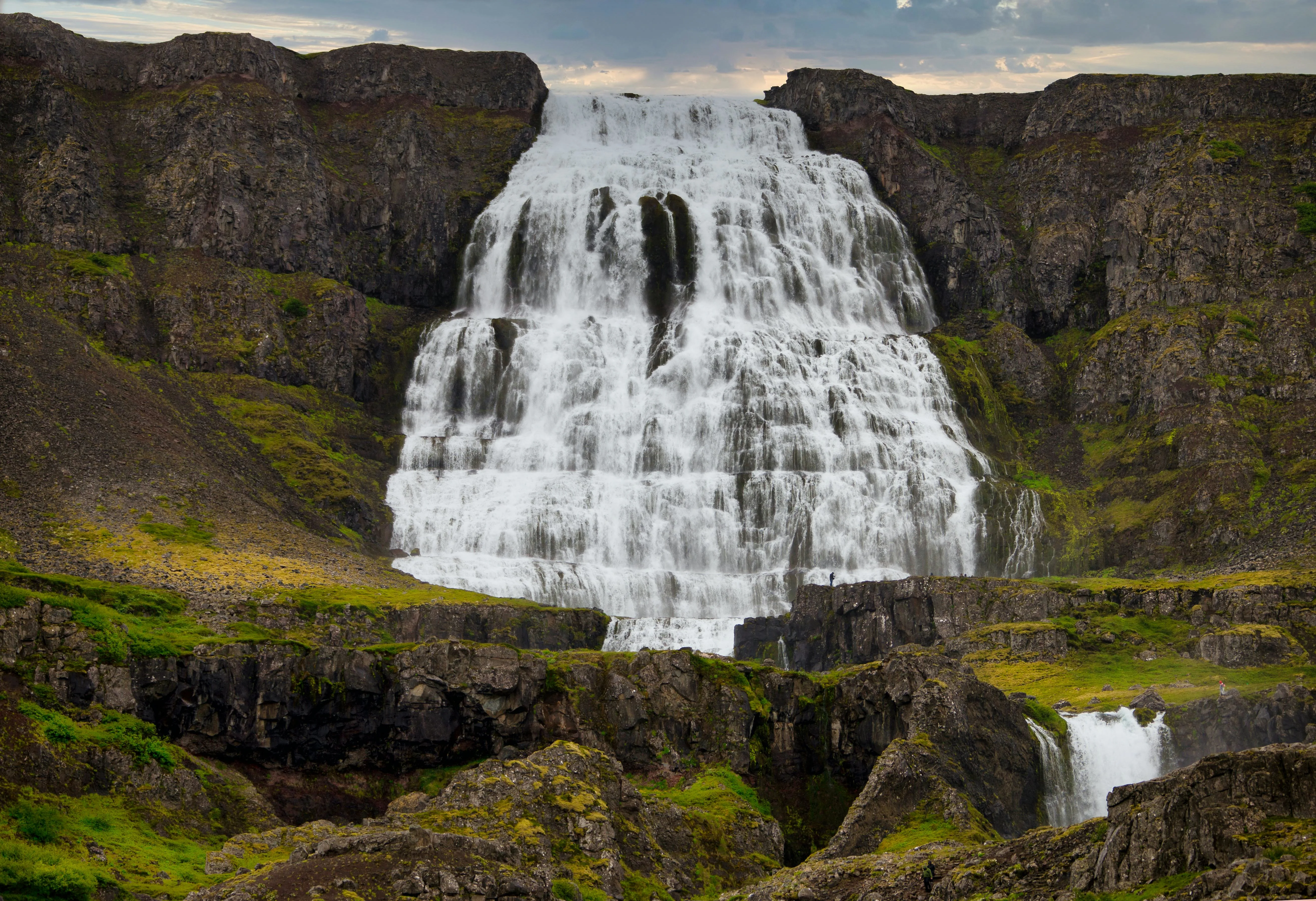
The mist hits your face before you even see it—that fine, cold spray carrying the scent of ancient basalt and glacial melt. It's 10:30 AM on a June morning, and the late Arctic sun casts long shadows across the Westfjords peninsula. Then, around the bend in the gravel road, it appears: Dynjandi, a thunderous curtain of water plunging 100 meters (328 feet) down weathered cliff faces, its base spreading 60 meters wide like a bride's veil caught mid-twirl. The name itself—pronounced "DIN-yahn-dee"—means "thunderous" in Icelandic, and standing here, you understand why. Each tier crashes with a bass-heavy rumble that vibrates through your chest, while smaller cascades above create a symphony of white noise. This isn't just Iceland's most magnificent waterfall; it's the crown jewel of the remote Westfjords, a region where fewer than 7,000 people inhabit 9,400 square kilometers of raw, untamed landscape. In 2026, as mass tourism squeezes the Golden Circle and South Coast, Dynjandi remains a sanctuary of solitude—accessible yet unspoiled, dramatic yet deeply peaceful. This is why you come now: to witness nature's power before the world discovers what you've found.
Why Dynjandi Embodies Iceland's Untamed Spirit
Dynjandi isn't merely a waterfall—it's a geological masterpiece carved over millennia by the relentless forces of glacial meltwater and volcanic geology. The main cascade, technically called Fjallfoss ("mountain waterfall"), drops approximately 100 meters from the Dynjandisá river, but the entire system comprises seven distinct waterfalls stacked like nature's wedding cake, with a cumulative height of nearly 200 meters (656 feet). The waterfall's distinctive trapezoidal shape—narrow at the top, dramatically wider at the base—results from the softer sedimentary rock layers eroding faster than the harder basalt above, creating that iconic veil-like appearance that has captivated visitors since Icelandic sagas first mentioned these falls.
The Westfjords region itself tells a story of isolation and resilience. Formed during the last Ice Age approximately 16,000 years ago, these finger-like peninsulas extend into the North Atlantic like gnarled fingers grasping at the sea. Dynjandi sits roughly 200 kilometers (124 miles) from Ísafjörður, the largest town in the Westfjords, accessible via Route 60—a road that wasn't fully paved until 2013. This relative inaccessibility has preserved the area's pristine character; while Reynisfjara and Gullfoss see 300,000+ visitors annually, Dynjandi welcomed just 87,000 visitors in 2024, according to the Icelandic Tourist Board.
Beyond its aesthetic grandeur, Dynjandi solves a fundamental human need: the craving for awe. In an era of digital saturation and urban confinement, this waterfall delivers what psychologist Dacher Keltner calls "the awe experience"—that overwhelming sensation of encountering something vast that transcends your current understanding. The sheer volume of water—estimated at 2-3 cubic meters per second during peak melt season—combined with the multi-tiered descent creates an acoustic and visual spectacle that demands your full presence. You cannot scroll past Dynjandi; you must stand before it, soaked in mist, feeling insignificantly small in the best possible way.
The Best Time to Experience Dynjandi
Timing your visit to Dynjandi requires balancing accessibility, weather, and crowd avoidance. The optimal window runs from June 15 to August 31, when Route 60 remains fully open and temperatures hover between 8–14°C (46–57°F). During this period, you'll experience nearly 24 hours of daylight—the midnight sun peaks around June 21, meaning you can photograph the falls at 11:00 PM in golden light that rivals any sunset. For the sweet spot between good weather and fewer visitors, target September 5–20, when daytime temperatures still reach 6–10°C (43–50°F) and autumn colors begin painting the moss-covered slopes in burnt orange and rust.
Arrive between 8:00–10:00 AM or after 6:00 PM to avoid the tour bus crowds that typically descend between 11:00 AM and 4:00 PM. Morning visits offer the added bonus of softer light for photography and the possibility of catching the mist illuminated by low-angle sun. Winter visits (October–April) are technically possible but strongly discouraged: Route 60 becomes treacherous with ice, daylight shrinks to 4–6 hours, and the parking area often closes without notice due to avalanche risk. The Icelandic Road and Coastal Administration (IRCA) maintains real-time road conditions at road.is—check this religiously before departure.
Avoid the July 20–August 10 peak, when European school holidays bring a 40% surge in rental car traffic. If you must visit during this window, book accommodation in Ísafjörður or the nearby village of Þingeyri well in advance. For current weather and waterfall flow conditions, visit the Icelandic Met Office at en.vedur.is, which provides hourly updates on precipitation and wind speeds—critical for safety when standing on wet rocks near the falls.
Approximate Budget for a 7-Day Trip (2026)
Visiting Dynjandi requires commitment—not just in kilometers driven, but in budget allocated. The Westfjords remain one of Iceland's most expensive regions due to transportation costs and limited competition among service providers. The following estimates reflect 2026 pricing, accounting for Iceland's average 4.2% annual inflation rate (Statistics Iceland, 2025). These costs assume a moderate travel style: comfortable but not luxury, with a mix of self-catering and restaurant meals.
- Accommodation: €145–€280 per night. Guesthouses in Ísafjörður average €165/night for a double room with shared bathroom; self-catering cottages near Dynjandi (in the Arnarfjörður area) run €220–€280/night. Budget hostels in Bolungarvík start at €85/night for dorm beds. Book 4–6 months ahead for summer dates.
- Food: €65–€95 per day. Breakfast: €12–€18 (coffee €4.50, skyr with granola €8, rúgbrauð bread €3.50). Lunch: €20–€30 (lamb soup €16, fish sandwich €14, coffee €4.50). Dinner: €35–€50 (grilled Arctic char €38, traditional hákarl tasting €12, local beer €11). Grocery shopping at Bónus or Krónan supermarkets reduces daily food costs to €35–€45.
- Transportation: 4WD rental: €145–€220/day (essential for Westfjords gravel roads). Fuel: €2.15/liter (approximately €180 for a 7-day Westfjords circuit covering 1,200 km). Gravel road insurance: €25/day (mandatory). Reykjavík to Ísafjörður domestic flight: €180–€340 round-trip via Eagle Air or Icelandair.
- Attractions: Dynjandi parking: €10 per vehicle (automated payment system installed 2024). Guided Westfjords hiking tour: €135/person. Boat tour to Látrabjarg cliffs: €95/person. Geothermal pool entry (Krossneslaug): €8. Museum entries: €12–€18 each.
- Miscellaneous: Waterproof hiking boots rental: €35/week. Thermal base layers purchase: €80–€150. Souvenirs: hand-knitted lopapeysa sweater €180, local honey €22, volcanic rock jewelry €45–€120. Travel insurance: €45–€85 for 7 days.
Total estimated cost for 7 days: €2,450–€3,680 per person (based on double occupancy)
7 Essential Dynjandi Experiences
- Walk the full tier sequence: Don't stop at the main waterfall. Follow the marked trail upward past all seven cascades: Dynjandi (Fjallfoss), Hundafoss, Göngumannsfoss, Hrísvaðsfoss, Hæstaleitarsfoss, Bjarmarfoss, and Hafragilsfoss. The 2.3-kilometer round-trip hike takes 90 minutes and gains 180 meters in elevation. Each tier offers distinct perspectives—the lower falls roar with power, while upper tiers whisper through narrow gorges. Bring waterproof layers; the mist intensifies as you ascend.
- Photograph the veil at blue hour: Position yourself on the wooden viewing platform 50 meters from the base at 10:30–11:15 PM in late June. The sun barely dips below the horizon, casting an ethereal blue-purple glow that makes the white water appear luminous. Use a tripod and 2-second shutter speed to capture the silky water texture against dark basalt. The contrast between the falls' brightness and the shadowed cliffs creates dramatic depth.
- Stand beneath the overhang: A narrow path (clearly marked with red stakes) leads behind the main cascade's upper section. This 15-minute detour rewards you with a perspective few capture: viewing the falls from within the cliff face itself, where water thunders overhead and rainbow prisms dance in the spray. Wear sturdy boots with grip—the rocks are slick with moss and constantly wet.
- Picnic at the upper parking area: The second parking lot, located 800 meters uphill from the main falls, offers sweeping views of the entire Dynjandisá valley. Spread a blanket here around 1:00 PM with supplies from Ísafjörður's bakery (try the kanilsnúður cinnamon roll, €4.50). You'll have panoramic vistas of the waterfall system framed by snow-capped peaks, often with zero other visitors.
- Visit the archaeological site: Behind the main falls lies the remains of a 10th-century farmstead, excavated in 2007 by the Westfjords Heritage Museum. Look for the informational plaque near the trailhead—this was one of Iceland's most remote settlements, abandoned in 1942 due to isolation. Standing here, you grasp the sheer determination required to survive in this landscape.
- Collect glacial water (responsibly): Small streams feed into the Dynjandisá above the falls, carrying water that originated in the Drangajökull glacier 40 kilometers away. Fill your reusable bottle at these sources—the water is pristine and naturally filtered through volcanic rock. Avoid the main river, which carries sediment and can be dangerous.
- Experience the acoustic phenomenon: Sit on the large flat rock 30 meters left of the main viewing platform at exactly 3:00 PM (when wind typically dies down). Close your eyes and listen: you'll distinguish at least four separate sound layers—the deep bass rumble of the main fall, the mid-range crash of secondary tiers, the high-frequency hiss of mist hitting rocks, and the subtle trickle of groundwater seeping through basalt. This multi-frequency soundscape induces a meditative state documented in University of Iceland environmental psychology studies.
3 Hidden Gems Most Travelers Miss
- Kattarlúsk Waterfall: Located 12 kilometers south of Dynjandi on Route 60, this 45-meter cascade receives perhaps 200 visitors annually. Pull over at coordinates 65.7892° N, 23.4561° W and follow the faint sheep trail for 400 meters. The waterfall plunges into a perfectly circular pool surrounded by red volcanic scoria—geologically distinct from Dynjandi's basalt. Access requires no special equipment, but visit only in dry conditions; the trail becomes a mudslide after rain. Locals call it "the cat's scratch" for its thin, jagged appearance.
- Ísafjörður Maritime Museum's Dynjandi Archive: Most tourists skip this small museum in Ísafjörður (open June–August, 10:00 AM–5:00 PM, admission €12), but the third-floor archive contains 19th-century photographs of Dynjandi taken by Swedish explorer Carl Mörner in 1893. These glass plate negatives reveal how the waterfall's flow has changed over 130+ years due to glacial retreat. Museum director Sigríður Jónsdóttir offers 30-minute private viewings by appointment (+354 456 2111)—email sjon@westfjords.is at least 3 days ahead.
- Arnarfjörður Hot Spring: Not the commercial pools, but a natural geothermal seep on the shore of Arnarfjörður fjord, 18 kilometers from Dynjandi. At low tide (check tide times at safn.is/tides), walk 600 meters north from the small boat harbor in Þingeyri to find warm water (38–42°C / 100–108°F) bubbling up through black sand. Locals have dug shallow soaking pools here for generations. Bring a towel and arrive at sunset; you'll likely have this spot alone. No facilities exist—practice Leave No Trace principles strictly.
Cultural & Practical Tips
- Respect the álfar (elves): Many Icelanders believe hidden people inhabit rocks and waterfalls. Never throw stones into Dynjandi's pools or move rocks from the site—this disturbs both geological stability and, according to local belief, the álfar. The Icelandic Folklore Society documents over 40 elf-related stories specific to the Westfjords.
- Master essential Icelandic phrases: "Takk fyrir" (TAHKk freer) = thank you; "Góðan daginn" (GO-than DIE-in) = good day; "Aðgangur" (ATH-gang-ur) = entrance; "Salerni" (SAH-lair-nee) = restroom. While 98% of Icelanders speak English, attempting Icelandic shows respect and often results in warmer service.
- Photography etiquette: Tripods are permitted but cannot block the main viewing platform during peak hours (11:00 AM–4:00 PM). Drone use requires written permission from the Environment Agency of Iceland (ust.is)—apply 30 days in advance. Commercial photography needs a €250 permit. Never photograph other visitors without consent; Icelanders value privacy highly.
- Weather preparedness: Westfjords weather changes every 20 minutes. Pack: waterproof jacket (Gore-Tex minimum), waterproof hiking pants, fleece mid-layer, wool base layers (no cotton), hat and gloves even in summer, sunglasses (glare from water is intense). Check the Icelandic Met Office app hourly—wind speeds above 20 m/s (45 mph) make standing near the falls dangerous.
- Vehicle requirements: A 4WD vehicle is mandatory, not optional. Route 60 has 14 kilometers of unpaved gravel, three unbridged river crossings (maximum depth 45 cm), and steep grades up to 12%. Rental companies void insurance if you damage a 2WD vehicle on Westfjords roads. Download offline Google Maps—cell service disappears for 40-kilometer stretches.
- Wildlife awareness: Arctic terns nest on cliffs above Dynjandi from May 15–July 31. They dive-bomb intruders within 50 meters of nests—carry a walking stick and wave it above your head if attacked. Never touch or approach chicks; parents will abandon them if they smell human scent. Puffins nest at nearby Látrabjarg but occasionally appear on Dynjandi's upper ledges.
- Payment systems: The Dynjandi parking fee uses an automated system (pay.is app or credit card at kiosk)—no cash accepted. Most Westfjords businesses accept cards, but carry 10,000 ISK (€65) in cash for emergencies. Icelandic banks charge 3% foreign transaction fees; use cards from banks with no international fees.
Conclusion: Travel with Reverence, Not Just Reservations
Dynjandi doesn't need your Instagram post—it has thundered against these cliffs for 16,000 years, indifferent to human documentation. What it asks, what the Westfjords demand, is something rarer than a perfect photograph: your full presence, your willingness to stand small before something vast, your commitment to leave no trace beyond footprints that the next rain will wash away. In 2026, as Iceland grapples with the paradox of sharing its beauty while preserving its soul, Dynjandi remains a test. Will you rush through, checking a box, or will you sit on that wet rock for an extra hour, letting the mist soak your jacket while you watch light shift across seven cascades? The waterfall will continue whether you come or not. But you—standing here, feeling that primal awe vibrate through your bones—will carry something back to your ordinary life that no souvenir shop can sell. That is the true currency of travel: not the places you've been, but the person you become while witnessing them. Come to Dynjandi. But come slowly, come quietly, come ready to be changed.