
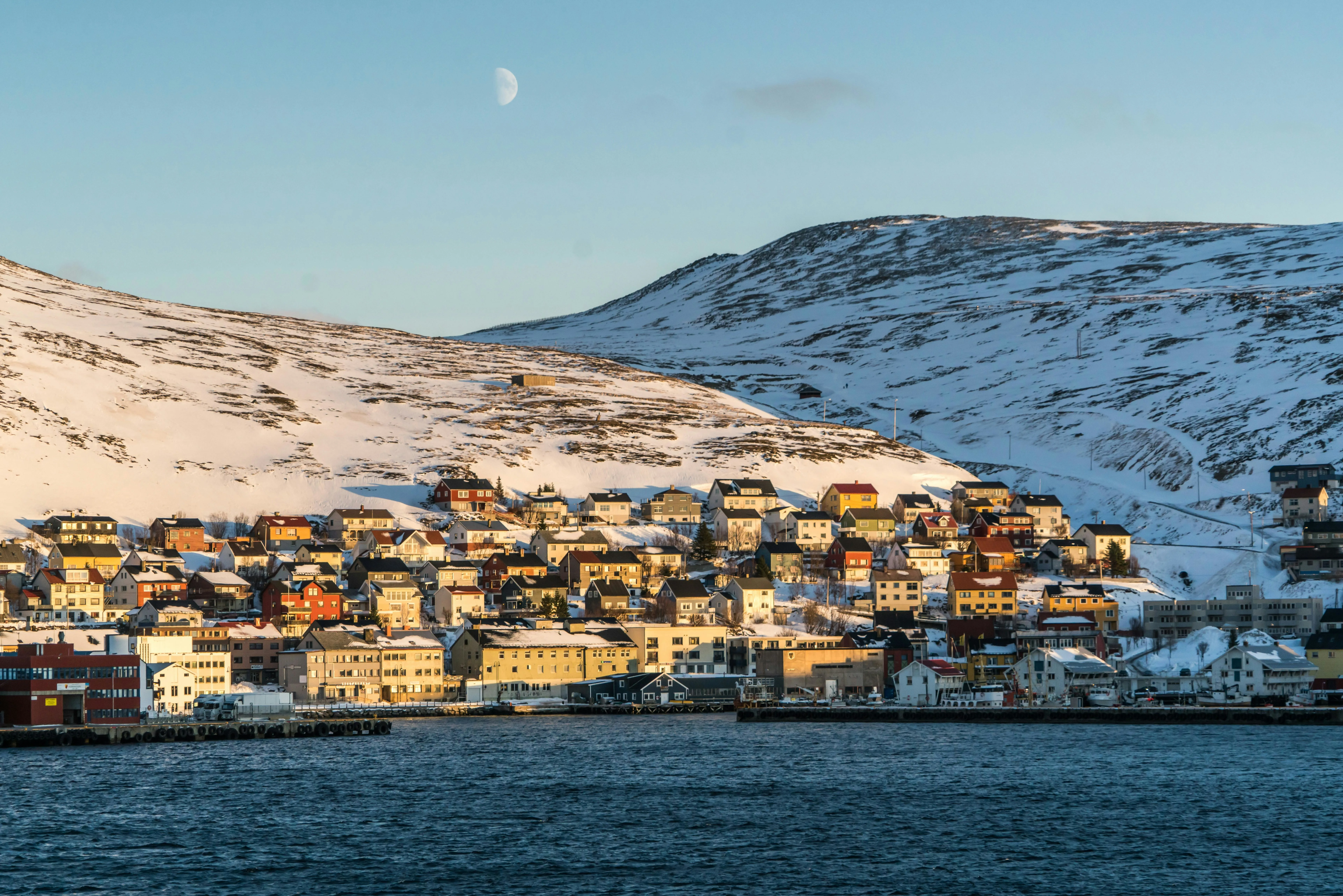
Ísafjörður Fjord Town Historic Timber Houses Meet Arctic Waters
The wind whispers through the narrow streets, carrying the salty tang of the North Atlantic mixed with the scent of dried fish and old timber. Here, in the heart of the Westfjords, the Ísafjörður fjord town nestles beneath towering basalt peaks that rise 800 meters (2,625 feet) directly from the water's edge, creating a natural amphitheater of stone and sea. It is late evening—around 11:00 PM in July—and the midnight sun casts a soft, ethereal glow over the colorful wooden warehouses that line the harbor, their corrugated iron roofs reflecting in the calm waters of Skutulsfjörður. The air temperature hovers at 10°C (50°F), but the breeze off the glacier-fed fjord makes it feel closer to 5°C (41°F), demanding layers and a willingness to slow down. This isn't merely a remote settlement; it is a living museum of maritime history, where the oldest timber houses date back to the 18th century and the population of 2,600 souls guards a heritage of independence. In 2026, as overtourism reshapes Iceland's southern coast, the Ísafjörður fjord town matters more than ever—a sanctuary of authentic culture, a gateway to the wild Westfjords, and a quiet place to reconnect with the rhythm of the tides.
Why Ísafjörður Fjord Town Embodies Westfjords Heritage
The Ísafjörður fjord town represents one of the most significant cultural hubs in Northwest Iceland, serving as a critical junction where commerce, fishing, and isolation converge. Established as a trading post in the 16th century by German and Danish merchants, the site solved a fundamental logistical need: providing a sheltered anchorage amidst the volatile waters of the Westfjords. The town's geography is engineered by nature; the spit of land known as Túngata protects the inner basin from prevailing westerly winds, creating a calm dockage area that measures approximately 400 meters in width. Today, the waterfront is defined by the Neðstikaupstaður district, a collection of 18th-century timber houses imported from Norway and Germany, painted in distinctive reds and yellows to withstand the harsh marine climate.
Beyond aesthetics, the location fulfills a deep cultural need for connection to the sea. Since the 1700s, when the Danish monarchy established a monopoly trading station here, communities have thrived on the rich fishing grounds surrounding the fjord. In 1996, the old town received protection as a heritage site, ensuring that the wooden architecture remains preserved against modern development. The infrastructure includes a modern hospital, a regional airport upgraded in 2015 to handle year-round flights, and a ferry terminal connecting to the Snæfellsnes Peninsula. Walking these gravel paths, you traverse ground where centuries of fishermen launched boats into the unknown. The site stands as a testament to resilience, where harsh weather and volatile seas have shaped a culture of independence and deep respect for the ocean's power.
The Best Time to Experience Ísafjörður Fjord Town
For optimal ferry access and comfortable walking conditions, plan your visit between June 15 and August 20, when daytime temperatures range from 12–17°C (54–63°F) and daylight extends nearly 24 hours. The best lighting for photography occurs between 10:00 PM and 12:30 AM during the solstice period, when the low-angle sun creates long shadows through the colorful warehouses without harsh glare. During these months, the Baldur ferry operates daily departures, and the harbor promenade remains dry and safe for strolling.
Shoulder season (May 1–June 14 and August 21–September 30) brings cooler temperatures of 6–10°C (43–50°F) and fewer crowds, but weather becomes unpredictable with occasional rain squalls. Winter visits (November–March) offer a stark beauty but require serious preparation; temperatures drop to -5 to -10°C (14–23°F), daylight shrinks to 4–6 hours, and ferry schedules reduce significantly. Additionally, many tourist facilities and restaurants reduce hours or close entirely outside the summer season, limiting dining options near the water.
Avoid visiting during storm warnings issued by the Icelandic Meteorological Office, as wind speeds can exceed 25 m/s (56 mph), making walking near the precipice dangerous. The site is open 24 hours with no entrance fee, but visitor centers operate limited hours: 9:00 AM–6:00 PM (June–August). Always verify ferry schedules at seatours.is and weather forecasts at vedur.is before departure, as the Ísafjörður fjord town microclimate can change rapidly even during summer months.
Approximate Budget for a 7-Day Trip (2026)
West Iceland offers moderate pricing compared to the south, though remote logistics increase transportation costs. These 2026 estimates assume a mid-range travel style, accounting for Iceland's projected 3.6% inflation rate and current exchange rates (1 USD = 0.92 EUR). Prices reflect the Ísafjörður town center, which serves as the base for visiting the Westfjords region.
- Accommodation: €150–€220 per night for guesthouses or hotels in Ísafjörður center (harbor view); budget hostels from €80; luxury hotels €300+
- Food: €70–€95 per day—breakfast €15 (often included), lunch €25 (seafood soup at Tjöruhúsið), dinner €40–€55 (lamb or fish at local restaurants)
- Transportation: Rental car essential: €90–€120/day for 4WD vehicle (gravel protection recommended); fuel €2.20/liter (approximately €150 for week); Reykjavík to Ísafjörður round-trip: 460 km; Route 1 plus Route 60
- Attractions: Westfjords Heritage Museum €15; Ferry to Flatey €45; Guided boat tour €85; Thermal pool €12; Sea monster museum €15
- Miscellaneous: Wool sweater €100–€150; thermal gear rental €35; travel insurance €55; parking fees €0
Total estimated cost for 7 days: €1,850–€2,350 per person (excluding international flights)
7 Essential Ísafjörður Fjord Town Experiences
- Walk the Old Town District: This paved path circles the Neðstikaupstaður area, offering views of 18th-century warehouses. Start at the harbor (66°04.500'N, 23°08.000'W). The walk takes 45 minutes and is wheelchair accessible. Best visited mid-morning when light hits the timber. The scent of old wood is intense. Wear sturdy shoes for cobblestone sections.
- Dine at Tjöruhúsið: This iconic restaurant (Neðstakaupstaður 2) features fresh catch of the day. Book a table by the window for harbor views. Open 6:00 PM–10:00 PM (June–August). Expect prices around €50 per main course. The building dates to 1734. Best visited late afternoon for sunset lighting.
- Visit the Heritage Museum: The Westfjords Heritage Museum houses maritime artifacts. Open 10:00 AM–6:00 PM (June–August). Entry €15. Interactive exhibits detail the 16th-century trading history. Best visited early afternoon when light hits the columns. It provides crucial cultural context for the landscape.
- Swim in the Thermal Pool: The local geothermal pool overlooks the fjord. Water temperature is 38°C (100°F). Open 6:30 AM–10:00 PM. Entry €12. The view from the hot pot is unparalleled. Best visited late evening when crowds thin. Shower facilities are mandatory before entry.
- Photograph the Timber Houses: The wooden buildings are painted in vibrant hues. Position yourself on the breakwater. Use a polarizing filter to reduce water glare. The composition requires a wide-angle lens (16–35mm). Expect wind; secure your tripod. Best light occurs between 3:00–5:00 PM.
- Take the Ferry to Flatey: The Baldur ferry departs daily from nearby Brjánslækur. The crossing takes 45 minutes. Explore the car-free island's historic houses. Return on the same day or stay overnight. Tickets cost €45 round-trip. Best visited mid-summer when puffins nest on cliffs.
- Watch the Midnight Sun Glow: On June 21, the sun sets around 12:15 AM. Return to the harbor around 11:00 PM to see the water glow amber in perpetual twilight. Temperatures drop rapidly; wear thermal layers. The site is empty at this hour, offering profound solitude. The light on the water is surreal.
3 Hidden Gems Most Travelers Miss
- Aldrei Fór Ég Suður Festival Site: Located near the old airport, this venue hosts an annual music festival. Most tour buses skip it for the harbor. Access via the road east of the center. The history of local culture is palpable here. Open daylight hours; no entry fee. Best visited late evening when wind is calm. No facilities—bring water.
- Old Fish Drying Sheds: Located at the western edge of the harbor, remnants of 19th-century wooden sheds remain visible. Most travelers miss this due to focus on colorful buildings. Access via the path behind the ferry terminal. The history of local industry is palpable here. Open daylight hours; no entry fee. Best visited late afternoon when shadows highlight the wood. Contact: visitisafjordur.is for history.
- Mount Ósvör Hike: A steep trail behind the town offers panoramic views. It is often overlooked for the harbor. Access via the path behind the hospital. Open daylight hours; no entry fee. The climb takes 1 hour. Best visited midday. Photography permitted without flash. It offers a tangible connection to the landscape.
Cultural & Practical Tips
- Respect the Working Harbor: This is an active fishing port, not just a tourist site. Do not block loading zones or touch fishing gear. Damage to equipment is taken seriously. Fines for interference can reach €300. Stay on marked paths to preserve the fragile ecosystem.
- Weather Preparedness: West Iceland weather is volatile. Even in July, pack: windproof waterproof jacket, thermal base layers, sturdy hiking boots, hat and gloves. Check vedur.is for real-time forecasts. Wind speeds can exceed 25 m/s (56 mph), making exposed areas dangerous.
- Photography Etiquette: Tripods permitted but don't block pathways for other visitors. Drone use requires special permit from Umhverfisstofnun (Icelandic Environment Agency)—apply at ust.is at least 14 days in advance. Respect private property near homes; do not trespass for angles.
- Driving Safety: Route 60 is paved but narrow. Pull over to let locals pass. Sheep roam freely on roads; drive cautiously. Single-lane bridges are common; yield to vehicles already on the bridge. Speed limits are strictly enforced by automatic cameras.
- Local Phrases: Learn these Icelandic essentials: Takk (tahk) = Thank you; Góðan daginn (go-than die-in) = Good day; Fallegur bær (fal-leg-ur by-ire) = Beautiful town. Effort with language earns warm smiles from locals.
- Emergency Contacts: Dial 112 for all emergencies. Nearest hospital: Ísafjörður Hospital (+354 450-1000). Cell coverage is excellent along the harbor. Download offline maps via Google Maps before arrival.
- Accessibility Note: Main promenade is wheelchair accessible. Ferry terminals include accessible ramps. Contact visitisafjordur.is for detailed accessibility maps before traveling.
Conclusion: Travel with Reverence, Not Just Checklists
The Ísafjörður fjord town demands more than a quick photo stop and a hashtag—it asks for your patience, your respect, your willingness to stand quietly before a waterfront that has witnessed centuries of trade and tide. As you visit this site in 2026, remember that each footprint lands on ground sacred to both maritime history and local heritage. The warehouses aren't merely a scenic backdrop; they are living structures, painted against the Atlantic, written in wood and time.
Responsible travel here means staying on paths, respecting working zones, and leaving only footprints on the boardwalk. It means understanding that the communities here are not just service providers but guardians of a fragile coastline. When you purchase from local farms, hire West Icelandic guides, and follow road safety rules, you participate in an economy that values preservation over exploitation.
So linger past the guidebook's recommended 30 minutes. Sit on a sun-warmed bench and watch boats rock in the swell. Let the sound of the water remind you that some places aren't meant to be conquered or consumed—they're meant to be witnessed with humility, protected with intention, and carried in memory long after your tires have left the harbor road.