
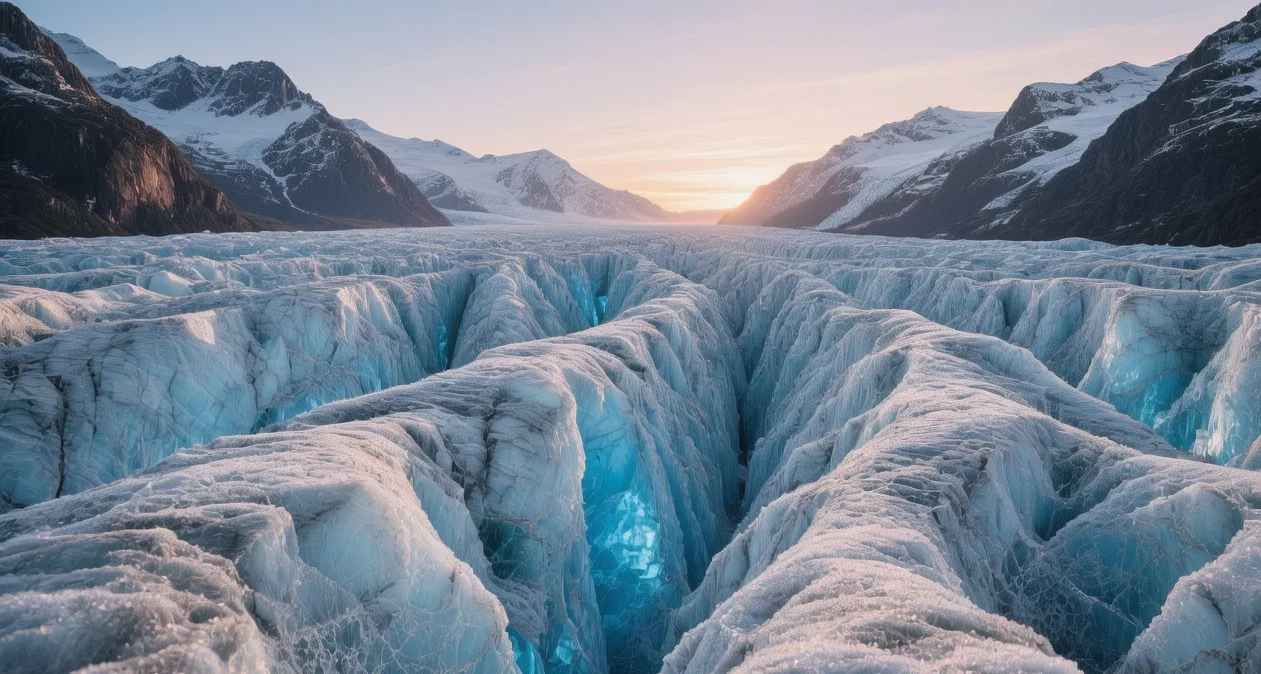
Jostedalsbreen Glacier Ancient Ice Meets Norwegian Wilderness
The air tastes of frozen time—sharp, clean, and carrying the mineral scent of rock flour suspended in meltwater streams. You stand at the toe of Nigardsbreen, one of 60 arms extending from the Jostedalsbreen glacier, as the morning sun ignites the ice in hues of electric blue and milky white. Above, the ice cap stretches 487 square kilometers (188 square miles) across the horizon, a remnant of the last Ice Age that once covered all of Scandinavia. The silence is deceptive; beneath your boots, the ice groans—a deep, resonant shift as the glacier moves 10 to 100 meters annually depending on the season. Guides check crampons while wind whips through the valley, carrying temperatures that hover near 5°C (41°F) even in midsummer. This is not a static landscape; it is a living, retreating entity that reshapes itself daily. In 2026, as climate records are broken globally, the Jostedalsbreen glacier matters because it stands as both a cathedral of natural history and a stark warning—a place where you can touch the past while witnessing the urgent fragility of our planet's cryosphere.
Why Jostedalsbreen Glacier Embodies Nordic Ice Heritage
The Jostedalsbreen glacier is not merely a tourist attraction; it is the largest ice cap in mainland Europe, a geological heavyweight that defines the identity of Western Norway. Reaching its maximum extent during the Little Ice Age around 1750, the glacier subsequently retreated until the 1920s, advanced again until 1930, and has been in general retreat since. Today, it covers approximately 487 square kilometers, with ice thickness measuring up to 600 meters (1,969 feet) in the central dome. This massive reservoir of fresh water solves a fundamental ecological need: it regulates regional hydrology, feeding rivers like the Jostedøla that sustain valleys below. However, its cultural significance runs deeper. For centuries, the ice served as a barrier and a boundary; crossing it required local knowledge that evolved into the modern guiding industry established formally in 1985 with the founding of the Norwegian Glacier Museum.
Engineering and science intersect here constantly. Researchers from the Norwegian Water Resources and Energy Directorate (NVE) monitor mass balance annually, drilling ice cores to analyze atmospheric history trapped in bubbles. The glacier's movement is measured using GPS stakes inserted into the ice, tracking flow rates that vary from 10 meters per year at the margins to 100 meters near the center. Accessing the ice requires specific infrastructure: maintained trails to glacier tongues, visitor centers like the one in Fjærland, and regulated guiding systems to prevent accidents in crevasse fields. In 2026, the Jostedalsbreen glacier fulfills a dual role: it is a classroom for climate science and a sanctuary for wilderness seekers. It reminds us that ice is not just frozen water—it is a archive of Earth's history, written in layers that take centuries to accumulate and mere decades to melt.
The Best Time to Experience Jostedalsbreen Glacier
For optimal safety and accessibility on the ice, target June 20–August 15. During this window, guided hikes operate daily, temperatures range from 8–16°C (46–61°F) in the valleys, and daylight extends to 19 hours, allowing for evening tours under the midnight sun. The ice is most stable in July when winter snow has consolidated into firn, reducing crevasse exposure slightly. For photography, the best light occurs between 6:00–9:00 AM when the sun hits the ice faces directly, creating maximum contrast between blue ice and white snow.
For solitude and dramatic winter landscapes, visit March 1–April 15. Temperatures drop to -5 to 5°C (23–41°F), and the glacier is accessible only via specialized winter guiding companies. Snowshoeing and ice climbing are popular during this period, though daylight is limited to 12 hours. Avoid July 25–August 5 if possible: this coincides with peak European school holidays and cruise ship excursions from Bergen. Guided tours book out weeks in advance, and trailheads like Nigardsbreen become congested. Additionally, avoid visiting during heavy rain events, which increase avalanche risk on surrounding slopes.
For real-time conditions, check the Norwegian Glacier Museum website (www.bremuseum.no) or the NVE glacier report (www.nve.no). Weather in the mountains changes rapidly; a sunny valley can become a whiteout on the ice within an hour. Always verify tour availability 48 hours prior, as high winds (>15 m/s) cancel ascents for safety. The guiding season officially opens June 1 and closes September 30, though some operators extend into October depending on snow conditions.
Approximate Budget for a 7-Day Trip (2026)
Traveling to the Jostedalsbreen region requires a moderate-to-high budget due to remote logistics and Norway's cost of living. This estimate assumes mid-range travel with 3-4% inflation adjustment from 2024 baselines. Prices are in Euros (€); local currency is Norwegian Krone (NOK). Costs include guided activities essential for safe glacier access.
- Accommodation: €160–€250 per night for a double room in Sogndal, Gaupne, or Fjærland. Budget hostels (Sogndal Vandrerhjem): €55–€75 per bed. Upscale lodges (Jostedalsbreen Nasjonalparkhotell): €300–€480 per night.
- Food: €75–€110 per day per person
- Breakfast: €15–€22 (hotel buffet with oatmeal, smoked fish, bread)
- Lunch: €22–€35 (packed guide lunch €25, café soup €30, or grocery picnic €20)
- Dinner: €38–€60 (restaurant main: reindeer €45, cod €42, pasta €32; add €14 for beer)
- Transportation:
- Car rental (7 days, 4WD recommended): €550–€750 including fuel
- Bergen Airport Flybussen: €15 one-way, €25 round-trip
- Local ferry (Gudvangen–Kaupanger): €20 per person
- Bus pass (Sogn og Fjordane): €60 weekly
- Attractions:
- Guided glacier hike (Nigardsbreen): €95–€130 per person
- Norwegian Glacier Museum entry: €18
- Briksdalsbreen shuttle bus: €25 round-trip
- Kayak rental (Jostedalsrivi): €50 half-day
- Ice climbing course: €150 half-day
- Miscellaneous:
- Souvenirs: Glacier ice jewelry €40, wool hat €35, guidebook €25
- Equipment rental (helmets/crampons if not included): €20
- Travel insurance (7 days, adventure coverage): €45–€65
- eSIM data plan: €20–€30
Total for 7 days (mid-range, per person, double occupancy): €1,950–€2,450
Budget travelers can reduce costs to €1,200–€1,500 by camping (€30 per night), cooking all meals, and skipping guided hikes in favor of viewing platforms. Luxury seekers should budget €4,000+ for private guiding, helicopter tours, and fine dining.
6 Essential Jostedalsbreen Glacier Experiences
- Guided Hike on Nigardsbreen: Book the 10:00 AM "Blue Ice Walk" from the Nigardsbreen base camp. This 3-hour excursion includes gear fitting (crampons, helmets, harnesses) and a 20-minute walk across moraine to the ice edge. Once on the glacier, you will navigate crevasses, climb ice walls, and drink meltwater from ancient layers. Guides explain glacial formation and retreat rates. Physical fitness required; minimum age is 8 years. The sensory experience is profound: the crunch of ice underfoot, the wind howling through seracs, and the overwhelming blue hue that permeates everything.
- Visit the Norwegian Glacier Museum: Located in Fjærland, this architectural marvel (designed by Sverre Fehn) houses exhibits on climate change and glaciology. Spend 2 hours exploring the "Ice Hall" where you touch real ice cores. The cinema screens documentaries on the Little Ice Age. It is open daily 10:00 AM–6:00 PM in summer. This context is crucial; seeing the ice without understanding its history diminishes the experience. The café offers views of the Fjærlandsfjord, perfect for post-visit reflection.
- View Briksdalsbreen from the Platform: While direct access to Briksdalsbreen is restricted to protect the environment, the viewing platform offers spectacular vistas. Take the shuttle bus from Briksdal Bistro (departing every 30 minutes) to the mountain station. Hike 15 minutes to the platform. You will see the glacier tongue hanging 300 meters above the lake. Best visited at 5:00 PM when crowds thin. Bring binoculars to spot ice calving events. This responsible viewing model ensures preservation while allowing appreciation.
- Kayak the Jostedalsrivi River: Join a half-day rafting or kayaking tour on the glacial river fed by the ice cap. The water is opaque turquoise due to rock flour sediment. Depart from Gaupne at 1:00 PM. You will navigate class II–III rapids while surrounded by steep valley walls. Dry suits are provided; water temperature is 4°C (39°F) year-round. This perspective from below highlights the sheer volume of meltwater the glacier produces daily. It is wet, cold, and exhilarating.
- Drive the National Tourist Route: Rent a car and drive the Sognefjellsvegen (Road 55), open June–October. This crosses the mountains near the glacier, reaching 1,434 meters elevation. Stop at the Fanakaaren viewpoint for panoramic shots of the ice cap. The road itself is an engineering feat, with stone bridges and viewing platforms designed to blend into the landscape. Allow 3 hours for the drive one-way; pullouts are frequent for photography. Watch for reindeer grazing near the road in early morning.
- Stargaze at Bergsseter: Drive to the Bergsseter parking area (1,050 meters elevation) after dark. Light pollution is minimal here. On clear nights, the Milky Way reflects off the ice cap, creating a double sky. Bring a red-light flashlight to preserve night vision. Temperatures drop below 5°C (41°F) even in summer; wear heavy layers. This quiet moment connects you to the cosmic scale of the landscape. No facilities exist here; pack out all trash. It is a spiritual experience unmatched by daytime visits.
3 Hidden Gems Most Travelers Miss
- Tunsbergdalsbreen Arm: While Nigardsbreen draws crowds, this southern arm is quieter and equally dramatic. Access via a 4-kilometer hike from the Tunsbergdal cabin (coordinates 61.5833°N, 7.0833°E). The trail crosses alpine meadows before reaching the moraine. Guided tours are available but less booked than Nigardsbreen. The ice here is often clearer due to less foot traffic. Best visited weekdays in June before peak season. Contact Jostedalsbreen Nasjonalparksenter for guide availability (+47 57 68 90 50). The solitude allows for deeper connection with the ice.
- Old Gaupne Church: Built in 1867, this wooden church in Gaupne village sits in the shadow of the glacier valley. It is overlooked by tourists rushing to the ice. Open for visits Tuesday–Thursday, 11:00 AM–3:00 PM. The interior features original altarpieces and acoustics that resonate with organ music during summer concerts. It represents the human history coexisting with the natural wonder. Entry is free; donations support maintenance. Visit during evening concerts for a cultural counterpoint to the wilderness experience.
- Supphellebreen Ice Cave: Located near Folgefonna (south of Jostedalsbreen but geologically similar), this is one of the few accessible ice caves. However, within the Jostedalsbreen region, ask guides about temporary meltwater caves forming near Nigardsbreen in late summer. These are unstable and access varies daily. If open, entering a blue ice cave is a once-in-a-lifetime experience. Light filters through the ice roof, creating an ethereal glow. Never enter without a guide; collapse risk is high. This dynamic feature changes shape every season, making each visit unique.
Cultural & Practical Tips
- Safety First: Never walk on the glacier without a certified guide. Crevasses are often hidden by snow bridges. Falling into one is fatal. Follow guide instructions implicitly; they know the ice structure. Wear provided safety gear at all times. The ice is slippery; balance is key. Do not wander off marked paths on moraines either; rocks are unstable.
- Leave No Trace: The glacier environment is fragile. Pack out all trash, including biodegradable items like fruit peels. Do not touch ice formations unnecessarily; body heat accelerates melting. Stay on designated trails to protect vegetation on the moraines. Respect wildlife; do not approach grazing sheep or reindeer. This ensures the landscape remains pristine for future generations.
- Useful Phrases:
- "Takk" (tahk) = Thank you
- "Er det trygt?" (ehr deh trygt) = Is it safe?
- "Hvor er toalettet?" (voor ehr toa-let-et) = Where is the toilet?
- "Jeg trenger hjelp" (yai tren-ger yelp) = I need help
- Photography Guidelines: Drones are prohibited in national parks without permission from the Norwegian Environment Agency. Respect other visitors; do not block paths for shots. Protect camera gear from moisture; condensation forms when moving from cold ice to warm indoors. Use polarizing filters to reduce glare off the ice. The best shots come from low angles emphasizing texture.
- Clothing Requirements: Dress in layers. Base layer: wool or synthetic (no cotton). Mid layer: fleece. Outer layer: waterproof windbreaker. Wear sturdy hiking boots (ankle support required). Gloves and hats are essential even in summer. Guides provide crampons and helmets, but personal clothing must be weather-appropriate. Hypothermia is a risk if wet and windy.
- Connectivity: Mobile coverage is spotty on the glacier itself. Download offline maps before arriving. Inform someone of your itinerary before heading into the mountains. Emergency number is 112. Most guide companies carry satellite phones, but personal preparation is vital. Do not rely on phone GPS for navigation on the ice.
- Seasonal Awareness: Spring (May–June) offers hard snow conditions ideal for ice climbing. Summer (July–August) offers accessible hiking but more meltwater. Autumn (September) offers fewer crowds but shorter days. Winter access is limited to specialized expeditions. Check road status (www.vegvesen.no) as mountain passes close in winter. Plan accordingly to avoid being stranded.
Conclusion: Travel with Reverence, Not Just Checklists
The Jostedalsbreen glacier does not exist for our consumption; it exists as a testament to time's slow power. In 2026, as we face accelerating climate shifts, visiting this ice cap requires more than a camera and a ticket—it demands reverence. Travel here not to conquer the ice but to witness it. Listen to the meltwater singing through crevasses; feel the cold radiating from walls that stood before written history. Understand that every step on the moraine impacts the fragile ecosystem beneath your boots. Leave only footprints that wind will erase; take only memories that will deepen your commitment to preservation. When you descend back to the green valleys, carry the glacier's silence with you. For in the end, the true value of this journey is not the photo you post, but the understanding you gain: that we are guests in a landscape that will endure long after we are gone, provided we treat it with the respect it demands.