
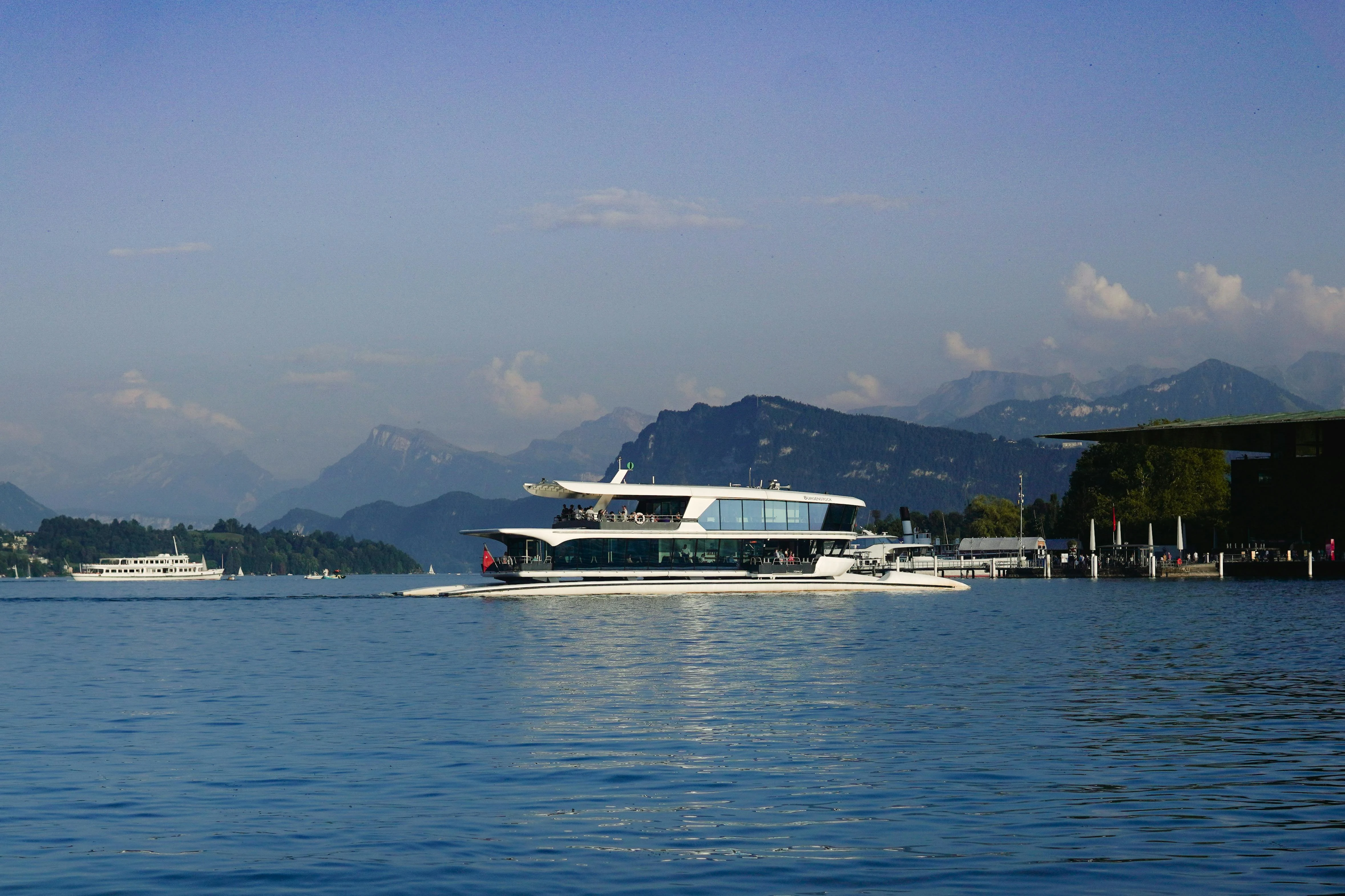
Lake Lucerne Cruises Alpine Majesty Meets Timeless Swiss Elegance
The morning sun breaks over Mount Rigi as a white paddle steamer cuts through glass-still waters—its brass fittings gleaming, its smokestack releasing gentle puffs against a backdrop of jagged peaks rising 2,000 meters into crystalline skies. You stand on the teak deck of the Stadt Luzern, one of five historic steamers still navigating the 114-square-kilometer expanse of Vierwaldstättersee, feeling the cool alpine breeze carry whispers of Swiss history across water that has mirrored emperors, revolutionaries, and dreamers for over 170 years. The vessel's twin paddle wheels churn the deep blue-green lake, creating a wake that ripples toward shores dotted with medieval chapels and terraced vineyards. Below deck, the original 1928 steam engine hums with mechanical poetry, a testament to Swiss engineering that has survived two world wars and the diesel age. As the boat approaches the dramatic narrowing at the Urnersee, where William Tell supposedly shot the apple from his son's head, you realize this isn't merely transportation—it's a floating museum, a moving viewpoint, and perhaps the most elegant way to witness the birthplace of Swiss democracy. In 2026, as mass tourism transforms European destinations into checklists, these Lake Lucerne cruises offer something increasingly rare: a chance to slow down and let the Alps reveal themselves on their own timeless schedule.
Why Lake Lucerne Cruises Embody Swiss Maritime Heritage
The story of Lake Lucerne cruises begins in 1837, when the first steamship Wilhelm Tell entered service, revolutionizing transportation across what the Swiss call Vierwaldstättersee—the "Lake of the Four Forested Settlements." Today, the Schiffahrtsgesellschaft des Vierwaldstättersees (SGV) operates a fleet of 19 vessels, including five meticulously preserved paddle steamers that represent the largest historic steamship fleet in Europe. These floating treasures—the Stadt Luzern (1928), Uri (1901), Unterwalden (1902), Gallia (1913), and Italia (1908)—aren't museum pieces frozen in time; they're working vessels carrying over 600,000 passengers annually across routes that connect 36 ports around the lake's four distinct basins.
The engineering behind these vessels solves a uniquely Alpine challenge: navigating a lake with dramatic depth variations (reaching 214 meters at its deepest point) while accommodating steep mountain approaches and unpredictable weather patterns known as Föhn winds that can transform calm waters into choppy seas within minutes. The paddle-wheel design, with diameters reaching 5.5 meters, provides superior maneuverability in the lake's narrowest sections—the 500-meter-wide chute at Brunnen where the Urnersee basin funnels between vertical rock faces rising 1,000 meters straight from the water's edge.
Each steamer's saloon features original Art Nouveau details: hand-carved walnut paneling, etched glass partitions depicting Alpine scenes, and brass fixtures polished to mirror brightness. The Stadt Luzern's first-class salon retains its 1928 configuration with velvet-upholstered benches and marble-topped tables, while the coal-fired boilers (converted to oil in 1958 but retaining original combustion chambers) generate 1,200 horsepower—enough to push these 450-ton vessels at 22 kilometers per hour against the lake's occasional 3-meter swells.
Beyond transportation, these cruises fulfill a cultural need: connecting modern travelers to the landscape that forged Swiss identity. The lake's 135-kilometer shoreline traces the route of the 1291 Rütli Oath, where three cantons formed the Old Swiss Confederacy. From the water, you witness the Rütli meadow—accessible only by boat or steep mountain path—where Switzerland's founding document was sworn. The cruises preserve not just vessels, but a perspective: seeing the Alps from the lake's surface, as generations of Swiss have done, reveals the dramatic scale and geological drama that land-based viewpoints simply cannot match.
The Best Time to Experience Lake Lucerne Cruises
For optimal conditions combining clear visibility, comfortable temperatures, and operational frequency of historic steamers, book your cruise between May 20–June 15 or September 10–October 5. During these shoulder-season windows, you'll experience average daytime temperatures of 17–23°C (63–73°F) with morning lows around 9–13°C (48–55°F). The historic paddle steamers operate on full schedules during these periods, with departures every 1–2 hours from Lucerne's main quay at Schweizerhofquai.
The ideal departure time for photography and tranquility is 8:30–10:00 AM, when morning light illuminates the eastern peaks of Mount Pilatus and the Rigi massif, creating dramatic reflections on the lake's surface. Evening cruises between 5:00–7:30 PM (later in summer, earlier in autumn) offer golden-hour photography opportunities as the setting sun paints the Alpine peaks in alpenglow—those magical pink and orange hues that last approximately 20 minutes after sunset.
Peak summer season (July 15–August 25) brings temperatures of 24–28°C (75–82°F) but also crowds of 3,000–5,000 daily cruise passengers, making deck space competitive and the experience less contemplative. Winter cruises (November–March) operate on reduced schedules with only modern motor vessels running; temperatures hover 1–6°C (34–43°F), and fog frequently obscures the Alpine panoramas, though the atmospheric mist creates a mysterious, moody beauty.
Avoid these periods: August 1 (Swiss National Day brings massive crowds and fireworks that disrupt evening cruises), December 20–January 5 (holiday period with limited steamer operations), and Easter weekend (Swiss school holidays create domestic tourism surge). For real-time schedule information and steamer operations, visit lakelucerne.ch or check SGV's official site at sgv.ch for live departure boards and weather-dependent service alerts.
Approximate Budget for a 7-Day Trip to Lake Lucerne (2026)
This budget estimate reflects mid-range travel preferences for a solo traveler or couple, based on 2026 pricing adjusted for Switzerland's 2.3% annual inflation rate (Swiss Federal Statistical Office data). Lake Lucerne cruises integrate seamlessly with Swiss public transportation, making a multi-day exploration both practical and cost-effective when planned strategically.
Accommodation:
• Budget hostel (dorm bed): €50–€70 per night (Youth Hostel Lucerne, 15-minute walk from quay)
• Mid-range hotel (3-star, lakeside): €190–€280 per night (Hotel Villa Honegg or Hotel des Balances)
• Upscale boutique (4-star superior, panoramic views): €350–€520 per night (Bürgenstock Resort or Park Hotel Vitznau)
Food: €70–€100 per day
• Breakfast: €15–€22 (hotel buffet with Swiss muesli, cheeses, and fresh bread)
• Lunch: €25–€35 (船上 restaurant menu or lakeside Gasthof with Rösti)
• Dinner: €38–€55 (traditional Swiss cuisine at Restaurant Old Swiss House or Wirtshaus Galliker)
• Coffee/pastry: €7–€11
Transportation:
• Swiss Travel Pass (8 days, 2nd class): €412 (covers all Lake Lucerne cruises, trains, buses, and 500+ museums)
• Lucerne Visitor Card (free with hotel stay): includes local buses and 50% discount on mountain railways
• Airport transfer (Zürich to Lucerne): covered by Swiss Travel Pass or €32 one-way train ticket
• Mountain excursions (Rigi, Pilatus, Stanserhorn): 50% discount with Swiss Travel Pass
Attractions & Cruises:
• Standard Lake Lucerne cruise (Lucerne to Flüelen, 4 hours): €52 full fare (free with Swiss Travel Pass)
• Historic paddle steamer gourmet cruise (3 hours with lunch): €95–€125
• Rütli meadow excursion (boat + cable car): €48
• Swiss Museum of Transport: €38 (free with Swiss Travel Pass)
• Old Town walking tour (guided): €28
• William Tell Express (boat + train combination): €145
Miscellaneous:
• Souvenirs (Swiss watch, local cheese, cowbell): €50–€150
• Travel insurance (7 days): €48–€72
• SIM card/data (Swisscom 10GB): €42
• Emergency fund: €120
Total estimated cost (mid-range): €2,150–€2,680 for 7 days
Budget traveler option: €1,100–€1,350
Luxury experience: €4,200–€6,500+
7 Essential Lake Lucerne Cruise Experiences
1. Historic Paddle Steamer Full-Lake Journey: Board the Stadt Luzern or Uri for the complete 4-hour 15-minute voyage from Lucerne to Flüelen, departing at 9:35 AM daily (May–October). This 42-kilometer route traverses all four lake basins, passing the Rütli meadow, Tell's Chapel, and the dramatic Axenstrasse cliff-hugging road. Secure a window seat in the first-class saloon (included with Swiss Travel Pass or €15 upgrade) to photograph the narrowing Urnersee basin. The steamer arrives in Flüelen at 1:50 PM, where you can explore the 13th-century Zwing Uri tower before returning by train.
2. Sunset Aperitif Cruise: Book the 6:00 PM departure (May–September) for a 90-minute round-trip to Meggenhorn, featuring complimentary Swiss white wine and Canapés served in the panoramic saloon. As the sun descends behind Mount Pilatus, the lake transforms into a mirror reflecting pink and orange peaks. This cruise operates Tuesday, Thursday, and Saturday; reservations essential (+41 41 367 67 67). Dress code: smart casual. Price: €68 per person including drinks.
3. Rütli Meadow Historical Excursion: Take the 11:05 AM cruise from Lucerne to Rütli (departure platform 2), arriving at 12:15 PM. This isolated meadow, accessible only by boat or 45-minute mountain hike, is Switzerland's birthplace where the 1291 Federal Charter was sworn. Spend 90 minutes exploring the Rütli memorial, hiking the 2-kilometer path to the Seelisberg viewpoint, and visiting the small museum detailing the founding oath. Return cruise departs at 3:45 PM. Free with Swiss Travel Pass.
4. Brunch Cruise on Sunday: Reserve the 10:30 AM Sunday departure (year-round) for a 3-hour round-trip featuring an extensive Swiss brunch buffet with regional specialties: Zuger Kirschtorte, Luzerner Chügelipastete, and Alpine cheese selections. The modern motor vessel Angelika offers panoramic windows and outdoor deck space. This family-friendly cruise includes children's activities and live accordion music. Price: €89 adults, €45 children 6–16. Book 2 weeks in advance.
5. William Tell Express Combination: This iconic journey begins with a 2-hour cruise from Lucerne to Flüelen (8:45 AM departure), followed by a scenic train ride on the Gotthard Panorama Express to Lugano. The boat portion includes an audio guide detailing the William Tell legend at key locations. The cruise passes Tell's Chapel (built 1879) at the exact spot where Tell allegedly jumped from Gessler's boat during a storm. Total journey time: 7 hours. Price: €152 (free with Swiss Travel Pass, seat reservation €18 mandatory).
6. Vitznau and Rigi Mountain Connection: Board the 9:15 AM cruise to Vitznau (1 hour 10 minutes), then transfer to Europe's first mountain railway (opened 1871) for the ascent to Rigi Kulm at 1,752 meters. The steamer crosses the lake's deepest section, offering views of the 214-meter depth marker buoy. At Rigi's summit, hike to the Rigi Kaltbad viewpoint before descending via cable car to Weggis and cruising back to Lucerne. This full-day itinerary (9:15 AM–6:30 PM) showcases the lake from water level and 1,700 meters above. Total cost: €98 (50% discount with Swiss Travel Pass).
7. Christmas Market Cruise: Experience Lake Lucerne's magical Advent atmosphere on the special December cruise (operates December 1–23, daily at 4:00 PM). The 90-minute evening journey features mulled wine (Glühwein), Swiss Christmas cookies, and views of illuminated lakeside towns. The steamer passes the Lucerne Christmas market at Schweizerhofquai, where 90 wooden chalets glow against the winter twilight. Dress warmly—deck temperatures hover 0–4°C (32–39°F). Price: €45 adults, €23 children, includes hot beverage and pastry.
3 Hidden Gems Most Travelers Miss
• Treasure Island (Schnitzturm) at Stansstad: This 15th-century fortified tower sits on a tiny islet connected to shore by a wooden bridge—the only surviving lake fortress in Central Switzerland. Most cruise passengers photograph it from the boat but never disembark. Take the 1:45 PM cruise to Stansstad, spend 45 minutes exploring the tower's museum (admission €8, open 10:00 AM–5:00 PM, April–October), then climb to the battlements for 360-degree views of the lake's narrowing point. The tower withstood a 1798 French naval assault and contains original medieval arrow slits. Contact: +41 41 610 20 40.
• Meggenhorn Chapel and Rose Garden: Disembark at Meggenhorn (served by 10:35 AM and 3:20 PM cruises) to visit this Neo-Gothic chapel built 1884–1886 from red sandstone, featuring original Nazarene-style frescoes. The adjacent rose garden (free entry, open dawn to dusk) contains 450 varieties blooming June–September, with panoramic lake views from the terrace. Most travelers remain on the boat, missing this 19th-century aristocratic estate. The chapel's interior features marble altars and stained glass depicting Lake Lucerne scenes. Allow 90 minutes for the visit. Access: 5-minute uphill walk from the quay.
• Islet of Lützelau: This car-free island in the lake's upper basin (Obersee) houses a 9th-century monastery and can only be reached by private boat or the hourly passenger ferry from Rapperswil (not served by main SGV cruises). Take the train to Rapperswil, then the 15-minute ferry crossing (€12 round-trip, 20-minute ride). The island's 1.2-kilometer perimeter path offers complete solitude, bird-watching opportunities (herons, kingfishers), and views of the Glarus Alps. The monastery church (built 820 AD) contains Carolingian-era frescoes. Ferry operates April–October, 9:00 AM–5:30 PM. Contact: +41 55 220 20 20. This is the lake's best-kept secret—fewer than 200 visitors daily in peak season.
Cultural & Practical Tips
• Boarding etiquette: Swiss cruise punctuality is absolute—vessels depart exactly on schedule, not "approximately." Arrive at the quay 10 minutes before departure. Boarding announcements are made in German, French, and English. Have your ticket or Swiss Travel Pass ready for inspection; conductors board immediately after departure.
• Seating protocol: First-class saloons (marked with red upholstery) require either a first-class ticket or a second-class ticket plus €15 upgrade. Second-class areas feature blue seats. During peak season, window seats fill quickly—claim yours immediately upon boarding. It's considered rude to reserve seats with bags while exploring the deck.
• Weather preparedness: Lake Lucerne's microclimate creates sudden weather shifts. The Föhn wind can increase speeds to 60 km/h within 20 minutes, causing waves up to 2 meters. Always carry a windproof jacket, even in summer. Deck temperatures can be 8–10°C cooler than land. Check the SGV weather hotline (+41 41 367 67 00) before departure.
• Photography guidelines: Tripods are permitted on deck but not in saloons (they obstruct aisles). Drone photography requires advance written permission from SGV and Swiss aviation authorities (FOCA). Flash photography is prohibited in historic saloons to preserve 100-year-old wood paneling. The best exterior shots come from the bow during the first 30 minutes after departure, before the boat creates wake turbulence.
• Language essentials: While crew members speak English, learning these Swiss German phrases enhances your experience: "Grüezi" (GRÜE-tsi) for hello, "Dampfschiff" (DAMPF-shif) for steamship, "Aussicht" (OWS-icht) for view, "Danke vilmal" (DAHN-keh feel-mahl) for thank you very much. Crew appreciate effort with local language.
• Dining reservations: Onboard restaurants (available on 2-hour+ cruises) require advance booking, especially for window tables. Reserve at least 48 hours ahead via +41 41 367 67 67 or online. Lunch menus feature Swiss specialties like Luzerner Chügelipastete (puff pastry with mushroom ragout) and Zuger Kirschtorte (cherry liqueur cake). Vegetarian options available; vegan meals require 72-hour advance notice.
• Accessibility information: Modern motor vessels are wheelchair-accessible with elevators; historic paddle steamers have limited accessibility due to 1920s design (narrow doorways, steps between decks). Wheelchair users should call +41 41 367 67 67 to confirm which vessels on their chosen route have elevator access. Assistance dogs permitted on all vessels with advance notification.
Conclusion: Travel with Contemplation, Not Just Checklists
The paddle wheels of the Stadt Luzern have turned over two million times since 1928, each rotation connecting passengers to a Switzerland that exists between the mountains and the water—a perspective that demands patience, rewards stillness, and reveals itself only to those willing to surrender to the lake's unhurried rhythm. As you glide past the Rütli meadow in 2026, watching the same shoreline that witnessed the birth of a nation seven centuries ago, you participate in a tradition shared by emperors and poets, revolutionaries and dreamers: the understanding that some truths emerge only from water level, where the Alps reflect in perfect symmetry and time seems to pause between paddle strokes.
Responsible travel on Lake Lucerne means choosing the historic steamer over the speedboat, allowing four hours for a journey that modern ferries complete in two, understanding that the coal-fired boilers (now converted to clean oil) represent a heritage worth preserving despite the efficiency of diesel engines. It means speaking softly in the first-class saloon, respecting the 100-year-old woodwork, disposing of waste properly, and tipping your crew—a gesture appreciated though not required in Swiss culture.
These cruises will continue long after your visit ends, carrying future generations across water that has witnessed the birth of democracy, the courage of legendary heroes, and the quiet dignity of a people who chose to preserve their maritime heritage rather than replace it with something faster, cheaper, or more convenient. So board slowly. Watch carefully. Let the Alps reveal themselves in their own time. And carry forward not just photographs, but the profound peace that comes from understanding that some journeys matter not for their destination, but for the space they create between who you were and who you become.