Kavala Aqueduct: Where Ottoman Engineering Meets Aegean Stone
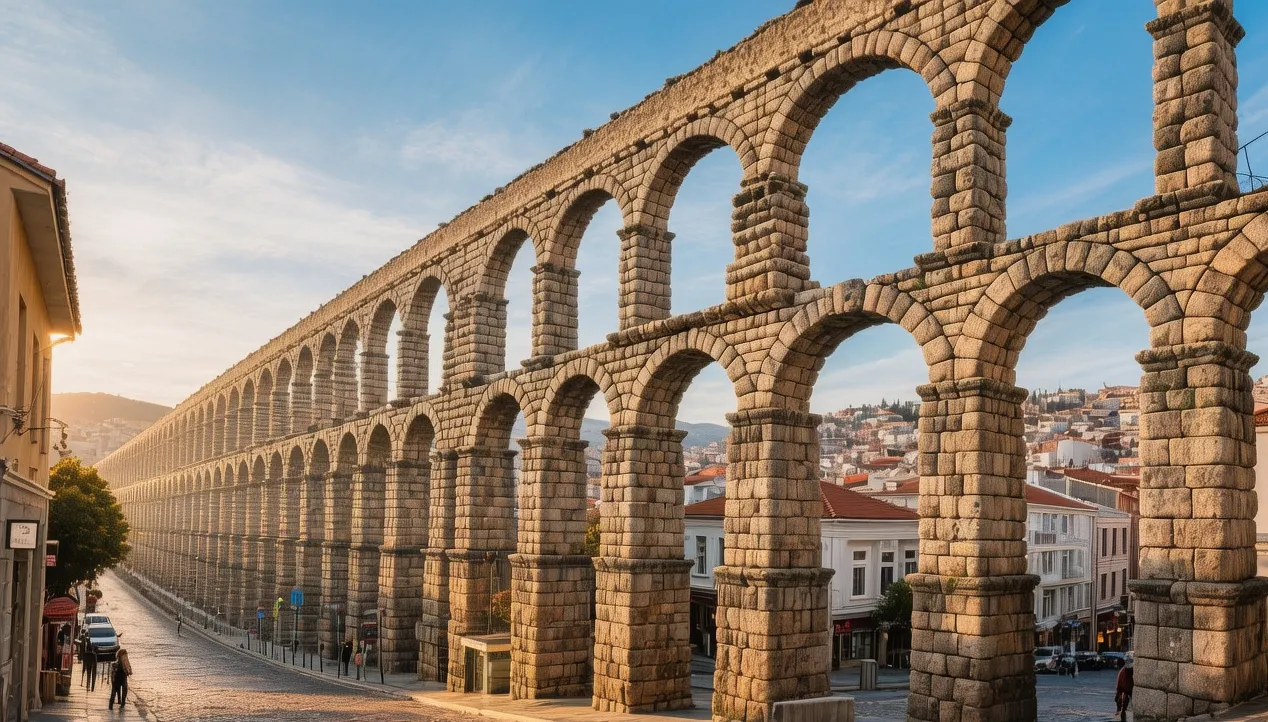
Golden hour bathes the ancient stone arches in amber light as you stand beneath the towering Kamares—the iconic aqueduct that has dominated Kavala's skyline for centuries. Sixty elegant arches stretch across the hillside, their weathered limestone blocks rising to heights of 25 meters, creating a rhythmic silhouette against the deepening blue of the Aegean sky. The structure spans approximately 270 meters from the mountain springs to the old town, a testament to Ottoman hydraulic engineering that once delivered fresh water to fountains, mosques, and homes throughout the city. You hear the distant crash of waves from the harbor below, mixed with the chatter of locals climbing the stone steps that wind between the arches, while swallows nest in the crevices of masonry laid over 450 years ago. This isn't merely a monument to the past—it's a living bridge between civilizations, where Byzantine foundations meet Ottoman innovation, where medieval necessity created modern beauty, and where every weathered stone tells the story of a city that has thrived at the crossroads of empires. To walk beneath these arches is to understand how human ingenuity transforms survival into art.
Why Kavala Aqueduct Embodies Ottoman Heritage
The Kavala aqueduct—known locally as Kamares, meaning "the Arches"—represents far more than a functional water system; it embodies the zenith of Ottoman civil engineering in the northern Aegean and stands as one of the best-preserved aqueducts in the Balkans. Constructed around 1550 during the reign of Sultan Suleiman the Magnificent, this monumental structure solved a critical problem that had plagued Kavala for centuries: the city's chronic water shortage despite its strategic importance as a port and commercial center. The aqueduct channeled fresh water from the springs of Mount Pangaion, located approximately 8 kilometers northeast of the city, through a sophisticated system of clay pipes and stone channels that maintained consistent gradient and pressure over uneven terrain.
Technical excellence defines every aspect of the structure: the 60 arches employ a combination of semi-circular and pointed designs, with the tallest reaching 25 meters (82 feet) and the main span measuring 270 meters (886 feet) in length. Engineers used locally quarried limestone blocks bound with mortar containing crushed brick—a Roman technique that provided exceptional durability against seismic activity and weathering. The aqueduct's cross-section reveals a covered channel approximately 1 meter wide and 1.5 meters high, sufficient to deliver an estimated 300 cubic meters of water daily to the city's distribution points. Most remarkably, the structure incorporates three distinct levels in its steepest sections, creating a cascading effect that regulated water pressure while maximizing flow efficiency.
Historical records indicate the aqueduct underwent significant restoration in 1748 under the supervision of local governor Ibrahim Pasha, who expanded the system to serve the growing population and new Ottoman administrative buildings. The structure remained in active use until 1920, when modern piping systems replaced the ancient channels—meaning it served Kavala continuously for nearly four centuries. Today, the Kavala aqueduct stands as a protected monument under the supervision of the Greek Ministry of Culture and the Ephorate of Antiquities of Kavala, with ongoing conservation efforts focusing on stabilizing weathered arches and preventing vegetation damage. The aqueduct's enduring presence reminds us that the Ottomans weren't merely conquerors—they were sophisticated urban planners who understood that civilization's foundation rests on reliable infrastructure.
The Best Time to Experience Kavala Aqueduct
To experience the Kavala aqueduct under optimal conditions, plan your visit between May 15 and June 20 or September 5 through September 25. During these windows, air temperatures range from 22–27°C (72–81°F), creating comfortable conditions for climbing the steep pathways that wind between the arches. The ideal times to visit are 8:00–10:00 AM, when morning light illuminates the eastern face of the limestone arches and creates dramatic shadows perfect for photography, or 6:30–8:00 PM, when the setting sun bathes the structure in golden light and temperatures drop to pleasant evening levels. Mid-morning visits (10:00 AM–12:00 PM) offer the clearest views from the upper arches across Kavala's old town to the harbor beyond.
Avoid visiting during July 20 through August 25, when temperatures soar to 32–38°C (90–100°F) and the exposed stone surfaces absorb heat, making the climb physically demanding and potentially dangerous for those with limited fitness. Additionally, midday sun creates harsh shadows that obscure architectural details and make photography challenging. Winter months (November through March) present their own difficulties: frequent rainfall makes the stone steps extremely slippery, temperatures drop to 6–12°C (43–54°F), and strong northerly winds funnel through the arches at speeds exceeding 40 km/h, creating uncomfortable and sometimes hazardous conditions. Additionally, reduced daylight hours (sunset as early as 5:00 PM) limit your exploration time.
Approximate Budget for a 7-Day Trip
Kavala offers exceptional value compared to Greece's more famous island destinations, combining authentic urban culture with coastal beauty at reasonable prices. The following budget assumes moderate comfort—clean, centrally-located accommodations and taverna dining with occasional upscale meals. Prices reflect the 2024–2026 season and assume travel during shoulder season (May–June or September) rather than peak summer.
- Accommodation: €50–€95 per night in Kavala city center or Panagia (old town). Traditional studios with kitchenette: €50–€65; boutique rooms in restored Ottoman buildings: €70–€95; seaside hotels with harbor views: €90–€130.
- Food: €28–€38 per day
- Breakfast: €5–€7 (Greek coffee €2.50, bougatsa pastry €2.50, fresh fruit €2)
- Lunch: €9–€13 (Greek salad €6.50, grilled calamari €9, spanakopita €4.50)
- Dinner: €14–€18 (fresh grilled fish €16–€24, lamb souvlaki €11, moussaka €9.50, house wine €4)
- Transportation:
- Bus from Thessaloniki to Kavala (KTEL): €18 one-way (2-hour journey)
- Bus from Kavala Airport to city center: €3.50 (30-minute route)
- Car rental: €32–€48 per day (useful for visiting nearby archaeological sites)
- Fuel: €45–€60 for week of regional exploration (approximately 180 km total)
- Local bus (city routes): €1.50 per ride
- Attractions:
- Kavala aqueduct (Kamares): Free access
- Kavala Castle (Acropolis): €3 (combined ticket with Archaeological Museum)
- Archaeological Museum of Kavala: €3 (combined ticket valid 3 days)
- Tobacco Museum: €2
- Boat tour to Thassos island: €25–€35 per person (day trip)
- Miscellaneous:
- Kavala tobacco products (cigarettes/tobacco): €8–€15
- Local wine from Drama region (750ml): €8–€14
- Handmade olive oil soap: €5–€9
- Travel insurance: €35–€50 for week
Total estimated cost for 7 days: €810–€1,160 per person (excluding international flights to Kavala or Thessaloniki)
6 Essential Kavala Aqueduct Experiences
- Sunrise Photography Walk: Arrive at the aqueduct's eastern entrance by 7:00 AM during May–June or September. The morning light strikes the limestone arches at an angle that reveals the texture of individual stones and creates dramatic shadows perfect for architectural photography. Start at the lowest arches near the base of the hill, then climb the stone pathway that winds between the structure's levels. Use a wide-angle lens (24mm or wider) to capture the full span of arches against the sky, and a telephoto lens (70–200mm) to isolate details like weathered mortar and swallow nests. The experience costs nothing and offers 90 minutes of golden light before crowds arrive.
- Historical Walking Tour: Join a guided tour departing from Kavala's central square (Plateia Eleftherias) at 10:00 AM on Tuesdays, Thursdays, and Saturdays. The 2-hour tour (€25 per person) includes the aqueduct, the nearby Imaret Ottoman complex, and Kavala's old town. Licensed guides explain the aqueduct's construction techniques, its role in Ottoman urban planning, and anecdotes about the city's tobacco trade heyday. The tour concludes at the upper arches with panoramic views of the harbor—ideal for understanding Kavala's strategic importance. Book in advance through the Kavala Tourist Information Office (+30 2510 231271).
- Sunset Picnic Among the Arches: Purchase supplies from Kavala's central market: local cheese, olives, fresh bread, tomatoes, and a bottle of Assyrtiko white wine. Arrive at the aqueduct at 6:00 PM and claim a spot on the grassy area beneath the middle arches. As the sun descends, the limestone changes color from cream to amber to rose, while the lights of Kavala's old town begin to twinkle below. This experience costs €12–€18 per person for provisions and creates memories far more valuable than any organized tour. Remember to pack out all trash and respect the monument's protected status.
- Architectural Detail Study: For those interested in engineering and construction, spend 2–3 hours examining the aqueduct's technical features. Focus on: the variation in arch designs (semi-circular vs. pointed), the mortar composition visible in weathered sections, the drainage holes that prevent water accumulation, and the different stone sizes used in various construction phases. Bring a notebook and camera with macro capability. The best sections for study are arches 25–35 (counting from the eastern end), where restoration work has exposed original construction techniques. This self-guided educational experience costs nothing beyond your time and curiosity.
- Panorama Hike to Upper Arches: Begin at the aqueduct's base near the intersection of Egnatia and 28is Oktovriou streets. Follow the marked hiking path that ascends alongside the structure—approximately 400 meters with moderate elevation gain (60 meters). The trail takes 20–25 minutes and leads to the highest accessible point where three levels of arches converge. From here, you'll enjoy 360-degree views encompassing Kavala's harbor, the old town's red-tiled roofs, Mount Pangaion's forested slopes, and the Aegean Sea stretching toward Thassos island. Bring water, sun protection, and sturdy shoes. The best time is late afternoon (5:00–7:00 PM) when temperatures moderate and light is optimal.
- Night Illumination Experience: Visit the aqueduct after dark when strategic lighting illuminates the arches from below, creating a dramatic spectacle against the night sky. The lighting system—installed during the 2015 restoration—uses LED fixtures that highlight the structure's architectural rhythm without overwhelming the historic fabric. Arrive at 9:00 PM and walk the perimeter path that circles the monument. The experience feels completely different from daytime visits: the arches seem to float in darkness, and the absence of crowds creates an intimate, almost mystical atmosphere. This free experience is particularly romantic for couples and offers unique photography opportunities for those comfortable with low-light techniques.
3 Hidden Gems Most Travelers Miss
- Byzantine Cistern Beneath the Arches: Hidden beneath the aqueduct's 18th arch lies a Byzantine-era cistern that predates the Ottoman structure by approximately 600 years. This underground chamber, measuring 8×6 meters with a vaulted ceiling 4 meters high, was incorporated into the aqueduct's foundation and served as a water storage and pressure-regulation point. Access requires advance arrangement through the Kavala Ephorate of Antiquities (+30 2510 222942)—contact them at least 48 hours ahead to schedule a visit. Tours are offered on Wednesdays and Fridays at 11:00 AM (€8 per person, minimum 4 participants). Bring a flashlight and wear sturdy shoes; the stone floor is uneven and damp. The cistern's cool interior (typically 16–18°C year-round) and ancient brickwork create a striking contrast to the sun-baked arches above.
- Spring Source Hiking Trail: While most visitors admire the aqueduct from below, few trace its route back to the original water source. Begin at the aqueduct's eastern terminus and follow the old water channel path northeast toward Mount Pangaion—a 6-kilometer hike taking approximately 2.5 hours one-way. The trail passes through pine forest, olive groves, and abandoned stone villages, eventually reaching the natural springs where the aqueduct's journey began. Along the way, you'll discover sections of the original clay piping, stone inspection chambers, and Ottoman-era milestones marking distances. The trail is marked with blue-and-white hiking blazes but requires moderate fitness and navigation skills. Bring 2 liters of water per person, sun protection, and a detailed map (available at Kavala tourist office). This experience connects you to the complete engineering system rather than just its most visible component.
- Imaret Ottoman Complex: Located just 300 meters southwest of the aqueduct's western terminus, the Imaret—a sprawling Ottoman charitable complex built in 1455—remains overlooked by most tourists rushing to the aqueduct. This architectural masterpiece features a mosque, hospice, school, and hospital arranged around three courtyards, all constructed with the same limestone as the aqueduct. The complex now houses a luxury hotel, but visitors can explore the exterior grounds and courtyard freely. The best time to visit is 4:00–6:00 PM when the afternoon sun illuminates the intricate stone carvings and the call to prayer echoes from the mosque's minaret. Ask the concierge (+30 2510 364500) for permission to photograph the interior courtyard—they often grant access to respectful visitors even if you're not staying at the hotel. This site provides crucial context for understanding the aqueduct's role in Ottoman urban planning.
Cultural & Practical Tips
- Respect the monument: The Kavala aqueduct is a protected archaeological site under Greek law. Never climb on the arches themselves, remove stones, or carve graffiti—violations carry fines up to €1,000 and potential criminal charges. Stay on designated pathways and respect barriers marking unstable sections. The monument belongs to all humanity; treat it with the reverence due a 450-year-old engineering achievement.
- Essential Greek phrases: Pronunciation guide: "Kalimera" (kah-lee-MEH-rah) = Good morning; "Efharisto" (ef-hah-REE-stoh) = Thank you; "Pu ine ta Kamares?" (poo EE-neh tah Kah-MAH-res) = Where are the Arches?; "Poso kostizi?" (POH-soh koh-STEE-zee) = How much does it cost? Kavala residents appreciate visitors who attempt Greek, even imperfectly, and often share local knowledge about hidden viewpoints or traditional tavernas when approached respectfully.
- Footwear requirements: The pathways around and beneath the aqueduct consist of uneven stone steps, gravel, and occasional steep inclines. Always wear closed-toe shoes with good grip—hiking sandals or trail runners are ideal. Avoid flip-flops or smooth-soled shoes, especially after rainfall when limestone becomes extremely slippery. The climb to upper arches involves approximately 150 steps with no handrails in some sections.
- Photography guidelines: The aqueduct is public property and photography for personal use is unrestricted. However, commercial photography or drone use requires permission from the Ephorate of Antiquities (+30 2510 222942). For best results, use a polarizing filter to reduce glare on limestone surfaces and a tripod for low-light evening shots (tripods permitted). Golden hour (first and last hour of daylight) provides optimal lighting. Avoid using flash near swallow nests during breeding season (April–July).
- Weather considerations: Kavala's coastal location creates variable conditions—the aqueduct's exposed hillside position can be 3–5°C warmer and significantly windier than the city center. Check the Hellenic National Meteorological Service (www.emy.gr) before visiting. During summer, temperatures on the stone pathways can exceed ambient air temperature by 5–7°C due to heat absorption. Always carry water (minimum 1 liter per person) and sun protection. After rainfall, wait at least 3 hours before climbing—the stone remains slippery long after surfaces appear dry.
- Accessibility information: The aqueduct's lower level is partially accessible for visitors with limited mobility, but upper levels require navigating steep, uneven terrain without ramp access. Wheelchair users can view the monument from the base and enjoy excellent photography opportunities from ground level. The Kavala Tourist Information Office can arrange guided tours with accessible routes upon request (+30 2510 231271). Accessible parking is available near the eastern entrance (2 designated spaces).
- Local customs: Kavala maintains a relaxed, authentic Greek atmosphere distinct from tourist-heavy islands. Dress modestly when visiting the nearby Imaret mosque (shoulders and knees covered). Tipping is appreciated but not mandatory—round up bills or leave 5–10% for exceptional service. Many shops close for siesta between 2:00–5:00 PM, though tourist areas remain open. Evening meals typically begin after 8:30 PM; arriving earlier may find kitchens closed.
Conclusion: Travel with Reverence, Not Just Recreation
The Kavala aqueduct asks nothing dramatic of you—only that you approach its ancient arches with awareness, recognizing that these stones have witnessed four and a half centuries of human history, from Ottoman sultans to modern tourists. In an age where travel often becomes a race to collect Instagram-worthy landmarks, the Kamares demands something different: presence. It invites you to trace your hand along weathered limestone laid by craftsmen whose names are lost to time, to stand where water once flowed toward a thirsty city, and to understand that infrastructure can transcend utility to become art.
When you leave Kavala—whether your bus departs for Thessaloniki at dawn or you board a ferry to Thassos with the aqueduct's silhouette still fresh in your mind—carry more than photographs of stone arches. Carry the understanding that monuments like this survive only when visitors become stewards, when we measure success not by how many sites we checked off a list but by whether the next traveler finds the aqueduct as majestic and intact as we did. Slow down. Sit on that sun-warmed stone. Listen to wind moving through arches that have stood since before the United States existed. This is travel transformed from consumption into communion—a sacred exchange between visitor and place, between present curiosity and historical wisdom, between human wonder and the enduring grace of engineering made beautiful.