
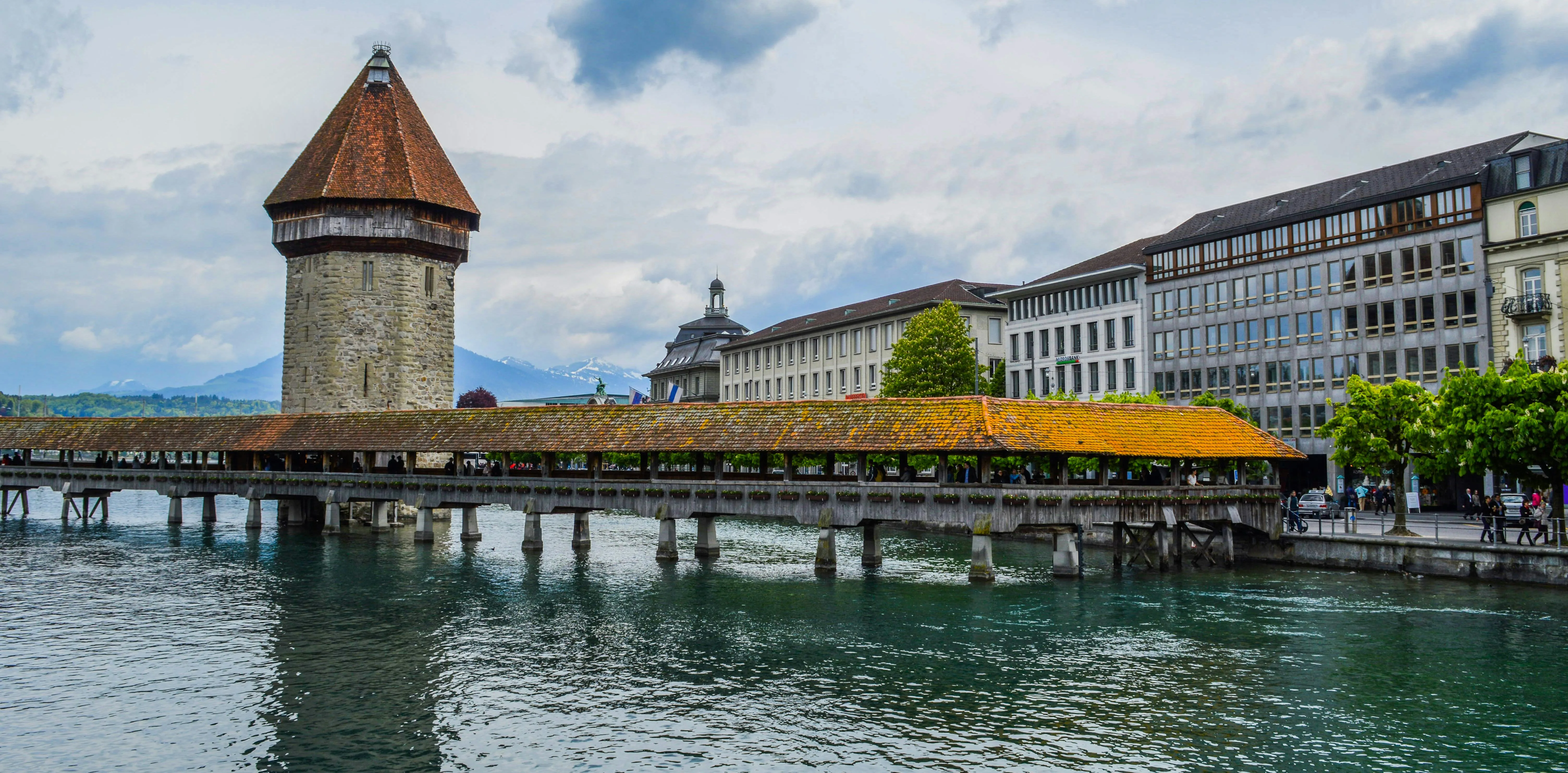
Lucerne Chapel Bridge Medieval Timber Meets Alpine Reflections
The morning mist still clings to the Reuss River as the first light of dawn breaks over Mount Pilatus—painting the snow-capped peaks in shades of rose and amber. You stand at the water's edge, watching swans glide beneath the world's oldest covered wooden footbridge, their white feathers cutting through glass-still waters that mirror seven centuries of history. The Kapellbrücke—Chapel Bridge—stretches 205 meters across the river, its honey-colored larch wood glowing warmly against the cool alpine air. Inside, 111 triangular paintings from the 17th century tell stories of Lucerne's patron saints and historic triumphs, though fire damage in 1993 claimed many originals; today's careful restorations preserve this cultural memory. The octagonal Wasserturm (Water Tower), built a decade before the bridge itself in 1333, stands sentinel in the river's center—once a treasury, prison, and torture chamber, now an iconic silhouette against the Swiss sky. This isn't merely a bridge; it's a living chronicle of resilience, craftsmanship, and the enduring spirit of a city that has guarded its heritage through floods, fires, and the relentless passage of time—and in 2026, as overtourism threatens Europe's most beloved landmarks, experiencing the Chapel Bridge with intention matters more than ever.
Why Lucerne Chapel Bridge Embodies Swiss Craftsmanship
Built in 1333 as part of Lucerne's medieval fortifications, the Chapel Bridge represents a masterclass in Alpine engineering and artistic vision. The structure served a dual purpose: connecting the old town's right bank with the left bank's St. Peter's Chapel (hence the name), while simultaneously strengthening the city's defenses against potential invaders. The bridge's 205-meter span—making it Europe's oldest surviving covered wooden footbridge—relies on traditional joinery techniques without metal fasteners, demonstrating the sophisticated carpentry skills of 14th-century Swiss craftsmen.
The triangular roof paintings, commissioned in the 1600s, originally numbered 158 panels depicting scenes from Lucerne's history, legends, and the lives of patron saints Mauritius and Leger. Master painters Heinrich Wagmann and his contemporaries created these works using tempera on wood, a technique requiring meticulous layering and drying time. When fire devastated the bridge on August 18, 1993, approximately two-thirds of these irreplaceable artworks were lost forever; the 47 surviving panels now reside in Lucerne's History Museum, while faithful reproductions adorn the restored bridge.
The octagonal Water Tower, rising 34 meters from the riverbed, predates the bridge by roughly a decade and served multiple functions throughout its storied past: as an archive for the city's treasures, a prison for high-profile captives, an interrogation chamber, and even a brief residence for the city treasurer. The tower's thick stone walls—measuring nearly 2 meters at the base—testify to its defensive origins, while its distinctive red-tiled roof and white facade have become synonymous with Lucerne itself.
Modern engineering meets medieval preservation in the bridge's 1994 reconstruction, which cost approximately 4.5 million Swiss francs and utilized traditional larch and oak wood sourced from sustainable Swiss forests. The restoration team, led by the Lucerne Monument Preservation Office, faced the delicate challenge of maintaining historical authenticity while incorporating fire-resistant treatments and modern safety standards—a balance that ensures the bridge will endure for future generations without compromising its 14th-century character.
The Best Time to Experience Lucerne Chapel Bridge
For optimal conditions combining fewer crowds, comfortable temperatures, and stunning photography light, visit between May 18–June 12 or September 15–October 8. During these shoulder-season windows, you'll encounter average daytime temperatures of 16–22°C (61–72°F) with morning lows around 8–12°C (46–54°F). The ideal time to walk the bridge is between 7:00–8:30 AM, when tour groups haven't yet arrived and the soft morning light creates magical reflections on the Reuss River.
Summer months (July 15–August 20) bring peak tourist season with temperatures reaching 25–28°C (77–82°F), but also crowds of 15,000–20,000 daily visitors—making photography nearly impossible and the bridge feel claustrophobic. Winter (December–February) offers a different charm with temperatures hovering 0–5°C (32–41°F) and potential snow creating a fairytale atmosphere, though fog can obscure the Alpine backdrop and daylight hours shrink to just 8.5 hours.
Avoid the following periods: August 18 (anniversary of the 1993 fire brings memorial crowds), December 20–31 (Christmas market overflow), and Easter weekend (Swiss school holidays create domestic tourism surge). For current weather conditions and webcams showing real-time bridge conditions.
Approximate Budget for a 7-Day Trip to Lucerne (2026)
This budget estimate reflects mid-range travel preferences for a solo traveler or couple, based on 2026 pricing adjusted for Switzerland's 2.1% annual inflation rate (Swiss Federal Statistical Office data). Lucerne ranks among Europe's more expensive destinations, but strategic planning can optimize your experience without sacrificing quality. Prices assume a 7-night stay with moderate dining, public transportation, and selective paid attractions.
Accommodation:
• Budget hostel (dorm bed): €45–€65 per night (Youth Hostel Lucerne, near train station)
• Mid-range hotel (3-star, old town): €180–€260 per night (Hotel des Balances or similar)
• Upscale boutique (4-star, lake view): €320–€450 per night (Hotel Château Gütsch)
Food: €65–€95 per day
• Breakfast: €12–€18 (hotel buffet or café croissant + coffee)
• Lunch: €22–€30 (Wirtshaus Galliker schnitzel or Migros restaurant menu)
• Dinner: €35–€50 (traditional Swiss fondue at Old Swiss House or Wirtshaus Taube)
• Coffee/pastry: €6–€9
Transportation:
• Swiss Travel Pass (8 days, 2nd class): €389 (covers trains, buses, boats, museum entries)
• Lucerne Visitor Card (free with hotel stay): includes local buses and boat discounts
• Airport transfer (Zürich to Lucerne): covered by Swiss Travel Pass or €28 one-way train ticket
• Mountain excursions (Pilatus/Rigi): 50% discount with Swiss Travel Pass
Attractions:
• Chapel Bridge & Water Tower: Free (exterior viewing and walking)
• Jesuit Church: Free
• Lion Monument: Free
• Swiss Museum of Transport: €36 (free with Swiss Travel Pass)
• Richard Wagner Museum: €18 (50% off with Swiss Travel Pass)
• Old Town walking tour (guided): €25
Miscellaneous:
• Souvenirs (cuckoo clock, Swiss chocolate): €30–€80
• Travel insurance (7 days): €45–€65
• SIM card/data (Swisscom 10GB): €40
• Emergency fund: €100
Total estimated cost (mid-range): €1,850–€2,340 for 7 days
Budget traveler option: €980–€1,200
Luxury experience: €3,500–€5,000+
7 Essential Lucerne Chapel Bridge Experiences
1. Dawn Photography Walk: Arrive at 6:45 AM during May–June or September–October to capture the bridge in golden hour light. Position yourself on the left bank near the Schwanenplatz tram stop for the classic composition showing the Water Tower framed by the bridge's covered span. Bring a polarizing filter to reduce water glare and capture the triangular paintings' details through the roof openings. Stay for 90 minutes as the light shifts from warm gold to crisp morning clarity.
2. Interior Painting Discovery: Enter the bridge from either end and walk slowly, looking upward through the roof's triangular openings where the 17th-century paintings hang. Count the 47 surviving reproduction panels depicting scenes like "The Martyrdom of St. Maurice" and "Lucerne's Alliance with the Forest Cantons." Note the fire damage visible on some panels—a somber reminder of the 1993 blaze. Allow 20–30 minutes for this contemplative walk.
3. Water Tower Interior Visit: While you cannot enter the tower itself (it houses the Lucerne Guilds' private collection), circle its base via the riverside promenade to appreciate the 2-meter-thick stone walls and octagonal architecture. The best viewing angle comes from the small pedestrian bridge connecting to the right bank—notice the arrow slits and medieval defensive features.
4. Evening Illumination Experience: Return between 8:30–10:00 PM (later in summer, earlier in winter) when the bridge's warm amber lighting creates a romantic atmosphere. The wooden structure glows against the dark river, and the reduced crowds allow for peaceful reflection. Purchase a gelato from the nearby Gelateria di Luciano and sit on the riverside benches to watch the illuminated bridge reflect in the Reuss.
5. Swan Feeding Ritual: Join locals and visitors at 10:00 AM near the bridge's midpoint where wild swans gather. Purchase approved swan food (€3 cones) from vendors at Schwanenplatz—never feed them bread, which harms their digestive systems. The swans of Lucerne are protected by city ordinance dating to the 19th century, and watching them glide beneath the historic bridge creates a timeless scene.
6. riverside Café Pause: Stop at Café Wäckerlig (established 1876) on the left bank for traditional Swiss coffee and a slice of Nusstorte (nut tart). Request a window table overlooking the bridge and order a Café Crème (€5.50) while watching tourists and locals cross the span. This family-run establishment has served Lucerne residents for nearly 150 years and maintains old-world charm with marble-topped tables and vintage photographs.
7. Historical Context Tour: Join the free 45-minute "Bridge & Tower" walking tour offered daily at 11:00 AM and 3:00 PM from May–October (meeting point: Kapellplatz). Knowledgeable guides explain the bridge's defensive role, the symbolism in the paintings, and details of the 1993 fire and reconstruction. Tip your guide €5–€10 if you found the tour valuable.
3 Hidden Gems Most Travelers Miss
• Spreuer Bridge (Spreuerbrücke): While everyone crowds the Chapel Bridge, this lesser-known covered bridge 300 meters upstream features the macabre "Dance of Death" paintings from 1626–1635. Built in 1408, it's the second covered bridge in Lucerne and displays 67 triangular panels showing death claiming people from all social classes—a medieval reminder of mortality. Access: Walk along the right bank from Chapel Bridge for 5 minutes, or take bus #1 to "Spreuerbrücke" stop. Best visited at 4:00–5:30 PM when tour groups have departed. No admission fee.
• Museum of Culture (Kultur- und Kongresszentrum) Rooftop Terrace: This Jean Nouvel-designed building offers a free rooftop terrace with the most spectacular elevated view of the Chapel Bridge and Old Town. The modern architecture contrasts beautifully with the medieval bridge below. Access: Enter the main building at Europaplatz 1, take the elevator to level 4, and follow signs to "Dachterrasse." Open daily 9:00 AM–6:00 PM. Insider tip: Visit at sunset (check sunset times at timeanddate.com) for photography when the bridge's lights first illuminate against twilight skies.
• Weinmarkt Alley's Hidden Courtyard: Behind the colorful Renaissance facades of Weinmarkt square lies a secluded courtyard with a 16th-century fountain and views of the Chapel Bridge's rear perspective. Most tourists photograph the bridge from the front but miss this intimate angle framed by flowering geraniums and historic architecture. Access: Enter Weinmarkt from Hirschenplatz, look for the arched passageway between numbers 2 and 4. The courtyard is privately owned but open to respectful visitors during daylight hours (8:00 AM–7:00 PM). Quiet photography only; this is a residential space.
Cultural & Practical Tips
• Photography etiquette: While photographing the bridge exterior is encouraged, avoid using tripods during peak hours (10:00 AM–5:00 PM) as they obstruct pedestrian flow. Drone photography is strictly prohibited without special permission from the Lucerne Tourism Office (+41 41 227 17 17). Flash photography inside the bridge damages the paintings and is forbidden.
• Swiss punctuality: If you've booked a guided tour or restaurant reservation, arrive exactly on time—Swiss culture values precision. Being more than 5 minutes late is considered rude. Use the phrase "Entschuldigen Sie die Verspätung" (ent-SHOOL-dee-gen zoo die fer-SHPAY-toong) meaning "Excuse the delay" if you're running behind.
• Tipping customs: Service charges are included in Swiss prices, but rounding up is appreciated. For a €47 meal, paying €50 is appropriate. For tour guides, tip 5–10% if service was exceptional. Never tip excessively—it can be seen as ostentatious.
• Quiet hours: Respect Ruhezeit (quiet time) from 10:00 PM–7:00 AM and 12:00–2:00 PM in residential areas. Keep voices low near the bridge early morning and late evening, as people live in buildings directly adjacent to the tourist areas.
• Weather preparedness: Lucerne's weather changes rapidly due to Alpine conditions. Even in summer, carry a light waterproof jacket—the Föhn wind can bring sudden temperature shifts of 10°C within an hour. Check the forecast at meteoswiss.admin.ch before heading out.
• Language basics: While German is the official language, most Lucerne residents speak Swiss German dialect. Learn these phrases: "Grüezi" (GRÜE-tsi) for hello, "Danke" (DAHN-keh) for thank you, "S'il vous plaît" (see voo play) works in French-speaking contexts. English is widely spoken in tourist areas.
• Sustainability practices: Lucerne aims to be carbon-neutral by 2050. Use the excellent public transportation system instead of taxis, carry a reusable water bottle (tap water is pristine), and dispose of recycling properly—Switzerland has strict waste separation rules with fines for non-compliance.
Conclusion: Travel with Reverence, Not Just Checklists
The Chapel Bridge of Lucerne has witnessed seven centuries of human history—medieval guild processions, Napoleonic troops, Victorian tourists with sketchbooks, and now, 21st-century travelers with smartphones. As you walk its 205 meters of larch wood planks in 2026, remember that each step connects you to generations who crossed this same span, each person carrying their own stories across the Reuss River. This isn't merely a photo opportunity for your Instagram feed; it's a testament to human craftsmanship, resilience after tragedy, and a city's commitment to preserving its soul.
Responsible travel means slowing down—sitting on the riverside bench long enough to notice how the light changes on the Water Tower's red tiles, learning the stories behind the triangular paintings, understanding that the 1993 fire nearly erased this treasure forever. It means speaking softly at dawn, disposing of your coffee cup properly, choosing the local café over the international chain, and leaving only footprints on these ancient timbers.
The Chapel Bridge will stand long after your visit ends—perhaps another 700 years if we treat it with the reverence it deserves. So walk slowly. Look upward. Listen to the river. And carry forward not just photographs, but a deeper appreciation for the delicate balance between sharing our world's wonders and protecting them for those who will cross this bridge in 2726.