
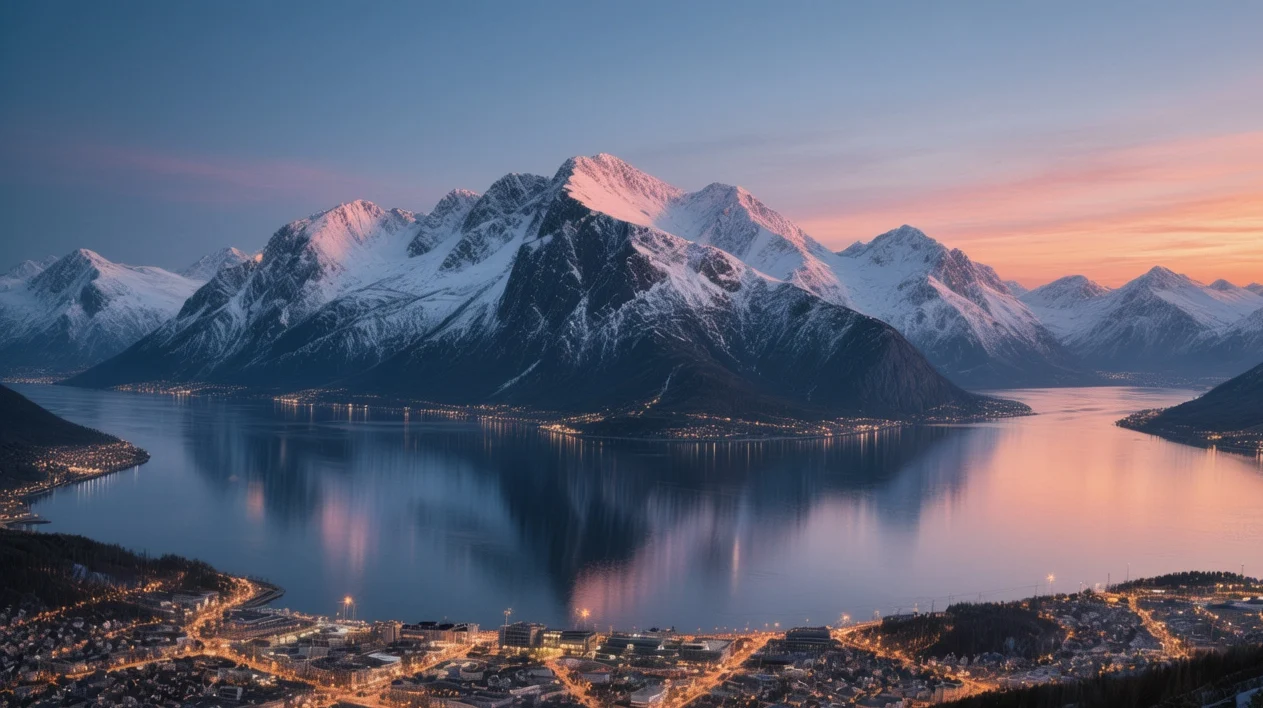
Molde Panorama City Mountain Vistas Meet Jazz Rhythms
The light strikes the snow-capped peaks across the water, igniting 222 mountain summits in a blaze of alpine gold as you stand on the viewing platform at Varden. Below, the town of Molde nestles against the shore of the Moldefjord, its red and white wooden houses glowing softly in the twilight. The air is crisp, carrying the scent of salt spray from the North Sea mixed with the faint, sweet aroma of blooming roses—for this is the Town of Roses. You hear the distant chime of church bells from 1742 mingling with the rhythmic lapping of waves against the quay. This is the Molde Panorama City, a place where the grandeur of the Romsdal Alps meets the intimate swing of a jazz club. Since the first International Jazz Festival here in 1961, music has woven itself into the civic soul, but the landscape remains the primary composer. In 2026, as urban centers worldwide homogenize, the Molde Panorama City matters because it preserves a unique duality: it is a gateway to wild nature and a sanctuary of culture, reminding us that civilization thrives best when it listens to the mountains surrounding it.
Why Molde Panorama City Embodies Norwegian Coastal Culture
The Molde Panorama City is not merely a scenic overlook; it is a testament to resilience and cultural identity forged against a dramatic backdrop. Granted town status in 1742, Molde served as a trading post for timber and fish until tragedy struck in April 1940, when German bombers devastated 85% of the wooden structures during World War II. The reconstruction solved a critical identity crisis: how to rebuild a modern town without losing its historical charm. The result is a blend of functional post-war architecture and preserved heritage sites like the Romsdal Museum, established in 1912, which anchors the community in its agrarian past.
Geographically, the city is defined by the panorama itself. The view encompasses 222 peaks, including the iconic Tussen (1,408 meters) and Romsdalshorn (1,540 meters), visible from the Varden viewpoint at 410 meters (1,345 feet) elevation. This natural amphitheater fulfills a psychological need for connection to the sublime; residents live in constant dialogue with the mountains. Culturally, the Molde International Jazz Festival, held annually since 1961, transforms the town every July, drawing 100,000 visitors to a population of just 32,000. In 2026, the city continues to balance tourism with livability, serving as the administrative center of Møre og Romsdal county. It stands as a symbol of the Norwegian ethos: that culture and nature are not separate entities but intertwined threads of the same tapestry, where a jazz riff echoes as loudly as an avalanche.
The Best Time to Experience Molde Panorama City
For the quintessential cultural and natural experience, target July 14–21, 2026. This window coincides with the Molde International Jazz Festival, when the streets pulse with music and outdoor stages operate from 12:00 PM to 2:00 AM. Temperatures range from 14–20°C (57–68°F), and daylight extends to 19 hours, allowing for late-night concerts under the midnight sun. For panoramic clarity without the festival crowds, visit June 15–30. Visibility is often highest in early summer before coastal fog sets in. The best light for photography occurs between 10:00 PM–12:00 AM when the sun dips but does not set.
Avoid November 1–December 15 if you dislike gray skies: this is the darkest period, with only 5–6 hours of dim light and frequent rainstorms rolling in from the Atlantic. Winds can exceed 80 km/h (50 mph), making the Varden viewpoint inaccessible. Also avoid visiting during Easter week if you seek tranquility, as many locals travel and businesses close. For real-time weather and road status, check www.yr.no or call +47 71 25 00 00. Note that the Varden viewpoint road closes in winter (November–April) due to snow; access is then limited to hiking or taxi.
Approximate Budget for a 7-Day Trip (2026)
Molde is moderately expensive, reflecting Western Norway's high cost of living. This budget assumes mid-range travel with 3-4% inflation adjustment from 2024 baselines. Prices are estimated in Euros (€); local currency is Norwegian Krone (NOK). Costs reflect Molde city center and nearby areas.
- Accommodation: €160–€250 per night for a double room in a 3-star hotel in Sentrum or near the fjord. Budget hostels (Molde Vandrerhjem): €55–€75 per bed. Upscale options (Scandic Seilet): €300–€450 per night.
- Food: €80–€120 per day per person
- Breakfast: €18–€25 (hotel buffet with bread, cheese, jam)
- Lunch: €25–€40 (café sandwich €30, fish soup €35, or grocery picnic €22)
- Dinner: €40–€65 (restaurant main: cod €45, lamb €48, pasta €35; add €15 for beer)
- Transportation:
- Train (Oslo–Åndalsnes + Bus): €90 one-way, €170 round-trip
- Local bus day pass (AtB): €12
- Car rental (7 days): €650–€850 including fuel
- Ferry (Molde–Vestnes): €15 per car
- Attractions:
- Varden Viewpoint Access: Free (road closed in winter)
- Romsdal Museum Entry: €16
- Jazz Festival Pass: €150–€300 (depending on days)
- Fjord Cruise: €70–€100
- Molde Cathedral Tour: Free
- Miscellaneous:
- Souvenirs: Jazz CD €20, wool sweater €110, rose plant €25
- Coffee and waffle: €12
- Travel insurance (7 days): €50–€70
- eSIM data plan: €25–€35
Total for 7 days (mid-range, per person, double occupancy): €2,100–€2,600
Budget travelers can reduce costs to €1,350–€1,650 by staying in hostels, cooking meals, and using public transport. Luxury seekers should budget €5,000+ for boutique hotels and fine dining.
6 Essential Molde Panorama City Experiences
- Ascend to Varden Viewpoint: Drive or hike to the 410-meter summit above the city. The road opens June–October. Park at the top and walk the 10-minute path to the stone shelter. The view encompasses the 222 peaks of the panorama. Visit at 11:00 PM in June for midnight sun. The wind is strong; bring a jacket. It is the definitive Molde experience. Spend 30 minutes absorbing the scale. Photography is best with a wide-angle lens. No entry fee.
- Attend the Jazz Festival: If visiting in July, buy a festival pass. Concerts take place in parks, churches, and clubs. The opening parade is iconic. Visit the main stage at Molde Parken at 8:00 PM. The atmosphere is electric. Even non-jazz fans enjoy the street vibe. Book accommodation months in advance. Prices surge during this week. It is the cultural highlight of the year. Free outdoor concerts are available daily.
- Explore Romsdal Museum: Located 2 kilometers west of the center. Open daily 10:00 AM–5:00 PM (summer). This open-air museum features 55 historic buildings moved from across the region. View the 17th-century loft houses and fishing cabins. Entry costs €16; free for under 18. Guided tours start at 1:00 PM. Allow 90 minutes. It provides essential historical context. The garden features heritage roses. Free parking available.
- Walk the Mordalsbakkane Trail: Start behind the hospital for this popular local hike. The path gains 300 meters over 2 kilometers. It takes 45 minutes uphill. The view rivals Varden but is more intimate. Visit at 7:00 AM for solitude. The terrain is rocky; wear boots. It is where locals exercise. Free access. No facilities at the top. Bring water. The descent is steep on knees.
- Cruise the Moldefjord: Depart from the city pier at 2:00 PM. The 2-hour boat tour circles the bay. You see the mountains from water level. The contrast is striking. Commentary is in English. Cost is €70. Café service on board. It offers a different perspective of the panorama. Best in calm weather. Seasickness bags available. A relaxing way to sightsee.
- Visit Molde Cathedral: Located in the city center. Built in 1957 after the war. Open daily 9:00 AM–4:00 PM. The octagonal design is unique. View the stained glass depicting local history. Entry is free; donations welcome. It is a quiet sanctuary amidst the town. Attend a Sunday service at 11:00 AM. The organ music is exceptional. Respectful attire required. Photography allowed without flash.
3 Hidden Gems Most Travelers Miss
- The Rose Garden (Rosenlund): Located near the Romsdal Museum. Molde is the Town of Roses, yet few visit this dedicated garden. Open June–August, dawn to dusk. Over 1,500 rose bushes bloom here. It is overlooked because it is not signposted prominently. The scent is intoxicating in July. Best visited at 8:00 AM when dew is on the petals. Free access. A quiet spot for reflection. No facilities exist; bring water. It honors the town's floral identity.
- Old Molde Bridge (Gamle Moldebru): Located east of the city center. This 1930s bridge is now for pedestrians and cyclists. Most drivers use the new tunnel. Walk across at sunset. The view back toward the town is classic. The iron structure is photogenic. It is missed because it is bypassed by traffic. Access is free, 24/7. The lighting at night is atmospheric. A nostalgic piece of infrastructure. No appointment needed.
- Seilet Hotel Skybar: Located on the 17th floor of the Scandic Seilet hotel. Even if not staying, you can visit the bar. Open 4:00 PM–1:00 AM. The view matches Varden but with a drink in hand. It is overlooked by budget travelers. A cocktail costs €18. Best visited at 10:00 PM. The floor-to-ceiling windows offer panoramic views. Dress code is smart casual. A luxurious way to see the panorama. No reservation needed for the bar.
Cultural & Practical Tips
- Jazz Festival Logistics: During the festival (July), the city center is pedestrianized. Cars are restricted. Use park-and-ride facilities. Accommodation books out 6 months in advance. Prices double during this week. Plan accordingly. It is a massive event for a small town. Respect noise levels in residential areas after 2:00 AM.
- Cashless Society: Norway is nearly cashless. Bring a credit/debit card with chip-and-PIN. Most places do not accept cash. Mobile payment (Vipps) is ubiquitous but requires a Norwegian number. Stick to cards as a visitor. ATMs are available but rarely needed. Inform your bank of travel plans to prevent blocks. Tickets are best purchased online.
- Useful Phrases:
- "Takk" (tahk) = Thank you
- "Unnskyld" (oon-shool) = Excuse me
- "Hvor er toalettet?" (voor ehr toa-let-et) = Where is the toilet?
- "Snakker du engelsk?" (snak-ker doh eng-elsk) = Do you speak English?
- Weather Preparedness: Weather changes rapidly. Pack a waterproof jacket even in summer. Temperatures can drop quickly near the water. Umbrellas are useful but wind can break them. Dress in wool; it stays warm when wet. Check Yr.no hourly forecasts. Indoor cafés provide shelter during downpours. The Varden road closes in snow.
- Photography Guidelines: Photography is allowed throughout the city. Tripods are permitted in public spaces. Respect privacy in residential areas. The best light is midnight sun in June. Use a polarizing filter to reduce water glare. Ask before photographing individuals. Drones are prohibited over the city center without permission. Share photos responsibly; tag #moldepanorama.
- Accessibility: The city center is mostly flat and wheelchair accessible. Varden is not accessible in winter; summer access depends on road conditions. The Romsdal Museum has gravel paths; some areas are difficult for wheelchairs. The Cathedral is accessible. Assistive listening devices are available for events. Book assistance in advance via +47 71 25 00 00.
- Transportation: The local bus network is efficient. Buy tickets via the AtB app. The train to Åndalsnes (Rauma Line) is one of the world's most scenic. It connects to Molde by bus. The ferry to Vestnes is a shortcut to the north. Car rental is recommended for flexibility. Parking is free in most areas outside the center.
Conclusion: Travel with Reverence, Not Just Checklists
The Molde Panorama City is not a backdrop for selfies; it is a living landscape where mountains meet music. In 2026, as tourism becomes increasingly transactional, this town demands a slower, more reflective pace. Travel here not to tick a box but to listen to the rhythm of the fjord. Notice the roses; feel the wind from the peaks; understand that this view has inspired poets and musicians for centuries. Leave only footprints on the trails; take only the inspiration that culture blooms best in nature's embrace. When you depart, carry the melody of the mountains with you. For in the end, the true value of this place is not the photo you post, but the harmony you find—that between the stone of the Alps and the swing of the saxophone, there exists a perfect balance, waiting for those willing to stop and listen.