
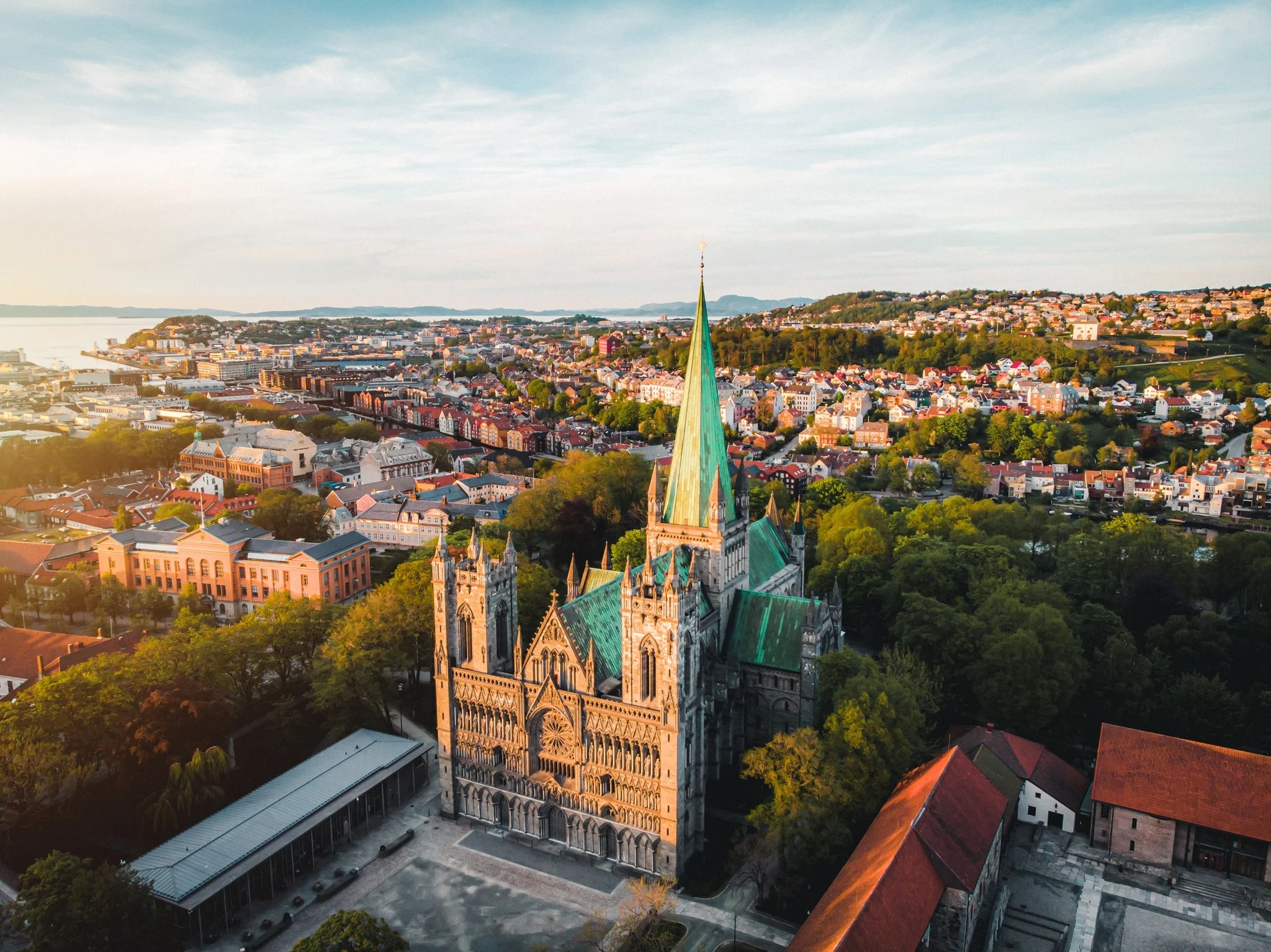
Nidaros Cathedral Gothic Stone Meets Norwegian Pilgrim Spirit
The bells toll across the Nidelva river, their bronze resonance vibrating through the gray soapstone walls of Nidaros Cathedral as the afternoon light fades over Trondheim. You stand on the cobblestones of the churchyard, where pilgrims have walked since 1070, touching the cold stone that has weathered nine centuries of rain, snow, and devotion. The air smells of damp earth and burning candles from the interior, mixing with the crisp salt breeze drifting up from the Trondheimsfjord. Above, the octagonal tower rises 85 meters (279 feet) into the Nordic sky, a silhouette that has guided travelers to the shrine of Saint Olav for nearly a millennium. Inside, the vaulted ceiling soars 21 meters (69 feet) high, casting long shadows over the nave where kings were once crowned. In 2026, as modern life accelerates beyond recognition, Nidaros Cathedral matters because it remains a sanctuary of stillness—a place where time is measured not in seconds but in centuries, reminding us that some foundations are built to endure long after we are gone.
Why Nidaros Cathedral Embodies Norwegian Spiritual Heritage
Nidaros Cathedral is not merely a church; it is the national sanctuary of Norway and the northernmost medieval cathedral in the world. Construction began in 1070 over the burial site of King Olav Haraldsson, who was slain at the Battle of Stiklestad in 1030 and later canonized. This site solved a fundamental spiritual need: providing a pilgrimage destination for Northern Europe comparable to Santiago de Compostela. The St. Olavsleden route stretches 560 kilometers from the Swedish border, drawing thousands of walkers annually to this sacred terminus. The architecture reflects this significance; built primarily of soapstone and marble, the cathedral combines Romanesque foundations with Gothic soaring arches, a style imported from England and France but adapted for the harsh Scandinavian climate.
The engineering of the structure is a testament to medieval craftsmanship. The west facade, reconstructed in the late 19th century, features over 70 sculptures of saints, kings, and biblical figures carved from local stone. The Nidaros Cathedral Restoration Workshop, established in 1869, is one of the oldest of its kind globally, employing traditional techniques to preserve the building. They use hand tools to carve replacement stones, ensuring the new matches the old in texture and composition. In 2026, the cathedral fulfills a dual role: it is an active Lutheran parish church and a living museum of stone. It stands as a symbol of national identity, having hosted every royal coronation until 1908 and continuing to host royal consecrations today. The building is not frozen in the past; it is a continuous project of preservation, where the work of 12th-century masons meets the chisels of 21st-century artisans.
The Best Time to Experience Nidaros Cathedral
For optimal lighting and full access to all areas, target June 15–August 20. During this window, temperatures in Trondheim range from 14–20°C (57–68°F), and daylight extends to 19 hours, allowing for evening visits when the stone glows in the midnight sun. The tower climb operates at full frequency, with departures every 30 minutes from 10:00 AM to 6:00 PM. For atmospheric solitude, visit December 1–20 when the cathedral is adorned with Advent candles. Temperatures drop to -5 to 4°C (23–39°F), and the interior feels especially warm and sacred. The Christmas concerts held here are world-renowned.
Avoid July 10–August 5 if you dislike crowds: this period coincides with peak cruise ship arrivals in Trondheim. Queue times for the tower can exceed 45 minutes, and the nave becomes congested during midday. Also avoid visiting during major religious holidays like Easter Sunday when services limit tourist access. For real-time service schedules and ticket availability, check www.nidarosdomen.no or call +47 73 89 07 00. Weather forecasts are available via Yr.no. Note that the tower closes during high winds (>15 m/s) or lightning for safety.
Approximate Budget for a 7-Day Trip (2026)
Trondheim is a moderately expensive city, reflecting Norway's high standard of living. This budget assumes mid-range travel with 3-4% inflation adjustment from 2024 baselines. Prices are estimated in Euros (€); local currency is Norwegian Krone (NOK). Costs reflect Trondheim city center and Bakklandet areas.
- Accommodation: €170–€260 per night for a double room in a 3-star hotel in Sentrum or Bakklandet. Budget hostels (Trondheim Vandrerhjem): €60–€80 per bed. Upscale options (Britannia Hotel): €350–€550 per night.
- Food: €80–€120 per day per person
- Breakfast: €18–€25 (hotel buffet with bread, cheese, jam)
- Lunch: €25–€40 (café sandwich €32, fish soup €38, or grocery picnic €24)
- Dinner: €42–€70 (restaurant main: lamb €50, fish €48, pasta €38; add €16 for beer)
- Transportation:
- Train (Airport–City): €25 one-way, €45 round-trip
- Local bus day pass (AtB): €12
- Car rental (7 days): €650–€850 including fuel
- Fjord cruise: €75–€110
- Attractions:
- Nidaros Cathedral Entry: Free (donations welcome)
- Tower Climb: €14
- Restoration Workshop Tour: €12
- Archbishop's Palace Museum: €16
- Guided Cathedral Tour: €25
- Miscellaneous:
- Souvenirs: Viking replica coin €15, wool sweater €110, book €35
- Coffee and waffle: €12
- Travel insurance (7 days): €50–€70
- eSIM data plan: €25–€35
Total for 7 days (mid-range, per person, double occupancy): €2,100–€2,700
Budget travelers can reduce costs to €1,350–€1,650 by staying in hostels, cooking meals, and using public transport. Luxury seekers should budget €5,000+ for boutique hotels and fine dining at restaurants like Fagn.
6 Essential Nidaros Cathedral Experiences
- Climb the Tower: Enter through the north door and ascend the 208 steps to the gallery. The climb takes 20 minutes and is steep. The view from the top encompasses Trondheim, the fjord, and the surrounding hills. Visit at 10:00 AM for clearest visibility. The bells are close here; expect loud ringing on the hour. It is the best vantage point for photography. Respect the narrow stairways; step aside to let others pass. No photography allowed inside the bell chamber.
- Visit the Shrine of St. Olav: Located behind the high altar in the octagon. This is the spiritual heart of the cathedral. Visit at 2:00 PM when light streams through the stained glass. The altar is simple stone, marking the original burial site. It is a place for quiet reflection. Candles are available for lighting. Photography is prohibited to respect the sanctity. It connects you to the thousand-year pilgrimage tradition. Free access during opening hours.
- Tour the Restoration Workshop: Located across the street from the cathedral. Open daily 9:00 AM–4:00 PM. Watch stone masons carve new sculptures using medieval tools. The exhibition explains the soapstone preservation process. Entry costs €12; free for under 18. Guided tours start at 11:00 AM. It provides essential context for the building's longevity. Allow 60 minutes for a full visit. The smell of stone dust is distinct.
- Walk the Pilgrim's Path: Enter the churchyard from the south gate, following the path pilgrims have taken for centuries. The cobblestones are worn smooth by footsteps. Visit at 8:00 AM when the light is soft. Read the information boards about St. Olavsleden. It is often overlooked by tourists rushing inside. The atmosphere is contemplative. Free access. A quiet moment before entering the nave. Respect the graves in the churchyard.
- Attend an Evening Concert: The cathedral hosts organ and choir concerts regularly. Check the schedule at www.nidarosdomen.no. Tickets cost €30–€50. The acoustics are world-class, with a reverberation time of 4 seconds. Visit at 7:00 PM. The interior is illuminated by candlelight. It offers a sensory experience beyond sight. Dress code is smart casual. A memorable way to experience the space.
- Explore the Nave: Walk the length of the main hall. The vaulted ceiling soars 21 meters above. Look for the medieval carvings on the capitals. Visit at noon when the sun illuminates the dust motes. It is the largest church in Scandinavia. Free entry; donations support maintenance. Allow 30 minutes to observe the details. The silence is profound even with tourists. Photography is allowed without flash.
3 Hidden Gems Most Travelers Miss
- The Crypt: Located beneath the choir, this medieval crypt houses ancient burial remains. Most visitors only see the main floor. Access is via guided tour only; ask at the information desk. The brick vaulting is original from the 12th century. It is overlooked because it is not advertised prominently. The atmosphere is cool and silent. Tours run on Saturdays at 1:00 PM in summer. It offers a direct connection to the cathedral's foundations. No extra cost beyond guided tour fee.
- The West Facade Sculptures: On the exterior front wall, over 70 stone figures depict biblical and royal history. Most tourists walk past without looking up. Visit at 4:00 PM when side-lighting enhances the depth of the carving. It is missed because visitors focus on the interior. The craftsmanship is exquisite. Bring binoculars to see details from the ground. No appointment needed; it is outdoors. A free outdoor gallery of medieval art.
- Erkebispegården Ruins: Behind the cathedral, the ruins of the Archbishop's Palace stand in a quiet garden. Located near the Restoration Workshop. Open daily dawn to dusk. The stone walls date to the 12th century. It is missed because visitors rush to the main church. The garden is peaceful with benches. Free access. Best visited in summer when flowers bloom. It adds a historical layer to the site. No facilities exist; bring water.
Cultural & Practical Tips
- Dress Code: Nidaros Cathedral is an active church. Shoulders and knees must be covered. Remove hats upon entry. Shorts and sleeveless tops are discouraged. Respectful attire is required for entry. This ensures the sanctity of the space. Violations can result in denied entry. Bring a scarf to cover up if needed.
- Cashless Society: Norway is nearly cashless. Bring a credit/debit card with chip-and-PIN. Most places do not accept cash. Mobile payment (Vipps) is ubiquitous but requires a Norwegian number. Stick to cards as a visitor. ATMs are available but rarely needed. Inform your bank of travel plans to prevent blocks. Donations can be made via card terminals.
- Useful Phrases:
- "Takk" (tahk) = Thank you
- "Unnskyld" (oon-shool) = Excuse me
- "Hvor er toalettet?" (voor ehr toa-let-et) = Where is the toilet?
- "Snakker du engelsk?" (snak-ker doh eng-elsk) = Do you speak English?
- Photography Guidelines: Photography is allowed in the nave without flash. Tripods are prohibited without special permission. Flash is prohibited to protect medieval textiles. Respect other visitors; do not block views for extended shots. The best light is morning. Use a high ISO setting instead of flash. Ask before photographing individuals. Drones are prohibited over the cathedral.
- Silence & Etiquette: Keep voices low inside the nave. It is a place of worship. Turn off mobile phone ringers. Do not eat or drink inside. Respect prayer areas; do not walk in front of people praying. This ensures a peaceful environment for all. Rangers patrol the area and will enforce rules. Behavior must be respectful.
- Weather Preparedness: Weather changes rapidly. Pack a waterproof jacket even in summer. Temperatures can drop quickly near the river. Umbrellas are useful but wind can break them. Dress in wool; it stays warm when wet. Check Yr.no hourly forecasts. Indoor areas provide shelter during downpours. The stone floors are cold in winter.
- Accessibility: The main nave is wheelchair accessible with ramp access. The tower is not accessible due to stairs. The Restoration Workshop is fully accessible with elevators. Wheelchairs can navigate the churchyard paths. Assistive listening devices are available for services. Book assistance in advance via +47 73 89 07 00. Toilets are accessible near the visitor center.
Conclusion: Travel with Reverence, Not Just Checklists
Nidaros Cathedral is not a museum exhibit; it is a living sanctuary carved from stone and faith. In 2026, as tourism becomes increasingly transactional, this cathedral demands a slower, more reflective pace. Travel here not to tick a box but to honor the devotion embedded in these walls. Notice the chisel marks; feel the cold stone; understand that this ground witnessed a millennium of prayers. Leave only footprints on the cobblestones; take only the inspiration that endurance is built over centuries. When you depart, carry the silence of the nave with you. For in the end, the true value of this place is not the photo you post, but the connection you feel—that across 1,000 years, we are still seekers looking for light, still building our cathedrals of hope, just like the masons who raised these spires toward the northern sky.