
Odda Trolltunga Hike Start Adventure Meets Norwegian Wilderness
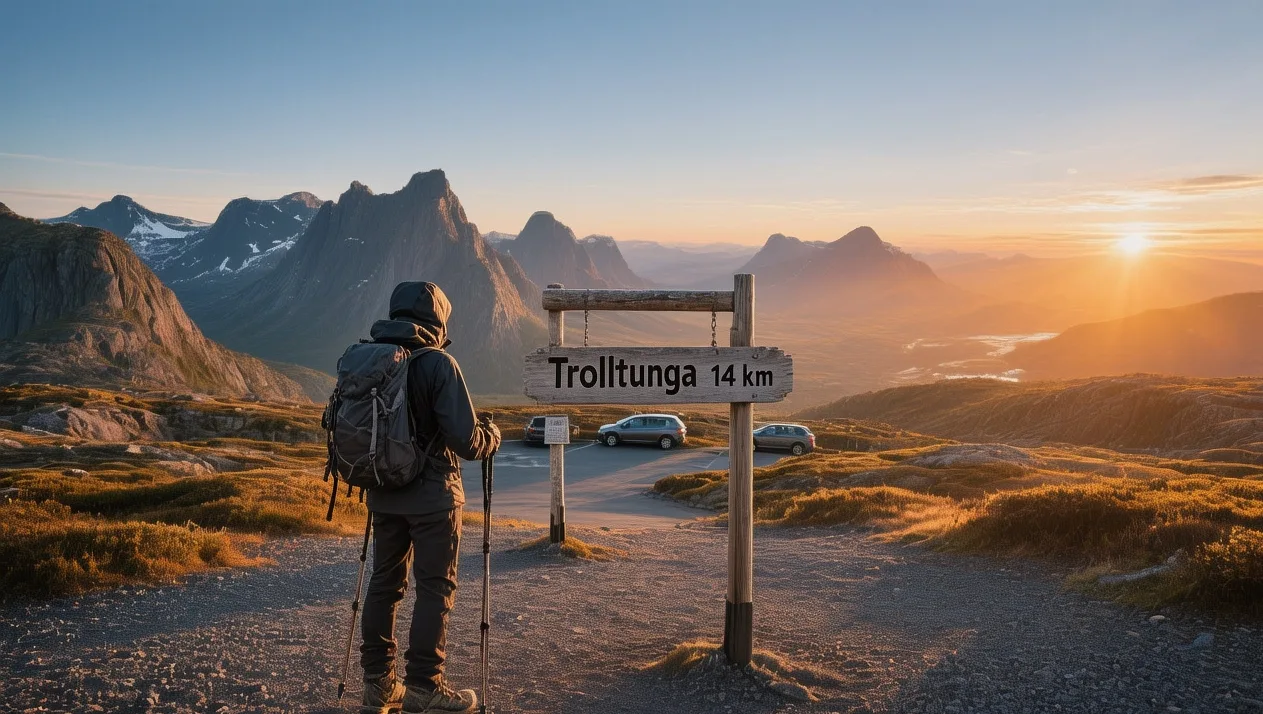
The air is crisp and still—minus 2°C (28°F)—as you stand at the P2 parking lot at 6:00 AM. It is mid-June 2026, and the first light of dawn breaks over the Hardanger plateau, casting a perpetual golden glow across the Odda Trolltunga hike start. You hear the crunch of gravel under hiking boots, the distant call of ravens, and the silence of a landscape that has remained unchanged for millennia. This trailhead—located at 350 meters above sea level in Tyssedal—marks the beginning of one of the world's most iconic hikes: a grueling 28-kilometer round-trip journey to the Troll's Tongue rock formation, suspended 700 meters above Lake Ringedalsvatnet. It is 2026, and the Odda Trolltunga hike start stands at a critical juncture. Climate change alters weather patterns; tourism numbers surge beyond 100,000 annual hikers; yet the ancient rhythm of the mountain persists. You are not just beginning a trek; you are embarking on a pilgrimage to one of Norway's most dramatic natural landmarks—and where your preparation and respect determine whether this experience becomes a triumph or a tragedy.
Why Odda Trolltunga Hike Start Embodies Norwegian Adventure
The Odda Trolltunga hike start is not merely a parking lot; it is the gateway to one of the most physically demanding day hikes in Scandinavia. Historically, this location solved a critical logistical need: providing safe access to the Trolltunga formation while minimizing environmental impact on the fragile alpine ecosystem. The trail was officially marked and maintained starting in 2010, transforming what was once a dangerous, unmarked route into a managed hiking experience. The infrastructure includes three parking areas (P1, P2, P3), with P2 serving as the primary starting point at coordinates 60.0694° N, 6.6186° E. The engineering required to maintain this trail is significant: stone steps prevent erosion on the steepest sections, while wooden bridges span the numerous streams that cascade down from the plateau.
What distinguishes this site is the sheer physical commitment required. Unlike other Norwegian hikes, the Odda Trolltunga hike start demands 8–12 hours of continuous effort, with an elevation gain of 570 meters. The trail traverses diverse terrain: from birch forest at the start, through barren rock fields, to the final approach across the high plateau. In 2026, the management faces the challenge of balancing accessibility with safety. The Norwegian Trekking Association (DNT) monitors trail conditions daily, and during winter months (October–May), the trail is officially closed due to avalanche risk and extreme weather. This interplay between human ambition and natural power creates a unique responsibility. You begin your journey on ground that has witnessed both triumph and tragedy; proper preparation is not optional—it is essential. Preservation here is not passive; it requires active respect from every hiker who laces up their boots at this threshold.
The Best Time to Experience Odda Trolltunga Hike Start
For the optimal hiking experience, plan your visit between June 15 and September 10—the peak summer window when snow has melted, temperatures range from 8–18°C (46–64°F), and the trail is fully accessible. During this period, the best departure time is between 6:00 AM and 8:00 AM, allowing you to reach Trolltunga before the afternoon crowds and return before darkness. For autumn photographers, the optimal window shifts to September 10 to September 25, when the tundra turns golden and red, temperatures hover around 5–12°C (41–54°F), and crowds diminish significantly. The autumn colors are visible on approximately 80% of days during this window.
Avoid traveling between October 1 and May 31 unless you are an experienced winter mountaineer: the trail is officially closed during this period due to avalanche risk, extreme weather, and limited daylight. Temperatures drop to -10–5°C (14–41°F), and snow accumulation makes the route treacherous without proper equipment and guide support. For current trail status, verify at trolltunga.com and weather forecasts at yr.no. The shoulder season (May 15–June 15) offers a compelling alternative: fewer crowds, blooming wildflowers, and prices 20% lower than peak summer, though residual snow may remain on the upper sections. Always check the Norwegian Meteorological Institute at met.no; afternoon thunderstorms are common in July and August, making early starts essential.
Approximate Budget for a 7-Day Trip (2026)
Visiting the Odda Trolltunga hike start requires a base in the Hardanger region, making this budget reflective of a 7-day regional trip centered around Odda. The following estimates assume a mid-range travel style: staying in local hotels or cabins, eating a mix of self-catered meals and local seafood, renting a car for essential mobility, and participating in guided activities. Prices reflect 2026 estimates with a 3.5% inflation adjustment based on 2025 Statistics Norway (SSB) data for Vestland county.
- Accommodation: €160–€260 per night for a double room in Odda Sentrum; budget hostels start at €80/night; camping cabins €100/night
- Food: €75–€95 per day: breakfast €15 (included at most lodgings), lunch €22 (packed sandwiches and energy bars), dinner €45–€55 (fresh lamb or cod with local beer)
- Transportation: €350 total: rental car €80/day (5 days, essential for Route 13), fuel €110 (450 km total driving), ferry Bruravik–Brimnes €40 round-trip with car, local bus route 900 (€15 day pass, limited frequency)
- Attractions: €150 total: Trolltunga guided hike €90, museum entries €30, fjord cruise €60, cultural workshop €20
- Miscellaneous: €100: hiking gear rental €40, wool sweater €60, local cider €20, emergency buffer €20
Total for 7 days: €1,535–€1,835 per person (based on double occupancy)
6 Essential Odda Trolltunga Hike Start Experiences
- Begin at P2 Parking Lot: Arrive at 6:00 AM to secure parking (€15/day). The trailhead is clearly marked with information boards detailing the route. Spend 15 minutes preparing: check weather, fill water bottles (2 liters minimum), and pack high-energy snacks. The light at 6:30 AM renders the birch forest surreal—morning mist clings to the trees. Bring headlamps even in summer; return may be after dark. This experience immerses you in the anticipation of the journey ahead.
- Complete the Full Hike: The 28-kilometer round-trip takes 8–12 hours depending on fitness. The first 6 kilometers ascend steadily through forest; the next 8 kilometers traverse rocky plateau; the final 6 kilometers lead to Trolltunga. The light at 2:00 PM illuminates the rock formation perfectly. Bring windproof layers; temperatures at the top are 5°C cooler than the start. This experience tests your physical and mental limits.
- Photograph Trolltunga Formation: Position yourself on the iconic rock at 1:00 PM. The 700-meter drop to Lake Ringedalsvatnet creates dramatic compositions. Wait for crowds to thin; patience rewards you with solo shots. The light at 3:00 PM casts long shadows across the plateau. Bring a wide-angle lens; the scale is difficult to capture. This moment—standing on the edge of the world—defines the Trolltunga experience.
- Visit the Trolltunga Visitor Center: Located in Odda town center, open 9:00 AM–6:00 PM daily (June–August). Spend 60 minutes exploring exhibits on geology and hiking history. The guided briefing departs at 10:00 AM (€20). Don't miss the safety video and gear recommendations. The facility focuses on conservation and education. The building itself dates to 2016, preserving the industrial heritage of the region.
- Take the Shuttle Bus: Book the P3 shuttle departing at 7:00 AM from Odda bus station (€25 round-trip). The 15-minute ride saves 3 kilometers of road walking. Wear comfortable shoes; the bus is crowded in peak season. Tours operate June–September, weather permitting. No reservation needed; first-come, first-served. This option preserves energy for the actual hike.
- Watch the Midnight Sun from the Summit: Arrive at 11:30 PM in late June. The Trolltunga rock, backed by mountains, offers one of the best vantage points for the sun dipping toward the horizon without setting. Bring a thermos of coffee and a warm blanket. The stone retains heat from the day, making it comfortable to sit even at night. This moment—standing on an Arctic summit at midnight, bathed in golden light—defines the Norwegian experience.
3 Hidden Gems Most Travelers Miss
- Mågelibanen Trail: While everyone hikes to Trolltunga, the historic Mågelibanen path offers equally iconic views. Located 5 kilometers from Odda, this old supply route features 1,200 stone steps carved into the mountainside. Access is via Route 13 (open June–September). Best visited at 8:00 PM when light is soft. Why it's overlooked: most visitors drive straight to Trolltunga without exploring alternative trails. Insider tip: Use a telephoto lens (70-200mm) to capture the steps against the fjord. Watch for trail markers; do not wander off path.
- Ringedalsvatnet Lake Viewpoint: Just 10 kilometers south lies the historic lake, hosting unique views of the lights reflecting off glaciated peaks. This spot hosts unique marine life adapted to cold freshwater. Open daily 24 hours. The wooden cabins contrast beautifully with the snowy landscape. Why it's missed: most tourists focus on Trolltunga and skip the lakeside. Insider tip: Visit the coffee shop on the waterfront for homemade waffles (€8). The view back toward the mountain from here is unique and less crowded.
- Tyssedal Industrial Heritage: Accessible only by foot or car, this historic industrial site near the hike start requires a 15-minute drive from Odda (look for the signpost near the harbor). The UNESCO World Heritage site features white stone buildings and vertical cliffs that amplify sound. Service times matter: visit outside Sunday 11:00 AM for quiet reflection. Check opening times at rjukan-notodden.no. Why it's overlooked: no signage and requires moderate fitness. Insider tip: Bring a waterproof bag for your phone; waves can splash high during incoming tide. No facilities exist here—pack out all trash.
Cultural & Practical Tips
- Respect Trail Closures: The Odda Trolltunga hike start is closed October–May. Do not attempt the hike outside official season. Avalanche risk is severe. Use headlamps to preserve night vision for yourself and others.
- Learn three Norwegian phrases: Takk (tahk—thank you), Unnskyld (oon-shuld—excuse me), and Ha det bra (hah deh bra—goodbye). Locals appreciate the effort, though 95% speak fluent English.
- Photography guidelines: Drone flights require permission from the Norwegian Civil Aviation Authority (apply at luftfartstilsynet.no). Drones are prohibited near populated areas without special permit. Respect privacy—do not photograph tourists without consent. Tripods are permitted on public areas.
- Weather preparedness: Weather changes rapidly; pack layers (wool base, fleece mid, waterproof outer). Even in July, temperatures can drop to 5°C (41°F) with wind chill. Rain occurs on 200 days annually. Waterproof boots are essential for walking.
- Hiking etiquette: Yield to descending hikers on narrow sections. Do not litter; pack out all trash. Watch for sheep, especially at dawn and dusk. Stay on marked trails to prevent erosion.
- Accessibility note: The Trolltunga trail is not wheelchair accessible. The Visitor Center has ramp access. Request the accessible travel guide at visitnorway.com.
- Emergency contacts: Medical emergencies: 113. Police: 112. Tourist information: +47 53 64 20 00. Nearest hospital: Odda Sjukehus (5 km), 24-hour emergency. Mountain rescue: 113. Mobile coverage is good at start but spotty on plateau.
Conclusion: Travel with Preparation, Not Just Enthusiasm
The Odda Trolltunga hike start demands more than your enthusiasm; it requires your preparation. This landscape—carved by ice, sustained by water, and inhabited by resilient communities—is not a theme park but a living ecosystem where every step matters. When you visit in 2026, remember that the mountain is unforgiving, the weather is unpredictable, and the trail is a lifeline for hikers who depend on your respect for safety protocols. The rock formation that draws millions is vulnerable to erosion; the tundra that recovers slowly from foot traffic is fragile. So hike responsibly. Buy local gear from Odda shops, not imported equipment. Stay on marked trails to protect the vegetation. Listen to the stories of the guides who still read the weather like maps.
In an era of instant gratification and social media tourism, Trolltunga asks you to prepare—to train for months before attempting the hike, to respect the mountain's power without rushing to the summit, to understand that you are a guest in a place that has survived millennia without you. Travel with preparation, and you ensure that the Odda Trolltunga hike start remains not just a checkbox on your bucket list, but a transformative experience where human determination and natural grandeur continue to coexist. The mountain will stand long after we are gone; let us ensure it remains wild enough to deserve its fame.