
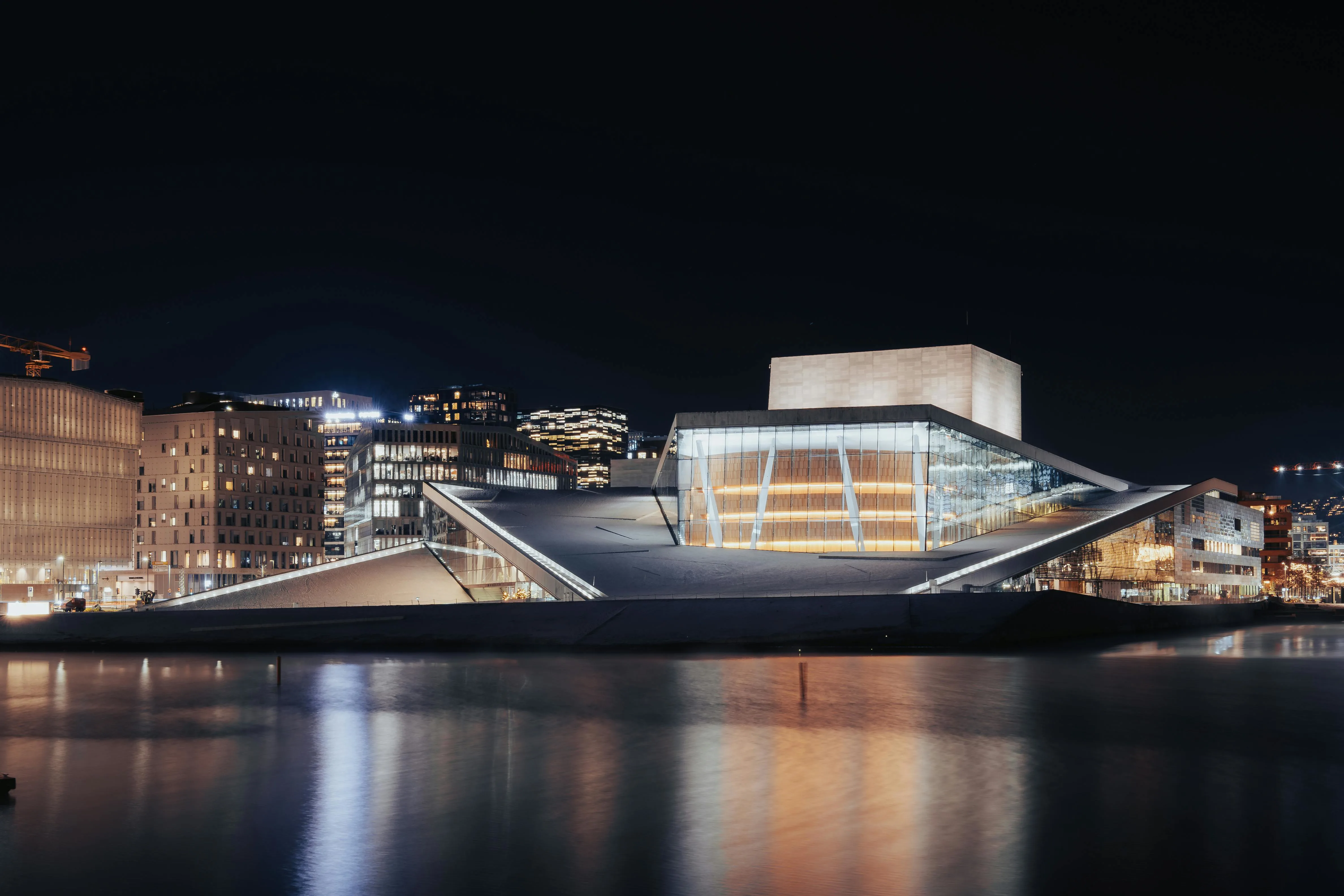
Oslo Opera House Architectural Marble Meets Nordic Fjord Light
The marble is cold beneath your palms—even in July—as you climb the gentle slope of the Oslo Opera House roof, a vast white glacier of stone rising from the dark waters of the Oslofjord. It is 8:00 PM, and the midnight sun casts a pale, ethereal glow across the 33,000 square meters (355,000 square feet) of Italian marble and Norwegian granite that clad this architectural marvel. Below, the water laps against the base where the building meets the fjord, blurring the line between land and sea; above, the city skyline of Bjørvika stands in sharp contrast to the organic curves of the roof you traverse. Since opening in 2008, this structure has redefined Oslo's identity, transforming a former industrial shipyard into a cultural beacon accessible to all. You pause at the summit, 34 meters (112 feet) above sea level, watching seagulls circle the angular peaks while the hum of the city fades into the rhythmic crash of waves. In 2026, as urban spaces become increasingly privatized, the Oslo Opera House matters because it remains radically public—a place where art is not locked behind ticket booths but walked upon, democratizing culture in a way few buildings ever achieve.
Why Oslo Opera House Embodies Nordic Design Philosophy
The Oslo Opera House is not merely a venue for performance; it is the physical manifestation of Norway's democratic ideals and design prowess. Designed by the renowned architectural firm Snøhetta, the building opened on April 12, 2008, replacing the old opera house that had served the city since 1958. The design solves a fundamental urban problem: how to create a monumental cultural institution that does not intimidate the public. Instead of walls that separate, the architects created a sloping roof that invites visitors to walk on top of the culture, literally and figuratively. This concept, known as "walking on water," fulfills the need for accessible high art in a society that values egalitarianism above hierarchy.
Technically, the structure is a feat of engineering. The roof is covered in 36,000 square meters of stone materials, including white Carrara marble from Italy and green granite from Halden, Norway. The main hall houses 1,370 seats arranged in a horseshoe shape, optimized for acoustics with walls lined with oak slats treated to reflect sound precisely. The "Wave Wall," a massive wooden structure inside the lobby, is crafted from 11,000 meters of oak, creating a visual and acoustic buffer between the foyer and the stage. In 2026, the Oslo Opera House continues to fulfill its role as a cultural anchor, hosting over 500,000 visitors annually who come not just for opera but to experience the architecture itself. It stands as a testament to the idea that public buildings should belong to the people, bridging the gap between the elite world of classical performance and the everyday citizen strolling the waterfront.
The Best Time to Experience Oslo Opera House
For optimal weather and extended daylight, target June 15–August 20. During this window, temperatures range from 15–22°C (59–72°F), and the midnight sun allows for roof walks until 10:00 PM. The marble retains heat during the day, making evening climbs pleasant. For photography, the best light occurs between 9:00–11:00 PM when the sun dips low, casting long shadows across the white stone without creating harsh glare. Guided tours operate at full frequency, with departures every hour from 10:00 AM to 4:00 PM.
For winter drama, visit December 1–20 when the roof is often dusted with snow, creating a stark contrast against the dark fjord. Temperatures drop to -5 to 4°C (23–39°F), and the interior feels especially warm and inviting. However, the roof can be slippery; wear shoes with good grip. Avoid December 24–January 2 if you plan to attend performances: the theater closes for holidays, and guided tours are limited. Also avoid rainy days in November when the marble becomes slick and visibility drops. For real-time tour schedules, check www.operaen.no or call +47 21 42 21 00. Weather forecasts are available via Yr.no.
Approximate Budget for a 7-Day Trip (2026)
Oslo is one of Europe's pricier capitals, reflecting Norway's high standard of living. This budget assumes mid-range travel with 3-4% inflation adjustment from 2024 baselines. Prices are estimated in Euros (€); local currency is Norwegian Krone (NOK). Costs reflect Oslo city center and Bjørvika areas.
- Accommodation: €180–€280 per night for a double room in a 3-star hotel in Sentrum or Bjørvika. Budget hostels (Anker Hotel): €65–€85 per bed. Upscale options (The Thief): €350–€550 per night.
- Food: €85–€125 per day per person
- Breakfast: €18–€25 (hotel buffet with bread, cheese, jam)
- Lunch: €25–€40 (café sandwich €32, fish soup €38, or grocery picnic €24)
- Dinner: €42–€70 (restaurant main: lamb €50, fish €48, pasta €38; add €16 for beer)
- Transportation:
- Train (Airport–City): €20 one-way, €35 round-trip
- Local tram/bus day pass: €13
- Car rental (7 days): €650–€850 including fuel
- Fjord cruise: €75–€110
- Attractions:
- Oslo Opera House Guided Tour: €22
- Opera Performance Ticket: €60–€150
- Munch Museum: €22
- Vigeland Sculpture Park: Free
- Norwegian Maritime Museum: €18
- Miscellaneous:
- Souvenirs: Troll figurine €25, wool sweater €110, postcards €5
- Coffee and pastry: €12
- Travel insurance (7 days): €50–€70
- eSIM data plan: €25–€35
Total for 7 days (mid-range, per person, double occupancy): €2,150–€2,750
Budget travelers can reduce costs to €1,400–€1,700 by staying in hostels, cooking meals, and using public transport. Luxury seekers should budget €5,000+ for boutique hotels and fine dining at restaurants like Maaemo.
6 Essential Oslo Opera House Experiences
- Walk the Roof Slope: Start at the main entrance on the west side. Ascend the wide marble steps that transition into the roof slope. The climb takes 15–20 minutes to the highest point. Wear flat shoes; the marble is polished and can be slippery. The view from the top encompasses the Oslofjord and the Akershus Fortress. Visit at sunset when the stone glows pink. It is free and open 24/7, though lighting is limited at night. The sensation of walking on architecture is unique.
- Attend a Performance: Book tickets for an opera, ballet, or concert in the main hall. The acoustics are world-class, designed by Arup Acoustics. Arrive 45 minutes early to explore the lobby. The "Wave Wall" of oak is stunning under interior lighting. Prices vary; standing room tickets cost €25. Check the schedule at www.operaen.no. Dress code is smart casual; no strict formal wear required. The experience connects you to the building's primary purpose.
- Take the Guided Tour: Join the daily guided tour at 1:00 PM (English). The 45-minute tour accesses backstage areas, the stage, and the orchestra pit. You learn about the engineering and history. Guides explain the symbolism of the materials. Tickets are purchased at the information desk. It provides context missing from a self-guided visit. Photography is allowed in most areas but not during rehearsals. Booking in advance is recommended during peak season.
- Visit the Barrier (Reffen): Walk 10 minutes east along the waterfront to the Reffen street food market (open May–September). This industrial area contrasts with the Opera's elegance. Eat grilled seafood while watching the building from a distance. The view from here shows the full scale of the structure against the water. It is lively in the evenings with music and vendors. A perfect spot for dinner after a roof walk. Cashless payment only.
- Explore the Lobby Art: Inside the main foyer, view the large-scale art installations. Notable works include the chandelier by Olafur Eliasson and the carpet by Pae White. The lobby is open to the public even without performance tickets. Spend 30 minutes observing the interplay of light and wood. The space is designed to feel like a public square indoors. It is climate-controlled, offering shelter from rain. Free access during opening hours (9:00 AM–11:00 PM).
- Photograph from the Pier: Walk to the pier directly in front of the Opera House. This angle captures the building rising from the water like an iceberg. Best light is early morning (6:00–8:00 AM) when reflections are clearest. Use a polarizing filter to reduce glare on the water. Include passing boats for scale. It is the classic postcard view. No tripod needed; handheld works well in summer light. Respect pedestrians on the narrow walkway.
3 Hidden Gems Most Travelers Miss
- The Underground View: Inside the building, look for the glass floor sections in the lobby that look down into the rehearsal spaces below. Located near the main staircase. Most visitors walk over them without noticing. You can see dancers practicing or stagehands working. It offers a rare glimpse into the operational heart of the Opera. Best viewed during weekday afternoons when rehearsals are active. No photography flash allowed to avoid distracting performers. It connects the public space to the creative process.
- Deichman Bjørvika Library: Located 5 minutes walk from the Opera House. This futuristic library (opened 2020) complements the Opera architecturally. The rooftop terrace offers a different view of the fjord. Open daily 10:00 AM–7:00 PM. Free entry. It is overlooked because tourists focus on the Opera. The interior features a massive wooden lattice structure. A quiet spot to rest after walking the roof. WiFi is free and fast. Cafés inside serve affordable coffee.
- Sult Statue: Located on the plaza near the Opera House, this bronze statue depicts the writer Knut Hamsun. Installed in 2019, it is often ignored by crowds heading to the roof. The sculpture captures the intensity of Oslo's literary history. Access is free, 24/7. It is missed because it is small compared to the building. Read the plaque to understand the context. A quiet moment of cultural reflection amidst the modern architecture. Best visited in the morning light.
Cultural & Practical Tips
- Footwear: The marble roof is polished and becomes very slippery when wet or icy. Wear shoes with rubber soles. Heels are dangerous and discouraged. In winter, the roof may be closed due to ice; check signage. Your safety is your responsibility; there are no railings on the slope. Rent spikes if visiting in deep winter.
- Cashless Society: Norway is nearly cashless. Bring a credit/debit card with chip-and-PIN. Most places do not accept cash. Mobile payment (Vipps) is ubiquitous but requires a Norwegian number. Stick to cards as a visitor. ATMs are available but rarely needed. Inform your bank of travel plans to prevent blocks.
- Useful Phrases:
- "Takk" (tahk) = Thank you
- "Unnskyld" (oon-shool) = Excuse me
- "Hvor er toalettet?" (voor ehr toa-let-et) = Where is the toilet?
- "Snakker du engelsk?" (snak-ker doh eng-elsk) = Do you speak English?
- Photography Guidelines: Photography is allowed on the roof and in the lobby. Flash is prohibited inside the auditorium. Drones are prohibited without permission from the Norwegian Civil Aviation Authority. Respect performers; do not photograph rehearsals without consent. Best light is golden hour. Use a wide-angle lens to capture the slope. Ask before photographing individuals.
- Weather Preparedness: Wind is significant on the roof due to the waterfront location. Pack a windproof jacket even in summer. Temperatures can drop quickly near the water. Umbrellas are useful but wind can break them. Dress in wool; it stays warm when wet. Check Yr.no hourly forecasts. Indoor areas provide shelter during downpours.
- Alcohol Regulations: Alcohol above 4.7% ABV is sold only at Vinmonopolet (state liquor stores). These close at 6:00 PM weekdays and 3:00 PM Saturdays. They are closed Sundays. Beer is available in supermarkets until 8:00 PM (6:00 PM Saturdays). Plan accordingly if you want wine with dinner. Prices are high due to taxes.
- Accessibility: The Opera House is fully wheelchair accessible. Elevators connect all levels including the roof (via service access if needed). Wheelchairs can navigate the lower slopes but may struggle with the steeper upper sections. Assistive listening devices are available for performances. Book assistance in advance via +47 21 42 21 00. Toilets are accessible on all floors.
Conclusion: Travel with Reverence, Not Just Checklists
The Oslo Opera House is not a monument to be photographed and forgotten; it is a public living room carved from stone. In 2026, as cultural institutions struggle to remain relevant, this building demands engagement beyond the superficial. Travel here not to tick a box but to understand the philosophy of accessibility embedded in every marble slab. Walk the slope slowly; feel the cold stone; understand that this space belongs to you as much as to the performers. Leave only footprints on the roof; take only the inspiration that art should be open to all. When you depart, carry the Opera's democratic spirit with you. For in the end, the true value of this place is not the photo you post, but the realization that architecture can bridge divides—that culture is not a tower to look up at, but a slope to walk together, side by side.