
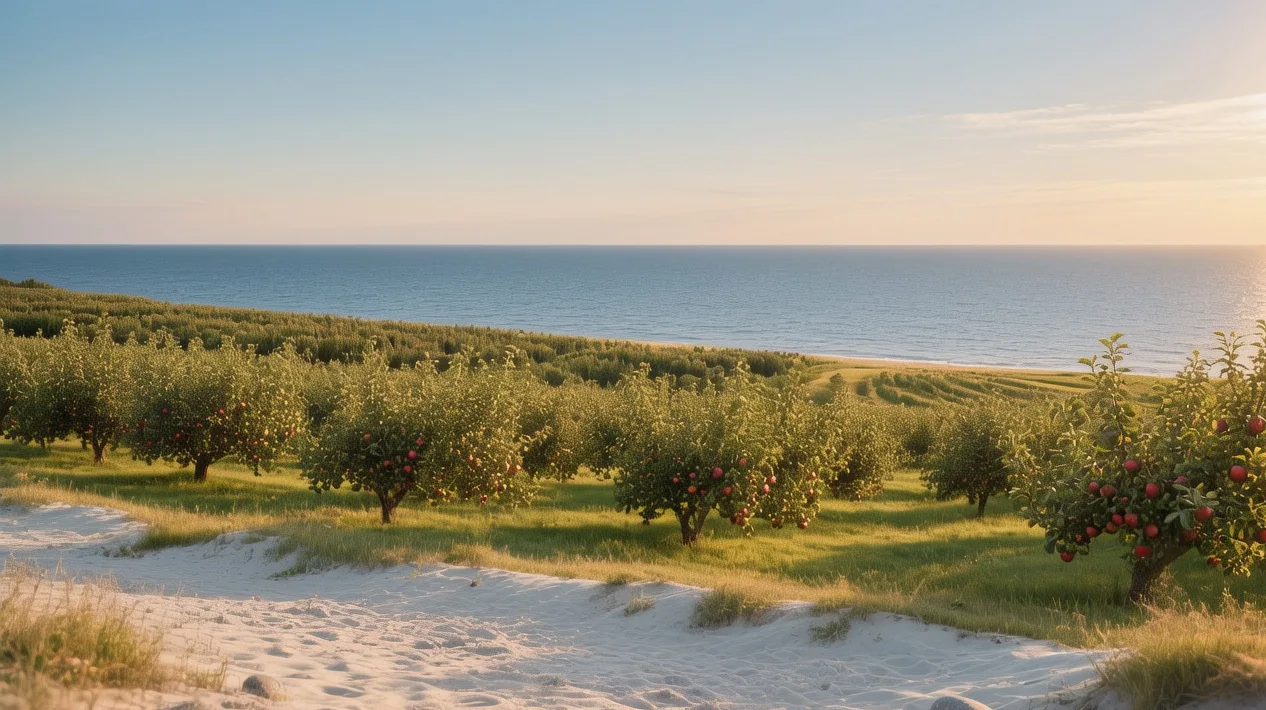
Österlen Coast Apple Orchards Meet Baltic Light
The morning sun rises at 4:45 AM over the Baltic Sea, casting a pale golden glow across 40 kilometers of coastline where white-sand beaches meet rolling hills dotted with apple orchards and artisan studios. You stand on the cliffs near Kivik, breathing air that carries the salty tang of the sea mixed with the sweet perfume of blooming fruit trees—a scent that has defined this corner of Skåne since Danish farmers first planted orchards here in the 1600s. Fishing boats bob in small harbors while cyclists pedal along coastal paths that wind through villages with names like Borrby and Glimminge, each one a postcard of red-painted cottages with white trim and geranium-filled window boxes. This is Österlen, Sweden's artistic and agricultural heartland, where the landscape shifts seamlessly from windswept beaches to fertile farmland, from ancient stone ships to contemporary galleries housed in converted barns. In 2026, as travelers seek authenticity over Instagram backdrops, Österlen coast remains refreshingly unspoiled—a place where you can still buy apples directly from orchardists who remember your name, where artists work in studios open to the public, and where the light possesses a quality that has drawn painters for over a century. This matters now: in an age of homogenized travel experiences, Österlen offers something increasingly rare—the chance to slow down and taste the terroir of a landscape that has cultivated beauty for generations.
Why Österlen Coast Embodies Scanian Rural Beauty
Österlen coast stands as Scandinavia's premier example of living rural heritage, solving a critical modern need: preserving agricultural traditions while embracing creative innovation in a landscape that has fed and inspired for centuries. The region encompasses approximately 1,200 square kilometers of southeastern Skåne, featuring 40 kilometers of Baltic coastline, over 200 working apple orchards covering 800 hectares, and more than 150 artisan studios and galleries. This diversity solves a practical problem: how to maintain economic viability in rural areas without sacrificing cultural identity or environmental sustainability. The landscape's character was shaped by the last Ice Age, which deposited nutrient-rich glacial till perfect for fruit cultivation, while the moderating influence of the Baltic Sea creates a microclimate with growing seasons 2-3 weeks longer than inland areas. Apple production dominates—Österlen produces 60% of Sweden's commercial apples, with varieties ranging from traditional Ingrid Marie to modern Discovery cultivars. The region's distinctive white-sand beaches, formed from crushed seashells and quartz deposits, contrast dramatically with the red clay soil inland, creating a visual palette that has attracted artists since Carl Larsson first painted here in the 1890s. Architectural heritage includes over 300 half-timbered farmhouses dating to the 1700s-1800s, many converted to galleries, cafés, and boutique accommodations while retaining original features like exposed beams and brick ovens. The coastal fishing industry, though diminished from its 19th-century peak, continues in villages like Kåseberga and Simrishamn, where 15-20 working boats still land fresh herring, cod, and mackerel daily. This integration of agriculture, artistry, and maritime tradition creates a resilient economy that has avoided the rural decline affecting other European regions—Österlen's population has grown 12% since 2010, reversing decades of outmigration.
The Best Time to Experience Österlen Coast
For the optimal Österlen coast experience, target May 20–June 25 for apple blossoms and long days, or September 10–October 15 for harvest season and golden light. During these windows, daytime temperatures range from 16–22°C (61–72°F) in spring and 14–19°C (57–66°F) in autumn, perfect for cycling coastal paths and exploring orchards. The famous apple blossoms typically peak between May 25–June 10, when entire hillsides turn pink and white—a spectacle lasting only 10-14 days. Arrive between 6:00–8:00 AM for the most ethereal light, when mist rises from orchards and the Baltic shimmers in dawn's glow. Avoid July 15–August 10 when Swedish school holidays bring peak crowds to beaches and accommodations book 6-8 months in advance, with prices spiking 50-70%. Winter visits (November–March) offer atmospheric solitude but limited daylight—sunset occurs as early as 3:20 PM in December, and many galleries, orchards, and seasonal cafés close entirely. For current blossom forecasts and harvest updates, verify at www.osterlen.com before your visit. Most attractions operate daily 10:00 AM–6:00 PM (June–August), with reduced hours September–May. The annual Österlen Open Studios event (last weekend of September) sees 200+ artists open their workshops—spectacular but requiring advance accommodation booking.
Approximate Budget for a 7-Day Trip (2026)
Österlen offers moderate pricing for Southern Sweden—more affordable than Stockholm but pricier than Eastern European rural destinations. The following estimates reflect 2026 rates with approximately 3.5% annual inflation from 2024 baseline data, assuming a comfortable mid-range travel style with a mix of self-catering from local producers and restaurant dining.
- Accommodation: €85–€145 per night for a double room in converted farmhouse or B&B (near Kivik or Simrishamn); budget hostels from €40/night; luxury seaside cottages average €180–€280/night
- Food: €48–€68 per day total
- Breakfast: €9–€13 (included at B&Bs or café with coffee and pastries)
- Lunch: €16–€22 (dagens lunch at local inn or picnic from farm shops)
- Dinner: €23–€33 (restaurant main course; try local fish or Scanian pork)
- Transportation:
- Copenhagen Airport to Ystad: €26 one-way via Skånetrafiken train (90 minutes)
- Local bus Ystad to Kivik: €5.50 single ticket (Bus 323)
- Bicycle rental: €14/day (essential for exploring Österlen)
- Day trip to Malmö: €16 round-trip train ticket (55 minutes)
- Car rental: €45/day (recommended for reaching remote orchards)
- Attractions:
- Ales Stenar Visitor Center: €8 adults, free under 19
- Kivik Art Centre: €12 adults, free under 18
- Glemminge hus castle: €9 adults
- Orchard tours and tastings: €8–€15 per person
- Stenshuvud National Park: Free
- Miscellaneous:
- Apple cider and juice: €6–€12 per bottle
- Local crafts and art: €20–€150
- Fika (coffee + cinnamon bun): €6–€8
- Smoked fish at harbor: €12–€18
- Farm-fresh produce: €15–€30
Total estimated cost for 7 days: €920–€1,350 per person (excluding international flights)
7 Essential Österlen Coast Experiences
- Cycle the Coastal Route from Ystad to Kivik: Rent a bicycle in Ystad (€14/day from Ystad Cykeluthyrning) and follow the marked Österlenleden cycling path 35 kilometers northeast to Kivik. The route takes 3-4 hours at a leisurely pace, passing through apple orchards, fishing villages, and the dramatic cliffs near Ales Stenar. Stop at Café Skansen in Kåseberga for traditional spettekaka and coffee. The path is mostly flat with well-maintained gravel and asphalt surfaces. Bring water and snacks—shops are sparse between villages. Best undertaken between 9:00 AM–4:00 PM to allow time for stops and photography.
- Visit Kivik's Apple Orchards During Harvest: Make your way to Kivik Musteri (Kivik 235) between September 15–October 10 for the annual apple harvest. The cidery offers guided tours (€10, daily at 11:00 AM and 2:00 PM) showing traditional and modern pressing techniques. Taste freshly pressed apple juice, sparkling cider, and apple brandy while learning about the 30+ varieties grown in Österlen. The orchard shop sells jars of apple butter, dried apple rings, and artisan ciders. Even outside harvest season, the orchard café serves excellent apple-based pastries and light lunches. Allow 90 minutes for the full experience.
- Explore Stenshuvud National Park: Hike through Sweden's southernmost national park, where 393 hectares of coastal landscape feature sandy beaches, deciduous forests, and the 97-meter-high Stenshuvud peak. Follow the yellow-marked trails (2-5 kilometers depending on route) through oak and beech forests to clifftop viewpoints overlooking the Baltic. The park is free and open year-round, though the visitor center operates 10:00 AM–4:00 PM (May–September). Best visited early morning (7:00–9:00 AM) or late afternoon (5:00–7:00 PM) to avoid crowds and experience optimal light. Bring sturdy shoes—trails can be muddy after rain.
- Discover Simrishamn's Art Galleries: Wander the cobblestone streets of this historic fishing town, visiting over 20 galleries and studios concentrated around Storgatan and Hamngatan. Don't miss Simrishamns Konsthall (Storgatan 18), featuring rotating contemporary exhibitions (€8 entry, Tuesday–Sunday 11:00 AM–5:00 PM). Many artists work in studios open to the public—look for the red "Öppet Atelier" signs. The town's harbor area features fresh fish markets where you can buy smoked mackerel and herring directly from boats (€15–€20 per kg). Visit between 10:00 AM–4:00 PM when most galleries operate.
- Experience Österlen Open Studios: If visiting in late September, participate in this annual event where 200+ artists, craftspeople, and producers open their workshops to the public. Pick up a free map at the tourist office or download the app showing participating locations across the region. Meet ceramicists, painters, textile artists, and food producers while watching demonstrations of traditional techniques. The event runs Saturday and Sunday 11:00 AM–5:00 PM (last weekend of September). No admission fee—simply arrive and explore. This is the best opportunity to purchase directly from creators and understand the creative process.
- Walk the Beaches from Borrby to Sandhammaren: Follow the 8-kilometer coastal path from Borrby village to Sandhammaren beach, one of Sweden's finest white-sand beaches stretching 3 kilometers. The walk takes 2-3 hours at a leisurely pace, passing dunes, coastal meadows, and small fishing hamlets. Sandhammaren features a historic lifeboat station (now a café) and swimming areas with gentle slopes perfect for families. The beach's fine quartz sand feels powdery underfoot and glows golden in late afternoon light. Best visited between 2:00–6:00 PM when the sun angle creates dramatic shadows across the dunes. Bring a swimsuit—the Baltic can be refreshing in summer (water temperatures 16–19°C/61–66°F in July-August).
- Taste Scanian Specialties at Local Farm Shops: Make your way to Österlen's Mat (regional food cooperative with locations in Kivik and Simrishamn) to sample and purchase local specialties: skånsk spettekaka (spit cake), artisan cheeses from Österlen Ost, smoked fish from Kåseberga, and organic vegetables from nearby farms. The staff provides tastings and explains production methods. Many farms offer "self-service" stands where you pay via Swish (mobile payment) or honor system—trust is fundamental to rural Österlen culture. Budget €20–€40 for quality provisions to enjoy at your accommodation or as picnic supplies.
3 Hidden Gems Most Travelers Miss
- Glimminge hus Medieval Castle: Located 12 kilometers northwest of Ystad, this remarkably preserved medieval fortress from 1499 sits surrounded by a moat and defensive walls. Unlike the crowded tourist sites, Glemminge hus receives only 15,000 visitors annually despite being Northern Europe's best-preserved medieval manor house. Access by car (15 minutes from Ystad) or bus #323 to Glemmingebro then 2km walk. Open Tuesday–Sunday 11:00 AM–4:00 PM (May–September), €9 entry. The castle features original brick vaulting, medieval graffiti, and a museum detailing Scanian history. The surrounding gardens include heritage apple varieties and medicinal herbs. Most tourists heading to Ales Stenar drive right past this treasure—don't be one of them.
- Ravlundhaga Ancient Burial Ground: Tucked in a forest clearing 5 kilometers east of Kivik, this Bronze Age burial site features 15 stone cairns and three stone ships dating to 1000–500 BC. The site is unmarked and receives perhaps 500 visitors annually, offering profound solitude. Access via small parking area on Ravlundhagavägen (coordinates: 55.4892°N, 14.2156°E), then 400-meter walk through forest. No facilities or signage—bring a map and respect the sacred nature of the site. The largest stone ship measures 25 meters long, smaller than Ales Stenar but infinitely more peaceful. Visit between 10:00 AM–3:00 PM for best light through the trees. This is where you truly feel the weight of Scandinavian prehistory without crowds.
- Österlen's Secret Apple Pie Café: In the tiny village of Borrby (population 400), Borrby Bakficka (Borrbyvägen 12) serves what locals consider Österlen's best apple pie, made from a secret family recipe using orchard-fresh apples. The café occupies a converted 1850s schoolhouse with only six tables. Open Wednesday–Sunday 10:00 AM–4:00 PM (May–October), closed Mondays and Tuesdays. Cash only. The owner, Ingrid, speaks limited English but welcomes visitors warmly. Order the äppelpaj with vanilla sauce (€9) and strong Swedish coffee. No website or social media—word of mouth sustains this place. Arrive before 11:30 AM on weekends to avoid the small local crowd. This is authentic Österlen: unpretentious, delicious, and utterly uninterested in tourism trends.
Cultural & Practical Tips
- Respect private property: Österlen's orchards and farms are working landscapes, not public parks. Always stay on marked paths unless explicit "Välkommen in" (Welcome in) signs invite you. Never pick fruit without permission—many orchards have designated "pick-your-own" areas with posted prices. Swedish Allemansrätten (right of public access) allows passage through nature but requires responsibility and respect.
- Cycling etiquette: Österlen is bicycle-friendly, but rural roads are shared with agricultural vehicles. Ride single file on narrow lanes, use hand signals, and wear helmets (culturally expected though not legally required). Lock bicycles securely—theft is rare but occurs in tourist areas. Many farms provide bicycle parking racks.
- Essential Swedish phrases:
- "Hej" (hey) = Hello/Goodbye
- "Tack" (tahk) = Thank you
- "Ursäkta" (oor-shek-tah) = Excuse me
- "Var ligger...?" (var lig-er) = Where is...?
- "En kaffe, tack" (en kaf-fe tahk) = One coffee, please
- Weather preparation: Österlen's coastal location means rapid weather changes—temperatures can shift 10°C in an hour. Bring layers even in summer. The Baltic moderates temperatures but creates unpredictable wind patterns. Average summer: 18–23°C (64–73°F); spring/autumn: 12–18°C (54–64°F). Rain is possible year-round—pack waterproof jacket and shoes. Sun protection essential in summer—there is minimal shade on beaches and coastal paths.
- Payment and connectivity: Sweden is nearly cashless—cards accepted everywhere, though some farm stands operate on honor system with Swish (mobile payment app). Inform your bank of travel dates. Mobile coverage is good throughout Österlen (Telia/Tele2 networks). Free WiFi available at cafés and libraries. ATMs available in Simrishamn and Ystad but sparse in villages—carry some cash for small purchases.
- Photography guidelines: Photography is permitted throughout public areas, but always ask permission before photographing people, inside private galleries, or at farm operations. Drone use requires permission from property owners and may be restricted near Ales Stenar archaeological site. Respect "No Photography" signs in galleries protecting artists' copyright. Golden hour (6:00–9:00 PM in summer) provides the best light for landscape photography.
- Seasonal considerations: Many attractions operate seasonally (May–October only). November–April sees significant closures, though the landscape offers stark beauty for photographers. Apple blossoms peak late May–early June; harvest runs mid-September–mid-October. Book accommodations 3-6 months in advance for summer visits and during Österlen Open Studios weekend. Winter visitors should verify opening hours before traveling—many businesses close entirely December–March.
Conclusion: Travel with Reverence, Not Just Tourism
Österlen coast asks something different of you than the hurried checklist approach of modern travel. This is not a place to photograph and flee; it is a living landscape where farmers tend orchards their great-grandfathers planted, where artists create in dialogue with light that has inspired for over a century, where the rhythm of seasons still dictates daily life. When you bite into an apple picked from a tree that has borne fruit for 40 years, or sip cider pressed from orchards visible from your breakfast table, you participate in a continuity that transcends tourism. That continuity is fragile. Every season brings new pressures—development, climate change, the homogenizing force of global commerce. Travel here with reverence: buy directly from producers, respect the land that feeds you, support the artists who interpret this place, and leave only footprints in the orchard grass. In return, Österlen offers something increasingly rare in our accelerated world—the chance to inhabit a landscape where beauty is not manufactured for consumption but cultivated through generations of care, where the light still possesses the quality that drew painters a century ago, where you can taste the terroir of a place that knows itself. This is why we travel: not to consume places, but to be transformed by them, to carry their stories forward with care and gratitude.