
Paradise Beach: Where Golden Sands Meet Aegean Turquoise
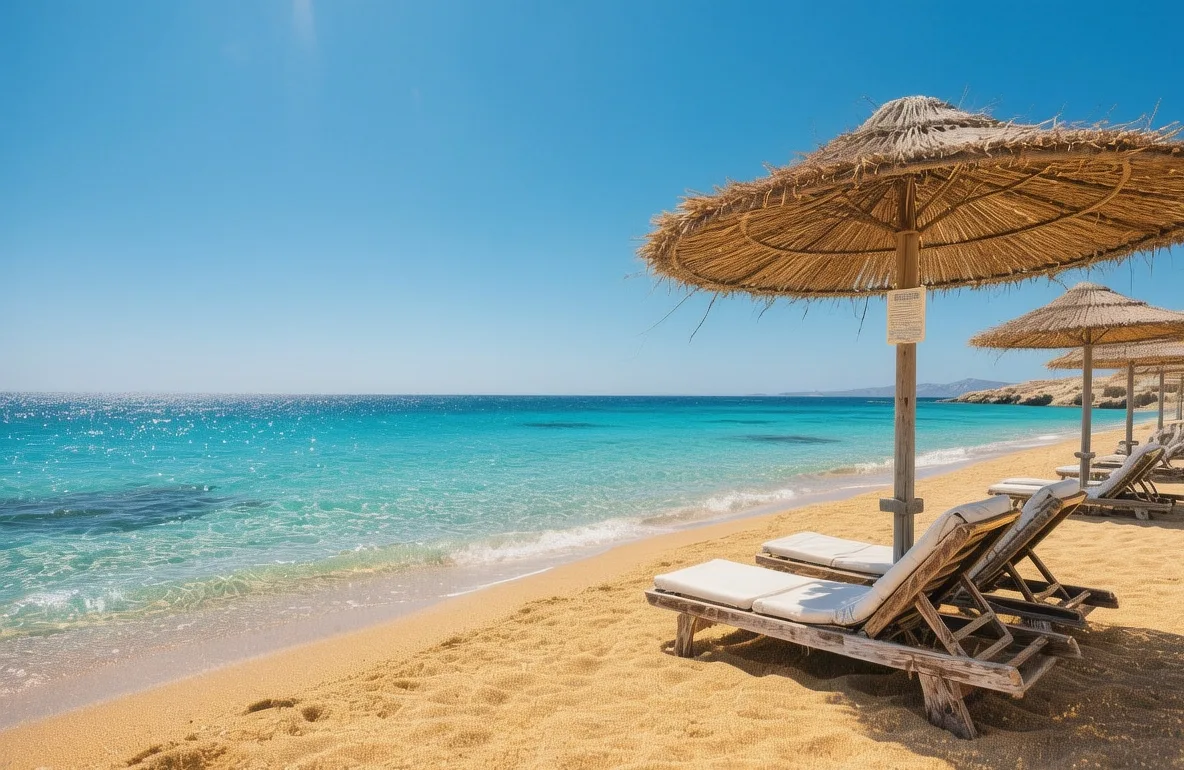
The midday sun bathes Paradise Beach in brilliant light as you step onto the warm golden sand, where the air carries the intoxicating blend of sea salt, coconut sunscreen, and the faint scent of tamarisk trees swaying in the meltemi breeze. Before you stretches a crescent of pristine shoreline approximately 700 meters long, its fine golden sand meeting crystal-clear turquoise waters that shimmer in shades ranging from aquamarine to deep sapphire. The only sounds are the rhythmic crash of waves against the shore, the distant thump of bass from beach clubs, and the joyful laughter of swimmers cooling off in the refreshing 22°C (72°F) waters. This iconic stretch of coastline—sheltered by low hills on its eastern edge and open to the Aegean Sea on its western side—solves a fundamental human need: the desire to escape into pure sensory pleasure where land, sea, and sky converge in perfect harmony. Standing on this sun-drenched shore as beach umbrellas dot the landscape like colorful flowers, you understand: Paradise Beach matters because it embodies the quintessential Mediterranean dream—a place where natural beauty, vibrant energy, and carefree spirit collaborate to create an experience that transcends ordinary beachgoing and awakens profound joy.
Why Paradise Beach Embodies Cycladic Beach Culture
Paradise Beach represents one of the Aegean's most iconic expressions of beach culture—a shoreline that solved the fundamental challenge of creating a space where natural beauty meets social vibrancy while maintaining the pristine environment that defines Cycladic coastal landscapes. Located on Mykonos' southern coast approximately 4 kilometers from Mykonos Town, this beach emerged as a cultural phenomenon in the 1960s when international travelers discovered its perfect combination of golden sand, sheltered waters, and stunning Aegean views. The beach's geological composition—fine golden sand mixed with small pebbles—was formed over millennia by wave action grinding volcanic and metamorphic rocks into particles measuring 0.5 to 2 millimeters in diameter, creating a surface that remains comfortable underfoot even in peak summer heat.
The beach's visual impact stems from precise geographical alignment: facing southwest at latitude 37.42°N, Paradise Beach receives optimal sunlight from dawn until dusk while remaining sheltered from the strongest northern meltemi winds by a natural headland that extends 200 meters into the sea. The water depth increases gradually from 0 to 3 meters over the first 50 meters from shore, creating ideal conditions for swimming and water sports while maintaining safety for families. The beach clubs—featuring sunbed arrangements, bars, and restaurants—were designed with traditional Cycladic architecture: whitewashed structures with blue accents, wooden decking elevated 30 centimeters above the sand to prevent erosion, and shaded areas providing relief from the intense Mediterranean sun.
Today, Paradise Beach fulfills multiple roles: it serves as a social hub where travelers from around the world gather to celebrate island life, a recreational space offering everything from tranquil sunbathing to energetic beach parties, and a natural sanctuary where the Aegean's beauty remains remarkably preserved despite decades of tourism. The ongoing environmental management by local authorities—including regular beach cleaning, water quality monitoring, and erosion control measures—ensures that this iconic shoreline continues to inspire while protecting the delicate coastal ecosystem. Every step on this golden sand connects you to generations of beachgoers who found joy in the simple pleasures of sun, sea, and sand—a reminder that paradise exists not in grand gestures but in moments of pure, unadulterated happiness.
The Best Time to Experience Paradise Beach
Timing transforms a visit to Paradise Beach from pleasant beach day to unforgettable Mediterranean experience. The optimal windows stretch from May 18–June 12 and September 15–October 20, when air temperatures hover between 22–28°C (72–82°F), water temperatures range from 20–24°C (68–75°F), and visitor numbers remain manageable enough to secure prime beachfront positions without excessive crowds. During these shoulder seasons, you'll experience comfortable conditions for swimming and sunbathing while capturing photographs in the soft, directional light that reveals the sand's golden tones and the water's crystalline clarity.
Arrive precisely at 9:00–10:00 AM when beach clubs open—this early arrival secures the best sunbed positions closest to the water, provides cooler temperatures for setting up your beach spot, and offers the most serene atmosphere before the midday rush. Paradise Beach operates as a public beach with beach club services available from 9:00 AM to sunset (approximately 8:00 PM in summer), though the beach itself remains accessible 24 hours. For those seeking the famous beach party atmosphere, arrive between 2:00–4:00 PM when DJ sets typically begin and the energy reaches its peak. Winter months (November–March) offer dramatic solitude and storm-watched beauty, though water temperatures drop to 15–17°C (59–63°F) and most beach facilities close.
Avoid July 15–August 31 unless you specifically seek maximum crowds and party atmosphere: temperatures regularly exceed 30°C (86°F), the beach reaches maximum capacity by 11:00 AM, and finding available sunbeds becomes challenging without advance reservations. Also skip periods of strong meltemi winds (typically mid-July to mid-August) when wave action can make swimming uncomfortable and winds exceed 40 km/h. For the most current information on beach conditions, weather forecasts, and special events.
Approximate Budget for a 7-Day Trip
Mykonos offers exceptional value for travelers seeking iconic Cycladic beauty combined with vibrant beach culture. The following breakdown reflects mid-range travel—comfortable boutique accommodations, authentic taverna dining mixed with beach club experiences, and comprehensive island exploration—based on current pricing for a single traveler experiencing Paradise Beach and greater Mykonos.
- Accommodation: €120–€300 per night in Mykonos Town, Ornos, or near Paradise Beach (€840–€2,100 total). Budget studios start at €60; luxury beachfront villas run €500+.
- Food: €50–€80 per day total. Breakfast: €8–€12 (Greek coffee €4, bougatsa pastry €3.50, fresh fruit €4.50). Lunch at beach: €15–€25 (Greek salad €10, grilled octopus €18, sandwich €12). Dinner: €25–€45 (seafood platter €35, lamb kleftiko €22, Assyrtiko wine €8/glass, dessert €8).
- Transportation: €130 total. Ferry from Athens: €45–€75 one-way (€90–€150 round-trip). Local bus to Paradise Beach: €2 per ride. ATV rental: €30/day. Occasional taxi rides: €15–€35 each.
- Attractions: €120 total. Paradise Beach sunbed rental: €15–€30 per day. Beach club entry: €20–€50 (varies by venue and events). Delos archaeological day trip: €25. Mykonos Town exploration: free. Water sports equipment: €25–€50 per activity.
- Miscellaneous: €130 total. Water/snacks €6/day, beach accessories €30, local honey €15, souvenirs €25, tips €30.
Total: €1,850–€2,850 for 7 days (excluding international airfare and Athens-Mykonos ferry)
7 Essential Paradise Beach Experiences
- Secure your sunbed spot at sunrise: Arrive at 9:00 AM when beach clubs open to claim prime positions closest to the water. The early morning light creates perfect conditions for swimming before crowds arrive. Rent a sunbed and umbrella set (€15–€30) which typically includes towel service. The southern section offers quieter atmosphere while the central area provides easy access to beach club amenities.
- Swim in the crystal-clear waters: Enter the Aegean at the beach's center where the water depth increases gradually from ankle-deep to waist-deep over 30 meters. The water temperature ranges from 20°C (68°F) in May to 24°C (75°F) in August. Swim early morning or late afternoon to avoid peak crowds; the water clarity—often exceeding 15 meters visibility—reveals small fish and underwater rock formations.
- Experience the beach club atmosphere: Immerse yourself in Paradise Beach's famous party scene by visiting between 2:00–6:00 PM when DJ sets create an energetic soundtrack. Order a refreshing cocktail (€12–€18) or local beer (€6–€8) while lounging on your sunbed. The beach clubs feature professional sound systems, dance areas on the sand, and international DJs during peak season.
- Try water sports activities: Rent equipment for jet skiing (€50/hour), parasailing (€45/10 minutes), or paddleboarding (€15/hour) from vendors positioned along the beach. The calm morning waters provide ideal conditions for beginners, while afternoon winds challenge experienced enthusiasts. All activities include safety equipment and brief instruction; lifeguards monitor designated swimming areas.
- Enjoy beachfront dining: Savor a leisurely lunch at one of the beachfront tavernas between 1:00–3:00 PM. Order traditional Greek meze: tzatziki (€6), dolmades (€8), grilled calamari (€16), and fresh fish of the day (€25–€35). The elevated wooden terraces provide shade and panoramic sea views while you dine. Request a table near the water's edge for the best ambiance.
- Photograph the golden hour: Position yourself at the beach's western end at 6:30–8:00 PM when the setting sun casts warm light across the golden sand and turquoise water. The low angle creates dramatic shadows and enhances the water's color gradient from aquamarine to deep blue. Use a polarizing filter to reduce water glare and capture the beach umbrellas' vibrant colors against the azure backdrop.
- Walk the shoreline at dusk: After sunset, stroll the 700-meter length of Paradise Beach as the sky transitions through shades of pink and orange. The cooling sand feels soft between your toes, and the gentle waves create a meditative rhythm. This peaceful time offers a completely different perspective from the daytime energy—ideal for reflection and appreciation of the beach's natural beauty.
3 Hidden Gems Most Travelers Miss
- The Northern Cove: Beyond the main beach area, a small secluded cove accessible by walking 200 meters north along the rocky coastline offers privacy and exceptional snorkeling. The protected inlet features crystal-clear water, underwater rock formations, and marine life including small octopus and colorful fish. Access: Follow the coastal path from Paradise Beach's northern end; wear water shoes for the rocky approach. Best visited at 8:00–10:00 AM or 6:00–8:00 PM when crowds are minimal. Bring your own snorkel gear as no facilities exist in this area.
- The Tamarisk Tree Shade: Scattered along the beach's back edge, mature tamarisk trees provide natural shade rarely utilized by sunbathers who prefer organized sunbed areas. These native trees—some over 50 years old—create cool pockets perfect for afternoon reading or nap breaks without sunbed rental fees. Access: Located 20–30 meters inland from the main beach area; look for the distinctive feathery green foliage. Best visited between 12:00–3:00 PM when sun intensity peaks. Bring a beach towel and respect the trees by not damaging branches or leaving trash.
- The Sunrise Yoga Spot: At the beach's eastern end, a flat sandy area sheltered by low dunes provides an ideal location for sunrise yoga and meditation. The eastern orientation offers unobstructed views of the sun rising over the Aegean, creating a serene atmosphere before the beach awakens. Access: Arrive by 6:00 AM; the area is marked by a small stone formation. Best visited May through September when sunrise occurs between 6:00–7:00 AM. Bring a yoga mat and water; the peaceful morning energy attracts like-minded travelers seeking tranquility.
Cultural & Practical Tips
- Beach etiquette: Paradise Beach operates on a first-come, first-served basis for public areas. Respect designated swimming zones marked by buoys. Keep music at reasonable volumes if using personal speakers. Remove all trash when leaving—use provided bins or take it with you. Greek beaches are public property; no one can charge for beach access itself, only for amenities like sunbeds.
- Footwear essentials: The sand can become extremely hot (exceeding 50°C/122°F) during midday hours. Wear flip-flops or water shoes when walking from parking areas to your beach spot. The sand cools significantly after 6:00 PM, making barefoot walking comfortable for evening strolls.
- Hydration and sun protection: Carry at least 2 liters of water per person; dehydration occurs quickly in the Mediterranean sun. Apply broad-spectrum sunscreen (SPF 50+) every two hours and after swimming. The beach reflects sunlight, increasing UV exposure. Seek shade between 12:00–3:00 PM when sun intensity peaks.
- Local phrases: Kalimera (kah-lee-MEH-rah) = Good morning; Kalispera (kah-lee-SPER-ah) = Good evening; Efharisto (ef-hah-REE-stoh) = Thank you; Parakalo (pah-rah-kah-LOH) = Please/You're welcome; Yassou (YAH-soo) = Hello. Using these greetings earns warm smiles from beach staff and local visitors.
- Money matters: Most beach clubs accept credit cards, but cash (Euros) is preferred for small purchases and tips. Sunbed rentals typically cost €15–€30 per set (two loungers and umbrella). Beach club minimum spend may apply during peak events (€20–€50 per person).
- Safety considerations: Lifeguards are on duty from 10:00 AM to 7:00 PM during peak season (June–September). Heed warning flags: red means no swimming, yellow indicates caution, green signals safe conditions. Strong meltemi winds can create sudden rough seas; always check conditions before swimming.
- Environmental respect: Paradise Beach's beauty depends on preservation. Do not remove sand, shells, or stones. Avoid stepping on dune vegetation. Use reef-safe sunscreen to protect marine life. Support beach clubs that follow sustainable practices and participate in regular beach cleaning initiatives.
Conclusion: Travel with Presence, Not Just Checklists
Paradise Beach demands more than a hurried photograph and a quick checkmark—it asks for your presence, your willingness to slow down and truly experience the simple pleasure of golden sand between your toes, of turquoise water cooling your skin, of sunlight warming your face. When you surrender to the rhythm of waves and the carefree spirit that defines this sacred shoreline, you participate in a tradition as old as human joy itself. This is not passive tourism; it is active celebration of life's elemental pleasures.
Responsible travel here means understanding that Paradise Beach's beauty is fragile: every piece of litter left behind mars the pristine sands, every disrespect for local customs diminishes the experience for others, every careless action accelerates environmental degradation. Walk gently. Leave no trace. Take only memories; leave only footprints. Support sustainable beach practices and respect the delicate balance between tourism and preservation that keeps this paradise thriving.
This is not merely a beach to be consumed but a sanctuary to be experienced—a place where natural beauty and human joy converge to create something transcendent. Slow down. Feel the sand. Listen to the waves. Let Paradise Beach reveal its magic gradually, as the tide reveals treasures to patient observers. The shoreline will still be here tomorrow, but your opportunity to encounter it with wonder and presence exists only in this moment. Choose joy over haste, connection over completion, and carry not just photographs but a deeper appreciation for the enduring power of simple pleasures.