
Rapperswil Rose Town Medieval Stone Meets Fragrant Blooms
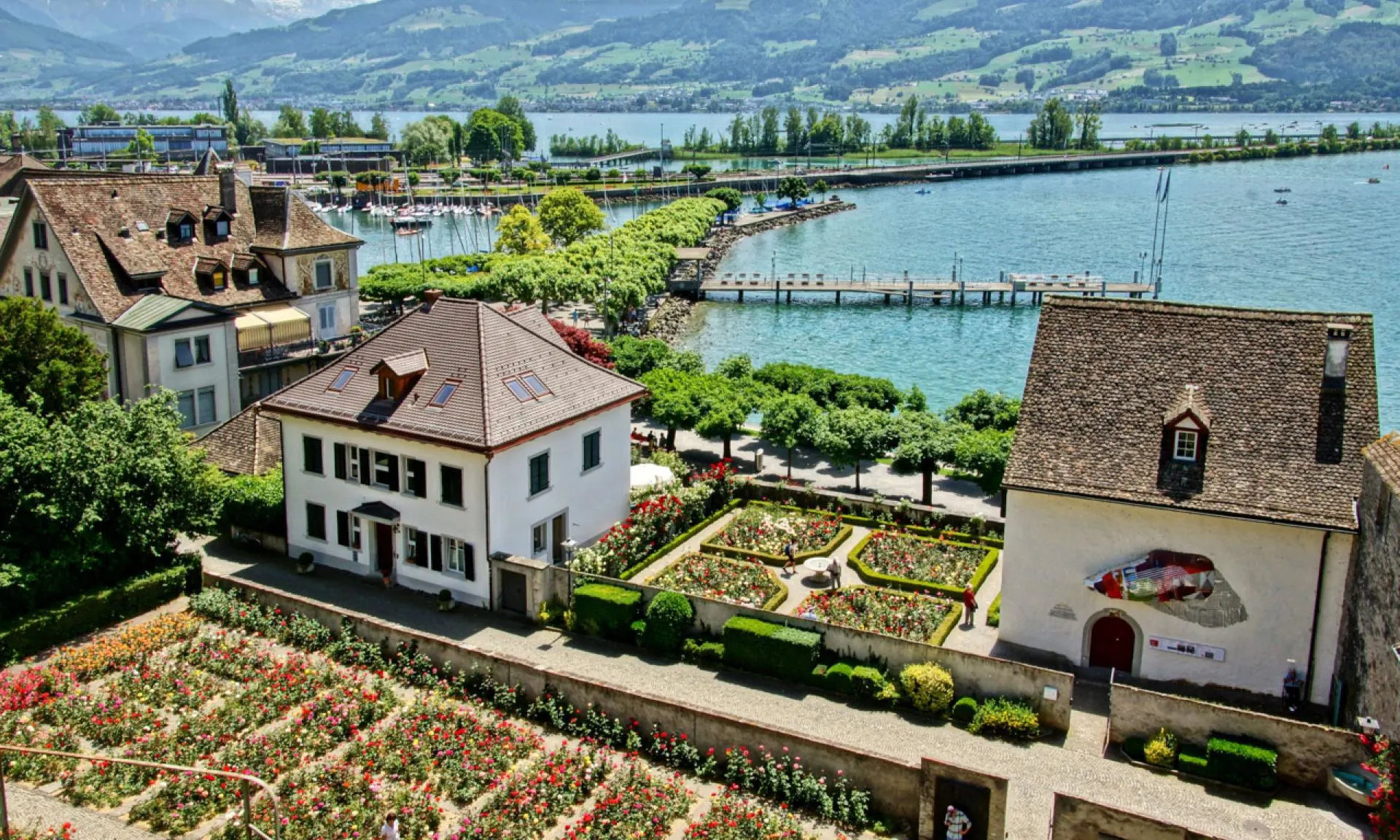
At 6:00 AM, the air above the Rapperswil rose town hangs cool at 406 meters (1,332 feet) elevation, carrying the intoxicating scent of damask roses blooming in the terraced gardens below the castle walls. You hear it before the sun crests the Glärnisch massif—the gentle lap of Lake Zurich against the wooden pilings of the 840-meter-long bridge, a rhythmic pulse that has defined this peninsula since the first fortifications were raised in 1229. This is not merely a village; it is a preserved medieval jewel spanning 700 years of history in the Canton of St. Gallen, guarding the upper end of the lake with 15,000 rose bushes in full color. The light here possesses a specific quality—filtered through morning mist, creating soft pastels that shift with the sun's arc over the water. In 2026, as historic sites face the pressure of modernization, the Rapperswil rose town matters more than ever: it represents a rare convergence of botanical beauty and architectural integrity, where the fragrance isn't manufactured but grown, demanding you slow down to match the garden's seasonal pace.
Why Rapperswil Rose Town Embodies Botanical and Medieval Heritage
The Rapperswil rose town solves a fundamental cultural problem: how to preserve horticultural beauty without freezing it in time. When the first rose garden was planted on the castle hill in 1913, curators faced a challenge—how to honor the town's nickname without reducing it to a theme park. Today, the infrastructure has evolved into a model of living heritage. The gardens, expanded in 2005 to include 15,000 bushes of 600 varieties, sit within the original castle grounds, ensuring tourism supports structural integrity. This engineering addresses a deeper need: the demand for authenticity in a commercialized world. The walls aren't artificial; they are 1.5-meter-thick limestone blocks quarried locally, designed to withstand siege engines from the 13th century.
Historically, the region fulfilled a need for strategic transit. The town changed hands multiple times—becoming part of the Swiss Confederacy in 1458—yet maintained its function as a pilgrimage site. This preservation creates a unique social fabric. The wooden bridge, rebuilt in 2001 after a 140-year absence, stands as a marker of renewed connection between Rapperswil and Hurden. The resort addresses a craving for connection: the Rosenweg (Rose Path) spans 2 kilometers, marked with informational panels installed in 2015. With 3,000 square meters of exhibition space in the castle and 15,000 blooming plants, the facility operates like an open-air archive. This isn't just recreation; it's a testament to Swiss stewardship, where access is granted only to those who respect the fragile balance between botanical fame and architectural integrity. The archives, dating to 1280, remain active, proving heritage can be administrative.
The Best Time to Experience Rapperswil Rose Town
For optimal rose blooming: June 15–September 10 offers the most vibrant colors. Daytime air temperatures range from 20–28°C (68–82.4°F) at lake level; nights drop to 12–16°C (53.6–60.8°F). Rose fragrance peaks during the heat of the day. For photography: July 1–August 15 provides the clearest skies. Sunrise occurs at 5:45 AM; arrive by 6:00–7:30 AM for soft light on the lake without haze.
Avoid November 1–February 28 (winter dormancy)—the rose bushes are pruned and bare, obscuring the town's signature feature. Also avoid August 1–20 if you seek solitude; European summer holidays bring crowds to the wooden bridge, and restaurant wait times reach 60 minutes. Winter sports are limited here; this is a cultural destination, not a ski resort.
For specific experiences: arrive at the Rapperswil SG train station by 8:30–9:00 AM to beat the tour bus influx. The gardens are least crowded on weekdays (Tuesday–Thursday). Check live blooming status at rapperswil.ch or call the tourism office at +41 55 220 11 22. Note that the castle museum closes on Mondays during the off-season; summer hours are daily.
Approximate Budget for a 7-Day Trip (2026)
Pricing methodology: Costs reflect mid-range travel (3-4 star hotels, mix of self-catering and restaurant dining, public transportation) during peak summer season (July 2026). All prices include Switzerland's 7.7% VAT. Prices adjusted for 3.5% inflation projected for 2026. Currency is Swiss Francs (CHF). Note: Rapperswil is often a day trip; this budget assumes using it as a base for Lake Zurich.
Accommodation: CHF 220–CHF 400 per night for double room in 3-star hotel in Rapperswil Old Town; CHF 160–CHF 260 in guesthouses in nearby Jona. Budget hostels: CHF 60–CHF 90 per person.
Food: CHF 70–CHF 110 per day per person
- Breakfast: CHF 18–CHF 28 (hotel buffet with muesli, cheese, bread)
- Lunch: CHF 25–CHF 40 (lakefront bistro salad CHF 26, sausage platter CHF 32)
- Dinner: CHF 35–CHF 55 (restaurant: cheese fondue CHF 42, schnitzel CHF 45)
Transportation:
- Train Zurich to Rapperswil: CHF 16 one-way (40 minutes, direct)
- Swiss Travel Pass (8 days): CHF 436 for unlimited trains/buses
- Local bus within region: free with Guest Card
- Taxi from station to hotel: CHF 20 (1.5 kilometers)
Attractions:
- Castle Museum Entry: CHF 12 adults, CHF 6 children
- Rose Garden Access: Free (donations welcome)
- Lake Zurich Boat Cruise: CHF 55 per day
- Polish Museum Entry: CHF 10
Miscellaneous:
- Souvenir: Rose oil bottle CHF 25, postcard set CHF 10
- Travel insurance (7 days): CHF 55–CHF 95
- Hiking poles rental: CHF 15
- Lockers at train station: CHF 10 per day
Total for 7 days (mid-range): CHF 2,500–CHF 3,500 per person (excluding international flights)
7 Essential Rapperswil Rose Town Experiences
- Explore the Castle Museum: Enter the main keep by 10:00 AM. The building uses traditional limestone and timber from 1229. The interior features period artifacts: armor, coins, documents. Spend 60 minutes exploring the rooms. Audio guides are available in five languages. Photography is allowed without flash. The courtyard grows herbs mentioned in historical records: sage, rosemary, thyme. Exit through the gift shop; purchase the historical reprint (CHF 25).
- Walk the Rose Gardens: The 2-kilometer path around the castle hill is steep and well-marked. Start at 8:00 AM when fragrance is strongest. The path is packed gravel, suitable for sneakers. Informational panels appear every 100 meters. Stop at the viewpoint platform near the Capuchin Monastery for panoramic shots. The trail is marked with yellow signs; do not deviate into private vineyards. Dogs are permitted on leash. Allow 2 hours for the full loop.
- Dine at the Stadthaus: Located in the old town center, this historic venue opens 11:00 AM. Reserve a table for 12:30 PM. Order the "Town Platter" (CHF 50): dried meat, cheese, pickles, bread. The interior features wood paneling from the 1990 renovation. Live folk music plays Saturday evenings. The wine list focuses on local Pinot Noir (CHF 70 per bottle). Dress code is smart casual; hiking boots are frowned upon—use locker rooms to change.
- Cross the Wooden Bridge: Walk the 840-meter Holzbrücke at 4:00 PM. This pedestrian path connects Rapperswil to Hurden. The route includes views of the Seedamm. Sit on the benches for best views of the Churfirsten. The bridge operates 24 hours; tickets are free. Stop at the chapel midway to light a candle. The structure is historic; photography through railings is permitted but watch for reflections.
- Cruise Lake Zurich: Board the MS Rapperswil at 9:00 AM. This 2-hour journey traverses the upper lake. The route includes stops at Stäfa and Meilen. Sit on the upper deck for best views of the Alps. The boat operates hourly; tickets cost CHF 55 full day. Stop at Zurich Bürkliplatz to access city trails. The vessel is historic; photography through windows is permitted but watch for reflections.
- Visit the Polish Museum: Located near the castle, this small museum opens 10:00 AM–5:00 PM. Entry is CHF 10. Exhibits explain the Polish diaspora history. Guides offer talks at 11:00 AM and 3:00 PM (German/English). The center has interactive displays for children. Restrooms are located here—clean and free. Combine with a visit to the adjacent playground for families. The archive contains first editions from 1850.
- Watch the Sunset from the Harbor: Take the path at 7:00 PM. The viewpoint terrace at lake level offers unobstructed 360° panoramas. On clear days, you see the Zurich skyline 30 kilometers away. Bring a warm jacket—even in summer, temperature drops to 15°C (59°F) after sunset. The café opens until 9:00 PM for coffee (CHF 6). Stay for 45 minutes to see the light shift on the water. Photography tripods allowed but cannot obstruct traffic.
3 Hidden Gems Most Travelers Miss
- The Capuchin Monastery Garden: While crowds flock to the main rose garden, this cloistered courtyard 200 meters east remains quieter. Access via the eastern path from the castle (5 minutes). The 500-meter walking loop requires no guide. The path follows historic herb beds from 1600s. Look for the old fountain—still intact. The path is less maintained, offering a wilder feel. Best visited Wednesday mornings when tour groups are absent. Entry by donation only. The herbs here are rarer than the main garden.
- The Endinger Winzerkeller: While tourists drink in the town, this neighboring wine cellar 1 kilometer west remains quieter. Access via PostBus line 851 from Rapperswil (10 minutes). The 1-kilometer walking loop requires no guide. The path follows historic wine terraces from 1700s. Look for the press house—steepest in the region. The path is less maintained, offering a wilder feel. Best visited Wednesday mornings when tour groups are absent. Tasting by appointment only (email wein@endinger.ch). The wine here is rarer than Rapperswil.
- The Secret Forest Bench: On the rose trail, 1 kilometer from the start, lies a solitary wooden bench facing the lake. It's unmarked on maps. This spot receives direct sunlight from 10:00 AM–12:00 PM. Most hikers walk past it without noticing. It's ideal for 20 minutes of silent meditation. Bring a book or simply breathe. The air here is infused with pine resin. Best used during weekdays. No facilities nearby—carry water. The bench was installed by a local carpenter in 1995.
Cultural & Practical Tips
- Hiking Rules: Stay on marked trails—this is strictly enforced. Entering vineyards during harvest (Sept–Oct) is prohibited. Violations incur CHF 200 fines. Rangers monitor behavior; reckless hiking results in expulsion. Children under 10 must be accompanied by an adult. No drones allowed without permission.
- Environmental Etiquette: Do not pick roses—this is private property. Pick up all trash—including biodegradable items like apple cores. Dogs are prohibited in rose beds (leashed only on trails). Noise levels should be kept low; this is a residential zone. Smoking is prohibited within 50 meters of the gardens.
- Language Basics: The region speaks German (Swiss dialect). Learn: "Grüezi" (GRUE-ts-i) = hello; "Danke" (DAN-kuh) = thank you; "En Guete" (en GUE-teh) = enjoy your meal. English is widely spoken in hotels and museums. Signage appears in German and English. Staff appreciate efforts to use local greetings.
- Safety Considerations: Trail surfaces can be slippery after rain—wear grippy shoes. Weather changes rapidly—seek shelter if thunderstorms approach. The bridge closes in high winds. Check status before hiking up. Water fountains are available on the trail; bring a bottle. Mobile coverage is spotty above 100 meters.
- Photography Guidelines: Drones are prohibited without special permits (apply 4 weeks ahead via rapperswil.ch). Tripods are allowed on trails but cannot obstruct traffic. Respect privacy—do not photograph other guests without permission. The best light for photography is 6:00–8:00 AM and 5:00–7:00 PM when shadows define the vines.
- Accessibility: The town center is wheelchair accessible (paved surface). Restrooms are equipped for disabled access. The Rose Trail is not suitable for wheelchairs (gravel/steep). Parking includes designated disabled spots (15 spaces). The station has a ramp entry. Wheelchair rental available at tourism office (CHF 30 per day).
- Payment Methods: Cash (CHF) is preferred at small kiosks and cellars. Cards accepted for amounts over CHF 50. No ATMs at the Castle—withdraw money in Rapperswil. Prices are fixed; tipping is not expected but appreciated (round up). Guest Card provides discounts on boat rental (10%).
Conclusion: Travel with Reverence, Not Just Checklist
The Rapperswil rose town doesn't need more tourists—it needs more storytellers. Those who understand that the castle isn't just a photo op but a tribute to 800 years of strategic impact. Those who recognize that the roses aren't just scenery but a livelihood sustaining gardeners since the 1900s. Those who accept that visiting here isn't consumption but participation in a living heritage. In 2026, as historic sites risk becoming theme parks, Rapperswil stands as a reminder: stories are rooted in soil, not plastic.
Your entry fee funds museum preservation and garden maintenance. Your choice to buy local wine supports agricultural continuity. Your willingness to learn the history, respect the blooms, and hike with care—this is the currency of sustainable tourism. So when you stand where guards supposedly watched the lake, remember: you're not visiting a set but walking through a legacy. Slow down. Smell the roses. Read the plaques. The town will remain beautiful in 2036, 2046, beyond—if we choose to honor it.