
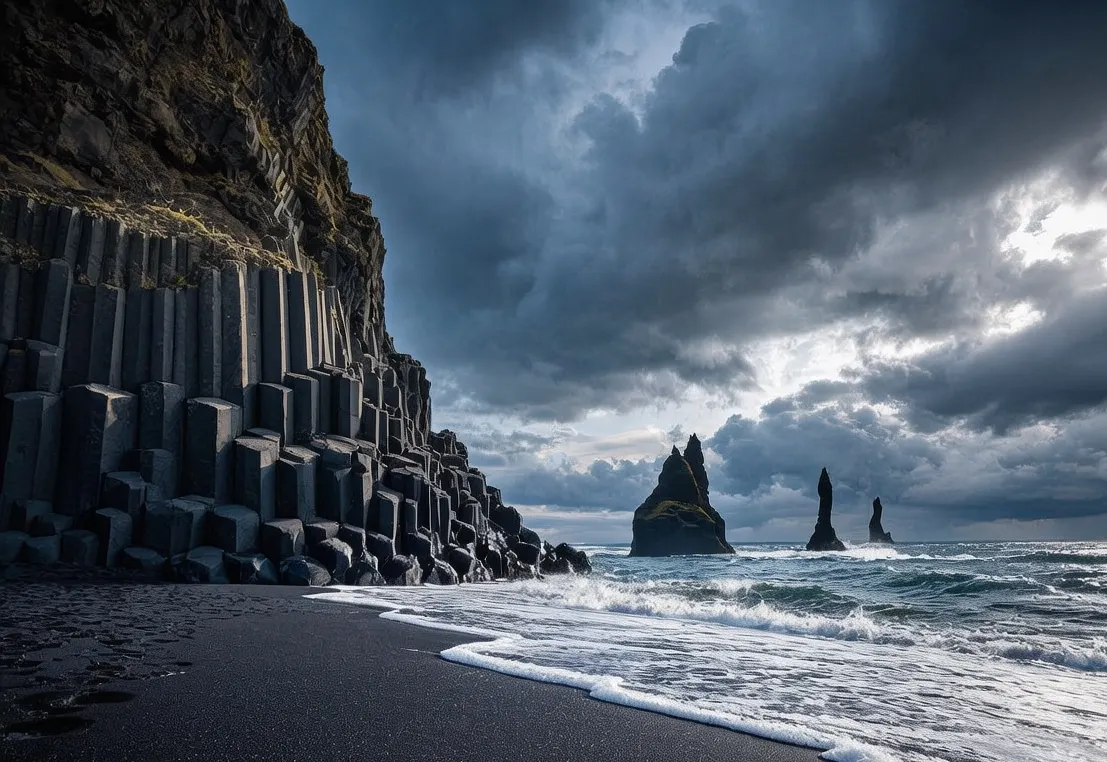
Reynisfjara Black Sand Beach Basalt Columns Meet Atlantic Fury
The wind screams across the black sand, carrying the salt spray of the North Atlantic and the thunderous crash of waves that have pounded this shore for millennia. You step onto the obsidian beach, where each grain of volcanic sand gleams like polished onyx under the pale Arctic sun. Before you rise the Reynisdrangar sea stacks—jagged basalt pillars that pierce the gray sky, standing sentinel over a coastline where the ocean claims lives without warning. To your left, hexagonal basalt columns stack geometrically in a cliff face, a natural cathedral carved by ancient lava flows cooled rapidly by the sea. This isn't just a beach; it's a geological masterpiece and a graveyard, where sneaker waves have dragged unsuspecting visitors into the freezing depths. In 2026, as coastal erosion accelerates and dangerous beaches claim more tourists globally, Reynisfjara black sand beach matters now more than ever—a stark reminder that nature's beauty demands respect, where the line between wonder and peril is as thin as the foam on a wave.
Why Reynisfjara Black Sand Beach Embodies Icelandic Power
The Reynisfjara black sand beach represents far more than a scenic stop—it is Iceland's most dramatic demonstration of volcanic geology meeting oceanic force. Formed approximately 10,000 years ago during the last Ice Age, the beach consists of black volcanic sand created by the erosion of basalt lava flows from nearby volcanoes. The iconic Reynisdrangar sea stacks rise 66 meters (217 feet) from the ocean, remnants of a basalt column formation that once connected to the mainland. According to Icelandic folklore, these stacks are the petrified remains of trolls who attempted to drag a ship to shore but were caught by sunrise and turned to stone.
The beach's hexagonal basalt columns, located at Reynisfjall cliff, demonstrate columnar jointing—a geological process where cooling lava contracts and fractures into geometric shapes. Each column measures 1–2 meters across, stacked in perfect hexagons that rival human architecture. This formation solves a critical educational need: providing visitors with a tangible example of volcanic processes that shaped Iceland. The beach stretches 2.5 kilometers along Route 215, with sand composed primarily of fine basalt particles mixed with volcanic glass.
Designated as part of a protected coastal area in 1992, Reynisfjara black sand beach draws 500,000+ visitors annually despite—or perhaps because of—its lethal reputation. The beach has claimed multiple lives due to sneaker waves that surge 30–50 meters inland without warning. This danger fulfills an uncomfortable truth: that some of Earth's most beautiful places are also its most unforgiving. The site serves as both a geological classroom and a cautionary tale, proving that Iceland's landscapes command敬畏 (reverence) rather than casual exploration.
The Best Time to Experience Reynisfjara Black Sand Beach
Timing your visit to Reynisfjara black sand beach requires balancing weather safety, photographic conditions, and crowd density. For optimal conditions combining manageable waves with dramatic lighting, target May 15–June 15 or September 10–October 5. During these shoulder seasons, air temperatures range from 5–11°C (41–52°F), and daylight stretches 16–20 hours, allowing extended exploration. The ocean is calmer than winter months, though sneaker waves remain a constant threat. Crowds are 35% lower than peak summer, giving you space to photograph without shoulder-to-shoulder congestion.
For storm photography and dramatic wave action, visit between November 15 and March 1. Temperatures drop to -2–4°C (28–39°F), and the Atlantic becomes turbulent, creating spectacular displays of power against the black sand. However, the beach becomes extremely dangerous during storms, with waves reaching 15 meters (49 feet) high. Plan your visit between 11:00 AM–3:00 PM for maximum daylight and slightly calmer conditions. Avoid December 20–January 10 unless experienced with Arctic conditions; daylight shrinks to 4–5 hours, and storms can trap visitors.
Avoid June 20–July 10 if you dislike crowds. This peak window brings 3,000+ daily visitors, creating bottlenecks at the basalt columns and parking areas between 11:00 AM–4:00 PM. The beach's danger increases with crowds as visitors venture too close to the water. For real-time weather and wave conditions, verify at www.vedur.is and check the Icelandic Coast Guard warnings at www.lhg.is. Never visit during red flag warnings.
Approximate Budget for a 7-Day Trip (2026)
Exploring Reynisfjara black sand beach anchors a week-long South Coast adventure. This budget assumes a 7-day trip based in Reykjavík or Vík with day trips along the Ring Road. Prices reflect 2026 rates, accounting for Iceland's average 3.8% annual inflation from 2024–2026 (source: Statistics Iceland). All amounts shown in euros; multiply by 1.08 for USD equivalents. Note that Iceland uses ISK, but € is provided for international comparison.
Accommodation: €150–€320 per night
• Budget guesthouse in Vík (near Reynisfjara): €150–€200
• Mid-range hotel (Selfoss area): €220–€280
• Luxury (Hotel Ranga or similar): €380–€550
• Camping (seasonal, Vík): €25 per person
Food: €55–€95 per day
• Breakfast: €12–€18 (hotel buffet or bakery pastry + coffee)
• Lunch: €18–€28 (Icelandic lamb soup, fish of the day, or hot dog)
• Dinner: €25–€49 (pan-fried Arctic char or traditional lamb)
• Groceries (self-catering): €35/day
Transportation:
• Keflavík Airport to Reykjavík Flybus: €32 round-trip
• Rental car (4x4 SUV, 7 days): €420 + €160 fuel
• South Coast day tour: €95
• Reykjavík city bus (Strætó): €3.20 per ride
• Reynisfjara parking: Free
Attractions:
• Reynisfjara beach: Free
• Dyrhólaey viewpoint: Free
• Skógafoss waterfall: Free
• Sólheimajökull glacier tour: €85
• Perlan Museum: €30
• Blue Lagoon day trip: €110
• Golden Circle tour: €95
Miscellaneous:
• Icelandic wool sweater (lopapeysa): €110–€180
• Waterproof jacket: €120
• Travel insurance: €55
• Souvenirs (lava rock, handicrafts): €40
• Tips (not expected but appreciated): €25
Total for 7 days (mid-range): €2,250–€2,600 per person
Total (budget-conscious): €1,500–€1,750 per person
6 Essential Reynisfjara Black Sand Beach Experiences
1. Photograph the Basalt Columns: Walk to the eastern end of the beach where hexagonal basalt columns rise from the cliff face. The formation extends 30 meters vertically, creating a natural amphitheater. Visit at 10:00 AM–12:00 PM when sunlight illuminates the geometric patterns. Use a wide-angle lens to capture the full scale. The columns are best photographed from below, looking up. This is one of Iceland's most iconic geological features, formed by rapid cooling of lava.
2. View the Reynisdrangar Sea Stacks: Stand at the western viewpoint to see the jagged sea stacks rising from the ocean. These 66-meter (217-foot) pillars are visible from the parking area. Visit at 2:00–4:00 PM when the light creates dramatic shadows. Use a telephoto lens (200mm+) to capture details. Never approach the water's edge here; waves surge unpredictably. The stacks are most dramatic during storm conditions, but view only from safe distances.
3. Walk the Black Sand Shoreline Safely: Stay at least 50 meters from the water's edge at all times. Walk parallel to the shore, never toward the ocean. The black sand is fine and powdery, creating a surreal landscape. Visit at 6:00–8:00 PM in summer for midnight sun lighting. Bring a windproof jacket; the beach is fully exposed. This experience emphasizes the beach's otherworldly beauty while maintaining critical safety distance.
4. Explore the Reynisfjall Cave: Located at the base of the basalt columns, this small cave offers shelter and unique photography opportunities. Access requires careful navigation over slippery rocks. Visit at low tide only and check tide tables in advance. The cave interior is dark; bring a flashlight. Never enter if waves are breaking near the entrance. This hidden space reveals the beach's geological complexity.
5. Watch for Arctic Terns and Puffins: Between May and August, seabirds nest on the cliffs above the beach. Bring binoculars to observe without disturbing. Arctic terns are aggressive during nesting season; give them wide berth. Visit at 7:00–9:00 AM when birds are most active. The sound of thousands of wings creates an unforgettable atmosphere. This experience highlights the beach's ecological importance beyond geology.
6. Sunrise Photography Session: Return to Reynisfjara between 4:00–6:00 AM in summer for sunrise. The low light creates ethereal conditions with minimal crowds. The basalt columns glow orange-pink in dawn light. Bring a tripod and neutral density filters for long exposures. This is the most peaceful time to experience the beach's power without the danger of midday crowds.
3 Hidden Gems Most Travelers Miss
• Reynisfjara East Beach: Located 1 kilometer east of the main parking area, this section features fewer crowds and intact basalt formations. Access requires a 15-minute walk along the shoreline. Why overlooked: Most visitors stay near the parking lot. Best visited at 8:00–9:00 AM before crowds arrive. Insider tip: The eastern cliffs offer better puffin viewing opportunities than the main area.
• Hjörleifshöfði Mountain: Located 12 kilometers east on Route 218, this volcanic plug offers panoramic views of Reynisfjara from above. Access requires a 2-hour hike round-trip. Why overlooked: Requires physical effort; tour buses skip it. Coordinates: 63.4167° N, 19.2333° W. Best visited at 7:00–8:00 AM for sunrise. The summit reveals the beach's full 2.5-kilometer stretch.
• Vík Church Viewpoint: Located in Vík village, 3 kilometers west. The churchyard offers a panoramic view of Reynisfjara and the Reynisdrangar stacks from above. Open 24/7; entry is free. Why overlooked: Tourists focus on the beach itself and miss the contextual view. Best visited at 9:00–10:00 PM for sunset. Insider tip: Combine with a visit to the Vík wool store for authentic Icelandic souvenirs.
Cultural & Practical Tips
• Never turn your back on the ocean: Sneaker waves at Reynisfjara surge 30–50 meters inland without warning. Multiple fatalities have occurred when visitors turned away from the water. Always face the ocean and maintain a 50-meter minimum distance. Waves can reach 15 meters (49 feet) high during storms. This rule is non-negotiable for survival.
• Wind preparation: The beach is fully exposed to Atlantic gales. Even in summer, wind speeds reach 70 km/h (43 mph). Bring a windproof jacket, secure hat, and gloves. Temperatures at the beach average 3–5°C cooler than Vík village. Check www.vedur.is for wind forecasts before visiting.
• Learn these Icelandic phrases:
— Takk (tahk): Thank you
— Góðan daginn (go-than dy-in): Good day
— Reynisfjara (ray-nis-fyar-a): The beach's name
— Hafið (ha-fith): The ocean
Icelanders appreciate effort; pronunciation matters less than attempting the language.
• Photography guidelines: Tripods permitted but anchor them against wind. Drone use requires special permit from the Icelandic Transport Authority (apply 4 weeks ahead). Best light: Sunrise (4:00–6:00 AM summer); golden hour (8:00–10:00 PM). Never risk your safety for a photo; no image is worth your life.
• Respect warning signs: Red flag warnings mean stay off the beach entirely. Icelandic authorities post clear signage when conditions are dangerous. Ignoring these warnings risks your life and burdens rescue services. The beach has claimed lives; heed the warnings. Check conditions at the visitor center before descending.
• Footwear requirements: The black sand is fine and powdery but becomes slippery when wet. Wear sturdy hiking boots with ankle support. Avoid sandals or flip-flops. The sand can reach 40°C (104°F) on sunny days, burning bare feet. Bring waterproof boots if exploring near the basalt caves.
Conclusion: Travel with Reverence, Not Just Photography
The Reynisfjara black sand beach demands more than a perfect Instagram shot—it asks for reverence. As you stand before those basalt columns and sea stacks, recognizing that you're not just visiting a landmark; you're entering a zone where the ocean claims lives without mercy. In 2026, as coastal tourism increases and dangerous beaches claim more visitors, Reynisfjara offers both wonder and warning: that nature's beauty is inseparable from its power, that respect outweighs curiosity, and that future generations deserve to experience this landscape safely. Slow down. Listen to the wind that shaped these stones. Feel the spray that carries the Atlantic's fury. Understand that this beach exists as both masterpiece and graveyard. When you visit Reynisfjara black sand beach in 2026, don't just capture the basalt for social media—contemplate the forces that created it. Don't just check a box—honor the lives lost here. Iceland preserves this site not as a playground, but as a teacher. Learn. Reflect. Carry this reverence home. The world needs more guardians of wild places, not just conquerors of views.