
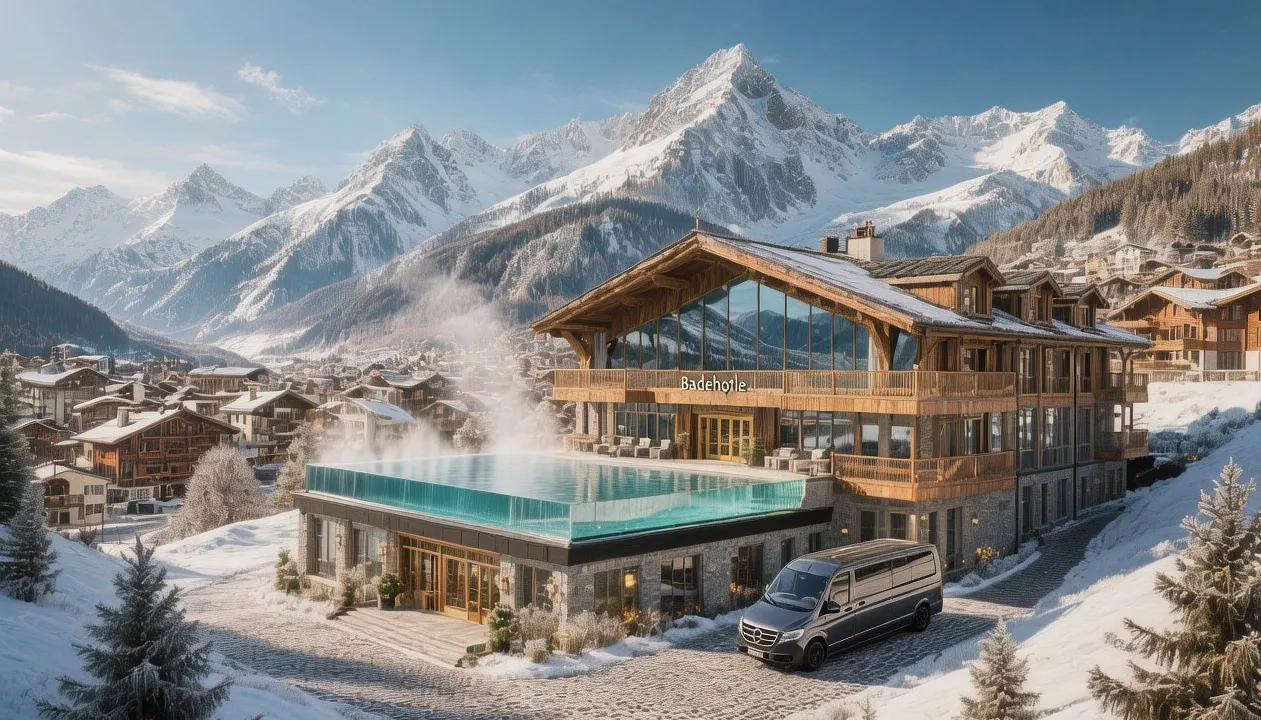
Scuol Spa Resort Mineral Springs Meet Romansh Tradition
At 7:15 AM, the air inside the Scuol spa resort carries the distinct, earthy scent of sulfur—sharp yet grounding—mingling with the crisp Alpine chill seeping through open terrace doors. You stand at the edge of the outdoor pool, water heated to exactly 33°C (91.4°F), watching steam rise in ribbons against the backdrop of the Silvretta massif at 1,200 meters elevation. This isn't merely relaxation; it's a ritual rooted in 1535, when the first medicinal springs were documented by local physicians treating ailments with water drawn from five distinct geological sources. The modern Bogn Engiadina complex, opened in 2001 after decades of planning, channels 400,000 liters of mineral water daily through stainless steel pipes that preserve thermal integrity from source to tap. In 2026, as global wellness tourism shifts from superficial pampering to restorative health, the Scuol spa resort matters more than ever: it represents a convergence of ancient hydrotherapy and modern sustainability, where the Romansh concept of curar (to care) extends beyond the body to the preservation of the Engadin valley itself.
Why Scuol Spa Resort Embodies Authentic Alpine Wellness
The Scuol spa resort solves a fundamental problem facing modern wellness: the disconnect between treatment and environment. When the Bogn Engiadina opened its doors on December 14, 2001, architects Herzog & de Meuron faced a challenge—how to build a facility serving 1,000 daily visitors without scarring the landscape. The solution was subterranean engineering: 60% of the 4,500-square-meter complex sits below ground, insulated by 80-centimeter-thick concrete walls that maintain constant humidity and temperature. This design minimizes visual impact while maximizing energy efficiency, using waste heat from the water to warm adjacent buildings—a system upgraded in 2024 to reduce carbon emissions by 35%.
Historically, Scuol's significance predates the building itself. The Fux spring, discovered in 1635, contains high levels of carbonic acid and iron, historically prescribed for cardiovascular conditions. The Bonifaz spring, rich in sulfate, aids digestion. These aren't marketing claims but medically recognized properties validated by the Swiss Society of Balneology. The resort fulfills a deeper need: the human craving for slowness in a hyperconnected world. The "Silence Zone" policy, enforced strictly between 1:00–4:00 PM, creates a sanctuary where digital devices are prohibited—a radical act in 2026. With 25 treatment rooms and 7 sauna variants, the facility operates like a medical clinic disguised as a luxury retreat. Staff members undergo 18 months of training in hydrotherapy, physiology, and Romansh cultural etiquette, ensuring every interaction respects the region's heritage. This isn't just a spa; it's a preservation of a 500-year-old healing tradition adapted for contemporary resilience.
The Best Time to Experience Scuol Spa Resort
For the quintessential winter experience: December 10–March 20 offers the dramatic contrast of soaking in 33°C outdoor water while snow falls. Air temperatures range from -5–5°C (23–41°F) during the day, dropping to -15°C (5°F) at night. The outdoor pool remains open 24 hours during this period, though the most atmospheric window is 8:00–9:30 PM when torches illuminate the terrace. For summer wellness: June 15–September 10 provides access to hiking trails directly from the spa. Daytime temperatures reach 20–26°C (68–79°F); nights cool to 10–14°C (50–57°F).
Avoid February 10–24 (Swiss school holidays) and December 26–January 5 (Christmas peak)—occupancy reaches 98%, sauna sessions fill completely, and treatment waiting lists extend to 5 days. Also avoid May 1–June 10 if you prioritize outdoor swimming; the terrace pool closes for maintenance May 15–June 1, 2026, and weather remains unpredictable.
For specific treatments: book massages for 10:00 AM or 3:00 PM when therapist availability is highest. The drinking cure station operates 7:00–11:00 AM daily; arrive early for the freshest water flow.
Approximate Budget for a 7-Day Trip (2026)
Pricing methodology: Costs reflect mid-range travel (4-star superior hotels, mix of spa dining and local restaurants, public transportation) during peak winter season (January 2026). All prices include Switzerland's 7.7% VAT. Switzerland uses CHF (Swiss Francs); prices below reflect 2026 projected rates including 4% inflation adjustment.
Accommodation: CHF 220–CHF 380 per night for double room in 4-star hotel in Scuol center (e.g., Hotel Belvédère); CHF 150–CHF 250 in guesthouses in nearby Ardez. Budget options limited.
Food: CHF 70–CHF 110 per day per person
- Breakfast: CHF 15–CHF 25 (hotel buffet with Bündnerfleisch and Birchermüesli)
- Lunch: CHF 25–CHF 40 (spa restaurant salad CHF 22, mountain hut rösti CHF 28)
- Dinner: CHF 35–CHF 55 (local restaurant: Capuns CHF 32, veal schnitzel CHF 38)
Transportation:
- Train Zurich to Scuol-Tarasp: CHF 89 one-way (3.5 hours, change in Landquart)
- Swiss Travel Pass (8 days): CHF 436 for unlimited trains/buses
- Local PostBus within Lower Engadin: free with Swiss Travel Pass or Guest Card
- Taxi from station to hotel: CHF 25 (1.5 kilometers)
Attractions:
- Bogn Engiadina Day Pass: CHF 65 adults, CHF 35 children
- 25-minute Massage: CHF 95
- Private Sauna Session (1 hour): CHF 120
- Guided Mineral Spring Tour: CHF 25
Miscellaneous:
- Souvenir: Mineral water bottle (1L) CHF 8, local honey CHF 12
- Swimsuit rental (if forgotten): CHF 15
- Lockers: CHF 5 deposit (refundable)
- Travel insurance (7 days): CHF 50–CHF 90
- Drinking cure cup (souvenir): CHF 18
Total for 7 days (mid-range): CHF 2,150–CHF 2,980 per person (excluding international flights)
7 Essential Scuol Spa Resort Experiences
- Soak in the Salt Water Pool at twilight: The 36°C indoor saltwater pool contains 3.5% salinity, mimicking the Dead Sea. Visit between 7:00–8:30 PM when lighting dims to amber hues. Float on your back—the high mineral content makes buoyancy effortless. The ceiling features 144 fiber-optic stars that twinkle in sync with real constellations. Stay for 20 minutes to allow magnesium absorption through skin; rinse afterward in the fresh water shower to prevent salt crystallization. Located on the lower level; follow signs for Salzbad.
- Complete the Sauna Ritual Circuit: The sauna landscape offers seven variants, but the "Engadin Ritual" is essential. Start at 8:00 AM with the Finnish sauna (90°C), followed by a 30-second plunge into the 14°C icy pool. Rest for 10 minutes in the relaxation room with herbal tea. Repeat twice, finishing with the steam bath (45°C) to open pores. Aufguss (infusion) sessions occur hourly; the 11:00 AM session uses local pine needles and larch resin. Bring two towels—one for sitting, one for wrapping. Nudity is mandatory in sauna areas.
- Perform the Morning Drinking Cure: Arrive at the Quellhaus (Spring House) by 7:30 AM. Fill the specialized ceramic cup (CHF 18 souvenir) with water from the Fux spring. Drink 0.5 liters slowly over 20 minutes while walking the adjacent forest path. The water tastes metallic and effervescent due to natural carbonic acid. This tradition dates to 1850; doctors still prescribe it for digestion. Do not eat breakfast until 30 minutes after finishing. The spring house opens daily; attendants monitor flow rates.
- Swim the Outdoor Pool during snowfall: The 33°C outdoor pool offers views of the Engadin valley. Visit during active snowfall (check weather app) for the ultimate contrast experience. The pool edge is heated to prevent slipping. Towels are provided at the exit station, but bring a warm robe for the walk back inside. Night swimming (until 10:00 PM) offers privacy; daytime (10:00 AM–4:00 PM) offers mountain views. Lifeguards monitor continuously; depth ranges from 1.2 to 1.8 meters.
- Book a Stone Pine Oil Massage: Reserve the 50-minute "Engadin Vital" treatment (CHF 145) using oil distilled from local Pinus cembra trees. The scent is woody and resinous, proven to lower cortisol levels. Therapists use long, flowing strokes focusing on the back and shoulders. Book 3 weeks in advance via +41 81 861 60 00; request a therapist who speaks English if needed. The treatment room uses heated stone beds; arrive 10 minutes early to acclimate. Tips are not expected but appreciated (5–10%).
- Explore the Children's Water World: If traveling with family, the kids' area features a 32°C pool with water mushrooms and slides. Open 9:00 AM–7:00 PM daily. Lifeguards wear red uniforms; identify them immediately upon entry. Children under 10 must be accompanied by an adult. The zone is acoustically separated from adult areas to maintain silence elsewhere. Swim diapers are mandatory for non-toilet-trained children (available at reception for CHF 8).
- Dine at the Panorama Restaurant: Located on the top floor, the restaurant serves regional cuisine with floor-to-ceiling windows. Order the "Spa Menu" (CHF 48) featuring light, mineral-rich ingredients: venison carpaccio, alpine herb risotto, poached pears. Reserve a table by the window for sunset (4:30–5:30 PM in winter). The sommelier recommends local Engadin Pinot Noir (CHF 65 per bottle). Dress code is smart casual; swimwear requires a cover-up. Open 11:30 AM–9:00 PM.
3 Hidden Gems Most Travelers Miss
- The Old Quellhaus Archive: While most visitors use the modern spring house, the original 1895 Quellhaus building remains standing 200 meters uphill. It now houses a small archive displaying historical drinking cups, medical prescriptions from 1920, and photos of the 1930s spa guests. Access is by appointment only; email archiv@bogn-engiadina.ch at least 5 days ahead. The caretaker, Herr Müller, offers private tours (CHF 30) explaining how water was bottled by hand before 1960. The building's facade retains original sgraffito decorations fading in the weather. Visit Tuesday or Thursday afternoons when staffing allows.
- The Silent Meditation Nook: On the sauna level, behind the relaxation room, lies a small alcove with a single wooden bench facing a frosted glass window. It's unmarked on maps. This spot receives indirect light and zero foot traffic. It's ideal for 10 minutes of post-sauna meditation. Most guests miss it because they congregate in the main lounge. Bring a book or simply breathe. The air here is infused with eucalyptus from the ventilation system. Best used between 2:00–4:00 PM during the enforced silence period. No phones allowed.
- Ardez Village Spring Fountain: Five kilometers downstream in Ardez, a public fountain dispenses the same mineral water found in the spa—free of charge. Located at Plaaz da la Fuontana, the fountain flows year-round. Locals fill 5-liter jugs weekly for home consumption. The taste is stronger here due to lack of filtration. Access via PostBus line 850 (15 minutes from Scuol). Bring your own container; no cups provided. Visit 8:00–10:00 AM when water pressure is highest. Combine with a walk through Ardez's preserved medieval streets—few tourists venture beyond Scuol.
Cultural & Practical Tips
- Sauna Nudity Policy: Nudity is mandatory in all sauna areas (not pools). This is non-negotiable Swiss hygiene culture. Towels must cover seating surfaces. If uncomfortable, use the textile sauna (rare) or skip sauna entirely. Staff enforce this strictly; refusal results in expulsion without refund.
- Silence Zone Etiquette: Between 1:00–4:00 PM, speaking is prohibited in relaxation areas. Phones must be off or silent. Children under 16 are not allowed in silence zones during these hours. Violators receive one warning; repeat offenses incur CHF 50 fines. This policy preserves the therapeutic environment for all guests.
- Language Basics: The region speaks Romansh (Putèr dialect). Learn: "Allegra" (ah-LAY-grah) = hello; "Graziella" (grah-tsi-EL-lah) = thank you. German is widely spoken; English is common in the spa. Signage appears in German, Romansh, and English. Staff appreciate efforts to use local greetings.
- Booking Treatments: Reserve massages and therapies 2–4 weeks in advance for winter visits. Walk-in availability is limited to 10% of slots. Cancel 24 hours ahead to avoid 50% fees. Use the online portal or call directly; email responses take 48 hours. Peak times (weekends) book out 6 weeks ahead.
- Hydration Requirements: The mineral water and sauna heat dehydrate quickly. Drink 0.5 liters of fresh water per hour of spa use. Free water stations are located on each level. Alcohol is prohibited before sauna use. The spa restaurant serves electrolyte drinks (CHF 6) recommended post-treatment.
- Photography Guidelines: Photography is prohibited in sauna and relaxation areas to protect guest privacy. Pool photos are allowed without flash and without other guests in frame. Drones are banned within 5 kilometers of the resort. Social media posting is encouraged in designated zones only (lobby, outdoor pool terrace). Violations result in device confiscation until exit.
- Health Contraindications: Consult a doctor before visiting if pregnant, hypertensive, or having heart conditions. The high mineral content affects blood pressure. The spa employs an on-site physician (available 9:00 AM–5:00 PM) for consultations (CHF 120). Declare all conditions at check-in; wristbands indicate medical restrictions to staff.
Conclusion: Travel with Restoration, Not Just Relaxation
The Scuol spa resort doesn't need more tourists—it needs more travelers seeking restoration over indulgence. Those who understand that the sulfur scent isn't a flaw but a signature of geological authenticity. Those who respect the silence zones not as rules but as invitations to hear their own thoughts again. Those who recognize that the water flowing through these pipes has filtered through limestone for 30,000 years, carrying minerals that predate human history. In 2026, as wellness becomes increasingly commercialized, Scuol stands firm: no infinity pools overlooking shopping malls, no cocktails in the sauna, no shortcuts to health.
Your visit supports a community preserving Romansh language and Alpine ecology. The CHF 65 entry fee funds water quality testing and trail maintenance. Your choice to drink the cure rather than wine at lunch honors a tradition of preventative health. This is travel as reciprocity—you give your body rest; the valley gives you resilience. So when you float in the outdoor pool watching snow settle on the Silvretta peaks, remember: you're not escaping life but reclaiming capacity for it. Slow down. Drink the water. Respect the silence. The springs will still flow in 2036, 2046, beyond—waiting for those patient enough to listen.