
Seyðisfjörður Colorful Houses Vibrant Timber Meets Nordic Fjord
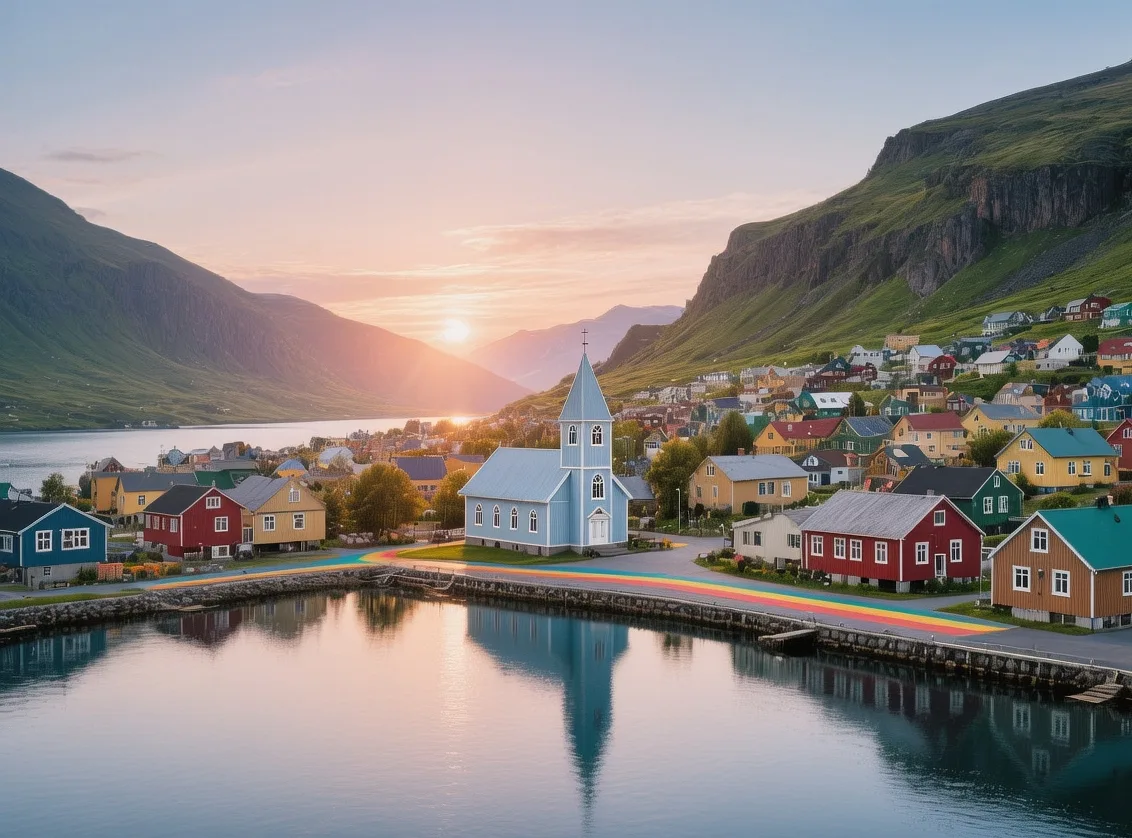
The wind sweeps down from the highlands, carrying the crisp scent of salt and damp timber as you step onto the gravel road. Before you, a cascade of wooden structures tumbles down the steep valley walls—painted in hues of turquoise, mustard, rust, and deep red. This is the visual signature of Seyðisfjörður colorful houses, a town of 700 souls nestled at the head of a 30-kilometer (18.6-mile) fjord in East Iceland. The blue church stands sentinel at the harbor's edge, its steeple piercing the gray sky, while behind it, the mountains rise 1,000 meters (3,280 feet) in a sheer wall of volcanic rock. These buildings are not merely aesthetic; they are historical artifacts, constructed from Norwegian timber imported in the late 19th century to house fishermen and traders. The silence is profound, broken only by the distant hum of the Norröna ferry docking or the rush of waterfalls hidden in the mist. In 2026, as overtourism threatens to homogenize unique cultural landscapes, the Seyðisfjörður colorful houses matter now more than ever—a fragile testament to architectural heritage where the choice to preserve local character against the tide of mass visitation determines whether this rainbow valley remains a living community or becomes a museum exhibit.
Why Seyðisfjörður Colorful Houses Embody Icelandic Heritage
The Seyðisfjörður colorful houses represent far more than a photographer's dream—they are Iceland's most intact example of 19th-century timber architecture and maritime history. Established as a trading post in 1848, the town flourished when Norwegian merchants arrived in the 1890s, bringing prefabricated wooden houses to withstand the harsh coastal climate. Unlike the corrugated iron common in Reykjavík, these structures were built from pine and spruce, painted in bright colors to combat the gloom of long winter nights. This architectural choice solved a critical psychological need: providing visual warmth and morale in an isolated environment where darkness prevails for months. Today, over 60 of these original buildings remain protected under heritage laws, forming the core of the town's identity.
Technical specifications highlight the engineering required to sustain life on such steep terrain. The houses are anchored into the hillside at angles exceeding 30 degrees, with foundations reinforced to withstand avalanches and heavy snow loads of up to 500 kilograms per square meter. The town's layout follows a grid pattern unusual for Iceland, designed by Norwegian engineer Tómas Ólafsson in 1895 to maximize harbor access. Designated a protected townscape in 1990, the site draws 100,000+ visitors annually, primarily via the Smyril Line ferry. The Seyðisfjörður colorful houses fulfill a human need for connection to tangible history, offering a visual link to the era when East Iceland was a hub of international trade. It proves that preservation requires active community engagement, ensuring the buildings remain homes rather than becoming vacant Airbnbs.
The Best Time to Experience Seyðisfjörður Colorful Houses
Timing your visit to the Seyðisfjörður colorful houses requires balancing ferry schedules, weather stability, and light conditions. For optimal photography with midnight sun, target June 15–July 31. During these summer months, temperatures range from 8–15°C (46–59°F), and daylight stretches 21 hours, allowing shoots between 10:00 PM–12:00 AM when the light is soft and golden. The ferry from Denmark arrives weekly, bringing a buzz of activity. Crowds are manageable if you visit on non-arrival days. For winter photography and aurora opportunities, visit between November 1 and March 31. Temperatures drop to -5–5°C (23–41°F), and the snow-capped mountains contrast sharply with the colorful facades. The dark skies offer northern lights visibility above the fjord. Plan your visit between 11:00 AM–3:00 PM for maximum daylight. However, avoid December 20–January 10 unless prepared for extreme weather; storms can close Route 93 temporarily, and daylight shrinks to 4–5 hours. Also skip July 1–10 if you dislike congestion during the LungA Art Festival. For real-time road conditions and ferry schedules.
Approximate Budget for a 7-Day Trip (2026)
Exploring the Seyðisfjörður colorful houses anchors a week-long East Iceland adventure. This budget assumes a 7-day trip based in Seyðisfjörður or Egilsstaðir with day trips to the fjords. Prices reflect 2026 rates, accounting for Iceland's average 3.8% annual inflation from 2024–2026 (source: Statistics Iceland). All amounts shown in euros; multiply by 1.08 for USD equivalents. Note that Iceland uses ISK, but € is provided for international comparison.
Accommodation: €150–€320 per night
• Budget guesthouse in Seyðisfjörður (harbor view): €150–€200
• Mid-range hotel (Town center): €230–€290
• Luxury (Hotel Alda or similar): €380–€500
• Camping (seasonal, Seyðisfjörður): €25 per person
Food: €60–€100 per day
• Breakfast: €15–€20 (hotel buffet or bakery pastry + coffee)
• Lunch: €20–€30 (fish soup, lamb sandwich, or hot dog)
• Dinner: €35–€50 (pan-fried Arctic char or traditional lamb)
• Groceries (self-catering): €40/day
Transportation:
• Keflavík Airport to Egilsstaðir Flight: €150 round-trip
• Rental car (4x4 SUV, 7 days): €450 + €180 fuel
• Smyril Line Ferry (Foot passenger): €200+
• Local bus (Strætó): €3.50 per ride
• Parking: Free
Attractions:
• Skaftfell Art Center: Free (donations)
• Hiking Trails: Free
• East Iceland Heritage Museum: €15
• Perlan Museum: €30
• Blue Lagoon day trip: €110
• Golden Circle tour: €95
• Boat tour Lagarfljót: €50
Miscellaneous:
• Icelandic wool sweater (lopapeysa): €120–€190
• Thermal base layers: €90
• Travel insurance: €60
• Souvenirs (local art, handicrafts): €50
• Tips (not expected but appreciated): €30
Total for 7 days (mid-range): €2,400–€2,750 per person
Total (budget-conscious): €1,600–€1,850 per person
6 Essential Seyðisfjörður Colorful Houses Experiences
1. Walk the Main Street (Aðalgata): Start at the harbor and walk up the main road. The houses line the street in a rainbow sequence. Visit at 8:00–9:00 AM for empty streets. The architecture is best viewed from below looking up. This approach offers the most iconic views of the town against the mountain.
2. Visit the Blue Church (Blákirkjan): Located at the waterfront end of Aðalgata. Built in 1898, it is the town's landmark. Visit at 10:00 AM–12:00 PM when light hits the blue façade. Photography is permitted outside; inside requires permission. This is the most photographed building in East Iceland.
3. Explore Skaftfell Art Center: Located in a historic timber building near the harbor. Open 1:00–5:00 PM (weekdays). Entry: Free. The exhibits feature contemporary Nordic art. Use the café for local coffee. This context transforms the visit from tourism to education about the town's creative revival.
4. Hike to the Waterfall (Fjarðarfoss): Follow the trail behind the town center. The hike is 2 kilometers round-trip. Visit at 2:00–4:00 PM for optimal lighting. The waterfall cascades directly above the houses. This experience highlights the geological forces surrounding the settlement.
5. Watch the Ferry Arrive: Stand on the pier when the Norröna docks (typically Fridays in summer). The arrival brings life to the quiet town. Visit at 4:00–6:00 PM on arrival days. The contrast between the massive ship and small town is striking. This journey reveals the town's connection to the wider world.
6. Drive the Fjord Road: Take Route 93 out of town toward Egilsstaðir. The drive is 27 kilometers and takes 30 minutes. Visit at 9:00–10:00 AM for clear visibility. The view back toward the town reveals the full cascade of houses. This perspective emphasizes the isolation that defines East Iceland culture.
3 Hidden Gems Most Travelers Miss
• Posthusid (The Post House): Located on Aðalgata, this historic building now serves as a cultural space. Open irregularly for events. Why overlooked: Tourists focus on the church; this requires checking event schedules. Insider tip: Ask locals about upcoming concerts; acoustics are incredible.
• Oddsskarð Tunnel Viewpoint: Located at the top of the mountain pass leaving the fjord. Access via Route 93. Why overlooked: Most drive through without stopping. Coordinates: 65.2667° N, 14.0000° W. Best visited at 7:00–8:00 AM for sunrise. The view looks back down into the fjord bowl.
• Old Norwegian Cemetery: Located on the hillside above the town. This historic graveyard dates back to the 1890s. Open 24/7; entry is free. Why overlooked: Requires a steep walk; often missed by bus tours. Insider tip: The headstones tell stories of early merchants; bring a telephoto lens to read inscriptions.
Cultural & Practical Tips
• Respect private homes: The Seyðisfjörður colorful houses are private residences, not museums. Do not knock on doors or enter yards. Stay on public paths. This ensures residents continue to welcome visitors without feeling invaded.
• Weather preparation: East Iceland experiences rapid weather changes. Even in summer, bring waterproof layers and windproof jackets. Temperatures in the fjord average 3–5°C cooler than Egilsstaðir. Check www.vedur.is for forecasts before hiking.
• Learn these Icelandic phrases:
— Takk (tahk): Thank you
— Góðan daginn (go-than dy-in): Good day
— Seyðisfjörður (say-this-fyorth-ur): The town's name
— Fallegt (fah-lekt): Beautiful
Icelanders appreciate effort; pronunciation matters less than attempting the language.
• Photography guidelines: Tripods permitted on public land but cannot block paths. Drone use requires special permit from the Icelandic Transport Authority. Best light: Morning (8:00–10:00 AM) or evening (8:00–10:00 PM). Respect other visitors; don't monopolize the prime spots.
• Driving etiquette: Route 93 is narrow and winding. Use pull-outs to let faster traffic pass. Speed limits are strictly enforced (90 km/h). In winter, ensure your vehicle is secured against wind; doors can slam shut violently. The tunnel has one lane; yield to oncoming traffic.
• Ferry bookings: The Smyril Line books up months in advance. Reserve 6 months ahead for summer travel. Vehicle transport is expensive; consider flying and renting a car. Check schedules at smyrilline.com.
Conclusion: Travel with Respect, Not Just Documentation
The Seyðisfjörður colorful houses demand more than a perfect Instagram shot—they ask for respect. As you stand before that rainbow cascade of timber, recognize that you're not just visiting a backdrop; you're entering a living community where history is inhabited, not displayed. In 2026, as tourism concentrates in the South, Seyðisfjörður offers both refuge and lesson: that regional economies need support, that privacy is valuable, and that future generations deserve to experience this landscape safely. Slow down. Listen to the wind in the valley. Feel the cold that preserves the wood. Understand that this town exists as both home and heritage. When you visit the Seyðisfjörður colorful houses in 2026, don't just capture the colors for social media—contemplate the lives behind the windows. Don't just check a box—honor the residents who maintain it. Iceland preserves this site not as a theme park, but as a legacy. Learn. Reflect. Carry this respect home. The world needs more guardians of local culture, not just consumers of scenery.