
Snæfellsnes Peninsula Glacial Peaks Meet Atlantic Wilds
The wind howls across black sand beaches, carrying the salt spray of the North Atlantic mixed with the crisp, cold scent of ancient ice. Here, on the Snæfellsnes Peninsula, the land ends abruptly in dramatic cliffs that plunge 100 meters into churning gray waters, while overhead, the Snæfellsjökull glacier cap glows pink in the midnight sun. It is late evening—around 11:30 PM in July—and the light refuses to fade, casting long, surreal shadows across lava fields that hardened over 10,000 years ago. The temperature hovers at 11°C (52°F), but the wind chill makes it feel closer to 6°C (43°F), demanding respect from every traveler who steps onto this volcanic shore. This isn't merely a scenic drive; it is a journey through "Iceland in Miniature," a 90-kilometer-long spit of land where Jules Verne imagined the entrance to the center of the Earth in his 1864 novel. In 2026, as overtourism pressures reshape popular destinations, the Snæfellsnes Peninsula matters more than ever—a balanced ecosystem of geology and culture, a sanctuary for mindful exploration, and a testament to the raw power that built this island nation.
Why Snæfellsnes Peninsula Embodies Iceland's Geological Soul
The Snæfellsnes Peninsula represents a unique geological convergence, often described as "Iceland in Miniature" because it contains nearly every landscape feature found across the entire country within a compact 90-kilometer length. The centerpiece, Snæfellsjökull, is a stratovolcano rising 1,446 meters (4,744 feet) above sea level, capped by a glacier that has covered the summit for approximately 700,000 years. This dual nature of fire and ice solves a fundamental geological puzzle: how subglacial volcanoes interact with ice sheets to create distinctive hyaloclastite ridges and table mountains. The peninsula was formed during the Tertiary period, with the most recent eruption occurring around 200 AD, classified as a VEI-2 event that produced lava fields still visible today.
Beyond geology, the region fulfills a deep cultural need for connection to the sea and soil. Since the 9th century, when Norse settlers first established fishing stations along the coast, communities like Stykkishólmur and Grundarfjörður have thrived on the rich fishing grounds of Breiðafjörður Bay. In 1976, the area received partial protection, and in 2001, Snæfellsjökull National Park was officially established, covering 170 square kilometers to preserve fragile moss fields and bird nesting sites. The landscape is composed primarily of basaltic lava, rhyolite, and sedimentary rock, materials that tell the story of repeated glaciation and volcanic renewal. Walking these paths, you traverse ground where history and myth intertwine; the glacier is said to be one of the world's energy vortices, a claim that draws spiritual seekers alongside geologists. The peninsula stands as a testament to resilience, where harsh weather and volatile earth have shaped a culture of independence and deep respect for nature.
The Best Time to Experience Snæfellsnes Peninsula
For optimal road conditions and wildlife viewing, plan your visit between June 15 and August 20, when daytime temperatures range from 12–17°C (54–63°F) and daylight extends nearly 24 hours. The best lighting for photography occurs between 10:00 PM and 1:00 AM during the solstice period, when the low-angle sun creates dramatic contrasts on the black lava fields without harsh midday glare. During these months, Route 54 (the main ring road around the peninsula) remains fully accessible for 2WD vehicles, though 4WD is recommended for highland tracks.
Shoulder season (May 1–June 14 and August 21–September 30) brings cooler temperatures of 6–10°C (43–50°F) and fewer crowds, but weather becomes unpredictable with occasional snow squalls even in late May. Winter visits (November–March) offer a stark beauty but require serious preparation; temperatures drop to -5 to -10°C (14–23°F), daylight shrinks to 4–6 hours, and Route 54 can close temporarily due to ice storms. Additionally, many tourist facilities and restaurants reduce hours or close entirely outside the summer season.
Avoid visiting during storm warnings issued by the Icelandic Meteorological Office, as wind speeds can exceed 30 m/s (67 mph), making driving dangerous. The peninsula is open year-round with no entrance fee for the national park, but visitor centers operate limited hours: 9:00 AM–6:00 PM (June–August) and 10:00 AM–4:00 PM (shoulder season). Always verify road conditions at road.is and weather forecasts at vedur.is before departure, as the Snæfellsnes Peninsula microclimate can change rapidly even during summer months.
Approximate Budget for a 7-Day Trip (2026)
West Iceland offers moderate pricing compared to the south, though remote logistics increase transportation costs. These 2026 estimates assume a mid-range travel style, accounting for Iceland's projected 3.5% inflation rate and current exchange rates (1 USD = 0.92 EUR). Prices reflect the Snæfellsnes region, with accommodation based in Stykkishólmur or Grundarfjörður.
- Accommodation: €150–€220 per night for guesthouses or hotels in Stykkishólmur (harbor view); budget hostels from €80; luxury hotels €300+
- Food: €70–€95 per day—breakfast €15 (often included), lunch €25 (seafood soup at Bjarnarhöfn Shark Museum), dinner €40–€55 (lamb or fish at local restaurants)
- Transportation: Rental car essential: €90–€120/day for 4WD vehicle (gravel protection recommended); fuel €2.20/liter (approximately €150 for week); Reykjavík to Snæfellsnes round-trip: 240 km; Route 1 plus Route 54
- Attractions: Snæfellsjökull National Park free; Shark Museum €12; Whale watching €90; Lava Centre €15; Guided glacier hike €110
- Miscellaneous: Wool sweater €100–€150; thermal gear rental €35; travel insurance €55; parking fees minimal (€0–€5 at some sites)
Total estimated cost for 7 days: €1,800–€2,300 per person (excluding international flights)
7 Essential Snæfellsnes Peninsula Experiences
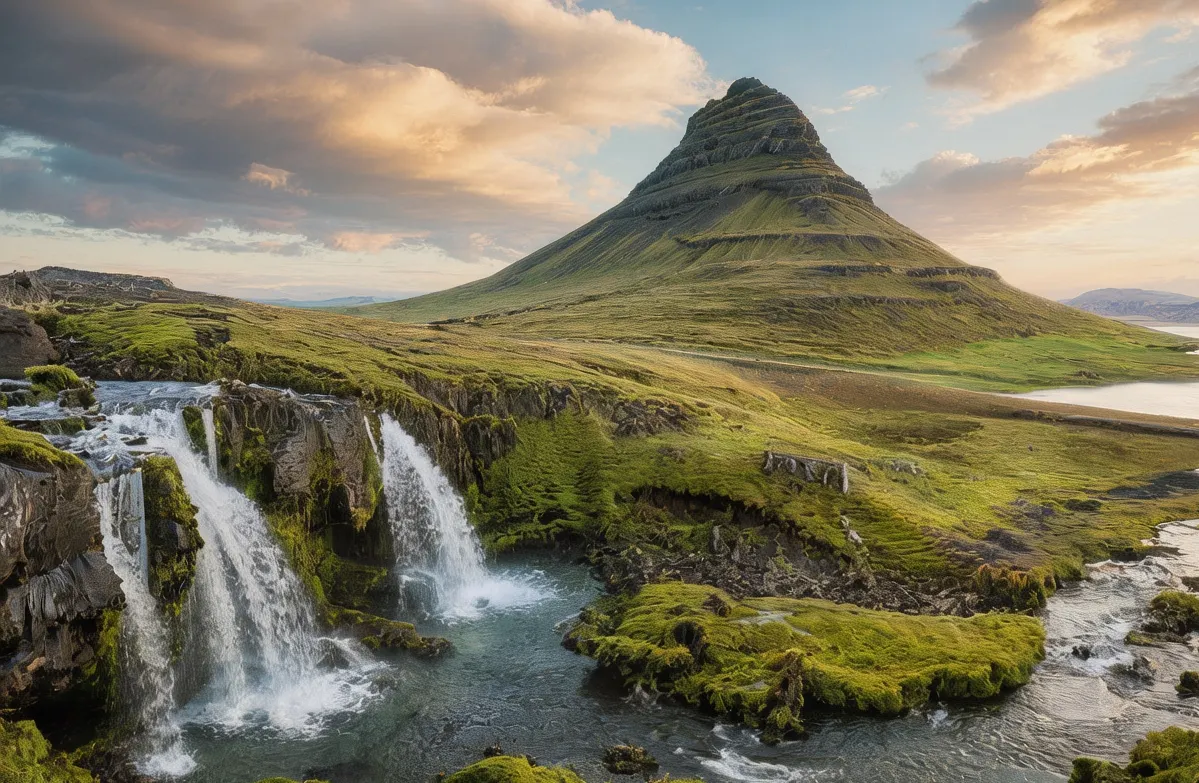
- Photograph Kirkjufell Mountain: This iconic peak (65°45.300'N, 23°18.500'W) is the most photographed mountain in Iceland. The best view is from the bridge near Grundarfjörður. Visit at 11:00 PM during summer for midnight sun lighting. The waterfall in the foreground adds depth to compositions. Allow 30 minutes for setup.
- Hike the Arnarstapi Cliff Path: This 1.5-kilometer coastal trail offers dramatic views of basalt columns and sea arches. Start at the visitor center (parking €5). The path is well-marked but exposed to wind. Best visited mid-morning when puffins are active on the cliffs. Wear sturdy boots for uneven terrain.
- Visit the Búðir Black Church: Located on a lava field near the western tip, this 19th-century wooden church is painted entirely black. Access via gravel road off Route 54. The contrast against green moss is striking. Best photographed late afternoon when shadows lengthen. No entry fee; donations welcome.
- Explore Rauðfeldsgjá Gorge: A dramatic cleft in the mountainside on the north coast. Park at the designated lot and walk 15 minutes to the entrance. You can walk partway into the gorge where a waterfall cascades inside. Wear waterproof gear; spray is heavy. Best visited midday when light penetrates the cleft.
- Tour the Bjarnarhöfn Shark Museum: Located at 65°49.100'N, 23°43.200'W, this family-run museum explains the tradition of fermenting Greenland shark. Taste samples if daring (strong ammonia smell). Open 9:00 AM–7:00 PM (June–August). Entry €12. It provides crucial cultural context for local food heritage.
- Drive the Snæfellsjökull Glacier Road: Route 574 leads to the base of the glacier. A 4WD vehicle is required beyond the parking area. The view of the ice cap from close range is awe-inspiring. Do not attempt to walk on the glacier without a certified guide. Best visited early morning for clear visibility.
- Watch seals at Ytri Tunga Beach: This golden sand beach on the south coast hosts a resident seal colony. Park safely off Route 54. Use binoculars to observe from a distance (50 meters minimum). Best visited during low tide when seals haul out on rocks. Quiet observation is key to not disturbing them.
3 Hidden Gems Most Travelers Miss
- Saxhóll Crater: Located near the western tip, this volcanic crater features a staircase built into the side leading to the rim. Most tour buses skip it for Kirkjufell. Access via Route 574. The climb takes 10 minutes and offers 360-degree views of the peninsula. Open daylight hours; no entry fee. Best visited late evening when wind is calm. No facilities—bring water.
- Dritvík Cove: Once a major fishing station, this remote bay now hosts only ruins and seabirds. Access via a rough gravel track off Route 574 (4WD recommended). The history of 19th-century fishing life is palpable here. Open daylight hours; no entry fee. Most travelers miss this due to road conditions. Contact: snf.is for track status. Best visited midday.
- Stykkishólmur Harbor Walk: While the town is known, the specific walk along the breakwater at sunset is overlooked. Start at the ferry terminal. The view back toward the town's colorful roofs is picturesque. Open 24/7. No facilities on the breakwater. Best visited around 10:00 PM during summer. Photography permitted without restrictions.
Cultural & Practical Tips
- Respect the moss: Lava moss takes 50–100 years to grow one centimeter. Never walk on it. Damage is permanent and visible for decades. Fines for destroying protected vegetation can reach €400. Stay on marked paths to preserve the fragile ecosystem.
- Weather preparedness: West Iceland weather is volatile. Even in July, pack: windproof waterproof jacket, thermal base layers, sturdy hiking boots, hat and gloves. Check vedur.is for real-time forecasts. Wind speeds can exceed 25 m/s (56 mph), making exposed areas dangerous.
- Photography etiquette: Tripods permitted but don't block pathways for other visitors. Drone use requires special permit from Umhverfisstofnun (Icelandic Environment Agency)—apply at ust.is at least 14 days in advance. Respect private property near farms; do not trespass for angles.
- Driving safety: Route 54 is paved but narrow. Pull over to let locals pass. Sheep roam freely on roads; drive cautiously. Single-lane bridges are common; yield to vehicles already on the bridge. Speed limits are strictly enforced by automatic cameras.
- Local phrases: Learn these Icelandic essentials: Takk (tahk) = Thank you; Góðan daginn (go-than die-in) = Good day; Fallegt útsýni (fal-legt oot-say-nee) = Beautiful view. Effort with language earns warm smiles from locals.
- Emergency contacts: Dial 112 for all emergencies. Nearest hospital: Stykkishólmur Health Center (+354 438-1000) or Akranes Hospital for major issues. Cell coverage is good along Route 54 but spotty on highland tracks. Download offline maps via Google Maps before arrival.
- Accessibility note: Arnarstapi path is partially accessible; Kirkjufell viewpoint is accessible. Glacier roads are not accessible. Contact visitsnaefellsnes.is for detailed accessibility maps before traveling.
Conclusion: Travel with Reverence, Not Just Checklists
The Snæfellsnes Peninsula demands more than a quick photo stop and a hashtag—it asks for your patience, your respect, your willingness to stand quietly before landscapes that have witnessed centuries of wind and ice. As you drive these roads in 2026, remember that each footprint lands on ground sacred to both geological history and local heritage. The glacier isn't merely a scenic backdrop; it is a living entity, retreating and advancing, written in ice and volcanic ash.
Responsible travel here means staying on paths, respecting moss barriers, and leaving only footprints on the gravel. It means understanding that the communities here are not just service providers but guardians of a fragile environment. When you purchase from local farms, hire West Icelandic guides, and follow road safety rules, you participate in an economy that values preservation over exploitation.
So linger past the guidebook's recommended itinerary. Sit on a sun-warmed rock and watch clouds race over Snæfellsjökull. Let the sound of Atlantic waves remind you that some places aren't meant to be conquered or consumed—they're meant to be witnessed with humility, protected with intention, and carried in memory long after your tires have left the black sand.