
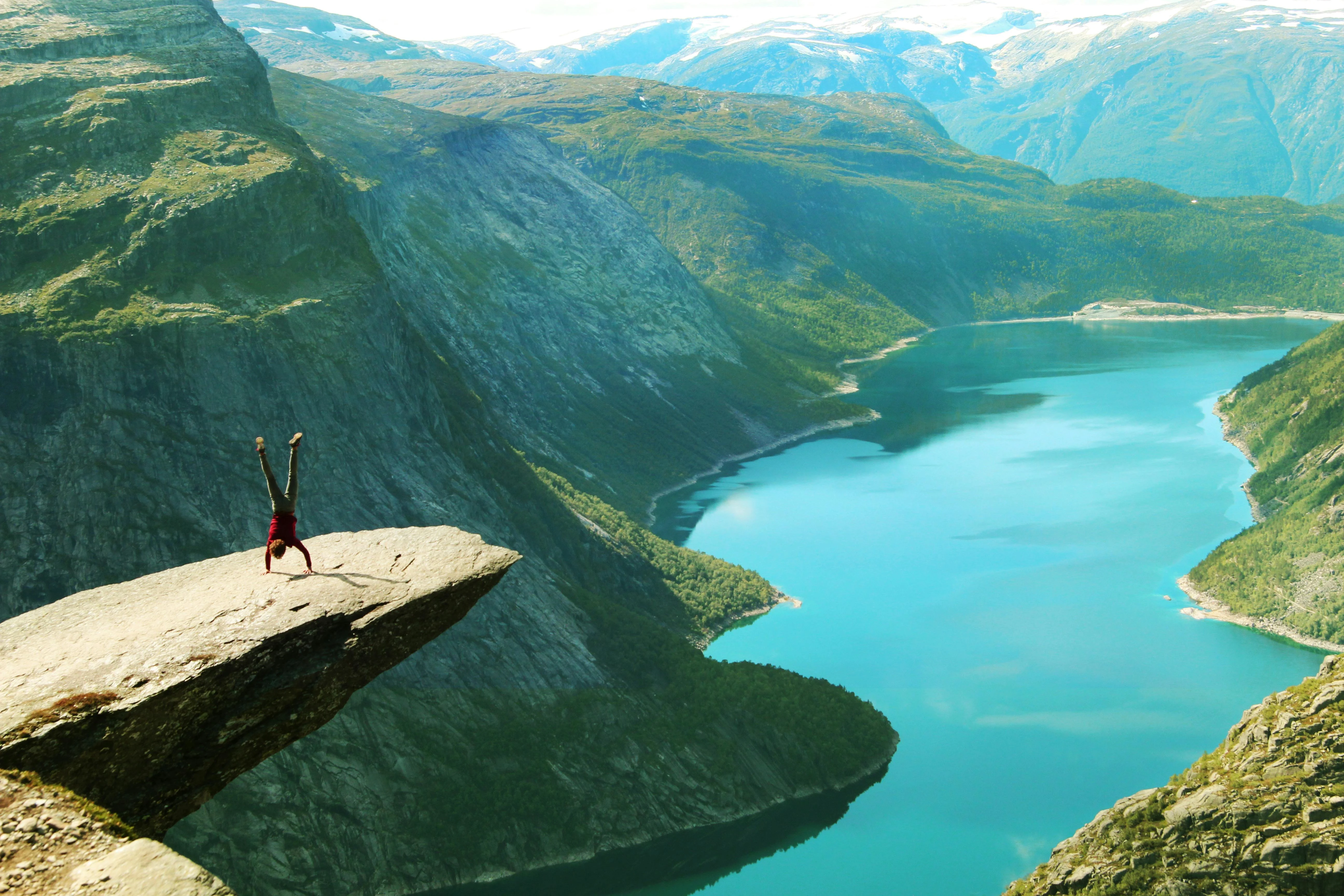
Trolltunga Cliff Gravity-Defying Rock Meets Norwegian Wilderness Spirit
The wind bites exposed skin even in July as you stand on the edge of the Trolltunga cliff, a horizontal slab of Precambrian rock projecting 700 meters (2,297 feet) above the icy depths of Ringedalsvatnet lake. Below, the water is a dark mirror reflecting the surrounding peaks of the Hardanger region; above, the sky stretches endlessly, broken only by the cry of a golden eagle circling the thermal updrafts. The stone beneath your boots is cold and textured with lichen that has colonized this surface for centuries—rough, unyielding, and utterly silent. You are 1,100 meters (3,609 feet) above sea level, reached after a grueling 28-kilometer (17-mile) round-trip hike that tests endurance and resolve in equal measure. There are no railings here, no safety nets, only the raw geological reality of a formation created by glacial erosion 10,000 years ago. In 2026, as digital fame turns natural wonders into crowded backdrops, the Trolltunga cliff matters because it remains unyielding—a place that demands physical effort and mental fortitude, reminding us that true beauty is not given freely but earned through sweat, respect, and presence.
Why Trolltunga Cliff Embodies Norwegian Mountain Culture
The Trolltunga cliff is not merely a photographic opportunity; it is a symbol of Norway's evolving relationship with outdoor tourism and conservation. Geologically, the formation is a remnant of the last Ice Age, where frost wedging cracked the bedrock and glaciers cleared the debris, leaving the tongue-shaped slab suspended in mid-air. For centuries, it was known only to local shepherds and hunters; it wasn't until 2010 that social media catapulted it into global consciousness, transforming a local secret into an international icon drawing 100,000+ visitors annually. This sudden fame solved a visibility problem for the Hardanger region but created a management challenge: how to protect fragile ecosystems from mass foot traffic.
To address this, the municipality of Ullensvang invested heavily in infrastructure between 2015 and 2025. Three mountain shelters (Trolltunga Active, Trolltunga Hangers, and Skjeggedal Lodge) now offer emergency accommodation and warm meals, engineered to withstand Arctic winds and heavy snow loads. The trail itself is marked with red T-paint and reinforced with stone steps on steep sections to prevent erosion. The Norwegian Trekking Association (DNT) monitors visitor numbers and trail conditions, ensuring safety without commercializing the experience excessively. In 2026, the Trolltunga cliff fulfills a cultural need for authentic adventure in an increasingly sanitized world. It represents the Norwegian concept of friluftsliv (open-air life)—the belief that nature is not a playground to be conquered but a partner to be respected. The cliff stands as a testament to geological time and human resilience, demanding that visitors arrive prepared, physically fit, and mentally ready to engage with the wilderness on its own terms.
The Best Time to Experience Trolltunga Cliff
For optimal safety and accessibility, target June 20–September 10. During this window, temperatures range from 8–18°C (46–64°F) at the summit, and snow patches on the trail have mostly melted. Daylight extends to 18 hours in June, allowing for early starts that avoid afternoon weather shifts. The best visibility occurs between 6:00–9:00 AM when morning air is clearest and before the majority of hikers reach the summit. Shuttle buses from Odda operate at full frequency, with departures every 30 minutes during peak season.
For winter adventure, visit March 1–April 15 when the trail becomes a snowshoe or ski mountaineering objective. Temperatures drop to -10 to 2°C (14–36°F), and the landscape transforms into a white wilderness. However, winter attempts require crampons, ice axes, avalanche training, and a certified guide—independent hiking is strongly discouraged. Avoid July 15–August 5 if you dislike crowds: this peak period sees 1,000+ hikers daily, creating queues at the cliff that can exceed 60 minutes. Also avoid visiting during high winds (>25 m/s), heavy rain, or fog when visibility drops below 50 meters—the exposed plateau becomes dangerous in poor conditions. For real-time trail status, check www.trolltunga.active.com or call +47 53 63 20 00. Weather forecasts are available via Yr.no, updated hourly.
Approximate Budget for a 7-Day Trip (2026)
Traveling to the Trolltunga region involves moderate-to-high costs typical of Western Norway's remote areas. This budget assumes mid-range travel with 3-4% inflation adjustment from 2024 baselines. Prices are estimated in Euros (€); local currency is Norwegian Krone (NOK). Costs reflect Odda and Bergen areas.
- Accommodation: €150–€240 per night for a double room in a 3-star hotel in Odda or Bergen. Budget hostels (Odda Camping): €50–€70 per bed. Upscale options (Hotel Ullensvang): €300–€500 per night.
- Food: €75–€110 per day per person
- Breakfast: €15–€22 (hotel buffet with bread, cheese, jam)
- Lunch: €22–€35 (mountain café sandwich €28, soup €30, or grocery picnic €20)
- Dinner: €38–€60 (restaurant main: lamb €45, fish €42, pasta €32; add €14 for beer)
- Transportation:
- Shuttle (Odda–Skjeggedal trailhead): €25 round-trip
- Bergen Airport Flybussen: €15 one-way, €25 round-trip
- Car rental (7 days, 4WD): €550–€750 including fuel
- Local bus pass (Hordaland): €60 weekly
- Attractions:
- Trolltunga Hike: Free (trail access)
- Guided Trolltunga hike: €130 per person
- Ringedalsvatnet Cable Car: €35 round-trip
- Vøringsfossen Viewpoint: Free
- Norwegian Waterfalls Centre: €18
- Miscellaneous:
- Souvenirs: Troll figurine €20, wool sweater €95, postcards €5
- Hiking gear rental (poles/boots): €35
- Travel insurance (7 days, adventure coverage): €45–€65
- eSIM data plan: €20–€30
Total for 7 days (mid-range, per person, double occupancy): €1,900–€2,400
Budget travelers can reduce costs to €1,200–€1,500 by camping (€30 per night), cooking meals, and using public transport. Luxury seekers should budget €4,200+ for private guides and fine dining.
6 Essential Trolltunga Cliff Experiences
- Hike the Main Trail: Start at Skjeggedal trailhead (P2) by 6:00 AM to beat crowds and afternoon weather changes. The 28-kilometer (17-mile) round-trip takes 10–12 hours total, gaining 1,100 meters elevation. The trail is marked with red T-paint; follow it through birch forest, across boulder fields, and over exposed plateau. The final approach requires scrambling over wet granite. Spend 15–20 minutes on the cliff itself—long enough for photos but not so long that you tire. Bring 3 liters of water, high-energy snacks, and waterproof layers. The descent is harder on knees; trekking poles help significantly.
- Stand on the Rock: This is the moment you've hiked for. Approach slowly, testing the stone's surface for moisture. The granite is often wet from mist; wipe your boots on the dry rock beside the formation before stepping on. Position yourself carefully, arms out for balance, and look down only when ready. The view through your legs to the lake 700 meters below is vertigo-inducing. Breathe deeply; the adrenaline is normal. Have a companion photograph from the safe zone—never stand on the cliff alone. The experience lasts seconds but memories endure decades.
- Stay at Trolltunga Hangers: Book a bed at the pod-style accommodation located 3 kilometers from the cliff. It offers heated sleeping pods with views of the valley. Dinner is served at 6:00 PM featuring local ingredients. Staying overnight allows you to hike at sunrise or sunset when day-trippers have left. The atmosphere is communal; hikers share stories in the lounge. It is the most convenient base for early starts. Booking opens January 1st for the summer season; reserve months in advance.
- Explore Ringedalsvatnet Lake: After the hike, take the cable car from Tyssedal to the mountain station. This offers a different perspective of the lake you saw from above. The ride takes 10 minutes and gains 750 meters elevation. The summit has a restaurant and viewing platform. Visit at 7:00 PM for dinner reservations to watch the sunset over the water. This complements the ground-level hike with an aerial perspective. The cable car operates May–October; check schedules at www.ringedalsvatnet.no.
- Visit Vøringsfossen Waterfall: Located 40 kilometers from Odda, this 182-meter waterfall is one of Norway's most famous. The new viewing platform (opened 2020) cantilevers over the edge, offering dramatic views. Stop here on your drive from Bergen to Odda. The visitor center explains the geology and history of the Månelva river. It offers a cultural counterpoint to the wilderness experience. Entry to the viewpoint is free; parking costs €10. The waterfall's power provides a preview of the region's dramatic hydrology.
- Watch Sunset from the Plateau: If staying at the mountain shelters, hike up in the evening. The sun sets behind the mountains around 10:00 PM in summer. The light turns the granite gold, then purple. Crowds dissipate significantly after 7:00 PM. Bring a headlamp for the descent. The silence at dusk is profound. This experience transforms the site from a tourist attraction to a spiritual space. Safety is paramount; do not approach the edge in low light. The colors are worth the extra effort.
3 Hidden Gems Most Travelers Miss
- Skjeggedal Old Road: Located at the trailhead, this historic road (coordinates 60.1250°N, 6.5833°E) was used before the new tunnel opened. It is now a cultural trail with information boards about the construction history. Open June–September, daily 9:00 AM–5:00 PM. The path is flat and suitable for all fitness levels. It is overlooked because most visitors rush to the main trail. The road provides insight into how access to the mountain was engineered. Entry is free; guided tours available on Wednesdays. It offers a quiet start to your adventure.
- Mågelibanen Funicular: Near Skjeggedal, this historic funicular (built 1908) transported workers to the hydroelectric power plant. Restored in 2019, it operates as a tourist attraction June–August. The ride takes 5 minutes and gains 350 meters elevation. Access via the visitor center at Skjeggedal. It is missed because most hikers focus on Trolltunga. The views from the top rival the cliff but with historical context. Tickets cost €15; book at the ticket booth. The engineering feat is impressive; it demonstrates human ingenuity in harsh terrain.
- Buarbreen Glacier Arm: Located 15 kilometers from Odda, this glacier tongue is accessible via a 30-minute walk. Unlike Jostedalsbreen, it sees fewer visitors. The ice is often more active visually. Access via Road 500 towards Buar. The trail is marked but steep. Best visited on weekdays when Trolltunga is busy. It provides a different glacial perspective without the long hike. No facilities exist; bring all supplies. The glacier's retreat is visible year-to-year, offering a stark climate change lesson.
Cultural & Practical Tips
- Safety First: Trolltunga has no railings—no safety equipment whatsoever. The edge is unstable in places. Do not run or jump on the rock. Keep a safe distance from the precipice, especially in wind. Children must be supervised closely. Rangers patrol the area during summer. Your safety is your own responsibility; rescue operations are costly and dangerous. Turn back if you feel uncomfortable.
- Proper Footwear: Wear sturdy hiking boots with aggressive tread and ankle support. Trail runners are insufficient for the wet granite and boulder fields. The trail includes sections of bare rock that become treacherous when wet. Rent boots in Odda if needed (€15/day). Do not attempt in sneakers, sandals, or flip-flops—this is dangerous and disrespectful to the mountain. Proper gear prevents injuries and increases enjoyment significantly.
- Useful Phrases:
- "Takk" (tahk) = Thank you
- "Hvor er stien?" (voor ehr stee-en) = Where is the trail?
- "Er det trygt?" (ehr deh trygt) = Is it safe?
- "Jeg trenger hjelp" (yai tren-ger yelp) = I need help
- Photography Guidelines: Drones are prohibited without permission from the Norwegian Environment Agency. Respect other visitors; do not monopolize the cliff for extended photo sessions. The dynamic range is extreme; expose for highlights to retain sky detail. Use a wide-angle lens to capture scale. Never risk your life for a photo—edges crumble. Ask fellow hikers to photograph you; most are happy to help. Wait your turn patiently; queues form during peak hours.
- Weather Preparedness: Mountain weather changes rapidly. Pack waterproof jacket, windproof layers, warm hat, and gloves even in summer. Temperatures at the summit average 6–8°C cooler than Odda. Fog can reduce visibility to zero in minutes; if this happens, stay on the marked trail and consider turning back. Check Yr.no hourly forecasts before departing. Do not rely on valley weather to predict summit conditions.
- Physical Fitness: The hike requires good fitness. You should be comfortable walking 28 kilometers with 1,100 meters elevation gain. The trail includes steep sections, boulder scrambling, and exposed plateaus. Train beforehand with stair climbing and hill walking. If you have knee or heart problems, consult a doctor before attempting. The descent is harder on joints; trekking poles reduce impact by 25%. Take your time; there is no prize for speed.
- Leave No Trace: Pack out all trash. There are no bins on the mountain. Use toilets at the trailhead before starting. Do not deface the rock or surrounding area. Respect wildlife; do not approach reindeer. Keep the mountain pristine for future visitors. Organic waste like fruit peels must also be packed out—they take months to decompose in Arctic conditions.
Conclusion: Travel with Courage, Not Just Checklists
The Trolltunga cliff is not a backdrop for Instagram; it is a test of character carved in granite. In 2026, as adventure becomes increasingly packaged and risk-free, this rock projecting over a dark lake offers something increasingly rare: genuine confrontation with fear. Travel here not to collect a photo but to discover what you're made of. Feel the wind; hear your heartbeat; understand that courage is not the absence of fear but action despite it. Leave only footprints; take only the knowledge that you stood on stone suspended between earth and sky. When you descend back to the valley, carry the mountain's lesson with you: that we are capable of more than we believe. For in the end, the true value of Trolltunga is not the image you share, but the transformation you undergo—the quiet knowing that when life presents its own precarious cliffs, you have already proven you can stand firm.