
Vigeland Sculpture Park Bronze Humanity Meets Oslo Green Space
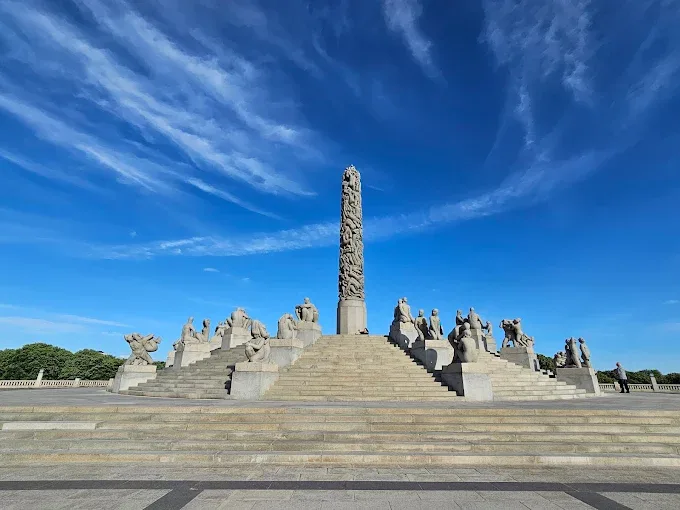
The light strikes the bronze figures at a low angle, casting long, dramatic shadows across the manicured lawns of Frogner Park. You walk among 212 sculptures—naked men, women, and children frozen in moments of joy, despair, and struggle—created by the singular vision of Gustav Vigeland. The air is crisp, carrying the scent of cut grass and the distant hum of Oslo traffic, yet here, within the 85-acre (34-hectare) enclosure, time seems to suspend itself. Since the park opened to the public in 1950, following Vigeland's death in 1943, these figures have witnessed generations of Oslo residents pass through their static gaze. You pause before the Monolith, a 17-meter (56-foot) towering pillar of granite carved from a single block, depicting 121 intertwined bodies reaching toward the sky. The texture of the stone is rough under your fingertips, cold even in summer, contrasting with the smooth, warm patina of the bronze figures nearby. In 2026, as public spaces increasingly become commercialized zones, the Vigeland Sculpture Park matters because it remains fiercely free and accessible—a democratic gallery where art is not locked behind glass but lived among, reminding us that human emotion is universal, timeless, and best experienced in the open air.
Why Vigeland Sculpture Park Embodies Norwegian Artistic Identity
The Vigeland Sculpture Park is not merely a collection of statues; it is the result of a unique contractual agreement between an artist and a city that solved the problem of legacy and public access. In 1921, Gustav Vigeland signed a deal with the municipality of Oslo: he would donate his entire artistic production to the city in exchange for a studio and home for life. This agreement, unprecedented in scale, ensured that his work—over 2,000 sculptures, drawings, and models—remained public property. The park itself, constructed between 1939 and 1949, fulfills a profound cultural need: to visualize the human condition without religious or political allegory. Vigeland's figures are secular, raw, and universally relatable, depicting the cycle of life from infancy to old age.
Technically, the park is a marvel of material engineering. The Monolith was carved from a single block of Iddefjord granite weighing 170 tons, transported by barge and rail to the site. It took three stone carvers 14 years (1929–1943) to complete the intricate relief work using pneumatic tools. The bronze figures, cast at the Næs Jernverk foundry, utilize the lost-wax technique to capture fine details like muscle tension and hair texture. The layout follows a strict axial symmetry: the Main Gate, the Bridge, the Fountain, the Monolith, and the Wheel of Life. This geometric precision contrasts with the organic forms of the sculptures, creating a tension between order and chaos. In 2026, the park stands as Norway's most visited tourist attraction outside of the fjords, drawing over 1 million visitors annually. It embodies the Norwegian value of friluftsliv (open-air life), merging high art with public recreation in a way few cities achieve.
The Best Time to Experience Vigeland Sculpture Park
For optimal lighting and comfortable walking conditions, target June 15–August 20. During this window, temperatures range from 15–22°C (59–72°F), and daylight extends to 18 hours, allowing for evening visits when the bronze glows in the midnight sun. The park is most atmospheric between 7:00–9:00 AM when the light is soft and crowds are minimal, or during golden hour at 8:00–10:00 PM. Guided tours operate daily at 1:00 PM during summer months. For winter photography, visit December 1–20 when snow blankets the figures, creating a stark monochrome landscape. Temperatures drop to -5 to 4°C (23–39°F), and the bronze becomes extremely cold to the touch.
Avoid July 15–August 5 if you dislike crowds: this period coincides with peak cruise ship season and Norwegian school holidays. The Main Bridge and Monolith Plateau can become congested with tour groups, making photography difficult. Also avoid visiting during heavy rain in November when the paths become muddy and light is poor. For real-time event schedules and tour availability, check www.vigeland.museum.no or call +47 23 49 39 00. Weather forecasts are available via Yr.no. Note that the park is open 24 hours, but the Museum and Visitor Center have limited hours (10:00 AM–5:00 PM in winter).
Approximate Budget for a 7-Day Trip (2026)
Oslo is one of Europe's pricier capitals, reflecting Norway's high standard of living. This budget assumes mid-range travel with 3-4% inflation adjustment from 2024 baselines. Prices are estimated in Euros (€); local currency is Norwegian Krone (NOK). Costs reflect Oslo city center and Frogner areas.
- Accommodation: €180–€280 per night for a double room in a 3-star hotel in Sentrum or Frogner. Budget hostels (Anker Hotel): €65–€85 per bed. Upscale options (The Frogner House): €350–€550 per night.
- Food: €85–€125 per day per person
- Breakfast: €18–€25 (hotel buffet with bread, cheese, jam)
- Lunch: €25–€40 (café sandwich €32, fish soup €38, or grocery picnic €24)
- Dinner: €42–€70 (restaurant main: lamb €50, fish €48, pasta €38; add €16 for beer)
- Transportation:
- Train (Airport–City): €20 one-way, €35 round-trip
- Local tram/bus day pass (Ruter): €13
- Car rental (7 days): €650–€850 including fuel
- Fjord cruise: €75–€110
- Attractions:
- Vigeland Sculpture Park: Free (outdoor access)
- Vigeland Museum Entry: €14
- Munch Museum: €22
- Norwegian Folk Museum: €20
- Guided Park Tour: €25
- Miscellaneous:
- Souvenirs: Troll figurine €25, wool sweater €110, postcards €5
- Coffee and pastry: €12
- Travel insurance (7 days): €50–€70
- eSIM data plan: €25–€35
Total for 7 days (mid-range, per person, double occupancy): €2,150–€2,750
Budget travelers can reduce costs to €1,400–€1,700 by staying in hostels, cooking meals, and using public transport. Luxury seekers should budget €5,000+ for boutique hotels and fine dining at restaurants like Maaemo.
6 Essential Vigeland Sculpture Park Experiences
- Walk the Main Bridge: Enter the park from the east gate and proceed to the Bridge. Here, 58 bronze sculptures line the railings, depicting everyday human interactions. Start at 9:00 AM to avoid crowds. Look for Angry Boy (Sinnataggen), the park's most iconic figure. The details in the hands and faces are exquisite. Spend 30 minutes walking the length, observing how light plays on the patina. It is the most photographed section; step aside to let others pass. The view back toward the Fountain is framed perfectly by the statues.
- Stand Before the Monolith: Walk up the hill to the Monolith Plateau. The 17-meter granite pillar dominates the skyline. Circle the base to see the relief figures climbing upward. The symbolism represents humanity's striving toward the spiritual. Visit at noon when the sun is highest to illuminate the deep carvings. The surrounding 12 bronze groups depict the cycle of life. Sit on the surrounding benches and contemplate the scale. It is the emotional center of the park. Photography is best from the lower steps to capture the full height.
- View the Wheel of Life: Located at the far west end of the park, this granite relief is embedded in a gate. It depicts the endless cycle of birth, life, and death. Visit at 4:00 PM when side-lighting enhances the depth of the carving. It is often overlooked by tourists who turn back after the Monolith. The detail is microscopic; bring a magnifying glass or zoom lens. It represents Vigeland's final philosophical statement. The surrounding garden is quiet and perfect for reflection. No entry fee is required.
- Visit the Vigeland Museum: Located just outside the park at Nobels gate 32. Open daily 10:00 AM–5:00 PM. This building was Vigeland's home and studio. View his original plaster models, drawings, and personal effects. The museum provides context for the outdoor sculptures. Entry costs €14; free for under 18. Guided tours start at 1:00 PM. It is climate-controlled, offering shelter from rain. The studio space remains exactly as he left it in 1943. Essential for understanding his process.
- Picnic in Frogner Park: The sculpture park is situated within the larger Frogner Park. Bring a blanket and food from a local bakery. Find a spot on the lawn near the Fountain. Locals gather here on sunny Sundays. The atmosphere is relaxed and family-friendly. Children play around the statues (though climbing is prohibited). It offers a chance to see the art in a living context. Purchase supplies at a Meny or Kiwi supermarket beforehand. Respect the grass; do not leave trash.
- Walk the Park at Night: The park is open 24 hours and lit at night. Visit at 10:00 PM in summer. The shadows create a dramatic, almost eerie atmosphere. The bronze figures look different under artificial light. It is quieter and more introspective. Stick to the main paths for safety. The Monolith is illuminated from below, emphasizing its height. This experience transforms the park from a museum to a dreamscape. Bring a flashlight if visiting in winter when days are short.
3 Hidden Gems Most Travelers Miss
- The Artist's Studio Interior: Inside the Vigeland Museum, the actual studio space is preserved. Most visitors focus on the gallery rooms. Ask the guide for access to the studio floor where the plaster models were made. It is overlooked because it is at the back of the museum. The space smells of clay and old wood. You can see the tools he used. Access is included in the museum ticket. Best viewed during guided tours at 1:00 PM. It offers a tangible connection to the creative process. Photography is allowed without flash.
- The Wrought Iron Gate: At the entrance to the Monolith Plateau, there is a massive wrought iron gate designed by Vigeland. Most people walk through without looking up. The intricate designs depict plants and animals intertwined. Visit at 10:00 AM when the sun shines through the metalwork. It is missed because visitors focus on the Monolith behind it. The craftsmanship is equal to the sculptures. Take a close-up photo of the details. It represents the fusion of functional art and sculpture. No appointment needed; it is outdoors.
- The Little Children's Playground Statues: Near the east entrance, there are smaller bronze figures of children playing. They are often ignored by adults heading to the Monolith. Visit at 3:00 PM when real children play nearby, mirroring the art. The figures depict tag, leapfrog, and hiding. It is a charming contrast to the serious themes elsewhere. Access is free, 24/7. It is missed because it is near the busy street. The patina is smoother here from being touched. A sweet moment of innocence in the park.
Cultural & Practical Tips
- Respect the Art: Do not climb on the sculptures. The bronze is delicate and oils from hands damage the patina. Rangers patrol the area and will issue fines for climbing. Keep a respectful distance for photos. The art is public property but fragile. Teach children to look with eyes, not hands. This ensures preservation for future generations. Violations are taken seriously by the municipality.
- Cashless Society: Norway is nearly cashless. Bring a credit/debit card with chip-and-PIN. Most places do not accept cash. Mobile payment (Vipps) is ubiquitous but requires a Norwegian number. Stick to cards as a visitor. ATMs are available but rarely needed. Inform your bank of travel plans to prevent blocks. Museum tickets can be bought online.
- Useful Phrases:
- "Takk" (tahk) = Thank you
- "Unnskyld" (oon-shool) = Excuse me
- "Hvor er toalettet?" (voor ehr toa-let-et) = Where is the toilet?
- "Snakker du engelsk?" (snak-ker doh eng-elsk) = Do you speak English?
- Photography Guidelines: Photography is allowed outdoors without restriction. Flash is prohibited inside the Museum. Drones are prohibited without permission from the Norwegian Civil Aviation Authority. Respect other visitors; do not block paths for extended shoots. Best light is golden hour. Use a polarizing filter to reduce glare on bronze. Ask before photographing individuals.
- Weather Preparedness: Weather changes rapidly. Pack a waterproof jacket even in summer. Temperatures can drop quickly near the water features. Umbrellas are useful but wind can break them. Dress in wool; it stays warm when wet. Check Yr.no hourly forecasts. The Museum provides shelter during downpours. Wear sturdy shoes for gravel paths.
- Accessibility: The park is mostly wheelchair accessible with paved paths. The Monolith Plateau involves stairs but there is a ramp access on the side. The Museum is fully accessible with elevators. Wheelchairs can navigate the Main Bridge easily. Assistive listening devices are available for tours. Book assistance in advance via +47 23 49 39 00. Toilets are accessible near the Visitor Center.
- Opening Hours: The outdoor park is open 24 hours year-round. The Museum and Visitor Center have seasonal hours (10:00 AM–5:00 PM in winter, until 6:00 PM in summer). Closed on May 17 (Constitution Day) and December 24–26. Plan your museum visit accordingly. The outdoor sculptures are always available. Night lighting is on from dusk until 11:00 PM.
Conclusion: Travel with Contemplation, Not Just Checklists
The Vigeland Sculpture Park is not a backdrop for selfies; it is a mirror of the human soul cast in bronze and stone. In 2026, as tourism becomes increasingly transactional, this park demands a slower, more reflective pace. Travel here not to tick a box but to engage with the raw emotion frozen in these figures. Notice the tension in a mother's arm; the joy in a child's leap; the weariness in an old man's spine. Leave only footprints on the gravel; take only the realization that art belongs to everyone. When you depart, carry the park's silence with you. For in the end, the true value of this place is not the photo you post, but the connection you feel—that across time and language, we all struggle, love, and rise together, just like the figures reaching toward the Monolith's peak.