
Viking Ship Museum Ancient Oak Meets Modern Preservation
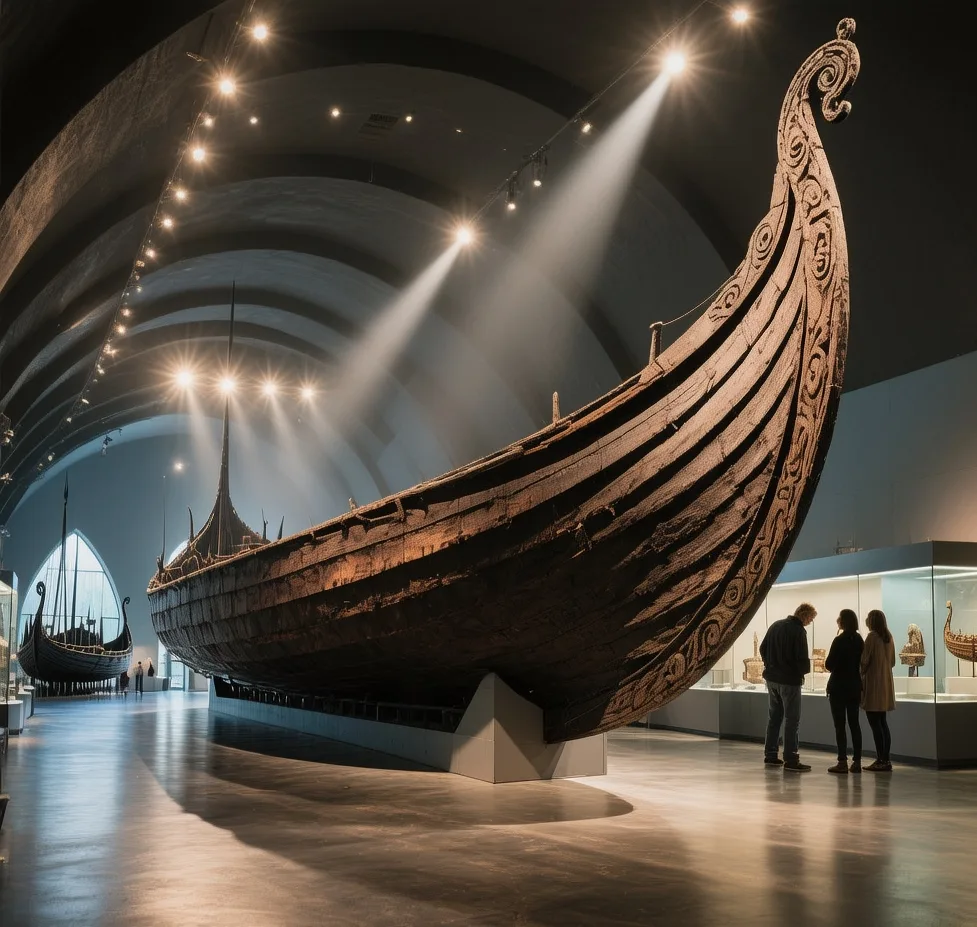
The air inside the hall is cool and still, carrying the faint, sweet scent of preserved oak that has survived over 1,000 years submerged in clay. You stand before the Viking Ship Museum—or rather, its magnificent successor, the Museum of the Viking Age—where the hull of the Oseberg ship rises like a dark wave frozen in time, towering 5 meters (16 feet) above the polished floor. Since the original museum closed for expansion in 2021, anticipation has built for this 2026 reopening, promising a fusion of archaeological integrity and immersive technology. The light is dim, focused intentionally on the intricate carvings of the prow, where serpent heads peer out from the shadows of the past. Around you, visitors speak in hushed tones, respecting the sanctity of these burial vessels that once carried queens into the afterlife. In 2026, as digital replicas threaten to replace physical heritage, this museum matters because it safeguards the tangible truth of the Viking Age—a place where you touch the same wood that sailed the North Sea, reminding us that history is not a story told but an artifact preserved.
Why Viking Ship Museum Embodies Norse Maritime Heritage
The Viking Ship Museum is not merely a repository of boats; it is the global epicenter of Viking Age archaeology. The collection centers on three primary vessels excavated from burial mounds in Vestfold: the Oseberg ship (excavated 1904–1905), the Gokstad ship (1880), and the Tune ship (1867). The Oseberg ship, dating to approximately 820 AD, is the best-preserved wooden artifact from the era, measuring 21.5 meters (71 feet) in length. These ships solved a fundamental historical mystery: how a Scandinavian culture dominated European waterways for three centuries. The answer lies in the clinker-built construction technique, where overlapping planks are riveted together, creating a hull flexible enough to ride ocean swells yet shallow enough to navigate rivers.
The new facility, opening fully in 2026, addresses the conservation needs of these fragile artifacts. The old building could not maintain the strict humidity controls required for 1,000-year-old wood; the new structure utilizes advanced HVAC engineering to keep relative humidity at 55% ±5%, preventing the wood from cracking or shrinking. The exhibition space spans 13,000 square meters, designed by architects to frame the ships as sculptures rather than mere exhibits. Over 2,000 artifacts accompany the vessels, including sledges, beds, and the iconic Viking cart found in the Oseberg burial. In 2026, the museum fulfills a critical educational need, moving beyond the myth of the barbarian raider to showcase the sophisticated craftsmanship, trade networks, and spiritual beliefs of the Norse people. It stands as a testament to Norway's commitment to preserving its identity while sharing it with the world.
The Best Time to Experience Viking Ship Museum
For optimal viewing conditions and manageable crowds, target June 10–August 20. During this window, temperatures in Oslo range from 15–22°C (59–72°F), and daylight extends to 18 hours, allowing for extended exploration of the Bygdøy peninsula. The museum opens at 9:00 AM; arrive by 9:30 AM to enter before tour groups converge. The light inside the exhibition halls is controlled, but the journey to the museum is best enjoyed in summer sunshine. Guided tours in English operate hourly from 10:00 AM to 3:00 PM.
For a contemplative visit, target October 15–November 15. Crowds thin significantly, and the autumn colors on Bygdøy provide a dramatic backdrop. Temperatures drop to 4–10°C (39–50°F). Avoid July 15–August 5 if you dislike congestion: this period coincides with peak cruise ship arrivals in Oslo. Queue times can exceed 60 minutes, and the viewing platforms around the Oseberg ship become crowded. Also avoid public holidays like May 17 (Constitution Day) when the museum may close or operate reduced hours. For real-time opening hours and ticket availability, check www.vikingeskipsmuseet.no or call +47 22 13 50 00. Weather forecasts are available via Yr.no.
Approximate Budget for a 7-Day Trip (2026)
Oslo remains one of Europe's pricier capitals, reflecting Norway's high standard of living. This budget assumes mid-range travel with 3-4% inflation adjustment from 2024 baselines. Prices are estimated in Euros (€); local currency is Norwegian Krone (NOK). Costs reflect Oslo city center and Bygdøy areas.
- Accommodation: €180–€280 per night for a double room in a 3-star hotel in Sentrum or Frogner. Budget hostels (Anker Hotel): €65–€85 per bed. Upscale options (The Thief): €350–€550 per night.
- Food: €85–€125 per day per person
- Breakfast: €18–€25 (hotel buffet with bread, cheese, jam)
- Lunch: €25–€40 (café sandwich €32, fish soup €38, or grocery picnic €24)
- Dinner: €42–€70 (restaurant main: lamb €50, fish €48, pasta €38; add €16 for beer)
- Transportation:
- Train (Airport–City): €20 one-way, €35 round-trip
- Bus Line 91 (City–Bygdøy): €4 one-way, €13 day pass
- Car rental (7 days): €650–€850 including fuel
- Fjord cruise: €75–€110
- Attractions:
- Viking Ship Museum Entry: €24 adults, free under 18
- Norwegian Maritime Museum: €18
- Fram Museum: €22
- Norwegian Folk Museum: €20
- Guided Viking Tour: €30
- Miscellaneous:
- Souvenirs: Viking replica coin €15, wool sweater €110, book €35
- Coffee and pastry: €12
- Travel insurance (7 days): €50–€70
- eSIM data plan: €25–€35
Total for 7 days (mid-range, per person, double occupancy): €2,150–€2,750
Budget travelers can reduce costs to €1,400–€1,700 by staying in hostels, cooking meals, and using public transport. Luxury seekers should budget €5,000+ for boutique hotels and fine dining at restaurants like Maaemo.
6 Essential Viking Ship Museum Experiences
- View the Oseberg Ship: Enter the main hall and proceed directly to the Oseberg vessel. This is the centerpiece of the collection. Spend 20 minutes observing the prow carvings from the lower platform, then ascend to the upper gallery for a full profile view. The wood is dark, almost black, preserved by peat bog conditions. Look for the intricate gripir (gripping beast) motifs. It is the most photographed artifact; wait for a clear line of sight. The silence in this hall is palpable. Respect the barriers; flash photography is prohibited.
- Examine the Burial Artifacts: Walk the perimeter cases surrounding the ships. View the wooden sledges, beds, and the ceremonial cart found with the Oseberg queen. These items date to the early 9th century. The craftsmanship reveals a society with skilled woodworkers and artists. Use the digital screens to see reconstructions of how the items were used. Spend 30 minutes here. The details in the metal fittings are exquisite. It provides context for the ships as burial chambers, not just vessels.
- Explore the Gokstad Ship: Move to the west wing to see the Gokstad ship. Excavated in 1880, this vessel is more robust than the Oseberg ship, designed for open sea voyages. It measures 23 meters (75 feet) long. Notice the shield mounts along the gunwale, indicating its use for warfare or defense. The wood is lighter in color. Compare the construction techniques with the Oseberg ship. It represents the Viking age's martial capability. Less crowded than the Oseberg hall.
- Visit the New Exhibition Hall: The 2026 expansion includes a dedicated hall for DNA analysis and osteology. View the remains of the Oseberg women and learn about their origins through isotopic analysis. This science-driven exhibit updates the narrative from myth to biology. Open daily 10:00 AM–5:00 PM. It is overlooked by those focused only on the ships. The interactive displays allow you to trace Viking trade routes. Essential for understanding the human element.
- Walk the Bygdøy Peninsula: After the museum, walk the 2-kilometer path to the Norwegian Maritime Museum. The route passes through oak forests and along the fjord shore. The air is fresh with salt and pine. It takes 30 minutes at a leisurely pace. The contrast between the ancient Viking ships and modern sailing vessels is striking. It extends the museum experience into the landscape. Benches are available for resting. Free access to the outdoor paths.
- Attend a Lectures Series: Check the schedule for evening lectures by museum archaeologists. Held in the auditorium at 6:00 PM on Thursdays during summer. Topics range from shipbuilding techniques to Viking religion. Tickets cost €15 and include museum entry. It offers deep dives not available on the main floor. Q&A sessions allow direct interaction with experts. Booking is required via the website. A rare opportunity for intellectual engagement.
3 Hidden Gems Most Travelers Miss
- The Conservation Laboratory Viewpoint: Located on the upper floor, a glass window looks directly into the active conservation lab. Most visitors miss this corridor. You can see conservators working on smaller artifacts in real-time. Open during working hours (9:00 AM–3:00 PM weekdays). It is overlooked because it is not marked on the main tour map. The precision tools and microscopes reveal the science of preservation. No appointment needed; just look through the glass. It connects the past to present-day stewardship.
- The Viking Garden: Outside the museum, a small reconstructed garden grows plants known to the Vikings. Located near the east exit. Open daily dawn to dusk. Herbs like yarrow, angelica, and flax are labeled with their historical uses. It is missed because visitors rush to the next museum. The scent is authentic to the period. A quiet spot for reflection. Free access. Best visited in summer when plants are in bloom. It adds a botanical dimension to the history.
- The Tune Ship Fragments: In a quieter corner of the main hall, the remains of the Tune ship are displayed. Unlike the others, it is not fully reconstructed. Most tourists skip it for the complete hulls. The fragments show the rivet patterns clearly. Visit at 4:00 PM when crowds thin. It offers a raw look at archaeological reality versus reconstruction. The information panel explains why it wasn't fully rebuilt. A sobering reminder of preservation challenges. No extra cost.
Cultural & Practical Tips
- Photography Rules: Photography is allowed without flash. Tripods are prohibited without special permission. Respect other visitors; do not block views for extended shots. The wood is sensitive to light; follow staff instructions. Flash can damage the 1,000-year-old organic material. Use high ISO settings instead. Share photos responsibly; tag the museum. Drones are prohibited on Bygdøy.
- Cashless Society: Norway is nearly cashless. Bring a credit/debit card with chip-and-PIN. Most places do not accept cash. Mobile payment (Vipps) is ubiquitous but requires a Norwegian number. Stick to cards as a visitor. ATMs are available but rarely needed. Inform your bank of travel plans to prevent blocks. Tickets are best purchased online.
- Useful Phrases:
- "Takk" (tahk) = Thank you
- "Unnskyld" (oon-shool) = Excuse me
- "Hvor er toalettet?" (voor ehr toa-let-et) = Where is the toilet?
- "Snakker du engelsk?" (snak-ker doh eng-elsk) = Do you speak English?
- Footwear: Wear comfortable walking shoes. The museum floors are hard stone. You will stand for long periods observing the ships. Bygdøy paths are gravel; sturdy soles are recommended. In winter, paths can be icy; wear boots with grip. Your comfort affects your enjoyment. Rent shoes if needed at local sports stores.
- Weather Preparedness: Weather changes rapidly. Pack a waterproof jacket even in summer. Temperatures can drop quickly near the water. Umbrellas are useful but wind can break them. Dress in wool; it stays warm when wet. Check Yr.no hourly forecasts. Indoor cafés provide shelter during downpours. The museum is climate-controlled.
- Accessibility: The museum is fully wheelchair accessible. Elevators connect all levels. Wheelchairs can navigate the viewing platforms. Assistive listening devices are available for tours. Book assistance in advance via +47 22 13 50 00. Toilets are accessible on all floors. The outdoor paths are paved but can be uneven.
- Opening Hours: The museum opens at 9:00 AM daily in summer (June–August). Winter hours (September–May) are 10:00 AM–4:00 PM. Closed on December 24–26 and May 1. Plan your visit accordingly. The last entry is 30 minutes before closing. Night openings occur occasionally in summer; check the schedule.
Conclusion: Travel with Reverence, Not Just Checklists
The Viking Ship Museum is not a theme park; it is a sanctuary for artifacts that have survived a millennium of decay. In 2026, as tourism becomes increasingly transactional, this museum demands a slower, more reflective pace. Travel here not to tick a box but to honor the craftsmanship of hands long turned to dust. Notice the rivet holes; smell the preserved wood; understand that these ships carried humans with hopes and fears just like yours. Leave only footprints; take only the inspiration that human ingenuity can endure across ages. When you depart, carry the silence of the halls with you. For in the end, the true value of this place is not the photo you post, but the connection you feel—that across 1,000 years, we are still voyagers seeking shore, still carving our stories into the wood of time.