
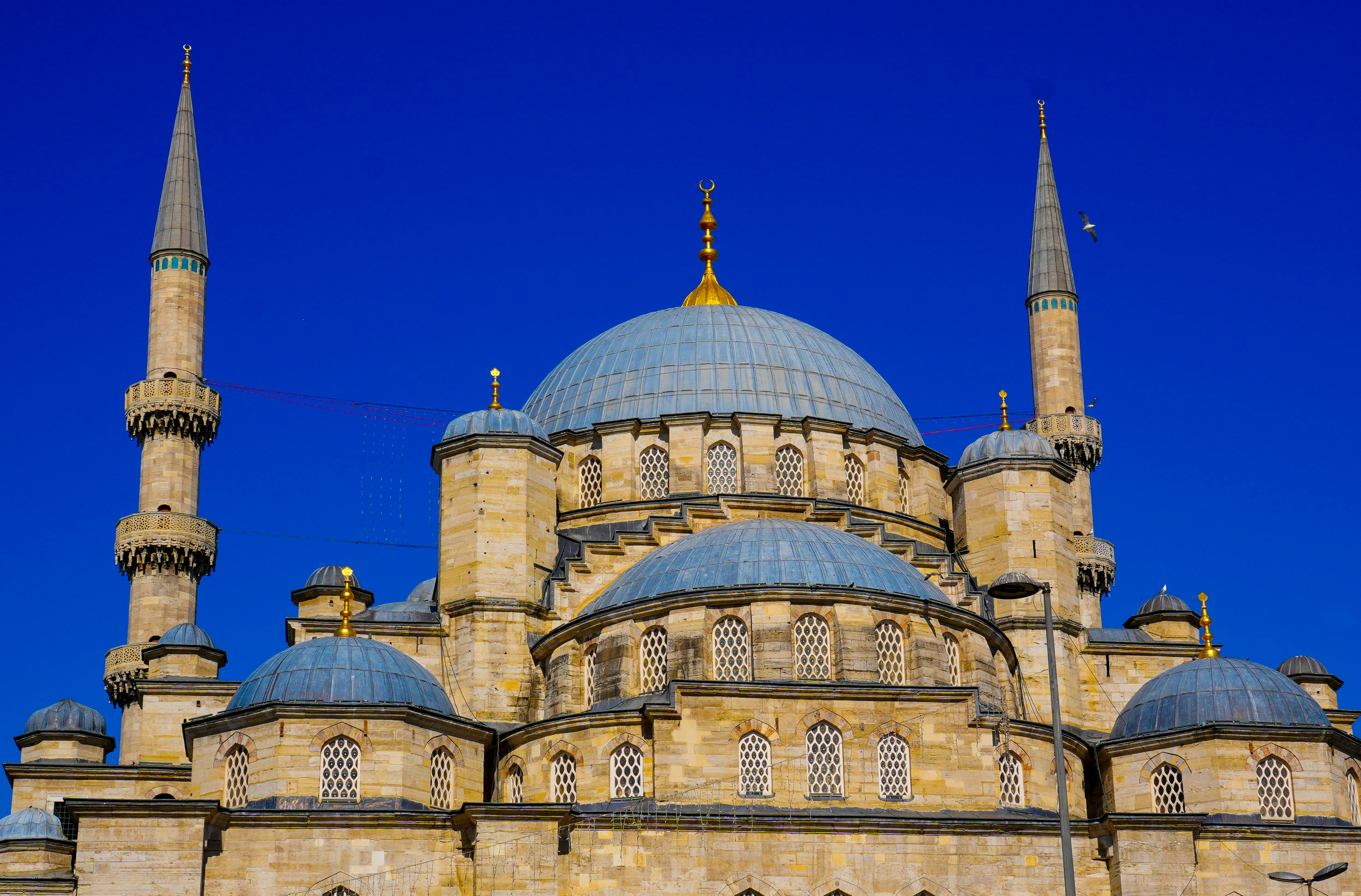
Blue Mosque: Where Ottoman Grandeur Meets Byzantine Sky
The call to prayer begins at dawn—a haunting melody that spills from six slender minarets and rolls across Sultanahmet Square like mist over the Bosphorus. You stand before the Blue Mosque as the first light catches its cascading domes, fifty-two in total, each one a perfect hemisphere of lead-covered stone that steps down toward the courtyard like waves frozen mid-crash. Inside, the air carries the weight of centuries—more than 20,000 hand-painted Iznik tiles shimmer in shades of cobalt and turquoise, their floral patterns glowing softly in the light that filters through 260 stained-glass windows. The vast prayer hall stretches 64 meters long and 72 meters wide, a space so immense that your footsteps echo against marble floors polished smooth by millions of pilgrims. This is not merely a mosque; it is Sultan Ahmed I's audacious answer to the nearby Hagia Sophia, a statement of imperial power carved from stone and faith. Built between 1609 and 1616 by architect Mehmed Ağa, it remains the only mosque in Istanbul with six minarets—a controversial choice that once sparked accusations of arrogance, as only the Great Mosque of Mecca possessed such a number. Today, as worshippers bow in perfect unison beneath the central dome that soars 43 meters overhead, the Blue Mosque continues its sacred dual purpose: serving as both an active house of prayer and a testament to the Ottoman Empire at its zenith.
Why Blue Mosque Embodies Ottoman Architectural Mastery
The Blue Mosque—officially known as Sultan Ahmed Camii—represents the culmination of classical Ottoman mosque architecture, a structure that solved a fundamental challenge: how to create a space that could rival the spiritual grandeur of the Hagia Sophia while asserting Islamic identity in a city that had been Constantinople just 153 years earlier. When Sultan Ahmed I commissioned young architect Mehmed Ağa in 1609, he demanded a mosque that would restore Ottoman prestige following military defeats in Persia. The result was a building that consumed vast resources: 10,000 workers toiled for seven years, using stone quarried from across the empire and more than 20,000 ceramic tiles produced in Iznik, the Ottoman capital of pottery-making.
The mosque's design represents a masterclass in structural engineering. The central dome, measuring 23.5 meters (77 feet) in diameter and rising 43 meters (141 feet) high, rests on four massive pillars—each 5 meters (16 feet) in diameter—known as the "elephant feet" for their enormous girth. Four semi-domes support the central dome, creating a cascading effect that distributes weight outward and downward through a system of buttresses hidden within the walls. This architectural solution, refined from earlier works by the legendary Sinan, allows the prayer hall to remain virtually column-free, creating an uninterrupted space that can accommodate up to 10,000 worshippers.
What truly distinguishes this mosque is its interior decoration. The lower walls feature more than 20,000 handcrafted Iznik tiles in fifty different tulip designs—the flower that symbolized the Ottoman Empire. Above, painted decorations in blue, green, and gold cover every available surface, creating the ethereal glow that earned the building its Western nickname. The mihrab (prayer niche) is carved from a single piece of marble, while the adjacent minbar (pulpit) features intricate stonework so delicate it appears lace-like. The mosque's six minarets—four at the corners with three balconies each, and two at the courtyard corners with two balconies each—total fifteen viewing platforms, from which the call to prayer once echoed across seven hills of Istanbul. This architectural statement fulfilled a profound need: creating a spiritual center that could stand as the visual and religious heart of the Ottoman capital, a place where imperial power and divine devotion merged into stone and light.
The Best Time to Experience Blue Mosque
Timing your visit to the Blue Mosque requires understanding its dual identity as both active mosque and major tourist attraction. The optimal period runs from April 15–May 31 and September 15–October 31, when Istanbul's temperatures range between 15–22°C (59–72°F), humidity stays moderate, and the light filtering through the stained-glass windows creates spectacular color displays on the tilework. During these shoulder seasons, you'll experience comfortable weather without the oppressive heat of summer or the chill winter winds that sweep across Sultanahmet Square.
For non-Muslim visitors, the ideal windows are 9:00–11:30 AM or 2:00–4:30 PM, avoiding the midday prayer period when the main prayer hall closes to tourists for approximately 90 minutes. Friday presents the greatest challenge: the noon prayer (12:00–2:30 PM) sees extended closures and massive crowds of worshippers, so either arrive before 11:00 AM or after 3:30 PM on this day. Winter months (December–February) offer the fewest tourists and dramatic atmospheric conditions—mist rising from the Bosphorus, snow dusting the domes—but bring temperatures of 3–8°C (37–46°F) with frequent rain and wind.
Avoid June 15–August 31 if possible: temperatures climb to 28–35°C (82–95°F) with humidity exceeding 75%, cruise ship crowds create queues exceeding two hours, and the intense midday sun makes waiting in line unbearable. Also skip Turkish national holidays (April 23, August 30, October 29) and religious holidays (Ramadan Bayram, Kurban Bayram) when domestic tourism surges and prayer times extend closures.
For the most transcendent experience, visit during the first hour after opening (8:30–9:30 AM) when morning light illuminates the blue tiles at their most vibrant, or during late afternoon (4:00–5:30 PM) when the setting sun casts golden rays through the stained glass. Check current visiting hours and prayer schedules at: www.istanbul.com
Approximate Budget for a 7-Day Trip
Istanbul offers exceptional value for travelers, with costs remaining moderate despite recent inflation. The following budget assumes mid-range travel with comfortable accommodations near Sultanahmet, quality Turkish cuisine, and comprehensive sightseeing. All prices reflect current rates in euros (€1 ≈ 35 Turkish Lira).
Accommodation: €50–€110 per night
• Budget pension in Sultanahmet: €25–€40/night
• Mid-range boutique hotel (3-star): €50–€80/night
• Upscale hotel with Bosphorus view: €110–€180/night
7 nights total: €350–€770
Food: €20–€40 per day
• Breakfast: €4–€7 (Turkish tea, simit, menemen, olives, feta)
• Lunch: €6–€12 (kebap, köfte, lentil soup, pide)
• Dinner: €10–€21 (mezze platter, grilled sea bass, lamb şiş)
• Street food/snacks: €2–€4 (simit, roasted chestnuts, Turkish coffee)
7 days total: €140–€280
Transportation:
• Istanbulkart (reloadable transit card): €2 initial fee
• Airport transfer (Havaist bus): €4 each way
• Tram/Metro/Bus rides: €0.50 per trip
• Ferry to Kadıköy: €0.75
• Taxi from Sultanahmet to Taksim: €7–€10
7 days total: €30–€45
Attractions:
• Blue Mosque: Free (donations welcome)
• Hagia Sophia: Free
• Topkapi Palace: €15
• Basilica Cistern: €10
• Galata Tower: €8
• Bosphorus cruise (2-hour): €12
• Grand Bazaar shopping: Variable
Total: €45–€75
Miscellaneous:
• Turkish bath (hamam) experience: €30–€55
• Souvenirs (ceramics, textiles, spices): €25–€80
• Travel insurance: €35
• SIM card (10GB data): €12
Total: €102–€182
TOTAL 7-DAY BUDGET: €667–€1,352
7 Essential Blue Mosque Experiences
1. Contemplate the Iznik Tilework: Spend time examining the lower walls where more than 20,000 hand-painted tiles create an underwater garden of tulips, carnations, roses, and cypress trees. The tiles feature fifty different tulip varieties—the Ottoman symbol of perfection and paradise. Notice how the colors shift throughout the day: morning light brings out the cobalt blues, while afternoon sun reveals the turquoise and sage greens. The quality declines slightly in tiles placed higher up, as the Iznik kilns couldn't keep pace with demand, forcing artisans to use lower-quality replacements.
2. Stand Beneath the Central Dome: Position yourself directly under the main dome and look upward. The interior is painted in shades of blue with gold stars, creating the illusion of a night sky. The dome is supported by four massive pillars—each 5 meters in diameter—known as "elephant feet" for their enormous size. The acoustic properties are remarkable: whisper softly and hear your voice carry across the vast space. This is where the imam leads prayers, and where the sultan once worshipped in his private loge.
3. Examine the Stained-Glass Windows: The mosque features 260 stained-glass windows, many dating to the 17th century with Venetian glass. The most beautiful are located in the qibla wall (facing Mecca), where intricate designs in red, blue, green, and gold filter sunlight into kaleidoscopic patterns that dance across the marble floor. Visit between 10:00 AM–12:00 PM when the sun angle creates the most spectacular light shows. Some windows were gifts from the Signoria of Venice, making them diplomatic artifacts as well as artistic treasures.
4. Study the Calligraphic Roundels: Eight enormous wooden disks hang from the upper walls, each nearly 7.5 meters (25 feet) in diameter. Created by calligrapher Kazasker Mustafa İzzet Efendi in the 19th century, they feature the names of Allah, Prophet Muhammad, the first four caliphs, and the Prophet's grandsons. The Arabic script is so masterfully executed that the letters appear to float. Stand back to appreciate the scale—these are among the largest examples of Islamic calligraphy in the world.
5. Explore the Courtyard (Avlu): Before entering the mosque, spend time in the monumental courtyard, which measures 58 meters square and features a central şadırvan (ablution fountain) under a domed canopy. The courtyard is surrounded by a continuous vaulted arcade with 26 domes, and the entrance gate features a heavy iron chain that hung low enough to force the sultan to bow his head—a symbolic reminder that even imperial power must submit to divine authority. The six minarets are best appreciated from here, their pencil-shaped spires reaching toward the sky.
6. Observe the Mihrab and Minbar: The mihrab (prayer niche indicating the direction of Mecca) is carved from a single block of marble with intricate muqarnas (stalactite) decoration. Adjacent stands the minbar (pulpit), accessed by a narrow staircase so steep that the imam must climb carefully while delivering the Friday sermon. Both feature exquisite stonework in white marble with geometric patterns so precise they appear machine-cut, though they were crafted entirely by hand in the 17th century.
7. Experience Evening Prayer Atmosphere: If your visit coincides with akşam (sunset prayer), position yourself respectfully at the back of the prayer hall. Watch as worshippers perform ritual ablutions at the şadırvan, then enter and align in perfect rows, their synchronized movements creating a living meditation. The call to prayer echoing from the minarets, combined with the sight of hundreds bowing in unison beneath the blue-lit dome, creates a transcendent moment that reveals the mosque's true purpose beyond tourism.
3 Hidden Gems Most Travelers Miss
• The Sultan's Pavilion (Hünkâr Mahfili): Located in the southeastern corner of the prayer hall, this ornate private chamber was reserved for the sultan and his retinue. The pavilion features a private mihrab, gilded decorations, and a small museum displaying religious artifacts including Qurans, prayer rugs, and Ottoman calligraphy. Most visitors rush past, but access is sometimes granted by polite inquiry to the mosque authorities after afternoon prayer (around 4:00 PM). The pavilion's windows offer a unique view of the Marmara Sea, and the room contains the sultan's private entrance from the palace.
• The Blue Mosque Museum (Arasta Bazaar): Behind the mosque, accessible through the Arasta Bazaar, lies a small but fascinating museum built on the foundations of the Great Palace of Constantinople. The museum displays mosaics from the Byzantine era, Ottoman-era artifacts from the mosque's construction, and exhibits on Iznik tile-making techniques. Open 9:00 AM–7:00 PM (€8 entrance), it's overlooked by 90% of visitors who don't realize it exists. The mosaic floor depicting hunting scenes dates to the 6th century and was discovered during excavations in 1935.
• The Muvakkithane (Timekeeper's House): This small octagonal building in the mosque complex served as the office of the muvakkithane—the timekeeper who calculated prayer times using astronomical observations. Now rarely open to the public, it houses antique astronomical instruments including astrolabes and sundials used to determine the exact moments for daily prayers. Access requires special permission from the mosque administration (contact through the official website), but those who gain entry can see 17th-century Ottoman scientific instruments and learn about the sophisticated timekeeping systems that governed daily life in imperial Istanbul.
Cultural & Practical Tips
• Dress code is strictly enforced: Women must cover their hair, shoulders, and knees; men must wear long pants (no shorts above the knee). Free headscarves and wraparound skirts are provided at the entrance, but bringing your own shows respect. Remove shoes before entering the prayer area—plastic bags are provided for storage. The dress code reflects the mosque's active religious function, not merely tourist protocol.
• Photography etiquette: Photography is permitted in most areas, but never photograph people while they pray. Flash photography is prohibited to protect the tiles and paintings. During prayer times, all photography stops—this is a house of worship first. The phrase "Fotoğraf çekebilir miyim?" (foh-toh-raf cheh-keh-bee-leer mee-yim) means "May I take a photo?" Always ask permission before photographing individuals.
• Respect prayer schedules: Five daily prayers occur at varying times throughout the year. Tourist access is restricted for 60–90 minutes around each prayer, with Friday noon prayer seeing the longest closure (90–120 minutes). Download the "Diyanet" app for accurate prayer times. Plan your visit around these periods rather than fighting them—use the time to explore Sultanahmet Square or the nearby archaeological museums.
• Security screening: Expect airport-style security with metal detectors and bag checks. Large backpacks and suitcases are not permitted; use the luggage storage at Sultanahmet Tram Station (€3/day). Arrive 15 minutes early to clear security, especially during peak season (June–August) when queues can exceed 30 minutes.
• Learn essential Turkish phrases: "Teşekkür ederim" (teh-shek-kur eh-deh-rim) = Thank you; "Affedersiniz" (af-feh-der-si-niz) = Excuse me; "Camii" (jah-mee) = Mosque; "Hoş geldiniz" (hosh gel-di-niz) = Welcome. Attempting Turkish, even poorly, earns warm smiles and better service from mosque staff and local vendors.
• Beware of "helpful" touts: Outside the entrance, individuals may offer "skip-the-line" services or claim the mosque is "closed for prayer" to divert you to carpet shops or overpriced restaurants. Ignore them; entry is free and lines move quickly during non-prayer times. Only trust official guides wearing government-issued badges with photos and identification numbers.
• Weather considerations: The marble floors become extremely slippery when wet. If visiting in winter (November–March), wear shoes with good traction and bring an umbrella. The mosque can be 5–8°C (9–14°F) cooler than outside in summer and equally colder in winter—bring layers even in warm weather. The courtyard offers shelter from rain but can be windy.
Conclusion: Travel with Reverence, Not Just Curiosity
The Blue Mosque demands more than casual observation—it asks for reverence. As you stand beneath that vast dome, watching light dance across twenty thousand hand-painted tiles that have witnessed centuries of prayers, remember that you are not merely a tourist but a guest in a space that has echoed with the devotions of sultans and servants, conquerors and refugees, believers and seekers. This building offers a narrative of synthesis: Ottoman architects learning from Byzantine engineers, Persian tile-makers sharing their craft with Turkish artisans, Venetian glassblowers contributing to Islamic sacred spaces.
Travel here with intention. Speak softly. Remove your shoes without complaint. Wait patiently when the call to prayer echoes through the courtyard. Accept the headscarf offered by the volunteer with gratitude. Purchase your tea from the family-run café around the corner rather than the tourist trap on the main square. These small acts of respect accumulate into something larger than sightseeing—they become participation in the ongoing story of this extraordinary place.
The Blue Mosque will outlast us all, continuing its call to prayer five times daily, its tiles shimmering in light that has changed empires. Your visit should honor that continuity, leaving the building as you found it: a testament to humanity's capacity for beauty, devotion, and architectural ambition. Slow down. Look up. Listen to the echo of your own footsteps merging with four centuries of history. That is how you truly experience the Blue Mosque.