
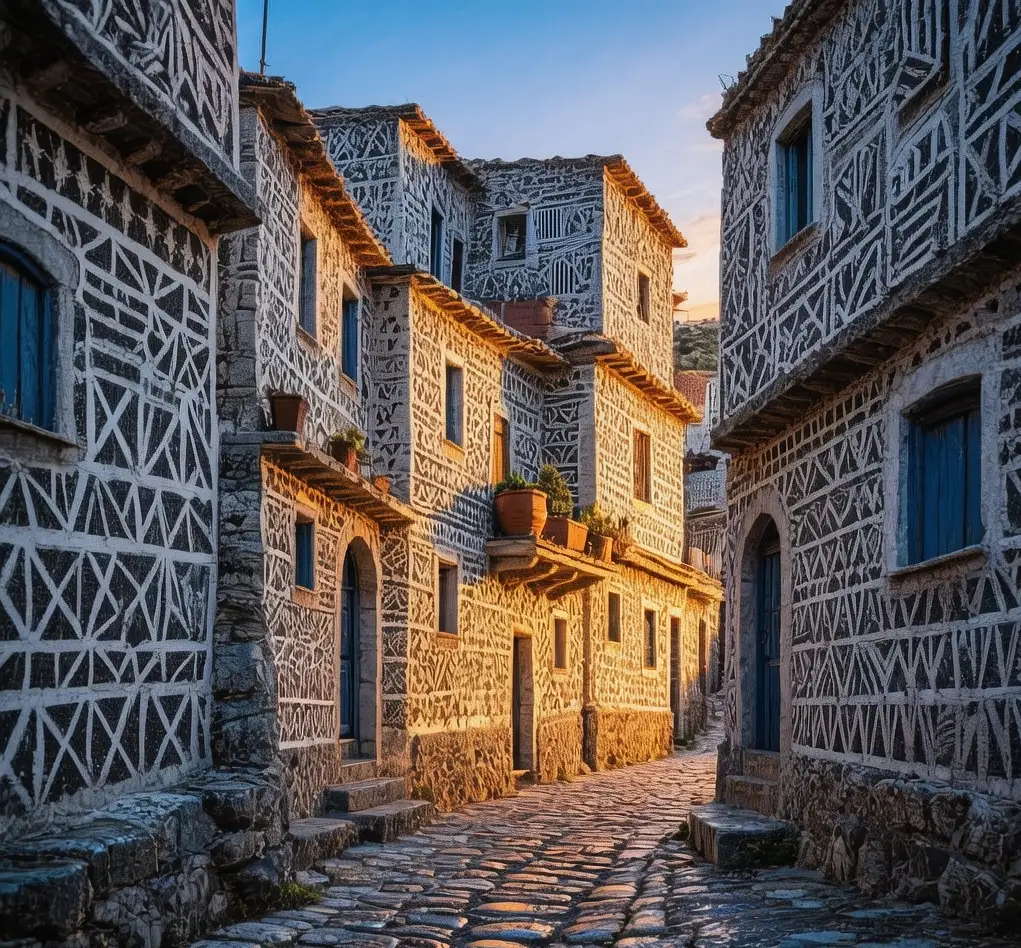
Chios Mastic Villages: Where Ancient Resin Meets Aegean Island Heritage
Golden afternoon light spills across the labyrinthine stone streets of medieval mastic villages as you wander through Chios's southern countryside—this unique landscape awakens with the gentle rustle of mastic trees in the breeze, the distant hum of cicadas in olive groves, and the soft murmur of visitors discovering settlements where aromatic resin has shaped culture for over two millennia. You breathe air scented with pine and the distinctive sweet-balsamic fragrance of mastic tears, feel the cool stone beneath your palm as you trace walls carved from volcanic rock, and watch sunlight illuminate the fortified villages where every alleyway tells stories of Genoese merchants, Ottoman rulers, and Greek artisans who guarded this precious commodity. These twenty-four medieval mastihochoria, spanning the southern third of Chios island, feature distinctive architecture with carved stone houses, narrow defensive streets designed to confuse pirates, and communal courtyards where mastic processing has continued unchanged since Byzantine times [[15]][[22]]. The villages' geometric precision—streets laid out in perfect grids, houses sharing party walls for structural strength—creates a living museum where the scent of mastic permeates every corner. But these mastic villages matter because they preserve not just architecture, but an entire way of life centered around nature's rarest gift—a testament to how a single tree's resin can shape culture, economy, and community across centuries, reminding us of the enduring connection between land, labor, and legacy.
Why Chios Mastic Villages Embody Mediterranean Heritage
Chios mastic villages represent the pinnacle of medieval Mediterranean architecture, solving a fundamental need to protect the world's only source of genuine mastic resin while creating fortified settlements that have preserved their unique character for over seven centuries. When Genoese merchants established control over Chios in 1346, they recognized mastic's extraordinary value—this aromatic resin, harvested exclusively from Pistacia lentiscus var. chia trees growing on Chios's southern slopes, was worth more than gold in medieval markets [[15]][[20]]. The problem they faced: how to protect this precious commodity from pirates, control production, and maintain quality while maximizing profits from trade with Constantinople and beyond.
The solution was visionary: construct twenty-four fortified villages—Pyrgi, Mesta, Olympi, and others—each designed as a self-contained fortress where mastic could be processed, stored, and guarded. These settlements showcase medieval military architecture at its finest: labyrinthine street patterns designed to confuse invaders, houses sharing party walls up to two meters thick for structural strength and defense, and central towers where mastic was weighed and stored [[18]][[24]]. The construction employed local volcanic stone and marble, creating distinctive grey-and-white architecture that has become iconic of Chios. Technical innovations include underground cisterns carved into bedrock to store rainwater, stone-paved streets that channel water away from mastic processing areas, and specialized rooms with controlled ventilation for drying mastic tears. The villages fulfilled a dual purpose: economically, they served as production centers for one of the medieval world's most valuable commodities; culturally, they became symbols of Chian identity where traditions of mastic cultivation passed from generation to generation. Today, managed by the Chios Mastic Growers Association alongside UNESCO recognition efforts, these villages stand as a testament to how natural resources can shape architecture, how medieval planning can preserve community, and how a single resin can anchor regional identity through centuries of change.
The Best Time to Experience Chios Mastic Villages
Timing your visit to Chios mastic villages profoundly influences both atmospheric immersion and practical accessibility. The optimal window falls between May 15 and June 20, when the Aegean enjoys extended daylight—sunset occurs around 8:45 PM—and temperatures range from 20°C to 27°C (68°F to 81°F), creating ideal conditions for exploring medieval streets, visiting mastic groves, and photographing stone architecture [[68]][[72]]. During this period, mastic trees begin their harvest season (July–September), wildflowers bloom in the countryside, and summer crowds remain manageable before peak season. For photographers, visit between 6:30–8:30 AM when soft morning light illuminates stone walls with minimal crowds, or 7:00–9:00 PM for dramatic golden-hour shots where grey stone glows against twilight skies.
Mastic villages operate year-round as living communities, but key experiences follow seasonal schedules: mastic harvest season (July–September) offers unique opportunities to witness traditional harvesting techniques; summer season (June–August) extends museum and café hours to 9:00 AM–9:00 PM daily; winter hours (November–February) reduce to 9:00 AM–4:00 PM. For current information, event schedules,. Avoid visiting during late November through early March, when temperatures drop to 8°C to 15°C (46°F to 59°F), daylight shrinks to nine hours, and winter rains can make stone pathways slippery. Also steer clear of mid-July to mid-August when cruise ship crowds peak and midday heat reaches 30°C+ (86°F+). Standard admission to village museums ranges €3–€6 for adults, with most village streets accessible free of charge [[24]]. The village cafés are particularly rewarding between 2:00–4:00 PM when afternoon light enhances the Mediterranean atmosphere.
Approximate Budget for a 7-Day Trip
Exploring Chios mastic villages and the island requires moderate budgeting, as Greece offers excellent value compared to many European destinations. Strategic planning—including staying in Pyrgi or Mesta and utilizing local transportation—can optimize your experience. The following breakdown reflects mid-range preferences with cultural and nature immersion priorities.
- Accommodation: €42–€82 per night for a double room in Pyrgi or Mesta (walking distance to village center); budget guesthouses €22–€42 per night; boutique traditional hotels €92+ per night
- Food: €26–€46 per day total
- Breakfast: €4–€7 (Greek coffee, bougatsa pastry, or village bakery items)
- Lunch: €7–€13 (Greek salad, grilled octopus, or mastic-flavored dishes at taverna)
- Dinner: €13–€24 (fresh fish, lamb kleftiko, or mezze platter at traditional restaurant)
- Taverna option: €6–€9 for souvlaki, tzatziki, and Greek coffee
- Transportation:
- Ferry from Piraeus to Chios: €32–€52 one-way (7–9 hours)
- Local bus to mastic villages: €6 per ride from Chios town
- Car rental for island exploration: €32 per day including fuel
- Taxi from Chios town to Pyrgi: €35 one-way
- Attractions:
- Pyrgi village museum: €4 adults; €2 students/seniors [[24]]
- Mesta village guided tour: €8 per person
- Mastic Museum: €5 adults
- Mastic grove visit: €6
- Traditional mastic workshop: €12 per person
- Miscellaneous:
- Mastic products and local crafts: €8–€38
- Audio guide rental: €3
- Photography permit for professional use: €18
Total estimated budget for 7 days: €590–€920 per person (excluding international flights)
7 Essential Chios Mastic Villages Experiences
- Wander Pyrgi's Geometric Streets at Sunrise: Arrive between 6:30–8:30 AM when the village is quiet and soft light reveals the famous xysta (decorative grey-and-white geometric patterns) on house facades. Start at the central square, then follow the labyrinthine streets where every turn reveals carved doorways and stone archways. Allow 60 minutes for this contemplative circuit; the morning atmosphere feels particularly magical before crowds gather. Listen for the gentle rustle of mastic trees in nearby groves and imagine the medieval merchants who once guarded this precious commodity.
- Explore Mesta's Fortress Architecture: Step into this perfectly preserved medieval fortress village where houses share party walls and streets form a defensive maze designed to confuse pirates. Visit between 10:00 AM–12:00 PM when natural light illuminates the stone architecture and carved details. Allow 45 minutes for full appreciation; the village's circular layout with a central tower reveals how medieval planning prioritized defense while maintaining community life [[22]].
- Visit a Mastic Grove: Join a guided tour of working mastic plantations where Pistacia lentiscus trees are cultivated using techniques unchanged for centuries. Visit between 2:00–4:00 PM when afternoon light enhances the silvery-green foliage. Allow 60 minutes; observe how farmers make precise cuts in the bark, collect the resin tears, and process them using traditional methods. The experience connects you directly with the labor and skill behind this ancient commodity.
- Taste Mastic Specialties: Reserve a table at a traditional taverna between 1:00–3:00 PM to sample dishes flavored with mastic—ice cream, bread, liqueur, and savory dishes. Order mastic ice cream (glyko masticha, €6), mastic spoon sweet (€5), or grilled fish with mastic sauce (€16). The unique pine-like flavor reveals why this resin was worth more than gold in medieval markets.
- Photograph the Xysta Patterns: Position yourself in Pyrgi's central square between 7:00–9:00 AM when soft light highlights the distinctive grey-and-white geometric patterns carved into volcanic stone. Use a polarizing filter to manage reflections; a wide-angle lens captures the intricate facade decorations. The iconic patterns—spirals, diamonds, and floral motifs—define Chios mastic villages' unique aesthetic.
- Attend a Mastic Processing Workshop: Join hands-on demonstrations where local artisans show traditional mastic cleaning, sorting, and preparation techniques. Workshops typically occur at 11:00 AM and 4:00 PM daily in summer; book in advance. The experience provides deeper context for mastic's value, revealing how resin tears are separated from impurities and prepared for culinary and medicinal use.
- Climb to the Village Towers: Ascend the central towers in Pyrgi or Mesta for panoramic views across mastic groves to the Aegean Sea. Visit between 5:00–7:00 PM when visibility is clearest and light is warmest. The thirty-meter towers offer unparalleled perspectives of how the villages integrate with the agricultural landscape, helping you visualize the medieval defensive system that protected this precious resource.
3 Hidden Gems Most Travelers Miss
- Olympi's Carved Stone Fountains: Tucked away in this lesser-visited mastic village, ornate stone fountains with intricate carvings and flowing water have quenched villagers' thirst for centuries. Most tourists focus solely on Pyrgi and Mesta without exploring Olympi's architectural treasures. Access: From Pyrgi, follow signs toward Olympi (5 km); accessible 24/7; free. Best visited between 10:00 AM–12:00 PM when the space is least crowded. The fountains' interpretive panels explain traditional water management systems, creating educational value alongside aesthetic beauty.
- The Mastic Museum's Underground Storage: Beneath the main exhibition in Pyrgi, climate-controlled chambers where mastic was historically stored reveal the careful preservation techniques that maintained resin quality. Most visitors explore the museum's upper floors without descending to these atmospheric spaces. Access: Inquire at museum entrance for basement access; typically available Tuesday–Saturday 10:00 AM–2:00 PM; included with admission. Best visited between 11:00 AM–1:00 PM when guides are available. The cool, aromatic chambers reveal how medieval merchants protected their most valuable commodity.
- The Abandoned Mastic Groves Near Kalamoti: Beyond the main tourist areas, ancient mastic trees over 200 years old grow in abandoned groves where traditional cultivation methods remain visible in the landscape. Most tourists don't know these access points. Access: Follow signs from Kalamoti village toward "Palaiés Mastichódes" (Old Mastic Groves); accessible via 20-minute walk; open daily daylight hours; free. Best visited between 4:00–6:00 PM for golden-hour photography. The experience—walking among ancient trees with twisted trunks and silvery leaves—creates a tangible connection to centuries of mastic cultivation.
Cultural & Practical Tips
- Photography Guidelines: Photography for personal use is permitted throughout mastic villages, but drones require special permission from local authorities—contact +30 22710 44333 in advance. The geometric facades and stone architecture are ideal for photography; visit during golden hour for optimal light. Respect residents' privacy when capturing candid moments in living villages.
- Language: While signage includes English, learning Greek phrases enhances your experience: efharistó (ef-ha-ree-STO = thank you), parakaló (pa-ra-ka-LO = please/you're welcome), yasou (YA-soo = hello). Greek pronunciation emphasizes the second-to-last syllable.
- Footwear: Sturdy walking shoes with good grip are essential—exploring stone-paved streets involves uneven surfaces, smooth volcanic rock, and occasional steps. The main village circuits involve moderate walking; allow 90 minutes for full exploration of each village.
- Mastic Harvest Season: If visiting July–September, respect that mastic harvesting is delicate work. Observe from a distance, never touch the trees or resin without permission, and understand that farmers work long hours in hot conditions to collect this precious commodity.
- Weather Considerations: Chios's southern location means hot, dry summers with meltemi winds. Check the forecast before visiting; strong winds can make exploring exposed village areas challenging. Spring (April–June) and fall (September–October) offer the most reliable conditions with comfortable temperatures.
- Combining with Athens: Chios is accessible via ferry from Piraeus (7–9 hours) or flight from Athens (45 minutes). Purchase a Chios transport pass for flexible travel. Consider spending 3–4 nights in the mastic villages to fully explore Pyrgi, Mesta, and Olympi alongside the island's beaches and monasteries.
- Respectful Engagement: Mastic villages are living communities, not museum exhibits. Respect private property, speak quietly in residential areas, and support local businesses by purchasing mastic products directly from village shops. The community values visitors who engage thoughtfully with the heritage while honoring present-day life.
Conclusion: Travel with Reverence, Not Just Observation
Chios mastic villages invite more than passive sightseeing—they demand engagement with the layered narratives embedded in stone, resin, and sea: the ingenuity of Genoese merchants who built fortresses to protect nature's gift, the resilience of farmers who cultivated mastic trees for generations, and the ongoing stewardship that keeps traditions alive for future visitors. When you stand in those geometric streets watching grey stone meet white limestone, you're not merely viewing architecture; you're connecting with a model for sustainable heritage preservation, a testament to how natural resources can shape culture, and a reminder that the most meaningful places honor both past and future. This isn't a place to rush through, checklist in hand, snapping photos before racing to the next attraction. Slow down. Feel the cool stone beneath your palm; listen to the rustle of mastic trees in the breeze; contemplate how a single tree's resin could build fortresses, fund empires, and sustain communities for two millennia. Travel here with curiosity about how places shape identity and how identity gives meaning to places. Support preservation by respecting the site, choosing experiences that employ local guides, and sharing not just images but understanding. The most transformative journeys leave you not just with memories of what you saw, but with deeper appreciation for continuity—and Chios mastic villages, with their seamless fusion of medieval heritage and living tradition, offer precisely that invitation to those willing to wander, to wonder, and to simply connect across time.