
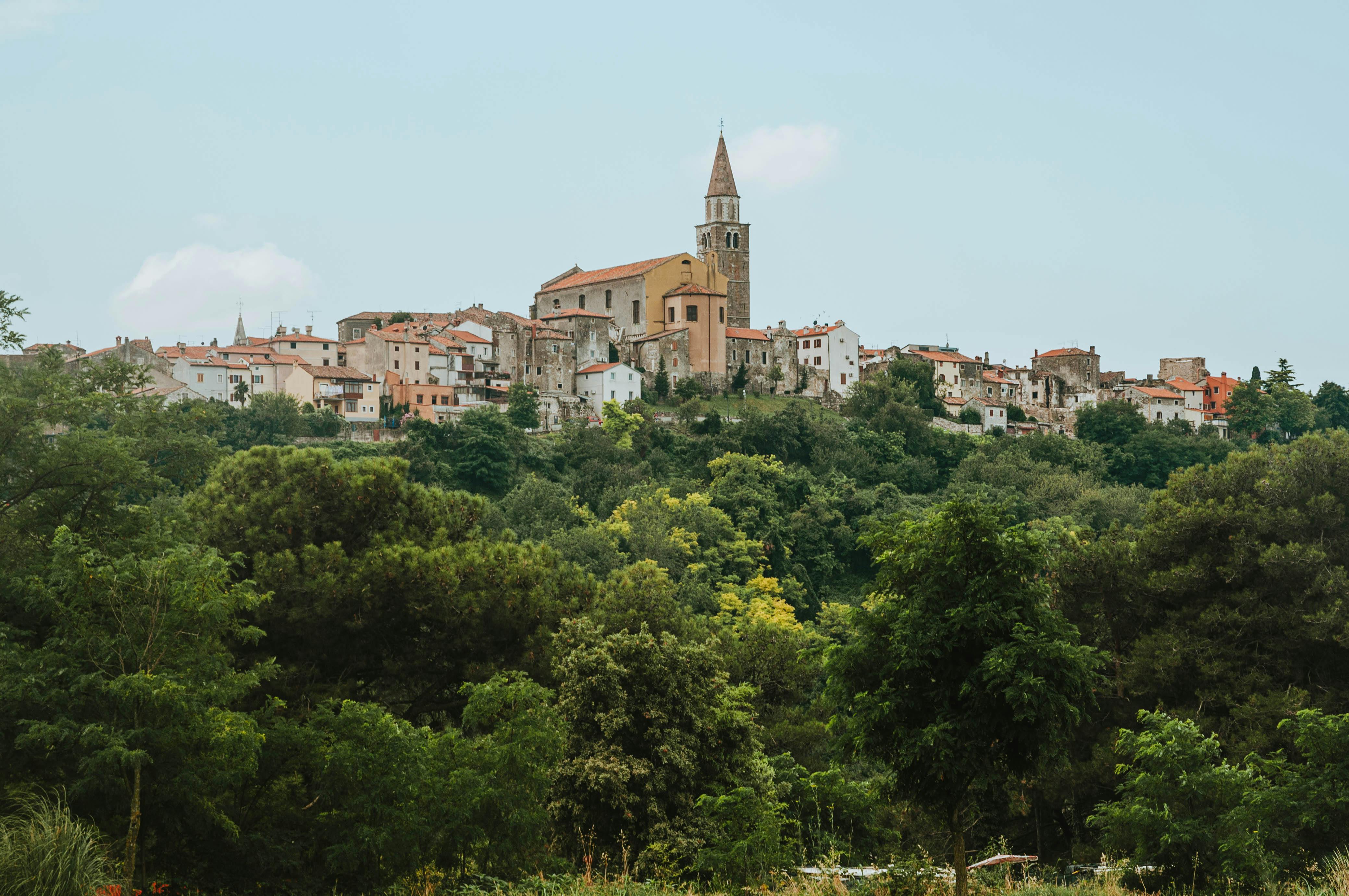
Grožnjan: Where Artistic Soul Meets Istrian Stone
The first light of dawn spills across limestone cobblestones, warming the terracotta rooftops that crown this 240-meter hilltop perch. You hear it before you see it—the tentative notes of a violin drifting from an open window, mingling with the scent of wild sage and espresso brewing in stone-walled cafés. Grožnjan awakens slowly, deliberately, as if savoring each moment of this Mediterranean morning. Narrow streets, barely wide enough for two people to pass, wind between buildings that have stood sentinel since the twelfth century, their weathered facades bearing witness to Venetian rule, Habsburg influence, and centuries of quiet transformation. Today, this medieval fortress town has reinvented itself as something extraordinary: a living canvas where over three hundred artists call home, where galleries outnumber grocery stores, and where the creative spirit pulses through every archway and courtyard. This is not merely a destination to visit—it is an experience that reshapes how you understand the relationship between place, history, and human expression.
Why Grožnjan Embodies Artistic Renaissance
Grožnjan's transformation from near-abandonment to cultural phenomenon represents one of Europe's most remarkable urban revitalizations. By the 1960s, this hilltop settlement faced extinction—its population had dwindled to fewer than thirty residents as young families migrated to coastal cities and industrial centers. The town's salvation arrived through an audacious vision: in 1965, local authorities began offering abandoned stone houses to artists for symbolic rents, catalyzing a creative migration that would permanently alter Grožnjan's destiny. Today, the town hosts more than thirty galleries and studios within its compact 0.3-square-kilometer historic core, creating one of the highest concentrations of working artists per capita in the Mediterranean region.
The architecture itself tells the story of this renaissance. Medieval fortifications, originally constructed in 1102 and reinforced throughout the Venetian period, now frame sculpture gardens and painting workshops. The characteristic Istrian stone—pale limestone quarried from nearby hills—provides both building material and artistic medium, its honey-colored surfaces reflecting the Adriatic light in ways that painters have chased for generations. Each gallery occupies a restored dwelling, its thick stone walls (often exceeding 60 centimeters) providing natural climate control that preserves delicate works while maintaining comfortable working conditions year-round.
Beyond visual arts, Grožnjan has cultivated a formidable reputation in music education and performance. The Jeunesses Musicales International organization established its Croatian branch here in 1969, transforming the town into a summer conservatory where young musicians from forty-plus countries study under master instructors. During peak season, the air vibrates with practice sessions—piano sonatas escaping through shuttered windows, string quartets rehearsing in converted palazzos, and impromptu jazz sessions spilling onto stone piazzas after midnight. This fusion of visual and musical creativity creates a cultural ecosystem unlike any other in the Adriatic region, where art is not displayed behind velvet ropes but created in real-time, visible through open studio doors.
The Best Time to Experience Grožnjan
Grožnjan's character shifts dramatically with the seasons, and choosing your arrival window determines which version of this artistic sanctuary you'll encounter. For travelers seeking the full creative explosion, plan your visit between June 15 and September 10, when the town reaches its zenith of activity. During these weeks, average temperatures range from 24–29°C (75–84°F), with evening breezes cooling to a comfortable 18–21°C (64–70°F). The summer music festivals reach their peak in July, with daily concerts scheduled between 8:00–10:00 PM in the town's main square, when the setting sun casts amber light across centuries-old stone.
However, the shoulder seasons offer their own magnetic appeal. May 1–June 14 brings mild temperatures of 19–24°C (66–75°F) and fewer crowds, allowing unhurried conversations with artists in their studios. The wildflowers blooming in surrounding vineyards create spectacular photography opportunities, and the soft spring light attracts plein air painters who welcome observer-participants. Similarly, September 11–October 20 delivers harvest-season charm, with temperatures of 17–23°C (63–73°F) and the added bonus of truffle season in nearby Motovun forest.
Avoid November through March unless you specifically seek solitude—many galleries close, restaurants reduce hours, and temperatures drop to 5–12°C (41–54°F) with increased rainfall. While the winter atmosphere has melancholic beauty, you'll miss the collaborative energy that defines Grožnjan's essence.
For comprehensive event calendars and accommodation bookings, visit the www.tz-groznjan.hr official tourism website, which updates weekly during high season with exhibition openings, concert schedules, and workshop availability.
Approximate Budget for a 7-Day Trip
Grožnjan occupies an interesting position in Croatia's tourism economy—more affordable than coastal hotspots like Rovinj or Dubrovnik, yet commanding premium prices during festival season due to limited accommodation. The following breakdown assumes a mid-range travel style with comfortable private rooms, quality dining, and active participation in cultural activities.
- Accommodation: €65–€120 per night for a double room in a restored stone house within the old town. Budget studios start at €45/night but may lack air conditioning; upscale artist-owned apartments with terraces and vineyard views run €100–€150/night. Book directly with property owners for 10–15% discounts.
- Food: €35–€55 per day per person
- Breakfast: €6–€10 (coffee €2, pastry €2.50, or full breakfast €8 at café)
- Lunch: €12–€18 (pasta with truffle sauce €14, grilled fish plate €16, salad and local cheese €12)
- Dinner: €18–€28 (three-course meal with wine at konoba-style restaurant)
- Transportation:
- Car rental: €35–€50/day (essential for exploring Istria; Grožnjan has limited parking at town entrance)
- Fuel: €25 total for week (Grožnjan is 25 km from coast, 15 km from Buje)
- Pula Airport transfers: €60 one-way taxi or €12 bus to Buje + €8 taxi to Grožnjan
- Attractions:
- Gallery entries: Most free; special exhibitions €3–€5
- Music festival concerts: €8–€15 per performance
- Art workshops (3-hour sessions): €25–€40
- Wine tasting at local vineyards: €10–€20
- Miscellaneous:
- Original artwork purchases: €50–€500+ (small paintings, prints, ceramics)
- Souvenirs: €15–€30 (locally made olive oil, truffle products)
- Tourist tax: €1.50 per person per night (paid at accommodation)
Total estimated cost for 7 days: €850–€1,350 per person (based on double occupancy; solo travelers should add 30–40% for single-room supplements)
7 Essential Grožnjan Experiences
- Gallery-hop at dawn: Arrive at the main square by 8:30 AM, when artists unlock their studios and arrange new works in window displays. Start at the Grožnjan Town Gallery on the eastern edge, then follow Via Umberta Gorjana westward. You'll witness painters stretching canvases, sculptors chiseling morning light into stone, and jewelers arranging handcrafted pieces—often with time to ask about techniques and inspiration before the tourist crowds arrive at 10:00 AM.
- Attend an evening concert in the Loggia: The Town Loggia, a fifteenth-century open-air pavilion with stone arches, hosts chamber music performances most summer evenings at 8:30 PM. Bring a light shawl—evenings cool quickly at this elevation—and arrive 20 minutes early to claim stone bench seating. The acoustics, amplified by surrounding medieval walls, create an intimate atmosphere where you can hear every bow stroke and breath.
- Watch sunset from the bell tower: Climb the 47-meter bell tower of the Parish Church of Saints Vitus, Modestus, and Crescentius (entry €3, open 9:00 AM–7:00 PM). The 128 stone steps deliver you to a viewing platform offering 360-degree vistas across the Mirna River valley to the Adriatic Sea. Time your ascent for 7:00–8:30 PM in summer, when the light turns the terracotta rooftops copper and the distant sea becomes liquid gold.
- Participate in a plein air painting session: Several artists offer half-day workshops (€35, 9:00 AM–1:00 PM) where you paint Grožnjan's streets alongside them. Materials provided; no experience necessary. You'll learn to capture the distinctive Istrian light while receiving personalized instruction, and you keep your finished piece as a souvenir far more meaningful than any mass-produced trinket.
- Explore the underground passages: Beneath Grožnjan's streets lies a network of medieval cellars and escape tunnels carved into the limestone bedrock. Guided tours depart from the tourist office at 11:00 AM and 4:00 PM daily (€8, 45 minutes). The temperature remains a constant 14°C (57°F) year-round, so bring a light jacket even in summer.
- Dine at a family konoba: Reserve a table at Konoba Morgan (book 2–3 days ahead; +385 52 776 240) for authentic Istrian cuisine. Order the fuži pasta with wild asparagus (in spring) or truffle sauce (year-round), followed by grilled lamb or fresh Adriatic sea bass. The wine list features local Malvasia and Teran varieties at €18–€35 per bottle—ask the owner for pairing recommendations.
- Visit during a full moon: If your schedule allows, plan your stay around a full moon. Artists often organize special evening exhibitions, the stone streets glow silver under moonlight, and impromptu music sessions continue past midnight. The contrast between the illuminated town and the dark Istrian countryside creates a magical atmosphere that daytime visitors never experience.
3 Hidden Gems Most Travelers Miss
- Atelier Kosta in the northern quarter: Tucked behind the cemetery on Grožnjan's least-visited side, sculptor Kosta Bogdanović maintains a working studio that rarely appears in guidebooks. His abstract stone carvings draw inspiration from Istrian geology and ancient Roman ruins. Visit by appointment only (call +385 98 234 567 or email kosta@groznjan-art.hr); he speaks English, Italian, and German. If you arrive between 3:00–5:00 PM, he often invites visitors to try chiseling techniques on practice stones. The surrounding garden, filled with weathered sculptures half-reclaimed by Mediterranean vegetation, provides extraordinary photography opportunities without crowds.
- The abandoned Venetian well on Via dei Pozzi: Most visitors rush past this sixteenth-century well on their way to the main square, but its carved stone reliefs tell Grožnjan's maritime history through symbols of lions, anchors, and merchant ships. The well has been dry since 1923, when the town connected to modern water systems, but its 12-meter depth and remarkable acoustics make it worth a stop. Drop a coin and listen to the echo—a local tradition said to guarantee your return to Grožnjan. Best visited at 10:00–11:00 AM or 5:00–6:00 PM when the sun angle illuminates the carvings.
- Private vineyard concerts at Zigante Estate: Located 3 kilometers outside town on the road to Buje, the Zigante family vineyard hosts intimate wine-and-music evenings every Thursday in summer (8:00 PM start, €25 including wine tasting and appetizers). Unlike the larger festivals, these gatherings cap attendance at 30 people and feature local jazz trios or classical guitarists performing among the vines. Reserve at least one week ahead via wine@zigante-istria.com or +385 52 776 445. The sunset views across the Mirna valley, paired with their award-winning Malvasia, create an unforgettable sensory experience.
Cultural & Practical Tips
- Language etiquette: While Croatian is the official language, Grožnjan's history means you'll hear Italian spoken frequently—many residents are bilingual. Learning basic greetings demonstrates respect: Dobar dan (DOH-bar dahn) for "Good day," Hvala (HVAH-lah) for "Thank you," and Bok (BOHK) for informal "Hello/Goodbye." Italian phrases like Buongiorno and Grazie are equally welcome.
- Photography protocols: Always ask permission before photographing artists at work or inside galleries—many consider their creative process private. A simple "Mogu li fotografirati?" (MOH-goo lee fo-toh-grah-fee-rah-tee?) shows courtesy. Most will agree, and some may even pose with their work. Drone photography requires special permission from the tourist office due to the historic architecture and frequent low-flying aircraft from nearby Pula Airport.
- Dress code considerations: Grožnjan's cobblestone streets are notoriously uneven and slippery when wet. Wear sturdy, flat-soled shoes with good grip—heels are impractical and potentially dangerous. For evening concerts, smart-casual attire is appropriate; Croatians dress well for cultural events, though formal wear is unnecessary.
- Currency and payments: Croatia adopted the Euro (€) in January 2023. While most galleries and restaurants accept credit cards, smaller vendors and market stalls prefer cash. ATMs are located in nearby Buje (8 km away); bring sufficient Euros for small purchases, tips, and tourist tax payments.
- Parking strategy: Private vehicles cannot enter the old town. Use the designated parking area at the town entrance (€1.50/hour or €10/day in summer). If staying within the walls, contact your accommodation host—they may have reserved spaces or can arrange luggage drop-off before you park.
- Seasonal weather preparation: Summer temperatures can exceed 30°C (86°F), but the elevation provides cooling breezes. Still, bring sun protection (hat, sunscreen SPF 30+) and a reusable water bottle—public fountains throughout town provide free, potable water. In spring and fall, pack layers; morning temperatures can be 10°C cooler than midday.
- Tipping customs: Round up restaurant bills by 10–15% for good service. For gallery purchases, tipping is not expected, but leaving a small gratuity (€2–€5) for particularly helpful staff who provide detailed explanations is appreciated. Taxi drivers expect 10% tips; hotel housekeeping €2–€3 per day.
Conclusion: Travel with Intention, Not Just Itinerary
Grožnjan resists the hurried checklist approach that characterizes so much modern tourism. This town demands that you slow down, that you linger in doorways watching light shift across stone walls, that you strike up conversations with artists who measure their days not in minutes but in brushstrokes and musical phrases. To truly experience Grožnjan is to participate in its ongoing creative dialogue—to understand that these galleries and studios are not museums preserving a static past but living workshops where culture evolves in real-time.
Your visit carries responsibility: support local artisans by purchasing directly from creators rather than importing mass-produced souvenirs; respect the residential nature of this community by observing quiet hours after 10:00 PM; and recognize that Grožnjan's magic stems from the delicate balance between tourism and authenticity that residents have maintained for six decades. Leave space in your schedule for unplanned discoveries—the impromptu jazz session in a hidden courtyard, the invitation to share wine with a painter, the perfect photograph that arrives only after you've stopped searching.
Grožnjan offers not just a destination but a different way of traveling, one that values depth over distance, connection over consumption, and creative inspiration over passive sightseeing. Come with an open mind, stay with an open heart, and depart with something far more valuable than photographs: a renewed understanding of how place and people can transform each other.