
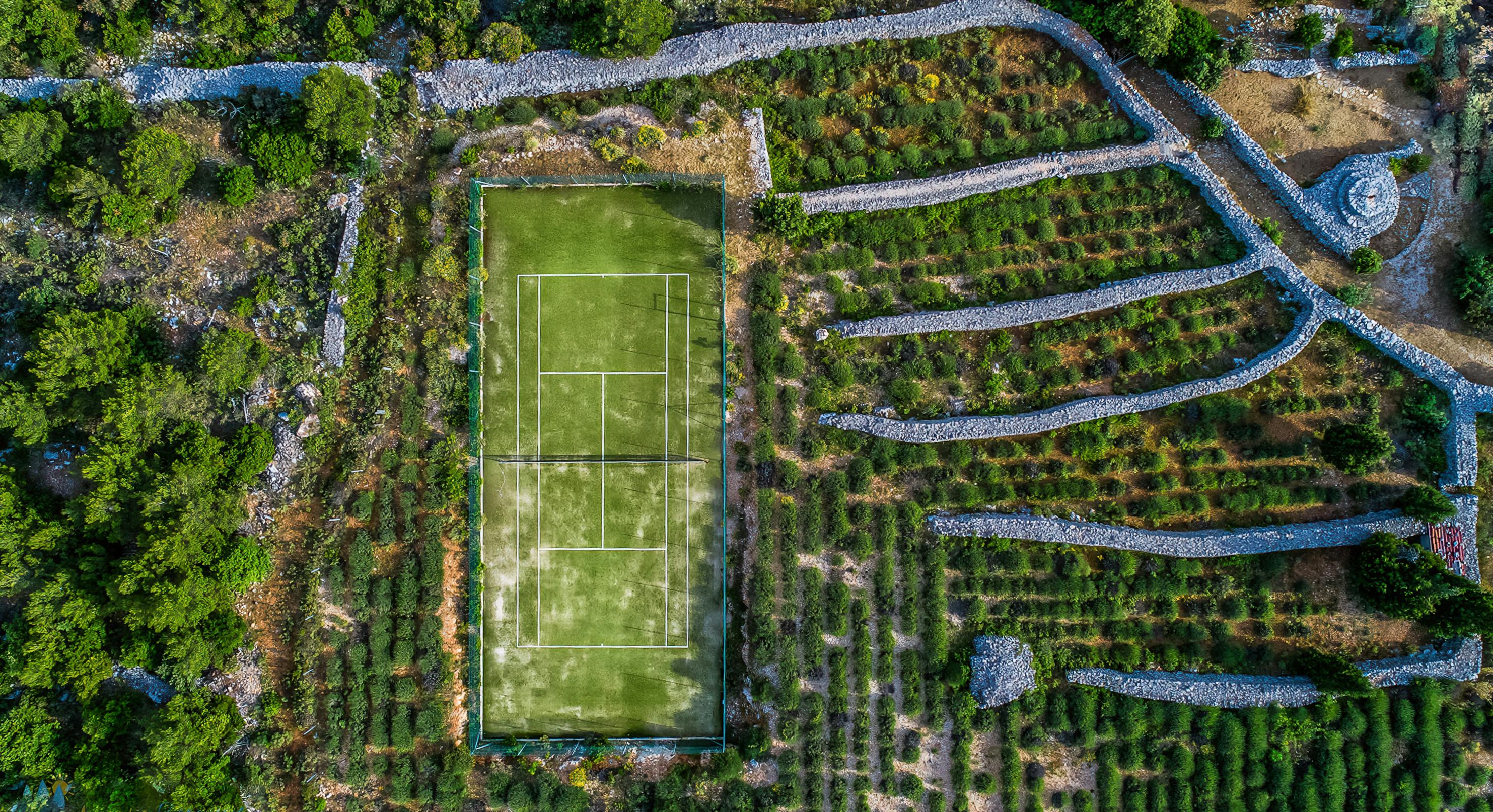
Hvar Lavender Fields: Where Purple Blooms Meet Adriatic Sunlight
The morning sun warms the limestone soil as you step onto a narrow path winding through endless rows of lavender, their purple spikes swaying gently in the coastal breeze that carries the island's signature perfume—honeyed floral notes mingled with wild rosemary and sun-baked earth. The air hums with bees dancing between blossoms, their wings catching the light like tiny jewels, while the distant cry of seagulls echoes from the Adriatic just kilometers away. You feel the soft brush of lavender against your skin, hear the rustle of dry grass underfoot, and breathe deeply the aromatherapy that has drawn seekers to Hvar for over a century. These fields—stretching across the island's interior plateau at elevations of 200-400 meters (656-1,312 feet)—were first cultivated commercially in the 1930s, when local farmers recognized that Hvar's unique microclimate of 2,700+ annual sunshine hours and well-drained karst soil created ideal conditions for Lavandula angustifolia. The lavender fields matter because they preserve something increasingly rare: an agricultural tradition where heritage farming meets sensory wonder, inviting visitors to experience not just beauty, but the therapeutic rhythm of land that has nourished both crops and souls for generations.
Why Hvar Lavender Fields Embody Dalmatian Agricultural Heritage
The lavender fields of Hvar represent one of the Adriatic's most elegant examples of sustainable agro-tourism, where geological advantage, traditional knowledge, and modern conservation converge to create a landscape that serves both ecological and cultural purposes. When Dalmatian farmers first planted commercial lavender in the 1930s, they solved a fundamental challenge: how to cultivate valuable crops on Hvar's rocky, drought-prone interior while preserving soil integrity and supporting rural communities. The island's limestone bedrock—formed during the Cretaceous period—provides excellent drainage essential for lavender's root health, while the Mediterranean climate with minimal summer rainfall prevents fungal diseases that plague lavender in wetter regions.
Engineering adaptations reflect centuries of ingenuity. Traditional dry-stone walls, built without mortar using local limestone, terrace the slopes to prevent erosion and create microclimates that protect young plants from coastal winds. Irrigation relies on ancient cisterns carved into bedrock to collect winter rainfall, supplemented by modern drip systems that deliver water directly to roots with minimal waste. The Hvar Lavender Association, established in 2005, manages sustainable harvesting practices: flowers are cut by hand at peak bloom (when essential oil content reaches 1.5-2.5%), distillation occurs within hours to preserve volatile compounds, and fields are rotated every 8-10 years to maintain soil vitality.
Today, approximately 150 hectares (370 acres) of lavender bloom across Hvar's interior, generating revenue that supports approximately 80 farming families and funds conservation of traditional agricultural landscapes. The fields fulfill a deeper need: providing authentic connection to place-based craftsmanship in an age where mass production often replaces artisanal quality. When you walk among rows of purple spikes, surrounded by the scent that has defined Hvar's identity for generations, you participate in a tradition that honors the connection between planetary conditions and human care—a philosophy increasingly valuable in an era of environmental uncertainty.
The Best Time to Experience Hvar Lavender Fields
Optimal conditions for visiting Hvar lavender fields occur during one distinct window: June 15 through July 25, when lavender reaches peak bloom and essential oil content is highest. During this period, temperatures range between 24-30°C (75-86°F), rainfall averages just 25-40mm monthly, and the Adriatic shimmers in brilliant blues that enhance photography from hillside viewpoints. Visit between 7:00-9:00 AM to experience soft morning light on purple blooms, minimal crowds, and the magical spectacle of dew-kissed lavender releasing its most intense fragrance as the sun warms the flowers.
Early summer (May) presents challenges: lavender plants are still developing, with limited blooms and weaker fragrance. Late summer (August) brings harvest completion—fields appear brown and dormant after cutting, diminishing visual appeal. Winter (November-February) brings cooler temperatures—8-14°C (46-57°F)—and occasional rain that makes limestone paths slippery; most lavender-related activities cease during this dormant period. Avoid visiting during midday in peak season (11:00 AM-3:00 PM) when intense sun can cause heat fatigue and photography light becomes harsh, washing out lavender's delicate purple hues.
For current bloom status, harvest schedules, and event updates, visit www.hvar.hr, the official tourism portal maintained by the Hvar Tourist Board. The website provides real-time updates on lavender field accessibility, links to the Hvar Lavender Association at hvar-lavender.com, and detailed information about guided farm tours, distillation demonstrations, and the annual Lavender Festival (typically held in late June). Most lavender farms welcome visitors daily from 8:00 AM to 7:00 PM during bloom season, though individual properties may vary—contact farms directly for specific visiting hours.
Approximate Budget for a 7-Day Trip
Hvar offers good value for a Croatian island destination, though prices peak during summer. This breakdown assumes a mid-range travel style with comfortable accommodations, authentic local dining, and scooter rental—recommended for accessing lavender fields scattered across Hvar's interior.
- Accommodation: €70-€130 per night for a double room in a family-run pansion or three-star hotel in Hvar Town, Stari Grad, or Jelsa
- Food: €34-48 per day total
- Breakfast: €6-10 (coffee, fresh burek, and local cheese at a pekara)
- Lunch: €12-17 (crni rižot—black cuttlefish risotto, or grilled sardines with olive oil)
- Dinner: €16-21 (slow-cooked lamb peka or fresh Adriatic fish with local Plavac Mali wine)
- Transportation:
- Scooter rental (7 days): €45-65 total (essential for field access)
- Ferry from Split to Hvar: €12-18 per person one-way
- Local bus between towns: €3-5 per ride
- Taxi within Hvar: €15-25 for short trips
- Attractions:
- Lavender farm tours: €15-25 per person (includes distillation demo)
- Hvar Fortress entry: €8
- Stari Grad Plain UNESCO site: Free
- Boat tour to Pakleni Islands: €35-55
- Local museum entry: €5-8
- Miscellaneous:
- Lavender products (oil, sachets, soap): €12-35
- Local honey and fig preserves: €10-18
- Maraschino liqueur tastings: €6-10
Total estimated cost for 7 days: €980-1,420 per person (excluding international flights)
7 Essential Hvar Lavender Field Experiences
- Sunrise Photography at Velo Grablje: Arrive at 7:00 AM when the lavender fields near Velo Grablje village are bathed in soft golden light. Position yourself at the hillside viewpoint for panoramic perspectives of purple rows cascading toward the Adriatic. The morning dew enhances fragrance intensity; bring a macro lens to capture individual blooms with bees at work. Allow 45 minutes for unhurried observation before crowds arrive.
- Guided Farm Tour with Distillation Demo: Book a tour with family-owned Lavanda Hvar or Brusje Lavender Farm (reserve 48 hours ahead via hvar-lavender.com) to witness traditional harvesting and steam distillation. Watch as freshly cut flowers transform into essential oil through copper stills—a process unchanged since the 1930s. Tours run daily at 10:00 AM and 4:00 PM during bloom season; cost €20-25 including tasting of lavender honey and herbal tea.
- Lavender Harvest Participation: Join local farmers for hands-on harvesting (typically late June, by arrangement only) to learn traditional cutting techniques: stems are snipped 15-20 centimeters below blooms using curved sheaves, bundled in groups of 50, and transported to distillation within hours. Wear long sleeves and sturdy shoes; bring sun protection. This immersive experience offers authentic cultural connection rarely available to tourists.
- Scenic Scooter Ride Through Interior: Rent a scooter in Hvar Town and follow the inland road toward Brusje and Velo Grablje, stopping at viewpoints where lavender fields frame panoramic Adriatic vistas. The 25-kilometer route gains 300 meters elevation with gentle curves; allow 2-3 hours with photo stops. Start at 8:00 AM for optimal light and cooler temperatures; carry water as services are limited inland.
- Lavender-Infused Dining Experience: Reserve a table at Konoba Menego or Restaurant Dišpet in Velo Grablje for lunch featuring lavender-enhanced Dalmatian cuisine: lavender-crusted lamb, honey-lavender desserts, or herbal teas. Expect to pay €18-25 per person; request terrace seating for views of surrounding fields. Visit at 1:00 PM to avoid peak lunch crowds while still enjoying daylight views.
- Sunset Walk at Malo Grablje: Return to the smaller, more secluded fields near Malo Grablje village at 6:30-7:30 PM in summer when warm light transforms purple blooms into liquid amethyst. The intimate scale of these fields—just 5-10 hectares—offers peaceful photography opportunities with minimal crowds. Bring a polarizing filter to manage golden-hour glare; the village's stone houses provide charming foreground elements.
- Lavender Product Shopping at Source: Purchase authentic lavender products directly from farm shops in Brusje or Velo Grablje, where prices are 30-40% lower than tourist boutiques and quality is guaranteed. Look for DOP-certified essential oils (€25-45 for 10ml), hand-stitched sachets (€8-15), and lavender honey (€12-20). Visit weekday mornings for personalized attention from farmers who share cultivation stories.
3 Hidden Gems Most Travelers Miss
- Wild Lavender Trail near Sv. Nikola: Beyond cultivated fields, a marked 3-kilometer hiking trail near the Sv. Nikola chapel features native wild lavender (Lavandula stoechas) blooming alongside endemic Dalmatian flora. Access from the Brusje parking area; follow stone markers for 20 minutes. The trail offers exceptional botanical photography opportunities with minimal crowds. Visit weekday mornings; bring water and wear sturdy shoes for rocky terrain.
- Traditional Stone Hut Distillery: Tucked in a secluded valley near Malo Grablje, a restored 19th-century stone hut houses a small-scale copper still used for artisanal lavender oil production. Access by arrangement only—contact Lavanda Hvar at +385 91 234 5678 to schedule a visit (typically Tuesday/Thursday mornings). The intimate setting allows observation of traditional distillation methods rarely seen by tourists. No admission fee; purchases support preservation.
- Lavender Honey Apiary Experience: Behind a family farm near Jelsa, beekeeper Ivan Novak maintains hives placed strategically among lavender fields to produce monofloral lavender honey. Visit by appointment (email ivan.novak@hvar-honey.hr) for a 45-minute tour explaining pollination ecology and honey harvesting. Tastings included; honey jars cost €14-22. Best visited at 9:00 AM when bees are most active; wear light-colored clothing to avoid startling hives.
Cultural & Practical Tips
- Respect agricultural spaces: Lavender fields are working farms—stay on designated paths, never pick blooms without permission, and avoid stepping on plants. Damaged lavender reduces essential oil yield and impacts farmers' livelihoods.
- Footwear essentials: Wear closed-toe shoes with good traction—the limestone paths become dusty and slippery. Avoid sandals; uneven terrain and dry grass require stable footing. Comfortable walking shoes are essential for field exploration.
- Sun protection strategy: Hvar's interior receives intense Mediterranean sun—pack a wide-brimmed hat, UV-blocking sunglasses, and reef-safe sunscreen. Temperatures in lavender fields can feel 3-5°C warmer than coastal areas; layer clothing for comfort.
- Essential Croatian phrases: "Dobar dan" (DOH-bar dahn = good day), "Hvala" (HVAH-lah = thank you), "Oprostite" (oh-PROH-stee-teh = excuse me), "Gdje je...?" (gdyeh yeh = where is...?). Locals appreciate even basic efforts to speak Croatian.
- Photography guidelines: Drones require special permission from the Hvar City Administration—contact hvar.hr at least 72 hours in advance. Respect other visitors' experiences; avoid blocking narrow field paths for extended shots during peak hours. Golden hour (7:00-9:00 AM, 6:30-7:30 PM summer) offers optimal light for lavender photography.
- Allergy awareness: Lavender pollen can trigger reactions in sensitive individuals—carry antihistamines if prone to allergies. Bees are abundant during bloom season; avoid wearing strong perfumes that may attract them.
- Accessibility information: Most lavender fields involve uneven limestone terrain and gentle slopes unsuitable for wheelchairs. Alternative viewpoints include the Hvar Town fortress or coastal promenades; contact +385 21 741 022 for accessibility guidance and adapted route suggestions.
Conclusion: Travel with Reverence, Not Just Photography
Hvar's lavender fields ask something deeper than your camera lens—they invite your reverence for a landscape where geological gift and human care collaborate to create beauty that nourishes both body and soul. As you walk among purple spikes that have defined this island's identity for generations, remember that you're experiencing not just scenery but a covenant: a promise that some traditions endure because communities choose to protect them. The lavender fields matter because they remind us that preservation is an active verb, requiring both visitor respect and local stewardship.
Responsible travel here means recognizing that these fields belong first to Hvar's farming families and their heritage. It means staying on paths to protect delicate plants, purchasing directly from producers to support traditional livelihoods, and understanding that your visit impacts a fragile balance between tourism and authentic agricultural life. The farmers, distillers, and artisans who maintain these fields aren't service providers—they're custodians of a story written in sunlight, limestone, and lavender.
Slow down. Breathe the honeyed air. Feel the soft brush of blooms against your skin. When you leave Hvar, carry not just photographs of purple hillsides but a commitment to value places where heritage grows from the earth itself. That's the difference between visiting a field and truly honoring a legacy.