
Mystras Byzantine Ruins: Where Frescoed Chapels Meet Mountain Majesty
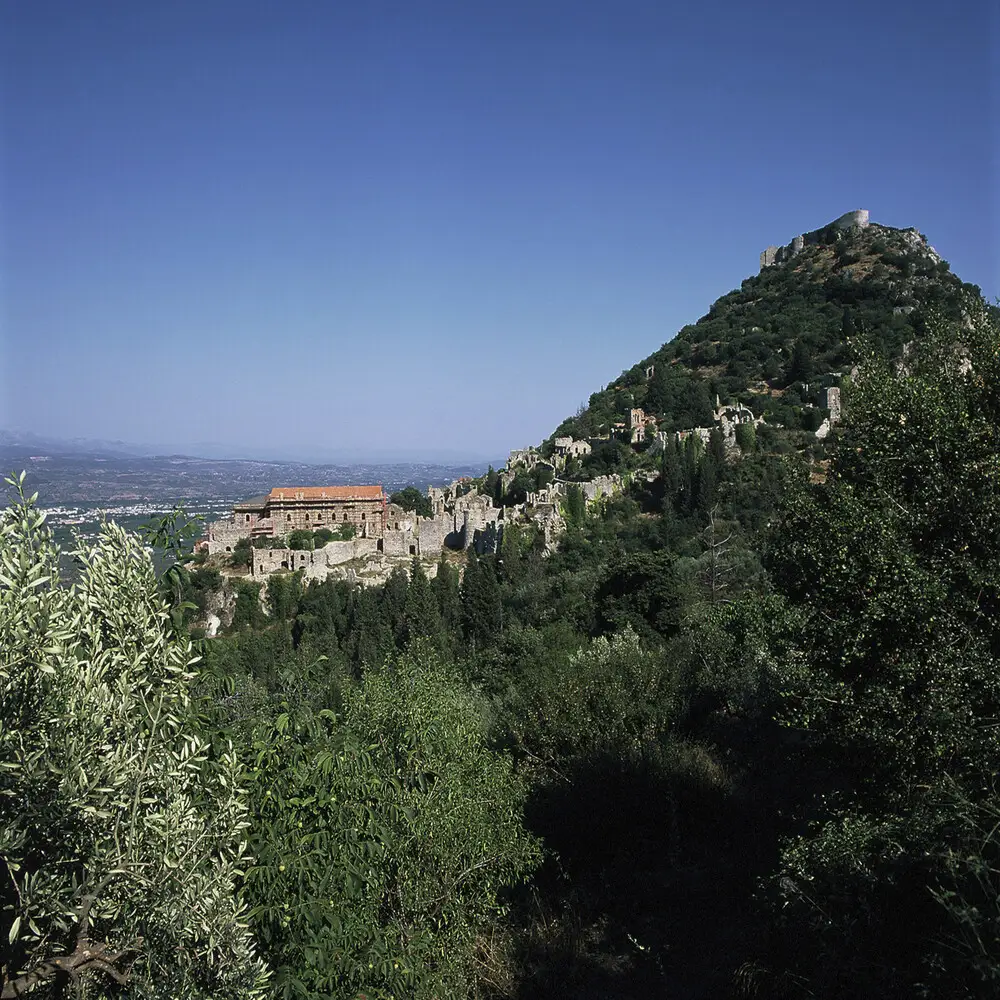
Golden light spills across terracotta rooftops as you climb the winding stone path—bell towers pierce the azure sky, and the scent of wild oregano mingles with ancient incense lingering in chapel air. You stand within the "Wonder of the Morea," a fortified Byzantine city cascading down the slopes of Mount Taygetos, where 14th-century frescoes depict saints with eyes that seem to follow your movement across sun-warmed stone floors. The Evrotas Valley stretches below like an emerald tapestry, framed by limestone cliffs that have watched over this sacred landscape since the Crusader era. Mystras matters because it preserves not just architecture, but a vanished world: the last flourishing of Byzantine culture before the Ottoman conquest, where theology, art, and power intertwined in hillside palaces and frescoed chapels that still whisper prayers to those who listen closely.
Why Mystras Byzantine Ruins Embodies Late Byzantine Splendor
Mystras represents the final brilliant chapter of Byzantine civilization—a fortified hilltop city founded in 1249 by Frankish prince William II of Villehardouin, then transformed into the cultural capital of the Despotate of the Morea under the Palaiologos dynasty. The site solves a profound historical need: how to preserve Orthodox Christian art, scholarship, and governance during an era of political fragmentation and external threat.
Architecturally, Mystras showcases sophisticated adaptation to mountainous terrain. Structures cascade across three elevation tiers spanning 600 vertical meters, connected by stepped pathways and vaulted passages. The Palace of the Despots, perched at the summit, features a 25-meter-long throne room with marble inlay floors and windows framing panoramic views—engineering that balanced defensive necessity with royal grandeur. Churches like Pantanassa and Perivleptos employ the cross-in-square Byzantine plan, with domes rising 12 meters above nave floors, their interiors covered in frescoes painted using the buon fresco technique that preserves pigment vibrancy after seven centuries.
Beyond aesthetics, Mystras fulfilled critical cultural functions: it housed a renowned scholarly circle that preserved classical Greek texts later transmitted to Renaissance Italy; its monasteries served as centers of theological debate; and its workshops produced illuminated manuscripts, silk textiles, and ecclesiastical metalwork traded across the Mediterranean. The city's hydraulic system—cisterns, aqueducts, and drainage channels carved into bedrock—sustained a population of 40,000 at its peak. When abandoned in the 1830s in favor of modern Sparta, Mystras became a time capsule, its frescoes and foundations protected by neglect until systematic excavations began in 1905. Today, this UNESCO World Heritage Site offers an unparalleled window into late Byzantine life, art, and faith.
The Best Time to Experience Mystras Byzantine Ruins
Timing your visit to Mystras requires balancing weather, lighting for fresco photography, and crowd dynamics. The optimal window runs from April 18 through June 5, when temperatures range 17–26°C (63–79°F) and wildflowers—cyclamen, anemones, and orchids—bloom among the ruins. During this period, morning light between 8:30–10:00 AM illuminates chapel interiors without harsh glare, perfect for capturing the subtle blues and golds of Byzantine frescoes.
A second exceptional season spans September 20 through October 25, with temperatures of 15–24°C (59–75°F) and clearer atmospheric conditions that enhance visibility across the Evrotas Valley. The late afternoon sun between 4:00–5:30 PM casts warm amber tones across stone fortifications, creating dramatic contrasts ideal for architectural photography.
For the most atmospheric experience, arrive at the upper entrance by 8:00 AM when opening begins. The morning light illuminates the Palace of the Despots while temperatures remain cool for exploring the steep, stepped pathways. Midday visits between 12:00–3:00 PM should be avoided during July and August, when temperatures exceed 35°C (95°F) and the exposed limestone radiates intense heat with minimal shade.
Avoid visiting during peak cruise excursion season (July 15–August 18) when tour groups create bottlenecks at key chapels. Winter months (November–February) bring frequent rain and temperatures of 6–13°C (43–55°F); while crowds thin, the ancient stone steps become slippery and hazardous when wet.
For official information and site hours: www.visitgreece.gr and www.culture.gr
Approximate Budget for a 7-Day Trip
Exploring Mystras as part of a Peloponnese cultural itinerary offers exceptional value, combining Byzantine heritage with rural Greek hospitality at prices well below island destinations. The following breakdown assumes a mid-range travel style with comfortable accommodation in nearby Sparta, dining at traditional tavernas, and a mix of independent exploration and guided experiences.
- Accommodation: €40–€75 per night for traditional guesthouses or boutique hotels in Sparta (near archaeological museum). Budget rooms start at €30; luxury heritage properties reach €110.
- Food: €24–€34 per day. Breakfast €4 (Greek coffee, honey yogurt, fresh bread); lunch €9 (horiatiki salad, grilled lamb, house wine); dinner €14–€18 (slow-cooked goat, wild greens pie, local Moschofilero wine).
- Transportation: Bus from Athens to Sparta €19 (3 hours, KTEL route); Sparta to Mystras taxi €12 round-trip or local bus €2 each way; rental car €28/day (recommended for flexibility); parking at site €2.
- Attractions: Mystras archaeological site entrance €12; guided Byzantine art tour €38; Ancient Sparta site €8; Monemvasia day trip €25; combined Peloponnese heritage ticket €20.
- Miscellaneous: Handmade Byzantine-style icon replicas €20–€40; local thyme honey 250g €6; traditional woven textiles €18; travel insurance €35/week; water/snacks at site €5.
Total for 7 days: €640–€840 per person (excluding international flights to Athens)
7 Essential Mystras Byzantine Ruins Experiences
- Explore the Perivleptos Church frescoes: Enter this 14th-century chapel dedicated to the Virgin Mary and allow your eyes to adjust to the dim interior light. The walls display remarkably preserved frescoes depicting the Life of Christ with expressive faces and rich lapis lazuli blues. Visit between 9:00–10:30 AM when natural light from the western window illuminates the apse without glare. Bring a small flashlight to examine details in shadowed corners.
- Climb to the Palace of the Despots: Ascend the steep path to the summit complex where Byzantine rulers once governed the Morea. Stand in the throne room and gaze through the original window openings at the Evrotas Valley panorama. The best light for photography occurs mid-morning (10:00–11:30 AM) when the sun illuminates the stone arches without creating harsh shadows.
- Walk the fortified upper town: Follow the medieval ramparts that encircle Mystras's highest tier, passing guard towers and postern gates. This 1.2-kilometer circuit offers commanding views and reveals defensive engineering techniques. Allow 30 minutes, pausing at interpretive panels explaining siege tactics and daily life within the walls.
- Visit the Pantanassa Monastery: This active convent, founded in 1428, features a stunning bell tower and a church with vibrant frescoes of the Last Judgment. Nuns welcome respectful visitors; dress modestly (shoulders and knees covered). The monastery shop sells handmade incense and herbal teas—proceeds support preservation efforts.
- Photograph the Agia Sofia Church at golden hour: Position yourself on the terrace below this 14th-century chapel between 5:00–6:30 PM in summer. The low-angle sun creates dramatic shadows across the facade while illuminating the interior frescoes through the western windows. Use a polarizing filter to enhance the contrast between stone and sky.
- Descend via the lower town pathway: After exploring the upper ruins, take the gentler route through the residential quarter where merchant houses and workshops once thrived. This path reveals domestic architecture—stone ovens, cisterns, and courtyard layouts—that brings Byzantine daily life into focus. Visit late afternoon when long shadows accentuate architectural details.
- Attend a guided fresco interpretation session: Book a specialized tour (€38, 90 minutes) with a Byzantine art historian who decodes iconography, explains pigment techniques, and shares stories behind the saints depicted. Tours depart at 9:30 AM and 3:30 PM daily; reserve 24 hours in advance at the ticket office. The guide reveals symbolism invisible to casual observers, deepening your appreciation of this artistic legacy.
3 Hidden Gems Most Travelers Miss
- The Metropolis of Agios Dimitrios: This cathedral, built circa 1290, features a rare marble ambo (pulpit) and frescoes depicting imperial portraits rarely shown in guidebooks. Most visitors bypass it because it lies slightly off the main circuit. Access via the path marked "Lower Town" then follow signs north; allow 15 extra minutes. Visit mid-morning (10:00–11:00 AM) when light illuminates the marble carvings without glare.
- The Hermitage of Agioi Theodoroi: A secluded cave chapel carved into the mountainside 400 meters above the upper town, this 14th-century retreat features minimalist frescoes and breathtaking valley views. Reached via an unmarked trail behind the Palace of the Despots—ask staff for directions. The 20-minute climb rewards with solitude and photographic opportunities. Visit early morning (8:00–9:00 AM) to avoid heat; wear sturdy shoes for the rocky path.
- The Byzantine Museum's Manuscript Room: Inside the on-site museum, a small climate-controlled chamber displays illuminated Gospel fragments and liturgical texts from Mystras's scholarly circle. Most visitors focus on the archaeological exhibits and miss this treasure. The room opens for guided viewings at 11:00 AM and 2:00 PM daily; inquire at the museum desk. The gold-leaf illuminations reveal the artistic sophistication that influenced Renaissance Italy.
Cultural & Practical Tips
- Respect active religious spaces: Pantanassa Monastery remains an active convent. Dress modestly when entering (shoulders and knees covered for all genders), remove hats inside chapels, and speak quietly. Photography inside active worship areas requires explicit permission—ask "Boro na fotografía?" (Can I photograph?).
- Carry cash for entrance fees: The ticket office accepts cash only (no credit cards). Mystras site entrance costs €12 for adults, €6 for students/seniors with ID, free for children under 18. The combined Peloponnese heritage ticket (€20) includes Mystras, Ancient Sparta, and Monemvasia.
- Learn essential Greek phrases: "Yassou" (YAH-soo) = hello; "Efharisto" (ef-hah-REE-stoh) = thank you; "Poso kani?" (POH-soh KAH-nee) = how much?; "Pou ine i tourleta?" (poo EE-nee ee toor-LEH-tah) = where is the toilet?; "Ine ekklisia?" (EE-neh ek-lee-SEE-ah) = is it a church?
- Prepare for steep terrain: Mystras involves significant elevation changes and uneven stone steps. Wear sturdy, closed-toe shoes with good grip. Carry at least 1.5 liters of water per person; refill stations are available near the upper and lower entrances. Visit early morning or late afternoon to avoid peak heat.
- Photography guidelines: Handheld photography is permitted throughout the site. Flash photography is prohibited inside chapels to protect frescoes. Tripods require permission from site staff and cannot obstruct pathways. Drone use is strictly prohibited without written authorization from the Hellenic Ministry of Culture (+30 210 8211000).
- Weather considerations: Afternoon thunderstorms can develop rapidly July–September. The ancient limestone becomes extremely slippery when wet—descend carefully if rain begins. Strong mountain winds occasionally reach 35 km/h (22 mph) on exposed terraces; secure loose items and be cautious near unprotected edges.
- Accessibility considerations: Mystras's steep, uneven pathways are not wheelchair accessible. However, the lower town area and museum are reachable via paved paths. Visitors with mobility issues can experience key monuments from accessible routes near the lower entrance. Request assistance at the ticket office; staff can provide seating for rest breaks.
Conclusion: Travel with Reverence, Not Just Sightseeing
Mystras asks for more than a quick photograph and a checklist mark—it invites reverence for the human devotion that transformed mountain stone into sacred art. This isn't merely an archaeological site; it's a sanctuary where theologians debated, artists prayed over pigments, and rulers governed with one eye on eternity. When you stand before a fresco whose colors have survived seven centuries, you're not just viewing history—you're participating in a continuum of faith and creativity that has inspired generations across empires and epochs.
Responsible travel here means understanding that you're a guest in a space where legacy breathes through every brushstroke. It means moving slowly enough to appreciate the theological symbolism in a saint's gesture, pausing to imagine the monks who once chanted in these chapels, and supporting the local community that preserves this heritage. Purchase tickets directly, hire local guides who share stories passed through generations, and dine at family tavernas that have served the Evrotas Valley for decades.
Slow down. Sit on a sun-warmed stone step and watch light shift across the Taygetos peaks. Listen to the wind moving through olive groves that Byzantine farmers once cultivated. Share a moment of silence with fellow travelers, letting the ruins speak not just of empire, but of enduring beauty. Mystras will endure—if we treat it not as a backdrop for selfies, but as a teacher of patience, a witness to human aspiration, a legacy to protect. Travel here with humility, and the frescoes will illuminate your soul.