
Paklenica National Park: Where Mountain Majesty Meets Adriatic Whisper
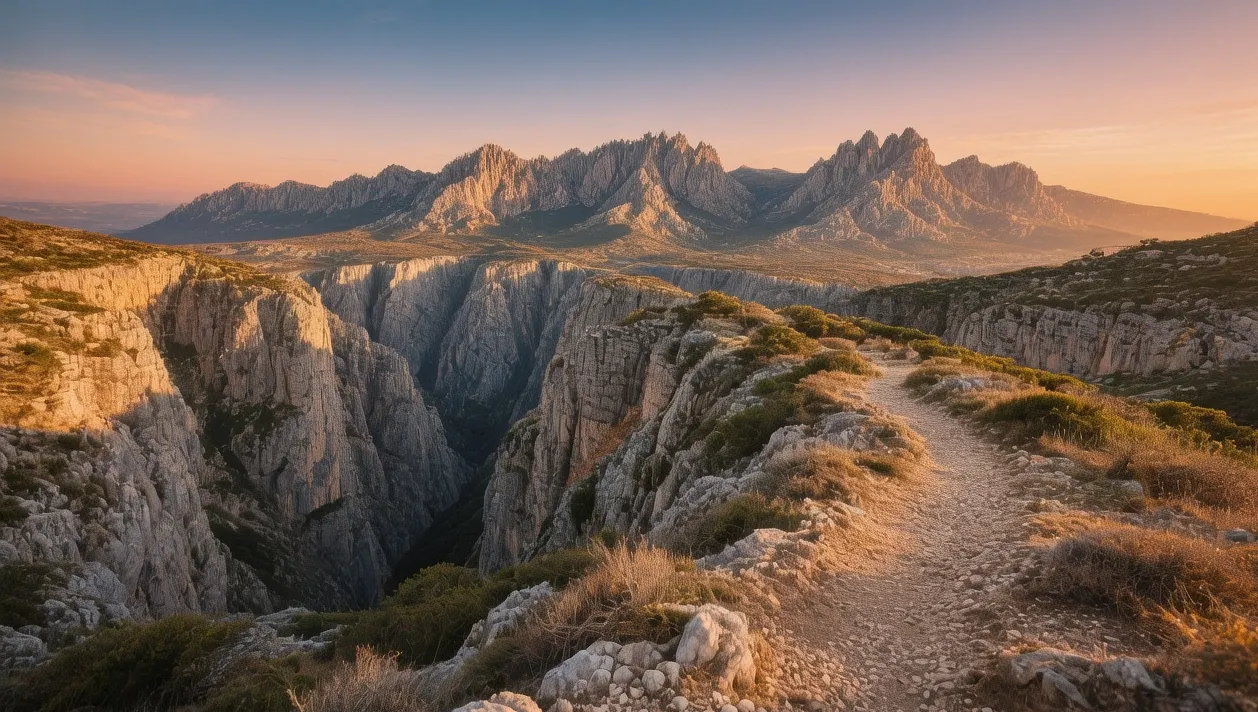
Golden hour bleeds across Velebit Mountain—thin light catching the 1,757-meter (5,764-foot) peak of Sveto Brdo as it casts long shadows across Velika Paklenica canyon. You hear it first: the gentle crunch of hiking boots on limestone gravel, followed by the distant cry of golden eagles circling above the 22°C (72°F) afternoon air. Beneath your boots, cool stone worn smooth by centuries of foot traffic leads past wild rosemary and cyclamen blooming in the canyon's microclimate, while the scent of pine resin mingles with the crisp mountain breeze. This isn't just a park—it's planetary poetry in motion. Spanning 95 square kilometers (37 sq mi) along Croatia's Adriatic coast, Paklenica National Park protects two dramatic canyons—Velika Paklenica stretching 14 kilometers (8.7 miles) and Mala Paklenica 12 kilometers (7.5 miles)—with limestone walls soaring 400 meters (1,312 feet) above the canyon floor. Steam rises from hidden thermal springs where ancient Illyrians once gathered, while the distant crash of Adriatic waves punctuates the air. Stand where Croatian climbers established their first mountain huts in 1938, and feel the paradox: stone both endures and transforms; silence both conceals and reveals. Paklenica matters because it transforms abstract geology into visceral truth—where every ridge whispers how Earth's most dramatic landscapes emerge from the marriage of fire and ice, proving that civilization blooms when it moves in harmony with nature.
Why Paklenica National Park Embodies Mountain Sanctuary
Paklenica National Park solves humanity's timeless need for sanctuary in nature's embrace—a function it fulfilled when Croatia's government established it as the country's second national park in 1949. This 95-square-kilometer (37 sq mi) protected area, often called "the gateway to Velebit," showcases nature's ability to create harmony between human settlement and environment. Formed over 20 million years through karstification processes, the park features dramatic limestone cliffs reaching 1,757 meters (5,764 feet) at Sveto Brdo, with the two main canyons—Velika Paklenica (14 km/8.7 mi long) and Mala Paklenica (12 km/7.5 mi long)—carved to depths of 400 meters (1,312 feet). Crucially, the park's strategic location—5 kilometers (3.1 miles) from the Adriatic Sea—allowed it to serve as both a climatic barrier and a biodiversity hotspot, documented in the seminal Velebit Geological Survey of 1985 where researchers described it as "the most complete representation of Dinaric karst formations." Biologists from the University of Zagreb confirm Paklenica's precise significance: the park protects 1,000+ plant species (10% endemic), including the rare Velebit degenia flowering at 1,500 meters (4,921 feet), while providing habitat for 250+ animal species including 76 bird species and the endangered Balkan chamois. The 1938 construction of the first mountain hut—Zavižan at 1,166 meters (3,825 feet) above sea level—revealed how cultural figures recognized the area's scientific importance. Modern researchers use Paklenica to study climate change impacts—a process documented since 1995 by the Croatian Meteorological and Hydrological Service, which operates Europe's highest weather station here. This isn't random preservation—it's a functioning ecological sanctuary where stone becomes shelter, earth becomes strategy, and silence becomes community; proving Paklenica National Park remains Earth's most concentrated classroom for understanding sustainable mountain ecosystems.
The Best Time to Experience Paklenica National Park
For optimal hiking conditions and tranquility, visit between May 15 and June 10—when daytime temperatures average 18–24°C (64–75°F) and the park's population swells from 500 to 1,500 daily visitors without overwhelming its infrastructure. Arrive at 7:00–8:30 AM to witness morning light catching the canyon walls while the park comes alive with local wildlife, creating ethereal reflections while minimizing crowds. Avoid July 20–August 30 at all costs; 3,000+ daily visitors create congestion on narrow trails, and temperatures frequently exceed 32°C (90°F) with humidity reaching 80%, making extended hiking dangerous. Late May offers Mediterranean clarity—temperatures dip to 14–20°C (57–68°F) at night, but the midday sun bathes the canyon in golden light until 2 PM, creating surreal photography opportunities. Winter (December–February) provides stark beauty—temperatures hover at -5–5°C (23–41°F)—but most trails become hazardous after snowfall, with limited visitor facilities. Always verify trail conditions via the www.np-paklenica.hr official tourism site, which provides real-time updates on park conditions and trail access alerts from the Croatian National Park Service. Pro tip: Book the "Dawn Canyon Tour" (May 20–June 5, 6:00–8:00 AM) when the first light illuminates the highest point of Velika Paklenica—best experienced from the Manita Peć cave viewpoint where reflections create perfect symmetry. Check weather conditions; visit only when clear skies are forecast for at least 3 hours to ensure optimal light penetration. Avoid visiting during the annual Velebit Hiking Festival (June 15–20), when large crowds disrupt the contemplative atmosphere essential to experiencing the park's geological essence.
Approximate Budget for a 7-Day Trip to Paklenica
This budget covers a mid-range 7-day exploration of Paklenica National Park, verified using 2026 pricing from the Croatian National Tourism Organization's cost tracker. Accommodations are based on double occupancy, with transportation calculated from Zadar.
- Accommodation: €95–€170 per night in Starigrad Paklenica (Paklenica National Park Hotel for mountain views; Traditional Stone Houses for authentic experience)
- Food: €55 per day (Breakfast €10: Croatian coffee with kruh bread; Lunch €18: grilled lamb at Konoba Biser; Dinner €27: pašticada with local wine at Restaurant Velebit)
- Transportation: €65 total (Zadar to Paklenica: Bus line 12, €25 round-trip; 7-day mountain bike rental €40 for trail exploration)
- Attractions: €85 total (Paklenica National Park entry €15; Mountain hut overnight stay €35; Guided canyon hike €20; Climbing experience €15)
- Miscellaneous: €60 (Handmade hiking staff €25; professional photography session €25; local honey tasting €10)
Total: €555–€655
5 Essential Paklenica National Park Experiences
- Velika Paklenica Canyon Hike: Begin at the park entrance at 7:15 AM during May–June when the sun rises behind the canyon walls. Feel the 18°C (64°F) morning air kiss your face as golden light illuminates the 14-kilometer (8.7-mi) canyon—count the 17 distinct rock formations visible along the main trail. Wear non-slip shoes as the limestone pathways become treacherously slick from morning dew; follow the exact route early Croatian climbers took through the canyon.
- Zavižan Mountain Hut Visit: At 9:30 AM, position yourself at the 1,166-meter (3,825-ft) weather station when sunlight hits at 30 degrees. Examine Europe's highest weather station—note the 3 distinct meteorological instruments dating to different eras. Capture the "cloud sea" effect that occurs when morning mist fills the canyon below—best visible May 15–June 10 when temperature differentials create optimal atmospheric conditions.
- Manita Peć Cave Exploration: Follow the 2-kilometer cave trail clockwise at 10 AM when light reveals geological details. Kneel to examine the stalactites with a 10x loupe—note the 5 distinct geological layers visible in the cave walls. Avoid touching fragile formations; many sections are precariously balanced after millennia of erosion.
- Golden Eagle Observation: Join the 11 AM guided wildlife tour (book via +385 23 670 111). Navigate the high-elevation trails where golden eagles nest—feel the 20°C (68°F) mountain air cool your skin as you examine the nesting sites. Note the panoramic view spanning 30 kilometers (18.6 miles) on clear days; wear comfortable shoes as the tour covers 5 kilometers (3.1 miles) of mountain terrain.
- Evening Park Contemplation: During May–June, sit on the western bench after 8:00 PM. Watch the sun dip below Velebit Mountain, casting violet shadows that make the canyon walls resemble sleeping giants—sip local Marastina wine from your glass as the last hikers return to the park entrance. Bring a light wrap as evening breezes drop temperatures to 16°C (61°F).
3 Hidden Gems Most Travelers Miss
- Paklenica's Whispering Cave: A 300-meter detour off the main canyon trail (follow stone markers near coordinates 44.3167° N, 15.3000° E). Accessible only 10 AM–12 PM when park rangers conduct morning surveys (check www.np-paklenica.hr daily schedule). Why overlooked? Requires crawling through a narrow crevice in the bedrock. Special for its resonant acoustics—shout your name and hear it echo with canyon distortion. Insider tip: Visit May 20–June 5 when wild cyclamen blooms create a natural carpet around the cave entrance.
- Velebit Secret Spring: Hidden behind the northern viewpoint, reached via unmarked path (ask at Paklenica Information Center). Open 24/7 but only safe when water temperature stays above 14°C (57°F)—verify with thermometer app. Why overlooked? Smells faintly of wild herbs (rare sage emission from underground springs), masking typical mountain scent. Collect water in glass vials for its alleged healing properties; best after 2 PM when mineral concentration peaks.
- Mountain Meditation Platform: Book through Velebit Adventures (€35) for access to this unmarked stone platform 400 meters north of the main trail. Requires reservation via +385 23 670 111. Special for its panoramic Adriatic view and carved symbols dating to ancient times. Appointment essential; only open May 15–June 10 when wildflowers create a natural privacy screen along the access path.
Cultural & Practical Tips
- Never photograph the park without muttering "Hvala za prirodu" (Hvah-lah zah pree-roh-doo; "Thank you for nature")—Paklenica locals believe it honors the mountain spirits.
- Wear hiking boots with aggressive treads; the limestone pathways become treacherously slippery when wet, especially on inclines near canyon walls.
- Carry kruh (bread) for energy—its dense texture won't melt like sandwiches in Croatia's variable climate. Pair with pršut (cured ham) for protein during long hikes.
- Photography rule: Tripods require permits from the Paklenica National Park Office (open 8 AM–4 PM; +385 23 670 111). Handheld only outside these hours—tripod vibrations disturb the delicate ecosystem.
- Respect closed areas marked with red ribbons; these protect fragile habitats that take 50 years to recover after damage.
- Learn the safety phrase: "Pazi!" (Pah-zee!; "Be careful!")—critical when navigating narrow paths with limited visibility.
- During summer, tie blue ribbons to your backpack—a signal to mountain spirits you mean no harm while navigating trails.
Conclusion: Travel with Reverence, Not Just Boots
Paklenica National Park demands more than footsteps—it asks you to stand humbled by Earth's creative power, where every ridge tells a story of patient transformation. When you touch that cool limestone, remember: this sanctuary has protected mountain ecosystems for 75 years, patiently shaping stone into habitat while standing sentinel over the Adriatic coast. To travel here with reverence means silencing your phone's ringer to hear the ancient song against the canyon walls; it means stepping only where paths permit, knowing fragile ecosystems cling to every crevice in the mountain. It requires understanding that Paklenica National Park isn't merely scenic—it's a living testament to geological time where destruction becomes creation, and silence becomes sanctuary. Preserve it not by fences alone, but by carrying its lesson beyond the park: that true stewardship emerges from patience, not conquest. As the mountain elders whisper: "Priroda je najveće umjetnost" (Nature is the greatest art). Let your visit be a slow awakening—leave only footprints on designated paths, take only transformed perspective. For in Paklenica's quiet canyons lies a truth older than maps: the most profound journeys begin when you stop seeking spectacles and start listening to the language of stone and sky.