
Porto Moniz Natural Pools: Where Volcanic Rock Meets Atlantic Tides
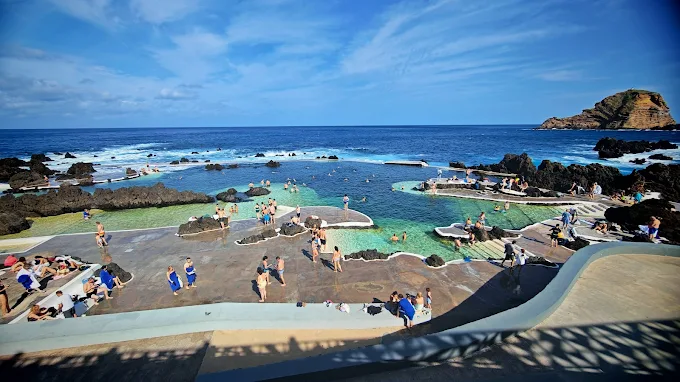
The Atlantic Ocean crashes against black volcanic rock with rhythmic thunder—waves exploding 20 meters into the air before retreating back to the deep. But here, in the sheltered embrace of lava formations cooled over 5 million years ago, the sea transforms from tempest to tranquility. You stand at the edge of a natural pool carved by ancient eruptions, where crystalline seawater maintains a perfect 22°C (72°F) in summer, filtered continuously by the ocean's own tides. Children splash in waist-deep shallows while elders sit on sun-warmed basalt, watching fishing boats bob beyond the protective rock barrier. This is Porto Moniz, where nature's architecture creates something extraordinary: volcanic rock pools spanning 4,400 square meters along Madeira's rugged northwest coast, formed when lava flows from the Paul da Serra plateau met the sea and solidified into nature's perfect swimming sanctuaries. The complex, expanded in 2000 with modern amenities while preserving the original lava formations, matters because it represents harmony between human ingenuity and geological gift—a place where you swim with the ocean's power held at bay by stone walls forged in fire, offering safe communion with the Atlantic's beauty without its danger.
Why Porto Moniz Natural Pools Embody Madeiran Harmony
The Porto Moniz natural pools represent one of the Atlantic's most elegant examples of geological serendipity meeting human adaptation. These volcanic formations originated from basaltic lava flows that erupted from Madeira's central volcanic massif approximately 5 million years ago, cooling rapidly upon contact with seawater to create honeycombed rock formations with natural depressions perfect for tidal pools. The original pools—formed entirely by nature without human intervention—range from 1.5 to 3 meters deep, with the volcanic rock creating natural barriers that protect swimmers from the open ocean's powerful waves while allowing fresh seawater to circulate continuously through submerged channels.
Recognizing this natural gift, the Porto Moniz municipality began developing the site in 1998, completing a major expansion in 2000 that added modern facilities while meticulously preserving the original lava formations. The project, designed by regional architects to blend seamlessly with the volcanic landscape, added 1,200 square meters of supplementary pools, sun terraces, and essential amenities including changing rooms, lifeguard stations, and accessibility features. The total complex now encompasses 4,400 square meters of swimming areas, with the natural pools maintaining water depths between 1.2 and 2.5 meters—ideal for both children and adults.
The engineering brilliance lies in what remains invisible: an underground filtration system that works in harmony with tidal movements, ensuring water quality meets European swimming standards while preserving the pools' natural character. The volcanic basalt, rich in iron and magnesium, gives the rock its distinctive black color and provides natural traction even when wet. Today, the pools welcome approximately 150,000 visitors annually, serving as both a community gathering space for Porto Moniz's 2,400 residents and Madeira's most accessible coastal attraction. The site solved a fundamental need: providing safe ocean swimming on an island where most coastline features steep cliffs and dangerous surf, creating a democratic space where age, ability, and swimming skill become irrelevant.
The Best Time to Experience Porto Moniz Natural Pools
The optimal window for visiting the Porto Moniz natural pools extends from June 10 through September 25, when water temperatures reach their peak at 22-24°C (72-75°F) and air temperatures hover between 24-28°C (75-82°F). During these months, the Atlantic remains calmest, with wave heights typically under 1 meter and visibility exceeding 15 meters. Arrive between 9:00-10:30 AM to experience the pools before cruise ship excursions arrive around 11:30 AM, or visit after 4:00 PM when day-trippers depart and the light turns golden for photography.
Winter months (November-March) present significant challenges: water temperatures drop to 17-18°C (63-64°F), air temperatures average 16-19°C (61-66°F), and the northwest coast bears the brunt of Atlantic storms that send waves crashing over the pools, occasionally forcing temporary closures. The period from late October through early December sees the highest rainfall—Porto Moniz receives 900mm (35 inches) annually, with 40% falling during these months. Avoid visiting during red flag conditions when lifeguards close the pools due to dangerous surf; these closures typically last 2-5 days following major storms.
For current conditions, tide schedules, and closure alerts, visit https://www.portomoniz.pt/pt/, the official tourism portal maintained by the Regional Tourism Board of Madeira. The website provides real-time updates on pool status and links to the Porto Moniz municipality's page at portomoniz.pt, which offers detailed information about facilities, pricing, and special events. The pools operate year-round with varying hours: 9:00 AM-7:00 PM (June-September), 10:00 AM-6:00 PM (October-May), and close only on December 25 and January 1.
Approximate Budget for a 7-Day Trip
Porto Moniz and northwest Madeira offer excellent value, with costs moderately lower than Funchal. This breakdown assumes a mid-range travel style with comfortable accommodations, local dining, and a rental car—essential for exploring the region's dispersed attractions and reaching Porto Moniz from other parts of the island.
- Accommodation: €50-€90 per night for a double room in a family-run pensão or three-star hotel in Porto Moniz village or nearby Seixal
- Food: €28-38 per day total
- Breakfast: €4-7 (coffee, fresh bread, and local cheese at a café)
- Lunch: €9-12 (lapas grelhadas—grilled limpets, or bolo do caco sandwich)
- Dinner: €15-19 (fresh espada fish or espetada with local wine)
- Transportation:
- Rental car (7 days, manual transmission): €170-230 total
- Fuel (approximately 320km): €45-55
- Public bus (Rodoeste routes 80, 139): €3.50 per ride from Funchal
- Taxi from Funchal: €85-95 one-way
- Attractions:
- Porto Moniz natural pools: €3 adults, €1.50 children (6-12 years)
- Season pool pass (7 days): €12
- Laurel Forest guided tour: €35-50
- Whale watching excursion: €55-75
- Vinho da Madeira tasting: €8-12
- Miscellaneous:
- Beach towel rental: €3 per day
- Snorkel gear rental: €8 per day
- Local honey and souvenirs: €15-20
- Poncha tastings: €10-15
Total estimated cost for 7 days: €750-1,020 per person (excluding international flights)
7 Essential Porto Moniz Natural Pools Experiences
- Sunrise Swimming Session: Arrive at 8:30 AM when the pools open (9:00 AM in winter) to experience near-empty volcanic pools bathed in soft morning light. The water feels crispest at 19-20°C (66-68°F) before the sun warms the surface. Swim the full length of the main pool—approximately 80 meters—feeling the gentle current as fresh seawater flows through underwater channels. Watch fishing boats depart the harbor while seabirds circle overhead. This peaceful hour before crowds arrive offers the purest connection to the site's natural character.
- Sunset Photography from the Terrace: Return at 6:30 PM in summer (5:00 PM in winter) when the setting sun casts amber light across the black volcanic rock and turquoise water creates stunning contrast. Position yourself on the upper sun terrace for elevated perspectives showing the pools' geometric patterns against the churning Atlantic beyond. The golden hour lasts approximately 45 minutes; bring a polarizing filter to reduce water glare and capture the volcanic rock's texture.
- Tidal Pool Exploration at Low Tide: Visit during low tide (check tide tables at portomoniz.pt) when the ocean recedes to reveal hidden tidal pools outside the main complex. These natural formations harbor limpets, sea urchins, and colorful algae. Wear water shoes for traction on slippery rock. The best low-tide exploration occurs 2 hours before and after minimum tide levels, typically early morning or late afternoon.
- Traditional Seafood Lunch at Waterfront: After your swim, dine at Restaurante O Calhau or Marisqueira do Porto Moniz, both offering terrace seating with pool views. Order lapas (grilled limpets served with garlic butter and lemon) and fresh espada (black scabbardfish). The restaurants source fish daily from boats you watched depart that morning. Expect to pay €18-25 per person for a complete meal with wine.
- Night Swimming Under Stars: During summer months, the pools occasionally offer extended hours until 9:00 PM on weekends. Swimming in naturally lit pools under starlight creates a magical experience—the black volcanic rock absorbs ambient light while bioluminescent plankton sometimes creates subtle blue glows in disturbed water. Check the schedule at the entrance or call +351 291 852 040 for special evening hours.
- Coastal Walk to Seixal: After pool time, hike the 6-kilometer coastal trail from Porto Moniz to neighboring Seixal village (approximately 90 minutes each way). The path clings to cliffs 50 meters above the ocean, passing through banana plantations and small waterfalls. The trailhead begins at the western end of the pool complex. Bring water and sun protection; there's minimal shade. Seixal offers its own small natural pools and a traditional café for the return journey.
- Laurisilva Forest Excursion: Combine your pool visit with a morning hike in the nearby Fanal Laurel Forest (25 minutes inland), a UNESCO World Heritage site featuring 500-year-old endemic trees. The contrast between volcanic coast and ancient cloud forest showcases Madeira's ecological diversity. Drive the ER105 north from Porto Moniz, then follow signs to Fanal. Park at the designated area (free) and follow the PR14 trail for 45 minutes into the forest's mystical heart.
3 Hidden Gems Most Travelers Miss
- Piscinas do Porto Moniz "Secret" Upper Pools: While 95% of visitors crowd the main complex, a smaller set of natural pools sits 200 meters west along the coastal path, accessible via an unmarked trail near the lighthouse. These volcanic formations receive only local families and offer complete tranquility. The pools are deeper (2-3 meters) with no facilities, so bring your own water and snacks. Access requires scrambling over rocks for 10 minutes—wear sturdy shoes. Best visited weekday mornings; locals call them "Piscinas do Farol" (Lighthouse Pools).
- Quinta do Furão Wine Estate: Perched 600 meters above Porto Moniz, this family-owned vineyard produces the region's only high-altitude wines and offers tastings with panoramic ocean views that stretch to the Desertas Islands. The estate, run by the Silva family since 1947, specializes in white wines from Verdelho and Sercial grapes grown in volcanic soil. Visit Tuesday-Saturday 10:00 AM-6:00 PM; tastings cost €8 and include three wines plus local cheese. The drive up features 17 hairpin turns—spectacular but challenging. Call +351 291 852 156 to arrange a visit.
- Ribeira da Janela River Mouth: At the eastern edge of Porto Moniz, where Madeira's longest river meets the Atlantic, a hidden black sand beach forms during low tide. The beach, locally called "Praia da Ribeira," offers tide pooling, freshwater springs that bubble up through the sand, and complete solitude. Access from the river parking area (follow signs for "Ribeira da Janela"); walk 15 minutes downstream. Visit 2 hours before low tide for optimal exploration. The freshwater springs create natural foot baths—locals claim the mineral-rich water soothes tired muscles.
Cultural & Practical Tips
- Pool etiquette: Shower before entering (mandatory for hygiene); the outdoor showers use fresh water and are located at each entrance. Never dive or jump into the pools—the volcanic rock bottom varies in depth and can cause serious injury. Children under 12 must be supervised at all times; lifeguards strictly enforce this rule.
- Footwear essentials: Wear water shoes or aqua socks—the volcanic rock, while naturally textured, can be sharp in areas. Flip-flops work for walking but provide poor traction in water. Rent water shoes at the entrance for €3 if you forgot yours.
- Safety awareness: Heed lifeguard warnings immediately—red flags mean close the pools due to dangerous surf conditions. The Atlantic can produce rogue waves that crash over the barriers without warning. Never swim when waves exceed the rock walls; wait for calmer conditions.
- Essential Portuguese phrases: "Bom dia" (bohm DEE-ah = good morning), "Obrigado/a" (oh-bree-GAH-doo/dah = thank you), "Uma cerveja, por favor" (OO-mah ser-VEH-zha por fah-VOR = a beer, please), "Onde são os balneários?" (ON-deh sow ohz bal-neh-AR-ee-osh = where are the changing rooms?).
- Photography guidelines: Drones require special permission from the municipality—contact portomoniz.pt at least 48 hours in advance. Respect other swimmers' privacy; ask permission before photographing strangers. The best angles come from the upper terrace; avoid standing on the volcanic rock barriers as this damages the natural formations.
- Weather considerations: Northwest Madeira receives more rain than Funchal—always pack a light rain jacket even on sunny days. Sudden squalls can develop quickly; if you hear thunder, exit the pools immediately as lightning poses serious risk on exposed rock.
- Accessibility information: The main pool complex features wheelchair-accessible entrances, ramps, and adapted changing rooms. However, the natural volcanic terrain limits full accessibility to all pool areas. Staff members provide assistance; request help at the entrance. The upper terrace and restaurant are fully accessible.
Conclusion: Travel with Reverence, Not Just Recreation
The Porto Moniz natural pools ask something deeper than your swim—they invite your reverence for a landscape forged in fire and refined by millennia of ocean patience. As you float in water that has traveled thousands of miles across the Atlantic, held safely within rock walls created by ancient eruptions, remember that you're experiencing a gift that required no human hand to create, only human wisdom to preserve. These pools matter because they remind us that the best travel experiences aren't built—they're discovered, protected, and shared with humility.
Responsible travel here means recognizing that this volcanic coastline belongs first to the sea and the geological forces that shaped it. It means respecting the lifeguards' authority, following pool rules designed to protect both visitors and the fragile ecosystem, and understanding that your presence impacts a community that has lived with these formations for five centuries. The families of Porto Moniz didn't create these pools; they became their guardians, ensuring that nature's architecture remains accessible to all while remaining fundamentally wild.
Slow down. Feel the volcanic rock beneath your feet—stone that was once liquid fire. Taste the salt on your lips. Watch how the ocean beyond the barriers pounds with power while the pools remain tranquil. When you leave, carry not just photographs but a commitment to preserve such places where nature's genius and human gratitude intersect. That's the difference between swimming in a pool and truly experiencing a miracle of geology.