
Rastoke Watermills: Where Ancient Currents Meet Living Heritage
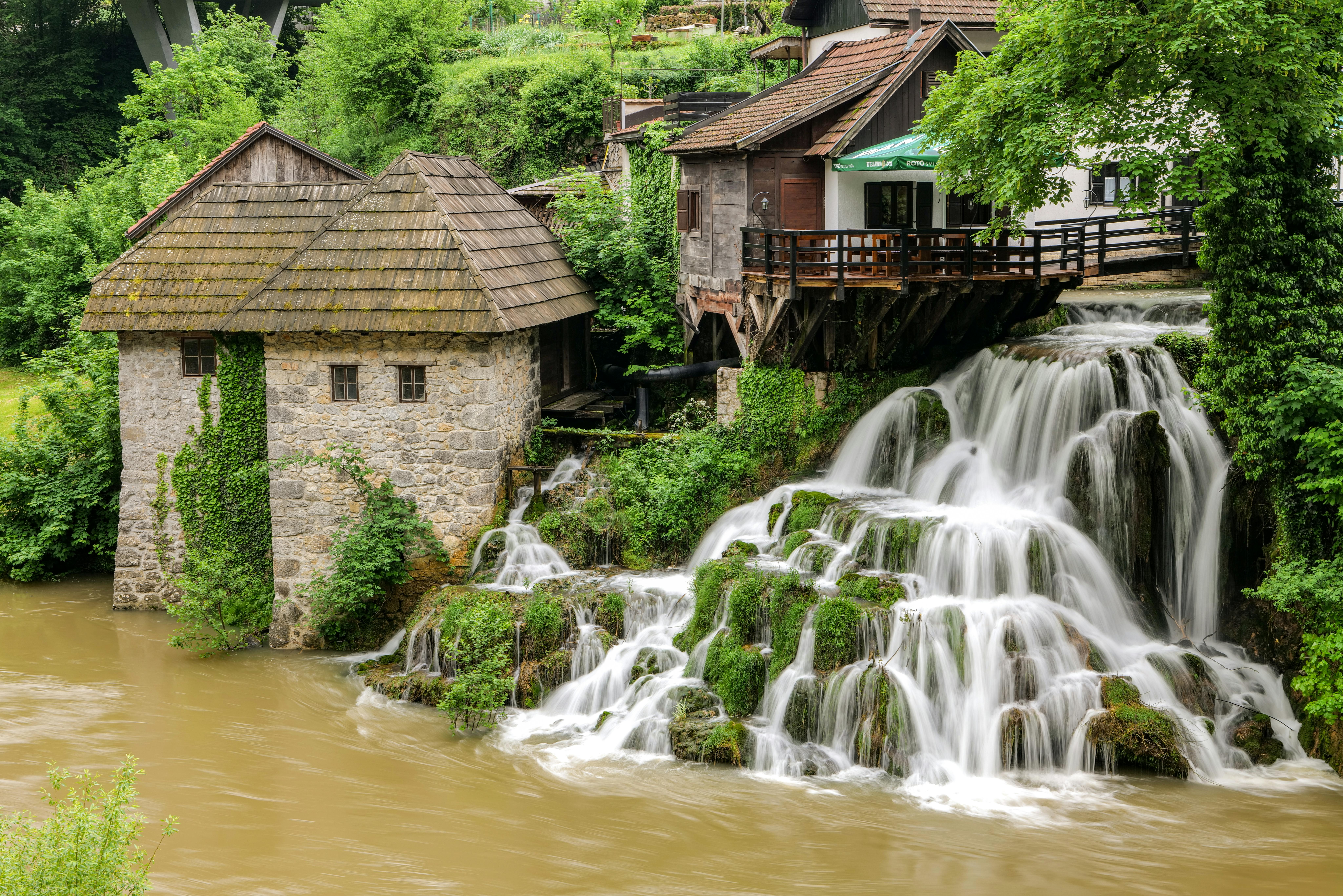
The first light of dawn breaks across Rastoke's enchanting village, where the Slunjčica River tumbles over 23 travertine barriers before merging with the Korana, powering wooden watermills that have stood sentinel for over three centuries. You hear it before you see the full panorama: the gentle rush of water over limestone cascades, the rhythmic creak of wooden mill wheels turning slowly in the current, the soft murmur of mist rising from emerald pools beneath willow branches. This is Croatia's most picturesque mill village—a living museum where 17th-century architecture harmonizes with natural waterfalls, creating a landscape so extraordinary it earns the nickname "Little Plitvice." Within this delicate ecosystem, where traditional stone-and-timber houses perch atop travertine formations and the scent of wild mint mingles with damp earth, Rastoke watermills matter not merely as a scenic destination but as a testament to sustainable coexistence—a place where you can stand on a wooden footbridge at sunrise and feel, with visceral clarity, the profound connection between flowing water, human ingenuity, and the enduring rhythm of a community that has learned to thrive alongside nature's power for generations.
Why Rastoke Watermills Embody Living Heritage
Rastoke represents far more than a charming mill village—it embodies one of Europe's most authentic examples of traditional hydraulic engineering harmonizing with natural landscapes, where centuries-old craftsmanship solves the fundamental challenge of harnessing river power without disrupting ecological balance. First documented in the 17th century and flourishing through the 18th and 19th centuries, Rastoke's 23 watermills were engineered to exploit the Slunjčica River's unique topography: travertine barriers (natural limestone formations created by mineral-rich water) create a series of cascades totaling 12 meters in elevation drop over just 500 meters of riverbed, providing ideal conditions for water-powered grinding, washing, and milling operations [[4]]. Traditional builders employed locally sourced materials—oak timber for mill wheels, limestone for foundations, and clay tiles for roofing—using joinery techniques that allowed structures to flex with seasonal water level changes without compromising stability.
Beyond its engineering significance, Rastoke fulfills a profound cultural need: preserving tangible heritage while maintaining functional relevance. Unlike reconstructed heritage sites, several Rastoke mills continue operating using traditional methods, grinding grain for local bakeries and demonstrating historical techniques to visitors. Conservation efforts prioritize authenticity: restoration projects use original lime-based mortars that allow historic masonry to "breathe," mill mechanisms are maintained with period-appropriate materials, and the surrounding travertine formations are protected under strict environmental guidelines to preserve the natural processes that created them [[7]]. This philosophy extends to community engagement: local families operate guesthouses in restored mill buildings, traditional crafts like wooden shingle-making are taught through workshops, and educational programs connect visitors with the hydrological science behind travertine formation. Today, Rastoke serves as a model for sustainable heritage tourism—where history remains tangible, relevant, and deeply human.
The Best Time to Experience Rastoke Watermills
Timing your Rastoke visit dramatically shapes your encounter with this living heritage sanctuary. For optimal conditions—reliable water flow, pleasant weather, and vibrant cultural programming—plan your arrival between May 10 and June 20 or September 5 and October 15. During these shoulder seasons, daytime temperatures range from 17–25°C (63–77°F), with refreshing river breezes keeping humidity comfortable. Morning walks between 7:30–9:30 AM offer the softest light for photographing mist-shrouded cascades, while late afternoon visits from 4:30–6:30 PM capture golden-hour warmth that makes travertine formations glow amber.
Summer brings lush vegetation but also increased visitation: from June 21 through September 4, temperatures climb to 26–31°C (79–88°F), and Rastoke sees peak crowds between 10:00 AM and 4:00 PM, especially on weekends. However, this period features extended daylight hours and warm evenings of 19–23°C (66–73°F), perfect for riverside dining after sunset. If visiting during peak season, arrive before 8:30 AM or after 5:30 PM to experience Rastoke's tranquility and secure unobstructed viewpoints for photography [[12]].
Avoid November through February unless you specifically seek solitude and don't mind temperatures of -1–8°C (30–46°F) with frequent fog, rain, or occasional ice. While winter offers atmospheric mist-shrouded mills and empty pathways, water flow can be reduced, some mill demonstrations cease, and travertine formations may be partially obscured by seasonal vegetation changes.
For current mill operating schedules, guided tour bookings, and event calendars, visit the www.tz-slunj.hr official tourism website, which provides comprehensive visitor information for Rastoke and Slunj in Croatian, English, and German [[2]].
Approximate Budget for a 7-Day Trip
Rastoke offers exceptional value among European heritage destinations, with village access free and most cultural experiences modestly priced. The following budget assumes a mid-range travel style with comfortable accommodations in Slunj or nearby Plitvice area, quality dining featuring local specialties, and active exploration of the watermill heritage.
- Accommodation: €54–€118 per night for a double room in a restored mill guesthouse or family-run agritourism estate within Rastoke or Slunj. Budget options start at €40/night; upscale riverside suites with waterfall views run €92–€148/night during peak season. Booking directly with properties often yields 10–15% discounts.
- Food: €29–€52 per day per person
- Breakfast: €5–€9 (coffee €2, pastry €2.50, or full breakfast €7 at local konoba)
- Lunch: €11–€17 (trout from Slunjčica River €14, traditional žganci with cream €12, kulen and cheese board €11)
- Dinner: €16–€27 (three-course Slavonian meal with wine at family restaurant; mid-range dinner for two averages €50)
- Transportation:
- Local bus (Slunj to Rastoke): €2 per ride
- Regional bus to Zagreb or Plitvice Lakes: €8–€18 depending on distance
- Car rental: €31–€48/day (useful for exploring the region; parking in Rastoke is free)
- Zagreb Airport transfers: €62 one-way taxi or €13 bus to Slunj + €5 local transport
- Attractions:
- Rastoke village walking tour: Free (donations appreciated)
- Working mill demonstration: €6 per person (includes fresh-ground flour sample)
- Guided heritage tour (90 minutes): €10 per person (English/German)
- Travertine formation workshop: €8 per person
- Wine tasting at local Slavonian vineyards: €9–€17
- Miscellaneous:
- Souvenirs: €7–€30 (handcrafted wooden items, local honey, traditional textiles)
- Tourist tax: €1.00 per person per night (April–September); €0.60 off-season
- Travel insurance: €21–€36 for week-long coverage
Total estimated cost for 7 days: €635–€1,145 per person (based on double occupancy; solo travelers should add 25–35% for single-room supplements)
7 Essential Rastoke Watermills Experiences
- Walk the mill village at dawn: Begin at the Rastoke entrance by 7:00–8:00 AM, when morning mist often hovers above the Slunjčica River and the first light illuminates wooden mill wheels turning in the current. Follow the marked heritage path (1.4 kilometers, 45–60 minutes at reflective pace), pausing to photograph travertine cascades, traditional stone-and-timber houses, and willow-lined riverbanks. The soft light enhances the texture of aged wood and limestone, and you'll experience the village's profound tranquility without crowds. Bring a polarizing filter to reduce water glare; photography is permitted but maintain respectful distance from residents [[4]].
- Watch a working mill demonstration: Visit one of Rastoke's operational watermills (typically open daily 9:00 AM–5:00 PM, €6 per person) to observe traditional grain-grinding techniques unchanged for centuries. The 30-minute demonstration includes explanations of mill mechanics, the sound of stone grinding grain, and a sample of freshly milled flour. Learn how water flow is regulated using wooden sluice gates, and how millers historically timed operations with river conditions. Conclude with a tasting of traditional bread baked with Rastoke-milled flour.
- Photograph travertine cascades at golden hour: Position yourself near the main Slunjčica-Korana confluence approximately one hour before sunset (5:30–7:00 PM in summer) to capture the iconic composition: wooden mills, emerald water, and golden light filtering through willow branches. The travertine barriers create natural steps that cascade water into photogenic pools; use a slow shutter speed (1/15–1/4 second) to blur water movement while keeping structures sharp. Arrive 15 minutes early to secure the best vantage point, as this is Rastoke's most photographed location.
- Explore the Ethnographic Collection: Enter the small museum housed in a restored mill building (open Tuesday–Sunday 10:00 AM–4:00 PM, entry €4) to discover artifacts of traditional riverine life: wooden tools, historical photographs, and exhibits on travertine formation science. Allow 30–40 minutes to engage with displays explaining how mineral-rich water creates limestone barriers over centuries, and how communities adapted architecture to this dynamic landscape. Multilingual panels provide context in Croatian, English, and German.
- Enjoy coffee at a riverside konoba: Pause at a family-run café overlooking the Slunjčica (open daily 8:00 AM–8:00 PM) to savor a kava (Croatian coffee, similar to espresso) for €2 while taking in the panoramic view of cascades and mills. Order a slice of traditional štrudla (fruit strudel) for €3.50, then linger as the afternoon light shifts across the water. Evening visits offer a magical atmosphere: the village illuminated against the darkening sky, with the sound of flowing water providing a natural soundtrack—a perfect moment for contemplation or conversation.
- Join a guided heritage tour: Book the English-language guided experience (departs daily at 10:00 AM and 3:00 PM, €10 per person) to discover Rastoke's layered history: 17th-century mill construction techniques, 19th-century industrial adaptations, and contemporary conservation efforts. The 90-minute tour includes access to restored mill interiors, explanations of traditional joinery, and stories of families who maintained these structures across generations. Guides share insights into travertine ecology and sustainable tourism practices.
- Walk the riverside path to Korana confluence: Conclude your Rastoke visit with a stroll along the paved pathway (800 meters, flat and accessible) that follows the Slunjčica to its meeting with the Korana River. Visit between 5:00–6:30 PM in summer, when the setting sun casts amber light across water and willow branches. Look for kingfishers darting between reeds and fishermen casting lines from stone embankments. The path features benches, informational panels about river ecology, and viewpoints for photography.
3 Hidden Gems Most Travelers Miss
- The abandoned fulling mill near the eastern bridge: Hidden along a little-used trail 300 meters east of Rastoke's main village, this weathered stone structure was once used for processing wool using water-powered hammers—a craft largely forgotten today. Most visitors focus on the central mills and miss this quiet testament to industrial heritage. Access via the unmarked footpath near the eastern footbridge; the 10-minute walk follows a gravel path through willow groves. The mill's interior, though no longer functional, offers atmospheric photography opportunities especially in morning mist. No facilities; bring water and wear sturdy shoes.
- The travertine formation observation point: Along the southern riverbank, a discreet wooden platform (unmarked on standard maps) overlooks an active travertine deposition site where mineral-rich water creates new limestone formations. Most tourists focus on mills and miss this geological treasure. Access via the marked trail from the village center; the platform lies 400 meters along the path. Visit mid-morning (9:30–11:00 AM) when light illuminates the crystalline structures forming beneath the water's surface. Rangers occasionally offer geology walks—check the official tourism website for announcements.
- The family archive of Mill No. 17: Behind the main tourist route, the owners of one restored mill maintain a small collection of historical documents, photographs, and tools from their family's three centuries of milling tradition. While primarily for researchers, the archive welcomes interested visitors by appointment (email rastoke-mills@tz-slunj.hr at least 48 hours ahead). The 30-minute introduction (free) reveals fascinating stories: harvest records from drought years, sketches of mill modifications, and letters documenting community life. Open Tuesday–Thursday 2:00–4:00 PM; bring a notebook for journaling.
Cultural & Practical Tips
- Language essentials: Croatian is the official language, though English and German are widely understood in tourist areas. Essential phrases: Dobar dan (DOH-bar dahn) for "Good day," Hvala (HVAH-lah) for "Thank you," Oprostite (oh-PROH-stee-teh) for "Excuse me," and Živjeli (ZHEE-vyeh-lee) for "Cheers." Village signage is multilingual (Croatian/English/German).
- Photography etiquette: Rastoke is a living village—respect residents' privacy when photographing windows or private courtyards. Avoid using tripods during peak hours (10:00 AM–4:00 PM) to prevent obstructing pedestrian flow. Interior photography in mills requires permission; flash is prohibited in exhibition spaces to protect historical artifacts.
- Footwear recommendations: Rastoke's pathways combine paved surfaces, wooden footbridges, and natural stone steps that can be slippery when wet. Wear sturdy walking shoes with good grip—sandals are acceptable in dry summer conditions but offer less stability near water. The village is largely flat, making it accessible for most mobility levels.
- Currency and payments: Croatia adopted the Euro (€) in January 2023. While most cafés and shops accept credit cards, smaller vendors and mill demonstrations may require cash. ATMs are available in Slunj center; bring €20–€50 in small denominations for incidental purchases.
- Weather preparedness: Continental climate means distinct seasons. Even in summer, bring a light jacket for evening visits—the river valley can cool quickly after sunset. In spring and fall, pack layers; temperatures can vary by 8–10°C (14–18°F) between morning and afternoon. Check forecasts for afternoon thunderstorms in summer.
- Respect heritage preservation: Rastoke's mills and travertine formations are protected cultural and natural heritage. Stay on marked pathways to avoid damaging sensitive limestone deposits, do not touch mill mechanisms during demonstrations, and avoid feeding wildlife. Report conservation concerns to village staff via the tourism office.
- Accessibility information: Main village pathways are wheelchair-accessible with smooth paving and gentle gradients. Some mill interiors feature steps; consult the official tourism website for detailed accessibility notes. Accessible restrooms are available near the village entrance. Guided tours can be adapted for visitors with mobility considerations with advance notice.
Conclusion: Travel with Reverence, Not Just Checklists
Rastoke invites a different rhythm of travel—one measured not in photos captured but in connections felt: the way morning light catches the curve of a wooden mill wheel, the sound of water flowing over ancient travertine, the shared silence with a fellow traveler watching mist rise from emerald pools. To rush through this living heritage sanctuary, treating it as merely another scenic stop without pausing to feel the weight of centuries of craftsmanship or listen to the stories embedded in every stone and timber, is to miss its essential gift: the opportunity to slow down, to appreciate the patience required to harmonize human ingenuity with natural forces, to let the confluence of water and wisdom recalibrate your sense of what endures.
Your visit carries gentle responsibility: honor Rastoke's purpose by respecting conservation guidelines and supporting local artisans; recognize that this village's story is not merely Croatian but universally relevant to societies navigating the balance between development and preservation; and understand that true appreciation requires not just observation but engagement—with history, with ecology, and with the living tradition that continues to inspire. Leave space in your journey for unplanned moments—the conversation with a miller about traditional techniques, the unexpected view of a kingfisher diving for prey, the quiet resolve to carry Rastoke's lesson of harmony forward.
Walk these waterways not as a tourist collecting sights, but as a guest honored to share in a community's commitment to heritage and sustainability. Let the cascades inspire your curiosity, let the mill wheels remind you of patience, and let Rastoke's enduring beauty teach you that the greatest luxury is not speed but stillness—the courage to linger, to notice, to truly arrive.