
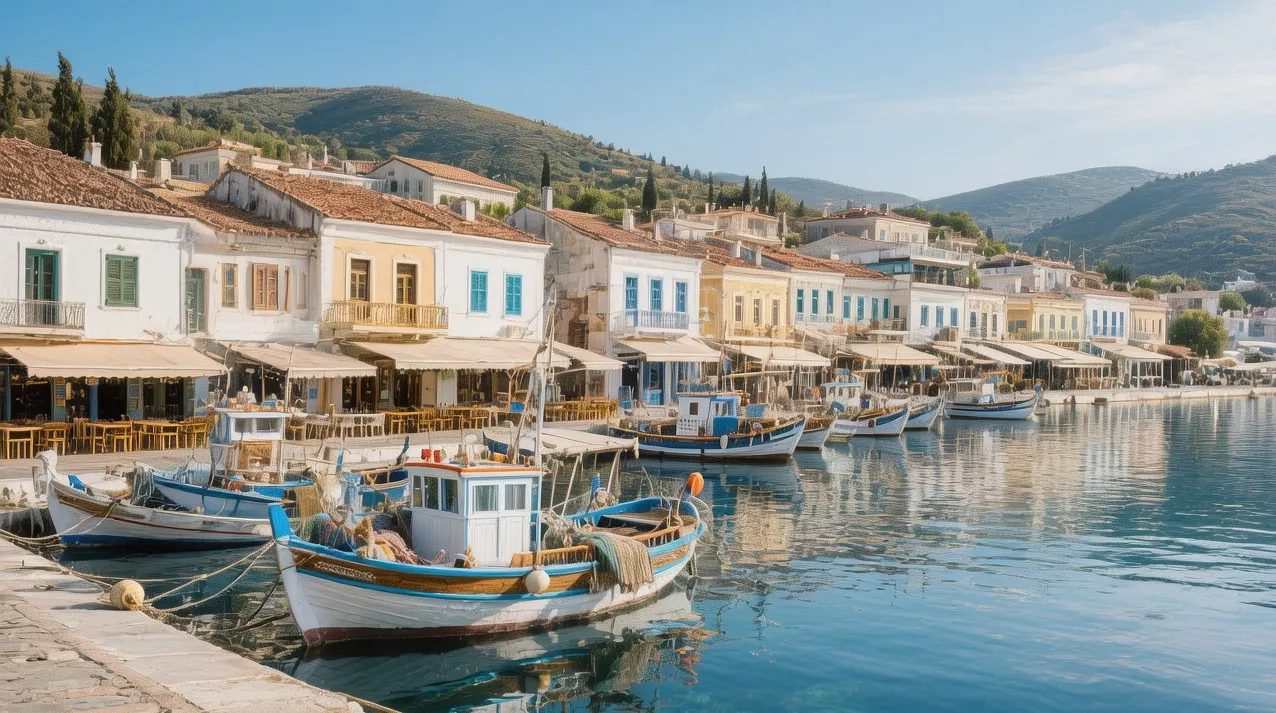
Samos Pythagoreion: Where Ancient Engineering Meets Aegean Wisdom
Golden light spills across weathered limestone blocks as you walk the ancient harbor quay—sea breezes carry the scent of wild oregano and salt, while the gentle lap of turquoise waters against stone foundations creates a rhythmic underscore to your arrival. You stand within one of the Mediterranean's most remarkable archaeological landscapes, where the ruins of an ancient Greek city unfold across 40 hectares of coastal terrain, anchored by the legendary Tunnel of Eupalinos—a 1,036-meter engineering marvel carved through Mount Kastro in the sixth century BCE. The harbor's semicircular layout, framed by remnants of Cyclopean walls and Hellenistic fortifications, once sheltered the fleet of Polycrates, the tyrant who transformed Samos into a center of philosophy, mathematics, and maritime power. This is Pythagoreion, a UNESCO World Heritage Site where the birthplace of Pythagoras meets the ingenuity of ancient engineers, where every weathered column and submerged pier whispers of a civilization that measured the stars, calculated the diagonal of triangles, and dared to tunnel through mountains. Pythagoreion matters because it preserves not just ruins, but revelation: a testament to human curiosity where science, philosophy, and art converged to illuminate the path toward understanding our world—and our place within it.
Why Samos Pythagoreion Embodies Ancient Engineering Genius
Pythagoreion represents one of antiquity's most sophisticated examples of urban planning and hydraulic engineering—a coastal settlement that solved the fundamental challenge of securing fresh water for a thriving port city while defending against siege. The site's crown jewel, the Tunnel of Eupalinos, was constructed circa 550–530 BCE under the direction of engineer Eupalinos of Megara, commissioned by tyrant Polycrates to provide a secure water supply that could not be cut by enemy forces.
Architecturally, the tunnel showcases extraordinary precision: two teams of workers began digging from opposite ends of Mount Kastro and met within centimeters of perfect alignment after excavating 1,036 meters through solid limestone. The tunnel's dimensions—1.8 meters wide by 1.8 meters high—allowed maintenance access while minimizing excavation effort, and its gentle slope of 0.4% enabled gravity-fed water flow from the spring at Agiades to the ancient harbor. This engineering feat, described by Herodotus as one of the three greatest works of the Greek world, demonstrates mathematical sophistication that anticipated modern surveying techniques by millennia.
Beyond hydraulics, Pythagoreion fulfilled profound cultural needs: it served as a philosophical crucible where Pythagoras developed his theories of mathematics and music; it functioned as a maritime hub where innovations in shipbuilding and navigation spread across the Aegean; and it created a model of urban resilience where fortifications, water systems, and harbor infrastructure worked in concert. The site's defensive walls—constructed using Cyclopean masonry with boulders weighing up to 8 tons—protected the city for centuries, while the temple of Hera (Heraion), located 6 kilometers west, anchored the island's spiritual life. When excavations began in the 19th century, archaeologists uncovered a layered history spanning Bronze Age settlement to Roman occupation, revealing a civilization where intellectual pursuit and practical innovation were inseparable. Today, Pythagoreion offers an unparalleled window into ancient Greek ingenuity, where every stone and survey mark tells a story of human ambition to master nature through reason.
The Best Time to Experience Samos Pythagoreion
Timing your visit to Pythagoreion requires balancing weather, lighting for photography, and archaeological site accessibility. The optimal window runs from May 10 through June 18, when temperatures range 19–27°C (66–81°F) and wildflowers—bougainvillea, jasmine, and sea daffodils—bloom among the ruins. During this period, morning light between 8:00–9:30 AM illuminates the limestone foundations without harsh shadows, perfect for capturing the texture of ancient masonry.
A second exceptional season spans September 20 through October 28, with temperatures of 18–26°C (64–79°F) and clearer atmospheric conditions that enhance visibility across the Aegean. The late afternoon sun between 4:30–6:00 PM casts warm amber tones across the harbor ruins, creating dramatic contrasts ideal for architectural photography.
For the most atmospheric experience, arrive at the Pythagoreion entrance by 8:00 AM when opening begins. The morning light illuminates the Tunnel of Eupalinos approach while temperatures remain cool for exploring the extensive archaeological grounds. Midday visits between 12:00–3:00 PM should be avoided during July and August, when temperatures exceed 33°C (91°F) and the exposed limestone radiates intense heat with minimal shade.
Avoid visiting during peak cruise excursion season (July 22–August 20) when tour groups create bottlenecks at key monuments. Winter months (November–February) bring frequent rain and temperatures of 10–16°C (50–61°F); while crowds thin dramatically, the Tunnel of Eupalinos may close during heavy weather for safety.
Approximate Budget for a 7-Day Trip
Exploring Samos Pythagoreion as part of a Dodecanese cultural itinerary offers exceptional value compared to more tourist-heavy Greek islands, combining archaeological wonder with coastal relaxation at accessible prices. The following breakdown assumes a mid-range travel style with comfortable accommodation in Pythagoreion village or nearby Vathy, dining at traditional tavernas, and a mix of independent exploration and guided experiences.
- Accommodation: €40–€80 per night for traditional guesthouses or boutique hotels in Pythagoreion (harbor area) or Vathy (capital). Budget rooms start at €30; luxury sea-view suites reach €120.
- Food: €22–€32 per day. Breakfast €4 (Greek coffee, honey yogurt, fresh bread); lunch €8 (horiatiki salad, grilled sardines, house wine); dinner €13–€17 (fresh catch of the day, lamb kleftiko, local Assyrtiko wine).
- Transportation: Ferry from Athens (Piraeus) to Samos €32–€50 (6–8 hours, depending on vessel); local bus to Pythagoreion €2.50 each way; rental car €32/day (recommended for island exploration); scooter rental €13/day.
- Attractions: Pythagoreion archaeological site entrance €8; Tunnel of Eupalinos guided tour €12; Heraion (Temple of Hera) entry €6; Archaeological Museum of Vathy €4; combined Samos heritage ticket €18.
- Miscellaneous: Handmade Samian pottery €12–€30; local thyme honey 250g €6; traditional woven textiles €18; travel insurance €35/week; water/snacks at site €4.
Total for 7 days: €600–€800 per person (excluding international flights to Athens and ferry costs)
7 Essential Samos Pythagoreion Experiences
- Walk the ancient harbor quay at sunrise: Arrive at the Pythagoreion waterfront by 7:30 AM to experience the submerged ruins in near-solitude. The morning light illuminates limestone blocks and ancient mooring stones, revealing the harbor's original layout. Allow 30 minutes to absorb the atmosphere before crowds arrive; bring a wide-angle lens to capture the panoramic seascape framed by archaeological remains.
- Explore the Tunnel of Eupalinos: Book a guided tour (€12, 45 minutes) to walk through a section of this ancient engineering marvel. The tunnel's cool interior (16–18°C / 61–64°F) provides respite from summer heat while your guide explains the surveying techniques that enabled two teams to meet with centimeter precision. Wear sturdy shoes for the uneven stone floor; flash photography is prohibited to protect the ancient walls.
- Examine the Cyclopean fortifications: Follow the path along the ancient city walls where massive limestone boulders—some weighing 8 tons—demonstrate Bronze Age construction techniques. Visit mid-morning (9:00–10:30 AM) when angled light accentuates the texture of weathered stone without harsh glare. Allow 20 minutes to appreciate the scale of defensive engineering that protected Pythagoreion for centuries.
- Visit the Archaeological Museum of Pythagoreion: This compact but informative collection displays artifacts excavated from the site: pottery, inscriptions, and sculptures that contextualize the ruins. Visit between 10:00–11:30 AM when natural light from skylights illuminates exhibits without glare. Entry included with site ticket; guided explanations available in English upon request.
- Photograph the Lion of Samos: Focus on this iconic 6th-century BCE marble statue, one of the earliest examples of monumental Greek sculpture. The best light for photography occurs mid-morning (10:00–11:30 AM) when side lighting reveals the texture of weathered marble. Use a polarizing filter to reduce glare on sunlit surfaces; always maintain respectful distance from protected artifacts.
- Combine with Heraion temple visit: After exploring Pythagoreion, drive 10 minutes west to the Temple of Hera (Heraion), one of the largest Greek temples ever built. This UNESCO-listed site features a single remaining column rising 8 meters high, set against a backdrop of reed marshes and the Aegean. Allow 60 minutes for the full experience; optimal lighting occurs late afternoon (4:00–5:30 PM).
- Attend an evening lecture on ancient mathematics: During summer months, the Pythagoreion cultural center hosts talks on Pythagoras's contributions to geometry and music theory. These 60-minute presentations typically begin at 7:00 PM and include demonstrations of ancient instruments. Reserve 24 hours in advance; bring a notebook for the interactive elements.
3 Hidden Gems Most Travelers Miss
- The Ancient Aqueduct Channel: A little-known footpath behind the Tunnel of Eupalinos entrance leads to the original water channel that carried spring water from Agiades to the harbor. The 15-minute walk reveals carved stone conduits, inspection shafts, and panoramic views of the Aegean. Access via the unmarked trail to the left of the tunnel entrance; follow signs for "Ydrauleio." Visit early afternoon (2:00–4:00 PM) when dappled light creates atmospheric photography opportunities. Bring sturdy shoes for the rocky terrain and ample water—there are no facilities along this path.
- The Hidden Chapel of Agios Nikolaos: Tucked behind olive groves 400 meters from Pythagoreion, this tiny 12th-century chapel features remarkably preserved frescoes and a peaceful courtyard with views of the ancient harbor. The entrance is unmarked; ask locals for "to ekklisaki tou Agiou Nikolaou." Visit mid-morning (10:00–11:00 AM) when light filters through the small western window to illuminate the frescoes. Bring a small donation for preservation efforts; the chapel remains an active worship space for local families and offers a quieter alternative to the main archaeological site.
- The Secret Beach of Potokaki: On Samos's southern coast, a secluded pebble beach sheltered by limestone cliffs offers crystal-clear waters and minimal crowds. Most visitors focus on Pythagoreion and miss this refreshing escape. Access via the coastal path from the village of Potokaki; follow signs for "Paralia." Visit late afternoon (4:00–5:30 PM) when sunlight warms the rocks while water remains refreshingly cool. Bring water shoes for the rocky entry and respect the fragile coastal ecosystem by removing all trash.
Cultural & Practical Tips
- Respect archaeological site etiquette: Pythagoreion is a protected UNESCO World Heritage location. Stay on marked pathways, never climb on ancient walls or columns, and do not remove stones or artifacts—these actions accelerate erosion of irreplaceable heritage. Speak softly to preserve the contemplative atmosphere for other visitors.
- Carry cash for entrance fees: The ticket office accepts cash only (no credit cards). Pythagoreion site entrance costs €8 for adults, €4 for students/seniors with ID, free for children under 18. The combined Samos heritage ticket (€18) includes Pythagoreion, Heraion, and the Archaeological Museum of Vathy.
- Learn essential Greek phrases: "Yassou" (YAH-soo) = hello; "Efharisto" (ef-hah-REE-stoh) = thank you; "Poso kani?" (POH-soh KAH-nee) = how much?; "Nero parakalo" (neh-ROH pah-rah-kah-LOH) = water please; "Ine arhea?" (EE-neh ah-REH-ah) = is it ancient?
- Prepare for sun exposure and uneven terrain: The archaeological site offers minimal shade and features uneven limestone paving. Wear sturdy, closed-toe shoes with good grip, apply SPF 30+ sunscreen, and carry at least 2 liters of water per person. Visit early morning or late afternoon to avoid peak heat.
- Photography guidelines: Handheld photography is permitted throughout the site. Tripods require permission from site staff and cannot obstruct pathways. Drone use is strictly prohibited without written authorization from the Hellenic Ministry of Culture (+30 210 8211000). Commercial photography requires permits obtained 48 hours in advance from the Samos Ephorate of Antiquities.
- Weather considerations: Afternoon thunderstorms can develop rapidly July–September. The ancient limestone becomes extremely slippery when wet—descend carefully if rain begins. Strong meltemi winds occasionally reach 35 km/h (22 mph) on exposed harbor areas; secure loose items and be cautious near unprotected edges.
- Accessibility considerations: Pythagoreion's uneven terrain and stone pathways are not fully wheelchair accessible. However, the harbor quay and museum are reachable via paved paths. Visitors with mobility issues can experience key monuments from accessible routes near the entrance. Request assistance at the ticket office; staff can provide seating for rest breaks.
Conclusion: Travel with Reverence, Not Just Sightseeing
Pythagoreion asks for more than a quick photograph and a checklist mark—it invites reverence for the human curiosity that transformed stone into science, philosophy into progress. This isn't merely an archaeological site; it's a testament to the enduring power of reason, where ancient engineers tunneled through mountains, philosophers calculated the harmony of spheres, and mariners navigated by stars. When you walk these weathered quays and stand within the cool darkness of Eupalinos's tunnel, you're not just viewing history—you're participating in a continuum of discovery that has illuminated human understanding for twenty-five centuries.
Responsible travel here means understanding that you're a guest in a space where legacy breathes through every survey mark. It means moving carefully to preserve fragile ruins, following guidelines that protect irreplaceable heritage, and supporting the local community that stewards this legacy. Purchase tickets directly, hire local guides who share both historical and cultural insights, and dine at tavernas sourcing ingredients from Samian gardens.
Slow down. Sit on a sun-warmed stone and watch light shift across the Aegean. Listen to waves lapping ancient piers, mingling with the distant cry of seabirds overhead. Share a moment of silence with fellow travelers, letting Pythagoreion's timeless wisdom inspire not just admiration, but stewardship. These ruins will endure—if we treat them not as backdrops for selfies, but as teachers of curiosity, witnesses to human ingenuity, legacies to protect. Travel here with humility, and the stones will share their ancient equations.