
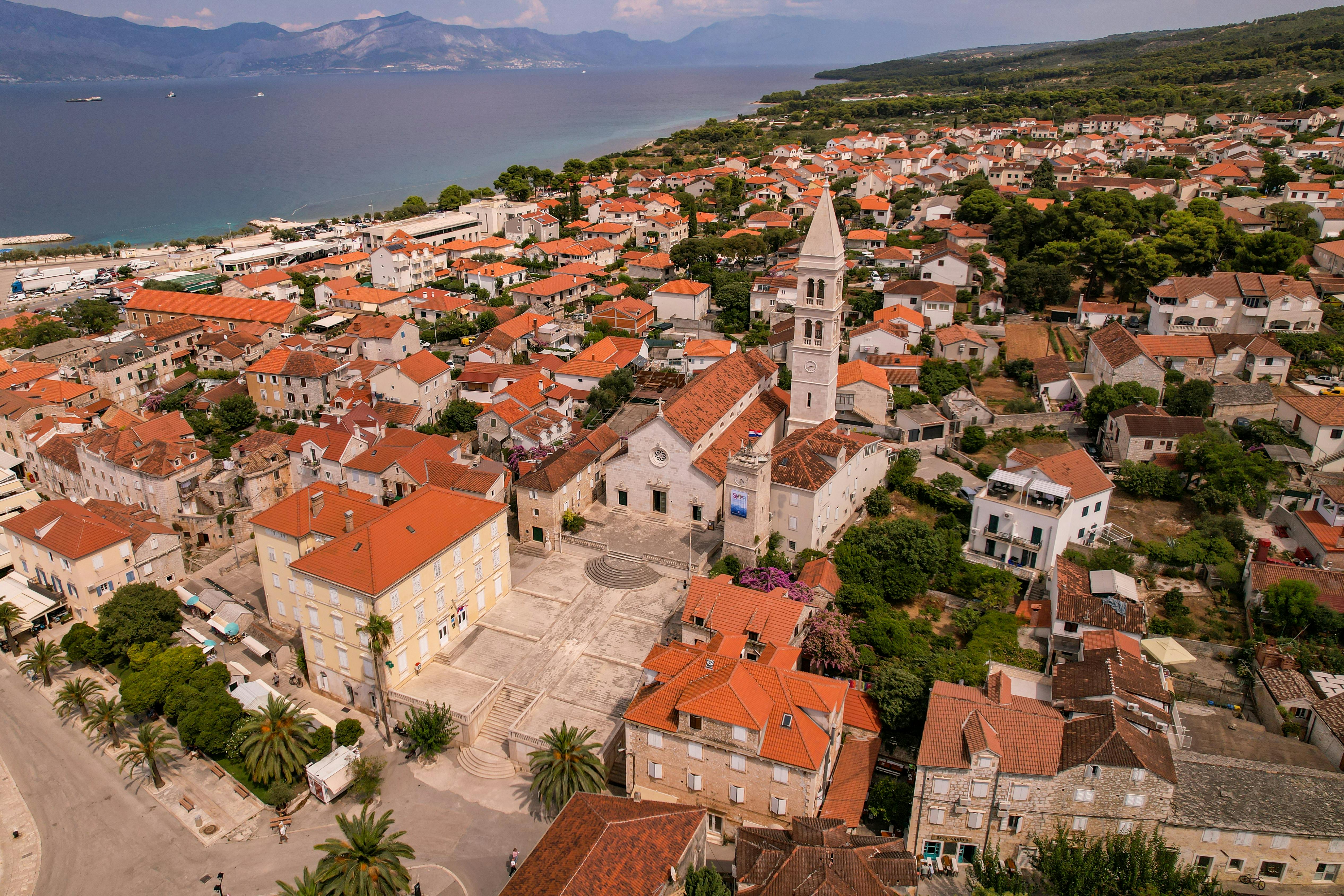
Trogir Old Town: Where Medieval Stone Meets Adriatic Harbor Light
The morning sun glints off the Adriatic as you step onto marble pavement polished smooth by twenty-three centuries of footsteps, entering a labyrinth where Greek foundations, Roman walls, and Venetian palaces stand shoulder to shoulder in harmonious dialogue. The air carries salt from the nearby harbor, the faint perfume of jasmine spilling from wrought-iron balconies, and the distant clatter of espresso cups echoing through vaulted arcades. You hear the gentle murmur of Croatian conversations, the soft shuffle of sandals on limestone worn by generations, and the occasional peal of bells from the Cathedral of St. Lawrence. This is Trogir—a UNESCO World Heritage site since 1997, where a mere 30-hectare (74-acre) island preserves one of Europe's most intact medieval urban fabrics, with narrow streets barely two meters wide opening onto sun-dappled squares where Romanesque arches frame Gothic windows. The old town matters because it preserves something increasingly rare: a living historical center where heritage isn't reconstructed but continuously inhabited, inviting visitors to experience not just a monument, but the pulse of a community that has mastered the art of preserving beauty while embracing daily life.
Why Trogir Old Town Embodies Dalmatian Continuity
The UNESCO old town of Trogir represents one of the Mediterranean's most elegant examples of layered urban heritage, where Greek colonization in the 3rd century BCE, Roman municipal planning, and Venetian maritime rule converged to create a compact masterpiece of architectural evolution. Founded as Tragurion by Greek settlers from Issa (modern Vis), the town's rectangular street grid—still visible today—was engineered to maximize defensive positioning on a small island between mainland Dalmatia and Čiovo, while maintaining access to the sea that sustained its prosperity.
Engineering ingenuity defined the town's development. Local limestone—quarried from nearby Brač Island—was cut into precise blocks bound with lime mortar that has hardened over centuries, creating structures resilient to seismic activity and coastal weather. The famous Radovan's Portal on the Cathedral of St. Lawrence (completed 1240) showcases Romanesque-Gothic sculpture carved with such precision that individual figures retain expressive detail after 800 years of exposure. The town's sophisticated water system, with cisterns carved into bedrock and channels directing rainwater to the harbor, solved a critical need for a settlement with limited freshwater sources.
Today, Trogir serves as both UNESCO World Heritage site and vibrant community, managed by the Trogir Cultural Heritage Department in partnership with conservation experts. Approximately 400,000 visitors annually explore its streets, generating revenue that funds ongoing restoration using traditional techniques—master stonemasons still repair damage with hand-cut limestone and lime mortar. This living preservation model balances tourism access with structural integrity, ensuring that Trogir remains not a museum but a home where heritage breathes in daily life.
The Best Time to Experience Trogir Old Town
Optimal conditions for exploring Trogir's UNESCO old town occur during two distinct windows: May 15 through June 25 and September 8 to October 18. During these periods, temperatures range between 20-26°C (68-79°F), rainfall averages just 40-60mm monthly, and the Adriatic shimmers in brilliant blues that enhance photography from harbor-side terraces. Visit between 7:30-8:30 AM to experience soft morning light on limestone facades, minimal crowds, and the magical ritual of locals gathering for espresso before the day begins.
Summer months (July-August) present significant challenges: temperatures soar to 28-32°C (82-90°F), crowds peak with 3,000+ daily visitors, and the narrow stone streets retain heat, making exploration physically demanding. Winter (November-February) brings cooler temperatures—10-15°C (50-59°F)—and occasional rain that makes marble pavement slippery; some outdoor cafés reduce hours. Avoid visiting during midday in summer (11:00 AM-3:00 PM) when sun exposure is intense and the main square becomes congested with cruise ship excursions.
For current events, cultural programming, and conservation updates, visit www.visittrogir.com, the official tourism portal maintained by the Trogir Tourist Board. The website provides real-time updates on old town access, links to the official heritage site at trogir.hr, and detailed information about guided walking tours, seasonal festivals, and photography workshops. The old town's pedestrian streets remain accessible 24/7, though individual attractions and businesses operate on varying schedules.
Approximate Budget for a 7-Day Trip
Trogir offers exceptional value for a Dalmatian coastal destination, with costs approximately 25-35% lower than Western European cities. This breakdown assumes a mid-range travel style with comfortable accommodations, authentic local dining, and public transportation—walkability within the old town significantly reduces transit costs.
- Accommodation: €60-€110 per night for a double room in a family-run pansion or three-star hotel in Trogir's Old Town, Arbanija, or nearby Seget Donji
- Food: €30-44 per day total
- Breakfast: €5-9 (coffee, fresh burek, and local cheese at a pekara)
- Lunch: €10-15 (crni rižot—black cuttlefish risotto, or grilled sardines with olive oil)
- Dinner: €15-20 (slow-cooked lamb peka or fresh Adriatic fish with local Plavac Mali wine)
- Transportation:
- Trogir bus day pass: €5 (covers local routes)
- Taxi from Split Airport: €15-25 one-way (Trogir is just 6km away)
- Inter-city bus to Split or Šibenik: €8-15 round-trip
- Old Town is pedestrian-only; no car rental needed within core
- Attractions:
- Trogir Old Town walking: Free (pedestrian zone)
- Cathedral of St. Lawrence entry: €5 adults, €2.50 children (7-18)
- Radovan's Portal guided tour: €8 supplement
- Kamerlengo Fortress: €4
- City Museum entry: €5
- Miscellaneous:
- Souvenir lavender products: €7-18
- Local olive oil tasting: €10-16
- Maraschino liqueur tastings: €5-9
Total estimated cost for 7 days: €870-1,270 per person (excluding international flights)
7 Essential Trogir Old Town Experiences
- Radovan's Portal at Sunrise: Arrive at 7:30 AM when the old town is nearly empty to experience the Cathedral of St. Lawrence's famous portal in soft morning light. Notice the intricate Romanesque-Gothic sculpture: lions supporting columns, saints in niches, and the central tympanum depicting Christ's nativity. The quiet atmosphere allows you to appreciate details often missed amid daytime crowds. Bring a macro lens for exceptional photography opportunities; allow 30 minutes for unhurried observation.
- Wandering Medieval Side Streets: Venture off the main axes into the labyrinth of narrow alleys—Ulica Ivana Pavla II, Gradska vrata, and Obala bana Berislavića—where hidden courtyards, artisan workshops, and family-owned konobas reveal authentic Trogir life. Look for Roman inscriptions embedded in medieval walls, jasmine-scented gardens behind wrought-iron gates, and small churches with centuries-old frescoes. Allow 90 minutes for aimless exploration; the best discoveries come without a map.
- Harbor-Side Photography Walk: Stroll the waterfront promenade at 6:00-7:00 PM in summer when warm light illuminates limestone facades and the Adriatic glows amber. Position yourself near the Kamerlengo Fortress for dramatic framing of medieval towers against the setting sun. Bring a polarizing filter to manage sea glare; tripods permitted in designated areas only. The interplay of light, stone, and water creates unforgettable images.
- Cathedral Bell Tower Climb: Ascend the 258 steps of the Cathedral of St. Lawrence bell tower for panoramic views of Trogir's terracotta rooftops, the harbor, and surrounding islands. The climb takes approximately 20 minutes; wear sturdy shoes for uneven medieval steps. Visit at 9:00-10:00 AM for optimal light and manageable crowds. The summit offers a 360-degree perspective that contextualizes the old town's layout and strategic coastal position.
- Traditional Lunch at Harbor Terraces: Reserve a table at Konoba Trs or Restaurant Bokeria for lunch with views of the harbor and old town walls. Order fresh grilled fish or brodet (traditional fish stew) paired with local Plavac Mali wine. Expect to pay €18-25 per person for a complete meal; request a harbor-side table when booking for optimal ambiance as boats glide past your table.
- Evening Korzo with Locals: Return to the main square at 8:00-9:00 PM when Trogir residents take their traditional evening promenade. Experience the boulevard as locals do: leisurely, social, with gelato in hand. The warm light creates magical photography opportunities as street lamps glow on limestone and café terraces fill with laughter. Follow the sound of conversation to discover impromptu gatherings at scenic overlooks.
- Guided Historical Walking Tour: Join the official guided walk (offered daily at 10:00 AM and 4:00 PM, €12 supplement) to understand Trogir's evolution from Greek colony to Roman municipium to Venetian stronghold. Guides explain architectural techniques, cultural traditions, and conservation efforts. The 90-minute tour deepens appreciation for the landscape's layered history.
3 Hidden Gems Most Travelers Miss
- Cipiko Palace Courtyard: Tucked behind an unassuming facade on the main square, this 15th-century Renaissance palace features a serene courtyard with original stone columns and a well-preserved coat of arms. Access via the tourist information center; open Tuesday-Sunday 9:00 AM-5:00 PM, entry €4. The courtyard offers a peaceful respite from old town crowds and exceptional photography opportunities with soft light filtering through arches. Visit at 3:00 PM to avoid midday tour groups.
- St. Dominic's Church Bell Tower View: Behind the main cathedral, a lesser-known church offers a small bell tower with panoramic views of Trogir's rooftops and harbor—without the crowds of the cathedral climb. Access via Ulica Dominikova; ask the sacristan for permission to ascend (donation €2-3). The 10-minute climb rewards with intimate perspectives rarely experienced by tourists. Visit at sunset for golden light; wear sturdy shoes for uneven medieval steps.
- Čiovo Island Footbridge Sunset: Walk the pedestrian bridge connecting Trogir to Čiovo Island at 6:00-7:00 PM for unique perspectives of the old town silhouetted against the setting sun. The 10-minute walk offers photo opportunities with the medieval walls reflected in calm harbor waters. Best visited weekday evenings; bring a wide-angle lens to capture the full sweep of coastline. Local fishermen often share stories if you pause to chat.
Cultural & Practical Tips
- Respect residential spaces: The old town remains a living neighborhood—keep voices moderate in residential courtyards, avoid photographing private windows, and follow posted quiet hours (typically 10:00 PM-7:00 AM). Many buildings house families, not just tourist accommodations.
- Footwear essentials: Wear comfortable, flat shoes with good traction—the marble pavement becomes slippery when wet or dusty. Avoid high heels; the uneven medieval stone requires stable footing. Comfortable walking shoes are essential for exploring cobblestone streets.
- Hydration strategy: Carry a reusable water bottle; public fountains provide safe, cool drinking water. Small vendors sell beverages at elevated prices; refill for free throughout the day. Visit in morning or late afternoon to avoid peak heat exposure in sun-baked stone corridors.
- Essential Croatian phrases: "Dobar dan" (DOH-bar dahn = good day), "Hvala" (HVAH-lah = thank you), "Oprostite" (oh-PROH-stee-teh = excuse me), "Gdje je...?" (gdyeh yeh = where is...?). Locals appreciate even basic efforts to speak Croatian.
- Photography guidelines: Drones require special permission from the Trogir City Administration—contact visittrogir.com at least 72 hours in advance. Respect other visitors' experiences; avoid blocking narrow streets for extended shots during peak hours. Golden hour (7:30-8:30 AM, 6:00-7:30 PM summer) offers optimal light.
- Weather considerations: The Adriatic coast can experience sudden bura (northeasterly) winds that make exposed areas chilly even in summer. Pack a light windbreaker; check the Croatian Meteorological Service at dhms.hr before visiting. Rain is rare in summer but possible; a compact umbrella fits easily in a daypack.
- Accessibility information: The old town's marble streets and numerous steps present challenges for wheelchairs and mobility devices. Alternative viewpoints include the harbor promenade or Čiovo Island bridge; contact +385 21 881 333 for accessibility guidance and adapted route suggestions.
Conclusion: Travel with Reverence, Not Just Sightseeing
Trogir's old town asks something deeper than your camera lens—it invites your reverence for stone that has witnessed centuries of human ambition, artistry, and resilience. As you walk streets polished by generations before you, remember that you're experiencing not just a monument but a covenant: a promise that some places endure because communities choose to protect them. The old town matters because it reminds us that preservation is an active verb, requiring both visitor respect and local stewardship.
Responsible travel here means recognizing that these streets belong first to Trogir's people and their heritage. It means walking mindfully to protect ancient limestone, supporting local artisans rather than mass-produced souvenirs, and understanding that your presence impacts a fragile balance between tourism and authentic community life. The stonemasons, guides, and residents who maintain this place aren't service providers—they're custodians of a story written in light and limestone.
Slow down. Feel the sun-warmed stone beneath your palm. Listen to the Adriatic whispering beyond the harbor. When you leave Trogir, carry not just photographs of medieval arches and red roofs but a commitment to value places where heritage breathes in daily life. That's the difference between visiting a landmark and truly honoring a legacy.