
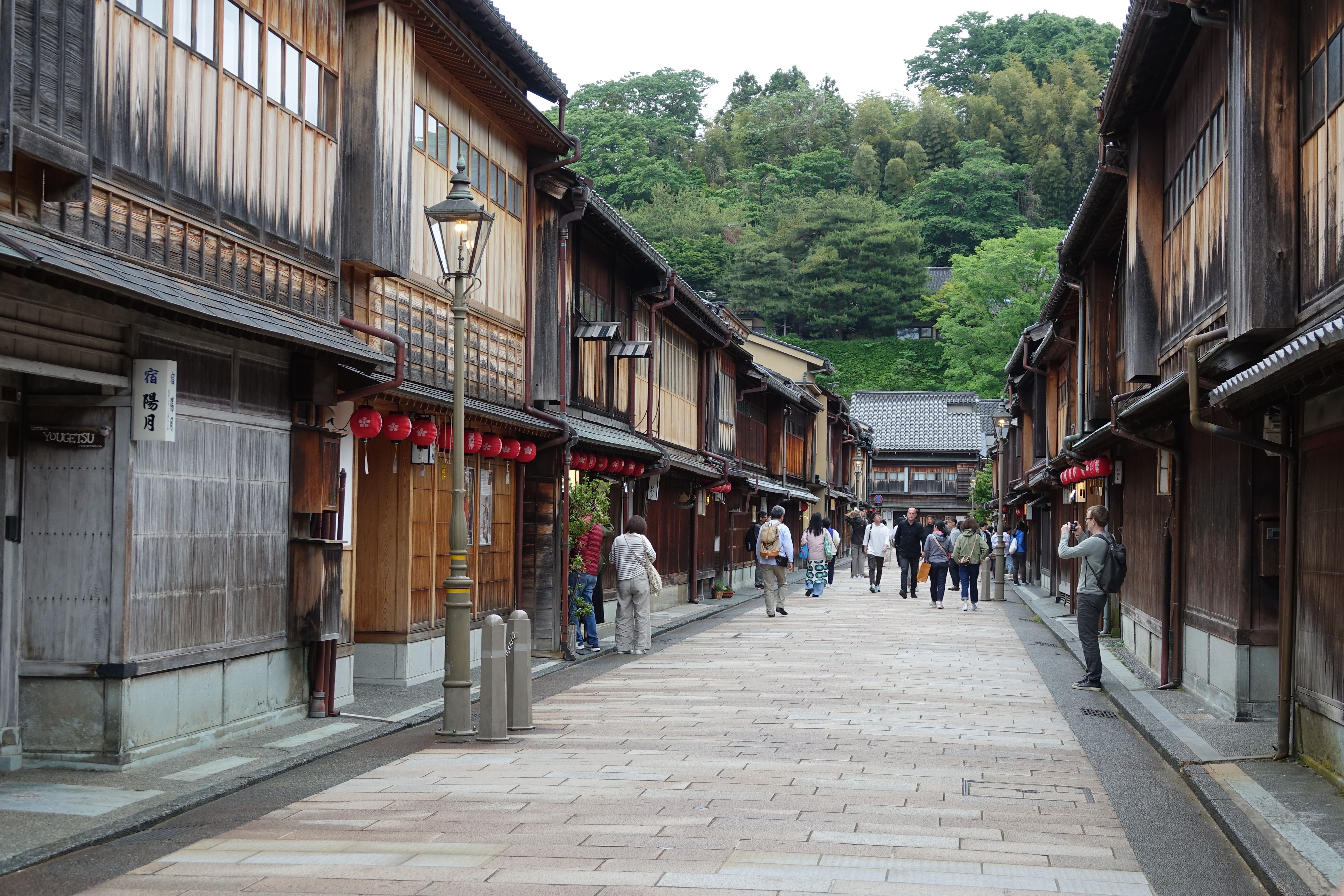
Higashi Chaya: Where Evening Lamplight Meets Edo-Period Latticework
The first hint arrives not as a sight, but as a sound—the distant, resonant pluck of a shamisen string drifting over the Asano River just as the sun dips below the horizon. You turn a corner off the main road in Kanazawa, and the 21st century simply evaporates. Before you stretches a street frozen in amber—a near-perfect thoroughfare of two-story wooden structures, their facades cloaked in intricate kimusuko latticework. This is the Higashi Chaya District, established in 1820 by the Kaga clan to consolidate the city’s teahouses into one elegant quarter [citation:1][citation:6]. Unlike the bustling, often overwhelming Gion in Kyoto, here the past breathes quietly through every cedar slat and stone gutter. As night falls, the soft glow of lanterns reflects off the wet stones, and if you listen closely beyond the susurrus of the Asano River, you can still hear the echo of geiko (as Kanazawa’s geisha are known) entertaining distinguished guests—a living tapestry of Japanese heritage preserved not as a museum piece, but as a beating heart of cultural identity [citation:7].
Why Higashi Chaya Embodies the Soul of Wabi-Sabi Elegance
To walk the main promenade of Higashi Chaya is to walk through a specific, intentional vision of beauty rooted in the Edo-period aesthetic. The district was not an accident of history; in 1820, the ruling Maeda clan deliberately moved these entertainment houses from the city center to this eastern bank of the Asano River to control and cultivate high-class leisure [citation:1][citation:6]. The architecture tells a story of defiance and artistry: during the Edo period, two-story buildings were largely forbidden, yet chaya (teahouses) received a special exemption, allowing their upper floors to become private rooms for banquets—a physical elevation of status and secrecy [citation:6][citation:7]. The defining feature, the kimusuko lattice, is not merely decorative; it historically allowed a discreet view from inside while obscuring the identities of the elite guests. This dance between visibility and concealment is the essence of the geisha world. Today, the district is protected as a National Important Preservation District for Groups of Traditional Buildings—a designation it shares with only a handful of sites—ensuring the 200-year-old facades of structures like the iconic Ochaya Shima remain untouched, their dark wood and clay walls a masterclass in understated, weathered grace [citation:2][citation:6].
The Best Time to Experience Higashi Chaya’s Quiet Grandeur
While the district is enchanting year-round, the most rewarding experience occurs during the crisp air of autumn (mid-October to late November) or the plum blossom season (late February to mid-March). For the best light and crowd avoidance, arrive on a weekday morning between 8:00 and 9:30 AM, before the shops open. At this hour, the sun casts long, dramatic shadows across the latticed wood, and you’ll likely share the street with only a few photographers. December through February offers the “Akari no Tabi” (Journey of Lights) illumination, a magical period where the cold air (average daytime highs of 6°C / 43°F) makes the warm lantern glow even more inviting. Conversely, avoid the Golden Week holidays (April 29–May 5) and Obon week (August 13–16), when domestic tourism peaks, and the narrow street becomes congested. For official updates on seasonal events and geisha performances, always consult the city’s official tourism portal: www.visitkanazawa.jp [citation:8]. The humidity and rain of the June to July rainy season (Tsuyu) can also dampen the walking experience, though the wet streets offer superb photographic reflections.
Approximate Budget for a 7-Day Kanazawa Trip
Kanazawa offers a more affordable alternative to Kyoto. The below estimates are based on mid-range travel data and assume you are basing yourself near Kanazawa Station or the Korinbo district, using public transit to reach Higashi Chaya [citation:4][citation:10]. Expect to spend roughly $121 (approx. ¥17,500) per day.
- Accommodation: $40–$120 USD (¥6,000–¥18,000) per night. A dorm bed at Guest House Pongyi or K's House costs as little as $17–$30 [citation:4]. A mid-range business hotel like Hotel Manten runs about $80, while a luxury stay at Hyatt Centric starts at $150 [citation:10].
- Food: $25–$55 per day. Breakfast at a cafe ($6 / ¥900). Lunch in the Chaya district (e.g., a Teishoku set meal) runs $10–$15 / ¥1,500–¥2,000. Dinner at an Izakaya costs $15–$25. Splurge on the famous Hakuichi gold leaf soft serve for $7 / ¥980 [citation:7].
- Transportation: $5–$10 per day. The Kanazawa Loop Bus costs a flat ¥200 ($1.35) per ride. A 1-day pass is ¥800. From Tokyo, the Hokuriku Shinkansen is roughly $90 one-way [citation:4].
- Attractions: Ochaya Shima museum entry: $3.30 / ¥500 [citation:7]. Kenrokuen Garden: $3.20 / ¥320. Gold leaf workshop at Kinpakuya Sakuda: $7 / ¥1,000 [citation:7].
- Miscellaneous: $20–$50. A set of gold-leafed chopsticks or a small Kutani-yaki ceramic cup makes for a cherished souvenir.
Total estimated 7-day trip (per person): $850 – $1,200 (excluding international flights). [citation:4]
7 Essential Higashi Chaya Experiences
- Step Inside a Real Geisha House at Ochaya Shima: Constructed in 1820, this is the only building in the district designated a National Important Cultural Property [citation:7]. Walk across the intentionally creaky "nightingale floors" (designed to chirp underfoot to warn of intruders) and gaze up at the meticulously preserved tatami rooms where geiko once danced. Open daily 9:30 AM – 5:30 PM [citation:7].
- Gild Your Memories at a Gold Leaf Workshop: Kanazawa produces 99% of Japan’s gold leaf. At Kinpakuya Sakuda, spend one hour applying ultrathin sheets of pure gold to chopsticks or a small box. It is a meditative, tactile process that connects you to the city’s most famous craft—and you leave with a dazzling, functional souvenir [citation:7].
- Sip Matcha at the 200-Year-Old Yanagi-An: Tucked away on a side alley, this historic teahouse offers a moment of pure stillness. Order the matcha set with a sweet wagashi and sit by the window, watching the shadows of passersby flicker across the kimusuko lattice [citation:7].
- Photograph the "Golden" Alley at Twilight: The main street is lovely, but the magic happens in the narrow side alleys. Visit just after sunset (around 5:30 PM in winter, 7:00 PM in summer) when the streetlamps click on, painting the wet stone and wood in shades of amber and indigo. Use a tripod for long exposures to capture the silence of the fading day.
- Indulge in the Original Gold Leaf Soft Serve at Hakuichi: Yes, it is touristy—but it is also delicious and historically kitschy. Hakuichi was the first to drape an entire shimmering sheet of edible gold leaf over a swirl of creamy soft serve. It is ¥980 of pure, unapologetic extravagance. Eat it quickly before the gold wilts [citation:7].
- Walk to Kazuemachi Across the Asanogawa Bridge: Most visitors stop at Higashi, but a five-minute walk west leads you to the smaller, even more atmospheric Kazuemachi Chaya District. Here, traditional houses line the river itself. Visit the hidden alley of Kuragarizaka—a lantern-lit stone staircase that feels like a film set [citation:7].
- Listen for the Echo of the Geiko at Night: While you likely won't see a geiko unless you have a private booking, simply standing on the main street after 8:00 PM offers a profound experience. Listen closely; on colder nights, you might hear the distant thrum of a taiko drum or the airy notes of a flute drifting from an active ochaya, a reminder that this is a living tradition, not a relic.
3 Hidden Gems Most Travelers Miss
- Utatsuyama Temple Walk: While the masses crowd the main street, ascend the steep, ancient stone staircase at the northern end of the district. This path winds through a quiet forest dotted with dozens of moss-covered temples and hidden gravesites. The view from the top overlooking the Chaya district rooftops to the sea is a perfect, serene escape. Insider tip: Go in the late afternoon for golden light filtering through the cedar trees.
- Machi no Odoriba Yoh (Vegetable Cafe): Opened January 2025, this chic cafe operates within a renovated townhouse hotel. Locals flock here for the healthy, beautiful one-plate galette lunches made with Ishikawa prefecture vegetables, and the signature hot marshmallow drink. From the second floor, you get a unique, elevated perspective of the street without the crowds [citation:5].
- Nishi Chaya District (The Quiet West): A 15-minute bus ride or 40-minute walk from Higashi is the often-forgotten Nishi Chaya District. It is smaller, but architecturally just as beautiful. It features the free Nishi Chaya Shiryokan Museum (an old teahouse you can explore) and the eerie, fascinating Dolls Museum. On a weekday afternoon, you might have an entire lattice-lined street entirely to yourself [citation:7].
Cultural & Practical Tips for the Chaya District
- Etiquette: Do not touch or lean on the kimusuko lattice; it is fragile and historic. Never photograph the entrances of private, active teahouses (those without signs or open doors)—it is a serious invasion of the geiko’s privacy. You will see signs in Japanese indicating this prohibition.
- Local Phrase: "Konnichiwa" (Kon-nee-chee-wah) is hello. If you enter a shop, a polite "Sumimasen" (Soo-mee-mah-sen) to get attention or excuse yourself is appreciated. To thank a shopkeeper, say "Arigato gozaimasu" (Ah-ree-gah-toh go-zahee-mahs).
- Photography Guidelines: The main street is free for photos. For the best shots, use a lens with a wide aperture (f/1.8 or f/2.8) to capture the texture of the wood in low light. The "blue hour" (30 minutes after sunset) is your best friend.
- Weather: Kanazawa is one of Japan's rainiest cities. Always carry a compact umbrella, even in spring. In winter (Dec-Feb), heavy clouds and snow are common, but this "secular" weather enhances the cozy, warm glow of the district.
- Geiko Performances: On certain Saturdays, the Kanazawa Tourism Association holds public geiko performances in all three Chaya districts. These are rare, ticketed events (approx ¥2,000-¥3,000). .
Conclusion: Travel With Presence, Not Just a Checklist
In a world obsessed with the new, Higashi Chaya offers a different kind of luxury: the radical act of preservation. It asks nothing of you but your quiet attention. You could rush through this street in twenty minutes, snap a photo of the gold leaf ice cream, and check "geisha district" off your list. But to truly travel here is to slow your pace to match the gentle brush of wind over the Asano River. It is to notice the way the rain darkens the centuries-old cedar, or the particular angle of a geiko’s hairpin glimpsed through a second-story window. By supporting the local artisans who keep the gold leaf workshops alive, and by respecting the silence of the active teahouses, you become a steward of this fragile beauty. Do not just look at Higashi Chaya; let it recalibrate your sense of time—you will carry the calm of its lantern-lit alleys with you long after the Shinkansen whisks you back to the neon present.