
Jiayuguan Fortress: Where Desert Winds Meet Imperial Stone
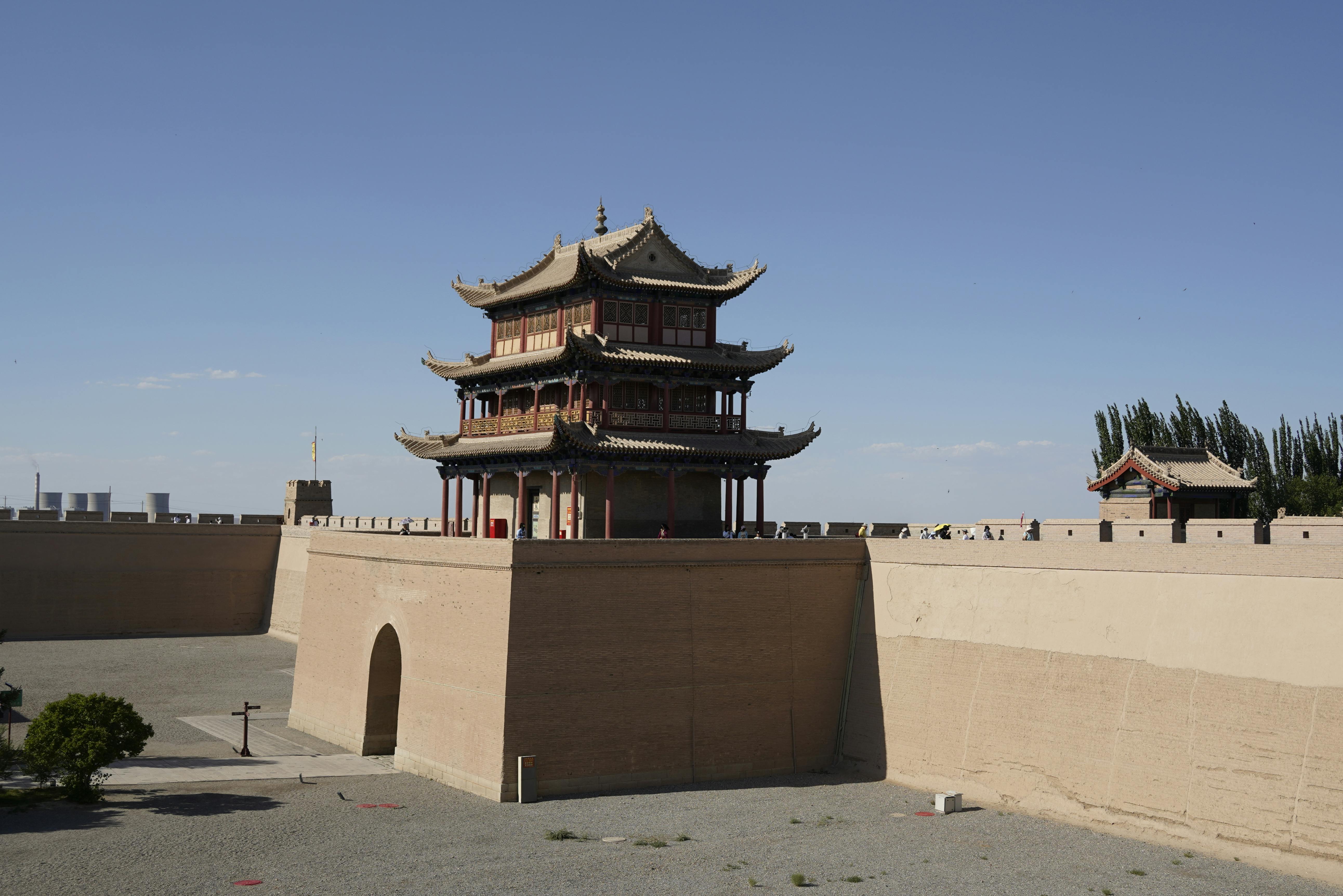
The sun dips below the Qilian Mountains, casting long shadows across the ochre ramparts of Jiayuguan Fortress—this monumental sentinel standing 9 meters tall against the endless Gobi expanse. You hear it before you see it: the whisper of wind through watchtowers, carrying echoes of Silk Road caravans that once passed beneath these arched gateways over six centuries ago. Built in 1372 during the Ming Dynasty's fourteenth year, this fortress marks the westernmost terminus of the Great Wall, where civilization yielded to the untamed desert. The rammed-earth walls, reinforced with layers of gravel and sticky rice mortar, have weathered 650 years of sandstorms and imperial ambitions. Standing at the narrowest point of the Hexi Corridor—just 15 kilometers wide between mountains and desert—this structure solved a critical defensive need: controlling the only viable passage between China proper and the Western Regions. Here, at the edge of empire, you touch the boundary between the known world and the vast unknown that stretched toward Persia and Rome.
Why Jiayuguan Fortress Embodies Ming Dynasty Engineering Mastery
Jiayuguan Fortress represents more than military architecture—it embodies the Ming Dynasty's strategic vision for controlling trade, migration, and defense along the ancient Silk Road. Constructed under the supervision of General Feng Sheng in 1372, the fortress covers 33,500 square meters with walls rising 9 meters high and stretching 733 meters along the eastern side, 666 meters on the west. The structure solved a fundamental geopolitical problem: how to regulate and tax the lucrative Silk Road commerce while defending against nomadic incursions from the west.
The engineering brilliance lies in its layered defense system: an inner city surrounded by an outer moat, with three main gates protected by barbicans—those distinctive U-shaped defensive outworks that forced attackers into kill zones. The walls utilize hangtu (rammed earth) construction, compacting layers of local soil, gravel, and lime to create surfaces harder than concrete. Watchtowers positioned at 100-meter intervals allowed archers overlapping fields of fire, while the famous Overhanging Great Wall section climbs the steep mountainside at a 45-degree angle—an audacious feat of military engineering.
Beyond defense, Jiayuguan served as customs checkpoint, immigration control, and cultural gateway. Every merchant, diplomat, and traveler passing between China and Central Asia registered here, paid tariffs, and received travel permits. The fortress housed garrisons of up to 1,800 soldiers, complete with armories, stables, and administrative offices. This wasn't merely a wall—it was a sophisticated border control system that regulated the flow of silk, spices, ideas, and religions for over five centuries until the Qing Dynasty expanded China's western borders beyond the need for such fortifications in the 1700s.
The Best Time to Experience Jiayuguan Fortress
Timing your visit to Jiayuguan Fortress dramatically affects your experience of this desert monument. The optimal window runs from May 15 through October 10, when daytime temperatures hover between 18–28°C (64–82°F) and the notorious Gobi dust storms subside. For photographers and those seeking optimal light, arrive between 7:00–9:00 AM or 6:00–8:00 PM when the low-angle sun bathes the ochre walls in golden radiance and creates dramatic shadows along the battlements.
Summer months (June–August) bring peak tourist season with temperatures reaching 32°C (90°F) at midday, though the arid climate keeps humidity below 40%, making heat more tolerable than coastal China. Spring (May) offers wildflowers blooming against the desert backdrop, while September–October delivers crisp air and harvest-season festivals in Jiayuguan City. Winter visits (November–March) present stark beauty with snow-dusted ramparts and near-empty grounds, but temperatures plunge to -12°C (10°F) with biting winds that make extended outdoor exploration uncomfortable.
Avoid the first week of May (Labor Day holiday) and first week of October (National Day Golden Week) when domestic tourism surges create overwhelming crowds. The fortress opens daily from 8:30 AM to 6:00 PM (May–October) and 9:00 AM to 5:00 PM (November–April), with last entry one hour before closing.
Approximate Budget for a 7-Day Trip
Pricing for Jiayuguan Fortress and surrounding Gansu Province reflects China's tier-3 city economy—significantly more affordable than Beijing or Shanghai while maintaining good infrastructure. The following breakdown assumes mid-range travel preferences with comfortable accommodations and authentic local dining. Prices quoted in Chinese Yuan (RMB/¥) with approximate USD equivalents. • Accommodation: ¥200–¥450 ($28–$63) per night for mid-range hotels in Jiayuguan City center; budget hostels ¥80–¥150 ($11–$21); upscale options ¥500–¥800 ($70–$112) • Food: ¥120–¥200 ($17–$28) per day (breakfast ¥20–¥30 for noodles/soy milk, lunch ¥40–¥60 for hand-pulled lamb noodles, dinner ¥60–¥110 for hot pot or barbecue) • Transportation: High-speed rail from Lanzhou ¥180 ($25) one-way; local bus to fortress ¥5 ($0.70); taxi from city ¥30–¥40 ($4–$6); bicycle rental ¥30/day ($4) • Attractions: Jiayuguan Fortress combo ticket ¥110 ($15) includes fortress, Overhanging Wall, and First Fire Tower; Great Wall Museum ¥30 ($4); Wei-Jin Art Gallery ¥40 ($6) • Miscellaneous: Camel ride at fortress ¥100 ($14) for 30 minutes; souvenir postcards ¥2–¥5; bottled water ¥3; traditional Gansu embroidery ¥150–¥500 ($21–$70) Total estimated cost for 7 days: ¥4,500–¥6,800 ($630–$950)6 Essential Jiayuguan Fortress Experiences
- Walk the Complete Fortress Circuit: Begin at the East Gate, ascend the ramparts, and traverse the full 733-meter perimeter. The 2.5-hour walk takes you through three defensive gates, across the inner courtyard where soldiers once drilled, and up to watchtowers offering panoramic views of the Qilian Mountains. Notice the arrow slots angled downward to target attackers at the wall base, and the drainage systems that have preserved these walls for 650 years.
- Climb the Overhanging Great Wall: Located 6 km north of the main fortress, this steep section climbs 150 meters up Heishi Mountain at a punishing 45-degree incline. The 258 stone steps test your endurance, but the vista from the summit—where the wall appears to hang suspended between heaven and earth—rewards every labored breath. Visit at sunset when the wall glows amber against purple mountains.
- Explore the Great Wall Museum: Housed in a modern complex 2 km from the fortress, this museum contains 4,000 artifacts spanning 2,000 years of wall construction. Don't miss the Ming Dynasty cannon, ancient beacon tower signal equipment, and the stunning mural depicting Silk Road trade caravans. Allow 90 minutes; audio guides available in English for ¥30.
- Witness the Beacon Tower Demonstration: At 10:30 AM daily, costumed interpreters recreate the ancient smoke-signal communication system atop the First Fire Tower. Watch as "soldiers" light wolf dung and dried reeds to create the black smoke that warned of invasion—signals that could transmit messages 500 km in just hours. The demonstration lasts 20 minutes and includes archery displays.
- Photograph the Yin-Water Bridge: This reconstructed stone bridge spans the seasonal riverbed outside the West Gate, creating the iconic reflection shot of Jiayuguan's triple-roofed gatehouse. Best captured at sunrise (7:00–8:00 AM) when calm water mirrors the fortress and mist rises from the desert floor. The bridge itself dates to the Ming era, though current structure is a 1980s restoration.
- Attend the Evening Light Show: From June to September, the fortress transforms after dark with a multimedia projection mapping show that illuminates the walls with scenes from its history—Ming soldiers on patrol, Silk Road merchants, and legendary battles. The 40-minute performance begins at 8:30 PM; tickets ¥180 ($25) purchased separately from daytime admission.
3 Hidden Gems Most Travelers Miss
- Wei-Jin Brick-Picture Gallery (Wei Jin Mu Hua Lang): Located 18 km northeast of Jiayuguan City in the Xinchen Township, this underground tomb complex contains over 1,400 painted bricks depicting daily life during the Wei and Jin dynasties (220–420 AD). The vibrant murals show farmers, hunters, musicians, and banquet scenes—remarkably preserved in the dry desert climate. Access requires a guided tour (¥60, includes transportation from city); tours depart at 9:30 AM and 2:30 PM. Most visitors skip this archaeological treasure, but the artistry rivals the Dunhuang caves.
- Stone Canyon (Shi Xia Valley): This dramatic gorge 25 km south of Jiayuguan features red sandstone cliffs carved by ancient rivers, with hiking trails leading to hidden temples and petroglyphs. The 3-hour trek through the canyon reveals Tang Dynasty Buddhist carvings and offers solitude rare in tourist-heavy Gansu. Hire a local driver for ¥150 round-trip; bring water and sun protection as there are no facilities. Visit between 8:00 AM–12:00 PM to avoid afternoon heat.
- Wild Great Wall at Hengliang: While everyone photographs the restored fortress sections, the unrestored "wild wall" 12 km west near Hengliang Village shows the Great Wall as it truly existed—crumbling rammed earth slowly returning to the desert. This 3-km stretch requires no entrance fee and offers haunting beauty, especially at dusk when the eroded walls blend into the landscape. Take bus #3 from Jiayuguan City to Hengliang (¥8), then walk 2 km northwest. Respect the fragile ruins—walking on the wall accelerates erosion.
Cultural & Practical Tips
- Respect the Heritage: Jiayuguan is a UNESCO World Heritage Site and sacred symbol of Chinese civilization. Never climb on unrestored wall sections, remove stones, or carve graffiti—penalties include fines up to ¥50,000 and potential deportation. Photography is permitted everywhere except inside certain museum exhibits (marked with no-camera signs).
- Essential Mandarin Phrases: Learn these pronunciations: Nǐ hǎo (nee how) = Hello; Duōshǎo qián? (dwo-shao chyen) = How much?; Xièxie (shyeh-shyeh) = Thank you; Cèsuǒ zài nǎl? (tsuh-swuh zai nah-lee) = Where is the bathroom?
- Desert Climate Preparation: The Gobi Desert's altitude (1,600 meters/5,250 feet) and aridity demand serious sun protection. Bring SPF 50+ sunscreen, wide-brimmed hat, sunglasses, and lip balm. Temperatures swing 20°C between day and night—layer clothing. Carry 2 liters of water minimum; dehydration occurs rapidly in the 20–30% humidity.
- Payment Methods: While major hotels accept international credit cards, smaller restaurants, taxis, and souvenir vendors require mobile payment (WeChat Pay or Alipay) or cash. Withdraw RMB from ATMs in Jiayuguan City before visiting the fortress; rural areas have limited banking infrastructure.
- Photography Etiquette: Always ask permission before photographing local residents, especially ethnic minorities (Hui Muslims comprise 5% of the population). A smile and pointing at your camera usually suffices. Drone photography requires special permits from the cultural heritage bureau—apply 2 weeks in advance at the Jiayuguan Tourism Administration office.
- Transportation Timing: The last bus from Jiayuguan Fortress to the city departs at 6:30 PM. Missing it means a ¥60 taxi ride. If visiting the Overhanging Wall and First Fire Tower, allocate 4 hours minimum and start by 1:00 PM to complete all sites before closing.
- Dietary Considerations: Gansu cuisine features heavy lamb, beef, and wheat noodles—vegetarian options are limited but available. Look for suan là tǔdòu sī (hot and sour shredded potatoes) and máhóng fàn (rice with mixed vegetables). Halal restaurants abound due to the significant Muslim population; look for green signs with Arabic script.
Conclusion: Travel with Reverence, Not Just Curiosity
Jiayuguan Fortress demands more than casual tourism—it calls for reverence. As you trace your fingers along those sun-baked ramparts, remember that each grain of compacted earth represents the labor of thousands who built this monument not for posterity's admiration, but for survival. The fortress stands as a testament to human ambition and fear, to the desire to define boundaries between "us" and "them," between civilization and wilderness.
Yet those boundaries have dissolved. The Silk Road caravans have given way to high-speed trains; the beacon towers' smoke signals have been replaced by fiber-optic cables. What remains is this: a place where you can stand at the edge of empire and feel the vastness of time. Where desert winds still whisper stories of merchants, soldiers, and dreamers who passed through these gates seeking fortune, glory, or simply a way home.
Visit Jiayuguan not to check a box on your travel itinerary, but to slow down and contemplate the impermanence of even our grandest constructions. Support local conservation efforts by paying entrance fees, hiring local guides, and purchasing authentic crafts rather than mass-produced souvenirs. Leave only footprints in the desert sand; take only photographs and the profound understanding that we are all temporary travelers through history. The fortress has endured 650 years—may it stand 650 more,见证 (witness) to future generations of humanity's endless quest to build, protect, and connect across the divides that separate us.