
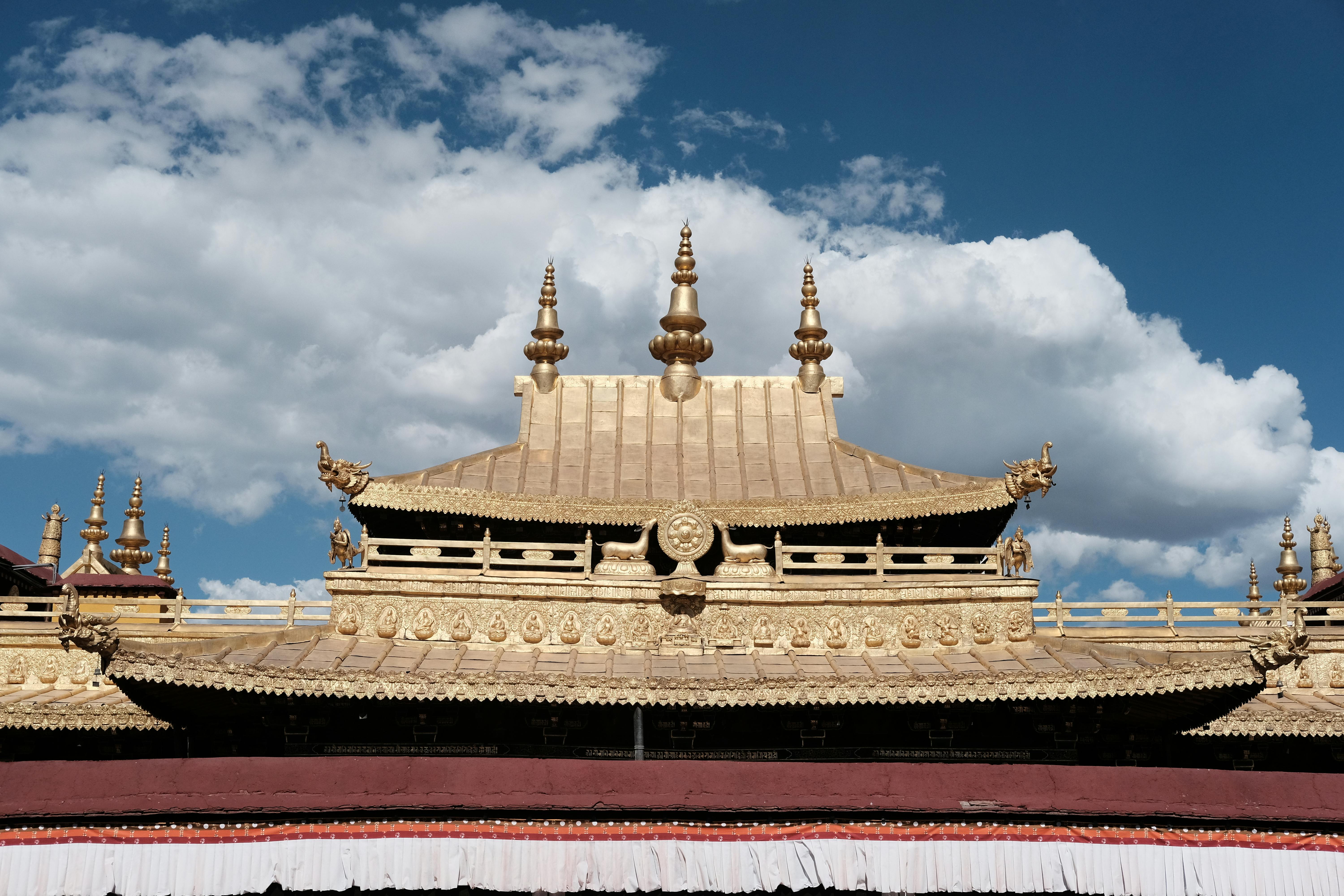
Jokhang Temple: Where Sacred Flames Meet Himalayan Devotion
The scent of juniper incense mingles with butter lamp smoke as dawn breaks over Lhasa—you hear the rhythmic slap of pilgrims' palms against stone, the low murmur of mantras circling the Jokhang Temple's golden spires, and the distant chime of prayer wheels turning in the crisp 3,650-meter (11,975-foot) altitude air. Built in 647 AD by King Songtsen Gampo to house the sacred Jowo Shakyamuni Buddha statue brought by his Nepalese wife, Princess Bhrikuti, this 25,000-square-meter complex stands as Tibet's spiritual heart—a living testament to over 1,300 years of uninterrupted devotion. The temple's distinctive fusion of Tibetan, Nepalese, and Tang Dynasty architectural styles creates a sanctuary where rammed-earth walls 1.8 meters thick regulate temperature naturally, while gilded bronze roofs catch the high-altitude sun in radiant bursts. Here, in the shadow of the Potala Palace, you witness more than religious architecture—you encounter the enduring pulse of Tibetan Buddhism, where every prostration, every flickering butter lamp, and every whispered prayer connects the earthly to the eternal.
Why Jokhang Temple Embodies Tibetan Spiritual Continuity
Jokhang Temple represents more than sacred architecture—it embodies the unbroken thread of Tibetan Buddhist practice through centuries of political change and cultural evolution. Commissioned in 647 AD during the Tibetan Empire's zenith, the temple was designed to anchor Buddhism in a land previously dominated by Bon shamanistic traditions. Its construction solved a fundamental spiritual need: providing a permanent, protected home for the Jowo Rinpoche—the 12-year-old depiction of Buddha Shakyamuni considered the most sacred image in Tibetan Buddhism, believed to have been blessed by the Buddha himself.
The temple's engineering reflects sophisticated Himalayan adaptation: foundations sunk 3 meters deep into stable gravel to withstand seismic activity; walls constructed using rammed earth technique with layers of barley straw and lime for insulation against -15°C winters and 25°C summers; and a roof system of interlocking cedar beams that distribute weight evenly across the structure. The central sanctum, housing the Jowo statue, is oriented precisely east-west to align with solstice sunlight—a feature shared with ancient observatories worldwide.
Designated a UNESCO World Heritage Site in 2000 as part of the "Historic Ensemble of the Potala Palace," Jokhang Temple balances preservation with living worship. Unlike static monuments, its courtyards remain active pilgrimage sites where devotees perform 100,000-prostration circuits, monks conduct daily rituals at 5:00 AM and 7:00 PM, and festival processions follow lunar calendar dates unchanged since the 7th century. This continuity solves a modern conservation dilemma: how to protect architectural heritage while honoring its sacred function. The result is a dynamic spiritual ecosystem where ancient devotion meets contemporary faith—a testament to humanity's enduring quest for meaning amid the roof of the world.
The Best Time to Experience Jokhang Temple
Timing transforms your Jokhang encounter from observational to transformative. The optimal window spans May 10 through October 15, when daytime temperatures range 8–22°C (46–72°F) and the Lhasa Valley experiences minimal rainfall. For photographers seeking the iconic golden light that illuminates the temple's gilded roofs while pilgrims prostrate in the courtyard, arrive between 6:30–8:30 AM when morning prayers create a vibrant atmosphere and atmospheric haze softens the high-altitude sun.
September and October deliver peak conditions: average temperatures of 10–20°C (50–68°F), clear skies offering panoramic views of surrounding peaks, and the added beauty of autumn festivals like the Monlam prayer assembly. Summer months (June–August) bring warmer days up to 24°C (75°F) but also the monsoon season's afternoon showers; mornings remain reliably clear for temple visits. Spring (May) offers blooming wildflowers in nearby valleys and fewer international visitors before peak season.
Avoid the first week of October (China's National Day holiday) when domestic tourism surges create crowded courtyards and limited accommodation. Winter visits (November–April) present stark beauty with snow-dusted rooftops, but temperatures drop to -10 to 10°C (14–50°F) with occasional wind chills below -20°C; some temple sections may close for maintenance. The temple opens daily from 7:00 AM to 7:00 PM, with main hall access 8:00 AM–6:00 PM; pilgrim prostration areas remain accessible 24 hours.
Approximate Budget for a 7-Day Trip
Pricing for Jokhang Temple and Lhasa reflects Tibet's regional economy—moderate costs with excellent value for cultural immersion. The following breakdown assumes mid-range travel preferences with comfortable lodging near Barkhor Square and authentic local dining. Prices quoted in Chinese Yuan (¥) with approximate USD equivalents. • Accommodation: ¥320–¥650 ($45–$91) per night for mid-range guesthouses in Barkhor area; budget hostels ¥150–¥280 ($21–$39); upscale heritage hotels ¥700–¥1,200 ($98–$168) • Food: ¥130–¥240 ($18–$34) per day (breakfast ¥20–¥35 for tsampa porridge and butter tea, lunch ¥40–¥75 for thenthuk noodles, dinner ¥70–¥130 for momo dumplings and yak stew) • Transportation: Taxi starting fare ¥10 ($1.40); city bus ¥1–2 ($0.15–0.30); airport shuttle ¥30–45 ($4–6); bicycle rental ¥35/day ($5) • Attractions: Jokhang Temple entrance ¥85 ($12); Potala Palace ¥200 ($28) with timed entry; Barkhor Street pilgrimage circuit free; Norbulingka Palace ¥60 ($8.50) • Miscellaneous: Thermal layers rental ¥90/day ($13) for high-altitude visits; hand-painted thangka scrolls ¥300–1,500 ($42–210); prayer flags ¥25/set ($3.50); Tibet Travel Permit processing ¥150–300 ($21–42) Total estimated cost for 7 days: ¥6,200–¥9,800 ($870–$1,370)6 Essential Jokhang Temple Experiences
- Join the Dawn Prostration Circuit: Arrive at Barkhor Square by 5:45 AM to witness pilgrims beginning their kora (circumambulation) around the temple. The 1.5-kilometer path follows ancient stone slabs worn smooth by centuries of devotion. Position yourself near the eastern entrance for optimal viewing; photography is permitted but maintain respectful distance from prostrating devotees. Bring a headlamp for pre-dawn arrival; temperatures average 5°C cooler than midday.
- Enter the Jowo Chapel at Opening: The main sanctum housing the sacred Jowo Shakyamuni statue opens at 8:00 AM. Arrive 15 minutes early to secure a place in the gentle flow of worshippers. The 10-minute visit reveals the 1.5-meter-tall statue adorned with silk robes and precious jewels—a sight that has inspired pilgrims for 1,300 years. Photography is prohibited inside; focus on absorbing the atmosphere of flickering butter lamps and whispered prayers.
- Explore the Rooftop Prayer Flag Terrace: Accessible via a narrow staircase on the temple's southwestern corner, this elevated platform offers panoramic views of Lhasa's old city and distant snow-capped peaks. The 30-minute visit reveals rows of vibrant lung ta (wind horse) prayer flags inscribed with mantras. Best visited between 4:00–6:00 PM when afternoon light enhances photographic opportunities. Wear sturdy shoes for uneven stone steps.
- Participate in a Butter Lamp Offering: Located in the temple's northern courtyard, the lamp altar allows visitors to light a traditional yak-butter lamp (¥20/$3) while making a silent wish. The ritual follows ancient protocol: approach with right hand forward, light the wick from an existing flame, and step back respectfully. Visit between 9:00–11:00 AM when monk attendants are available to explain symbolism. The warm glow against dark wood creates profound photographic moments.
- Walk the Barkhor Pilgrimage Circuit: This 1.5-kilometer path encircling Jokhang Temple is Lhasa's spiritual and commercial heart. The 45-minute walk reveals traditional Tibetan architecture, artisan workshops, and pilgrims spinning prayer wheels. Start clockwise at the temple's main entrance; allow time for browsing handmade crafts. Best experienced between 7:00–9:00 AM or 5:00–7:00 PM when local life unfolds most authentically.
- Attend Evening Chanting at the Monks' Quarter: While the main temple closes at 6:00 PM, the adjacent monks' residence often hosts informal chanting sessions visible from the courtyard perimeter. The 30-minute experience features deep-throated overtone singing accompanied by ceremonial drums and cymbals. Position yourself near the eastern wall after 7:00 PM; no ticket required but maintain silence and respectful distance.
3 Hidden Gems Most Travelers Miss
- Temple Roof Restoration Workshop: Behind the main complex, a little-known conservation studio preserves traditional techniques for repairing gilded bronze roofs. Access requires advance arrangement via the temple administration office (open 9:00 AM–4:00 PM, weekdays); guided visits depart at 10:30 AM and 2:30 PM, lasting 40 minutes, cost ¥50 ($7) with proceeds supporting preservation. Limited to six visitors per session; request booking 48 hours ahead through your guesthouse. This intimate experience reveals centuries-old metallurgical arts rarely seen by tourists.
- Underground Meditation Cave: Beneath the temple's northwestern corner lies a small natural cave where Guru Rinpoche (Padmasambhava) is believed to have meditated in the 8th century. Access is restricted but occasionally permitted during special festivals; inquire at the temple information desk about terma (hidden treasure) discovery anniversaries. When open, visits last 15 minutes with a monk guide; bring a small scarf as offering. The cave's cool, mineral-scented air and ancient rock carvings create a profoundly contemplative atmosphere.
- Traditional Thangka Painting Studio: Tucked in an alley off Barkhor Street, a family-operated workshop specializes in sacred scroll painting using mineral pigments and gold leaf techniques unchanged since the Tibetan Empire. Access: Enter via the blue door marked with a vajra symbol; open 10:00 AM–5:00 PM; no appointment needed but English is limited—bring a translation app. Insider tip: Custom commissions take 3–6 months; leave contact details with your guesthouse for updates. Purchases directly support heritage artistry.
Cultural & Practical Tips
- Respect Sacred Protocols: Jokhang Temple remains an active place of worship. Dress modestly (shoulders and knees covered), remove hats and sunglasses before entering chapels, and always circumambulate shrines clockwise. Photography is prohibited inside sanctums; ask permission before photographing monks or pilgrims.
- Essential Tibetan Phrases: Learn these pronunciations: Tashi delek (tah-shee deh-lek) = Hello/blessings; Thukje che (took-jay chay) = Thank you; Kalu (kah-loo) = Please; Khamsang du (kahm-sahng doo) = Goodbye. Even basic attempts are warmly appreciated.
- Altitude & Health Prep: At 3,650 meters, altitude sickness can affect sensitive individuals. Spend 2–3 days acclimatizing in Lhasa before visiting; stay hydrated, avoid alcohol initially, and recognize symptoms: headache, nausea, dizziness. Carry diamox (acetazolamide) if prone to altitude issues; consult a physician before travel.
- Permit Requirements: Foreign visitors require a Tibet Travel Permit in addition to a Chinese visa. Arrange through a licensed travel agency 15–20 days before arrival; permits are checked at airport, train station, and temple entrances. Carry photocopies alongside originals.
- Weather Adaptation: Lhasa's high-altitude climate features intense UV radiation, dry air, and significant temperature swings. Use SPF 50+ sunscreen, wear UV-protection sunglasses, and pack windproof layers. Even in summer, mornings and evenings require thermal clothing.
- Photography Etiquette: Always ask permission before photographing individuals, especially monks and prostrating pilgrims. A smile and pointing at your camera usually suffices. Avoid using flash inside chapels; it damages ancient pigments and disrupts meditation.
- Dietary Considerations: Tibetan cuisine features barley, yak, and dairy prominently. Vegetarian options exist but are limited—request soja (vegetable) dishes when ordering. Try local specialties: shapaley (meat-filled bread), gyuma (blood sausage), and po cha (salted butter tea).
Conclusion: Travel with Reverence, Not Just Curiosity
Jokhang Temple invites more than observation—it calls for reverent presence. As you stand within its ancient walls, remember that every flickering butter lamp, every whispered mantra, and every prostration on sun-warmed stone represents not just ritual but a living lineage of devotion stretching back thirteen centuries. This temple endures not because it was frozen in time, but because generations chose to nurture its sacred purpose amid changing worlds.
Visit Jokhang not to consume a spectacle, but to listen—to the stories embedded in rammed-earth walls, to the rhythms of prayer that have persisted through empires and upheavals, to the quiet reminder that spiritual richness flourishes through continuity, not interruption. Support community-based preservation by purchasing crafts directly from artisans, choosing locally owned guesthouses, and learning a few words of Tibetan. Leave only footprints on ancient flagstones; carry home not just photographs, but a deeper commitment to preserving places where humanity's shared quest for meaning still breathes.
In an era of rapid change, Jokhang stands as a testament to spiritual resilience—a sanctuary where sacred flames meet Himalayan devotion. Slow down. Light a butter lamp. Let the temple's unhurried rhythm recalibrate your sense of time. For in that pause, you may discover what pilgrims have felt for centuries: that the greatest journeys transform not just your itinerary, but your understanding of what it means to belong to a place, and to the human story that connects us all.