
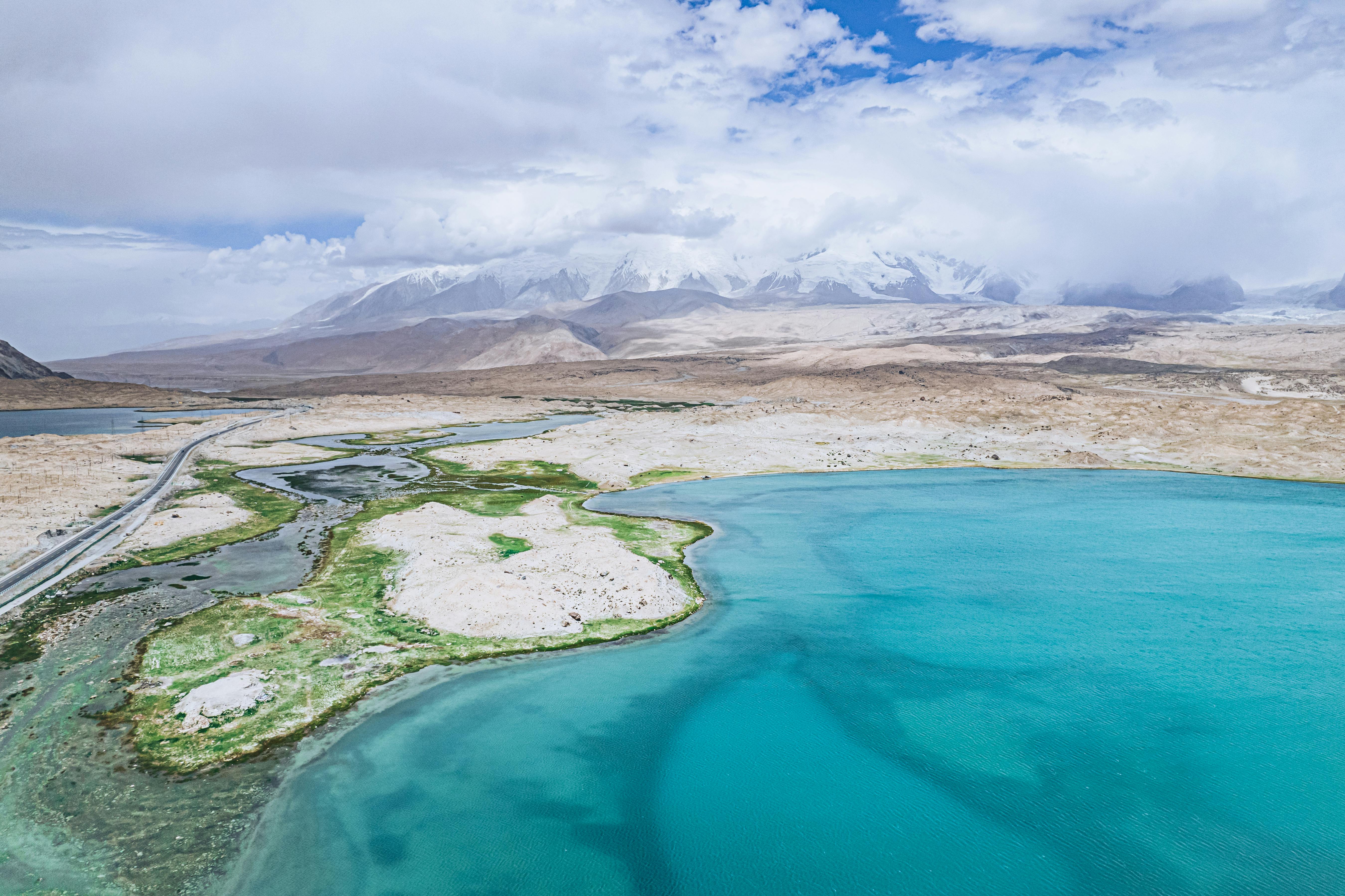
Karakul Lake: Where Pamir Peaks Meet Mirror Waters
The first light of dawn ignites Muztagh Ata—"Father of Ice Mountains"—casting a rose-gold glow across the obsidian surface of Karakul Lake. You stand at 3,600 meters (11,811 feet) above sea level, where the air is thin and crisp, carrying the faint scent of wild juniper and glacial minerals. The lake, spanning 25 kilometers long and 10 kilometers wide with a maximum depth of 230 meters (755 feet), lies in a tectonic basin carved by ancient glaciers and fed by snowmelt from three towering giants: Muztagh Ata (7,546 meters), Kongur Tagh (7,649 meters), and Kongur Tiube (7,530 meters). This saline, endorheic lake—meaning it has no outlet—has remained largely unchanged for millennia, its waters shifting from deep sapphire to emerald depending on the angle of light and sediment load. For the Kyrgyz and Tajik herders who traverse these high pastures, Karakul is not merely a landscape but a spiritual compass, a place where the boundary between earth and sky dissolves. Here, on the roof of the world along the legendary Karakoram Highway, you witness more than geological grandeur—you encounter a living testament to the planet's raw, untamed beauty.
Why Karakul Lake Embodies High-Altitude Serenity
Karakul Lake represents a rare convergence of tectonic power, glacial history, and cultural reverence. Formed approximately 2.5 million years ago during the Pleistocene epoch by the collision of the Indian and Eurasian plates, the lake occupies a depression created by fault-line subsidence in the Pamir Mountains. Its saline composition—approximately 3.2% salinity, similar to the Dead Sea but far less extreme—results from mineral accumulation over millennia with no outlet to flush dissolved solids. This extreme environment solved a fundamental human need: providing a reliable water source and navigational landmark for Silk Road caravans traversing one of Earth's most challenging mountain corridors.
The lake's cultural significance spans centuries. For Kyrgyz nomads, Karakul (Qara Köl, meaning "Black Lake" in reference to its deep, dark appearance) marks the boundary between summer and winter pastures. Traditional yurt encampments dot the eastern shore during June–August, where herders practice transhumance—seasonal livestock migration—a sustainable land-use system perfected over 3,000 years. The surrounding peaks hold spiritual weight: Muztagh Ata is considered sacred in both Zoroastrian and Islamic traditions, believed to be the dwelling place of ancient deities and later, a site of pilgrimage for blessing journeys.
Modern conservation efforts, initiated in 1985 with the establishment of the Pamir Plateau Nature Reserve, protect over 800 plant species adapted to extreme altitude and endangered fauna like the Marco Polo sheep and snow leopard. Engineering marvels facilitate responsible access: the Karakoram Highway (China National Highway 314) features reinforced retaining walls and avalanche barriers along the lake's western edge, while designated viewing platforms minimize ecological disturbance. This careful balance between accessibility and preservation embodies Karakul's enduring lesson: that humanity's greatest achievements honor, rather than dominate, the natural world.
The Best Time to Experience Karakul Lake
Timing transforms your Karakul encounter from challenging to transcendent. The optimal window spans June 1 through September 20, when daytime temperatures range 5–20°C (41–68°F) and the Karakoram Highway remains clear of snow and landslides. For photographers chasing the legendary mirror effect—where the lake's glassy surface perfectly reflects surrounding peaks—arrive between 6:00–8:00 AM when wind speeds typically drop below 5 km/h and atmospheric conditions align.
July and August deliver peak accessibility: wildflowers bloom in alpine meadows, Kyrgyz herders establish seasonal camps, and daylight extends until 9:30 PM. September offers crisp air, golden larch forests at lower elevations, and fewer visitors, with temperatures cooling to 0–15°C (32–59°F). Early June presents dramatic snow-capped peaks but occasional road closures due to late-season avalanches; late September risks early snowfall that can block high passes.
Avoid the first week of October (China's National Day holiday) when domestic tourism surges create crowded viewpoints and limited accommodation. Winter access (November–May) is extremely limited: the highway frequently closes due to heavy snow, and temperatures plummet to -25 to -5°C (-13 to 23°F) with wind chills exceeding -40°C. The lake is accessible year-round with no entrance fee; visitor facilities operate 8:00 AM–7:00 PM (June–September) and 9:00 AM–5:00 PM (October–May).
For official permits, weather alerts, and regional travel updates, visit: www.xinjiangguide.com
Approximate Budget for a 7-Day Trip
Pricing for Karakul Lake reflects Xinjiang's regional economy—excellent value for high-altitude adventure with costs significantly lower than international mountain destinations. The following breakdown assumes mid-range travel preferences with comfortable lodging in Tashkurgan or Kashgar and authentic local dining. Prices quoted in Chinese Yuan (¥) with approximate USD equivalents. • Accommodation: ¥300–¥600 ($42–$84) per night for mid-range guesthouses in Tashkurgan; budget homestays with Kyrgyz families ¥150–¥300 ($21–$42); upscale eco-lodges ¥700–¥1,100 ($98–$154) • Food: ¥120–¥220 ($17–$31) per day (breakfast ¥20–¥35 for naan and milk tea, lunch ¥40–¥70 for laghman noodles, dinner ¥60–¥115 for hand-pulled lamb stew) • Transportation: Shared minibus Kashgar to Tashkurgan ¥80–120 ($11–17) one-way; private vehicle hire ¥400–600/day ($56–84); local taxi short trips ¥30–50 ($4–7) • Attractions: Karakul Lake viewpoint free; Stone City (Tashkurgan) ¥30 ($4); Golden Grassland pasture visit ¥25 ($3.50); Kyrgyz yurt cultural experience ¥50–100 ($7–14) • Miscellaneous: Thermal jacket rental ¥100/day ($14) for high-altitude visits; handmade Kyrgyz felt crafts ¥80–300 ($11–42); dried apricots ¥30/500g ($4); travel insurance with altitude coverage ¥60–150 ($8–21) Total estimated cost for 7 days: ¥5,800–¥8,900 ($810–$1,245)6 Essential Karakul Lake Experiences
- Witness Sunrise Reflections at the Main Viewing Platform: Arrive by 5:45 AM to secure a position at the designated photography platform on the lake's eastern shore. The 15-minute walk from the parking area follows a gravel path with minimal elevation gain. When conditions align, the lake's surface becomes a perfect mirror for Muztagh Ata—a phenomenon locals call ayna suw (mirror water). Bring a tripod; summit temperatures average 10°C cooler than valley floors.
- Visit a Kyrgyz Yurt Encampment: Between June and August, nomadic families establish seasonal camps along the lake's eastern shore. Polite inquiry (a smile and Salam aleikum) often leads to invitations for milk tea and homemade boorsok (fried dough). Visit between 4:00–6:00 PM when herders return with livestock; bring small gifts like fruit or school supplies for children—cash can create dependency.
- Hike the Lakeshore Trail to the Northern Cove: This 3.5-kilometer unpaved path follows the water's edge, offering intimate perspectives of glacial moraines and wildflower meadows. The 90-minute walk reveals mineral-stained rock formations and, with luck, golden eagles soaring on thermal updrafts. Best visited between 9:00–11:00 AM when light illuminates the water's color variations. Trailhead marked by a stone cairn 2 km north of main parking.
- Photograph the Karakoram Highway Curve: The iconic bend where Highway 314 hugs the lake's western shore creates dramatic compositions with trucks winding against mountain backdrops. Position yourself at the pullout 8 km south of the main viewpoint; arrive by 7:00 AM for side-lighting that enhances texture. Use a polarizing filter to reduce glare on the water; shutter speed 1/250s freezes vehicle motion.
- Explore Tashkurgan Stone City: This ancient fortress, perched on a hill overlooking the Tashkurgan River, dates to the Han Dynasty (2nd century BC) and served as a Silk Road checkpoint. The 45-minute self-guided walk follows restored pathways past crumbling adobe walls with panoramic views of the Pamir range. Open 9:00 AM–6:00 PM; audio guides available in English for ¥25. Don't miss the museum's collection of Sogdian coins and Tang Dynasty travel permits.
- Stargaze from the Alpine Meadow: After sunset, the high-altitude air (low humidity, minimal light pollution) reveals the Milky Way with stunning clarity. Join the optional evening program (July–August, 9:00 PM, ¥45/$6) where local guides share Kyrgyz star legends while you observe through portable telescopes. Dress in layers—temperatures drop rapidly after dark. The meadow is accessible via the same road; last return transport departs at 10:00 PM.
3 Hidden Gems Most Travelers Miss
- Western Shore Wildflower Meadow: While 95% of visitors photograph from the eastern viewpoint, the lake's western shore offers secluded meadows blooming with rare alpine species like Pamir poppy and snow lotus from late June to mid-July. Access: Park at the unmarked pullout 4 km north of main viewpoint; follow the faint trail descending 50 meters to the water's edge. Open daylight hours; no facilities. Insider tip: Visit on weekday mornings to avoid small tour groups; bring binoculars for spotting ibex on distant slopes.
- Glacial Stream Confluence Point: Located 6 km southeast of the main lake, this lesser-known spot where three glacial streams merge creates mesmerizing patterns of turquoise, emerald, and milky-white water. The 20-minute walk from the roadside follows a rocky path with moderate elevation gain. Visit between 10:00 AM–12:00 PM when sunlight penetrates the water to reveal mineral striations. No signage—ask local drivers for "uch darya qoshulishi" (three rivers meeting).
- Traditional Felt-Making Workshop: A family-operated yurt 3 km north of the main encampment offers demonstrations of Kyrgyz shyrdak (patterned felt) creation using techniques unchanged for centuries. Access requires advance arrangement via guesthouses in Tashkurgan; sessions depart at 2:00 PM, lasting 60 minutes, cost ¥70 ($10) including tea. Limited to five visitors per session; request booking 24 hours ahead. This intimate experience reveals textile traditions and nomadic craftsmanship rarely seen by tourists.
Cultural & Practical Tips
- Respect Nomadic Customs: Kyrgyz and Tajik communities maintain traditional hospitality codes. Always remove shoes before entering a yurt; accept offered tea with your right hand; never step on the threshold. Photography of individuals requires explicit permission—offer to share digital copies as a gesture of goodwill.
- Essential Local Phrases: Learn these pronunciations: Salam aleikum (sah-lahm ah-lay-koom) = Hello; Rahmat (rah-maht) = Thank you; Baary qancha? (bah-ruh chan-chah) = How much?; Xosh (hosh) = Goodbye. Even basic attempts are warmly appreciated.
- Altitude & Health Prep: At 3,600 meters, altitude sickness can affect sensitive individuals. Ascend gradually from Kashgar (1,300m), stay hydrated, and avoid alcohol the first 24 hours. Carry diamox (acetazolamide) if prone to altitude issues; recognize symptoms: headache, nausea, dizziness.
- Weather Adaptation: Pamir weather changes rapidly: intense sun, sudden wind, and temperature swings of 20°C within hours. Use SPF 50+ sunscreen, wear UV-protection sunglasses, and pack windproof layers. Even in summer, mornings and evenings require thermal clothing.
- Transportation Timing: The Karakoram Highway is subject to closures due to landslides or snow. Check road status with your guesthouse each morning; allow flexibility in your itinerary. Last shared transport from Karakul to Tashkurgan typically departs at 5:00 PM.
- Environmental Stewardship: Karakul lies within a fragile alpine ecosystem. Pack out all trash, stay on designated paths to protect vegetation, and avoid disturbing wildlife. Use reusable water bottles; filling stations available at visitor centers.
- Dietary Considerations: Local cuisine features lamb, dairy, and wheat prominently. Vegetarian options are limited but available—request yasliq tamaq (vegetable food) when ordering. Try regional specialties: shorpo (mutton soup), manti (steamed dumplings), and chai (milk tea with salt).
Conclusion: Travel with Reverence, Not Just Curiosity
Karakul Lake invites more than observation—it calls for reverent presence. As you stand above this high-altitude mirror, remember that every ripple on its surface reflects not just snow-capped peaks but millennia of geological patience, and every whispered legend from a Kyrgyz herder carries wisdom about living in balance with extreme environments. This lake endures not because it is untouched, but because generations chose to tread lightly upon its shores.
Visit Karakul not to conquer a viewpoint, but to listen—to the wind through juniper thickets, to the stories embedded in nomadic traditions, to the quiet reminder that Earth's most profound beauty often lies in stillness, not spectacle. Support community-based tourism by purchasing crafts directly from artisans, choosing locally owned guesthouses, and learning a few words of Kyrgyz or Tajik. Leave only footprints that vanish with the next mountain breeze; carry home not just photographs, but a deeper commitment to preserving places where the planetary and the personal still converse.
In an era of rapid extraction, Karakul stands as a testament to restraint—a mirror reflecting not just sky, but our capacity for wonder. Slow down. Breathe the thin, pine-scented air. Let the lake's stillness recalibrate your sense of time. For in that pause, you may hear what travelers have felt for two millennia: the gentle reminder that some boundaries—between earth and sky, past and present, self and wilderness—are meant not to be crossed, but honored.