
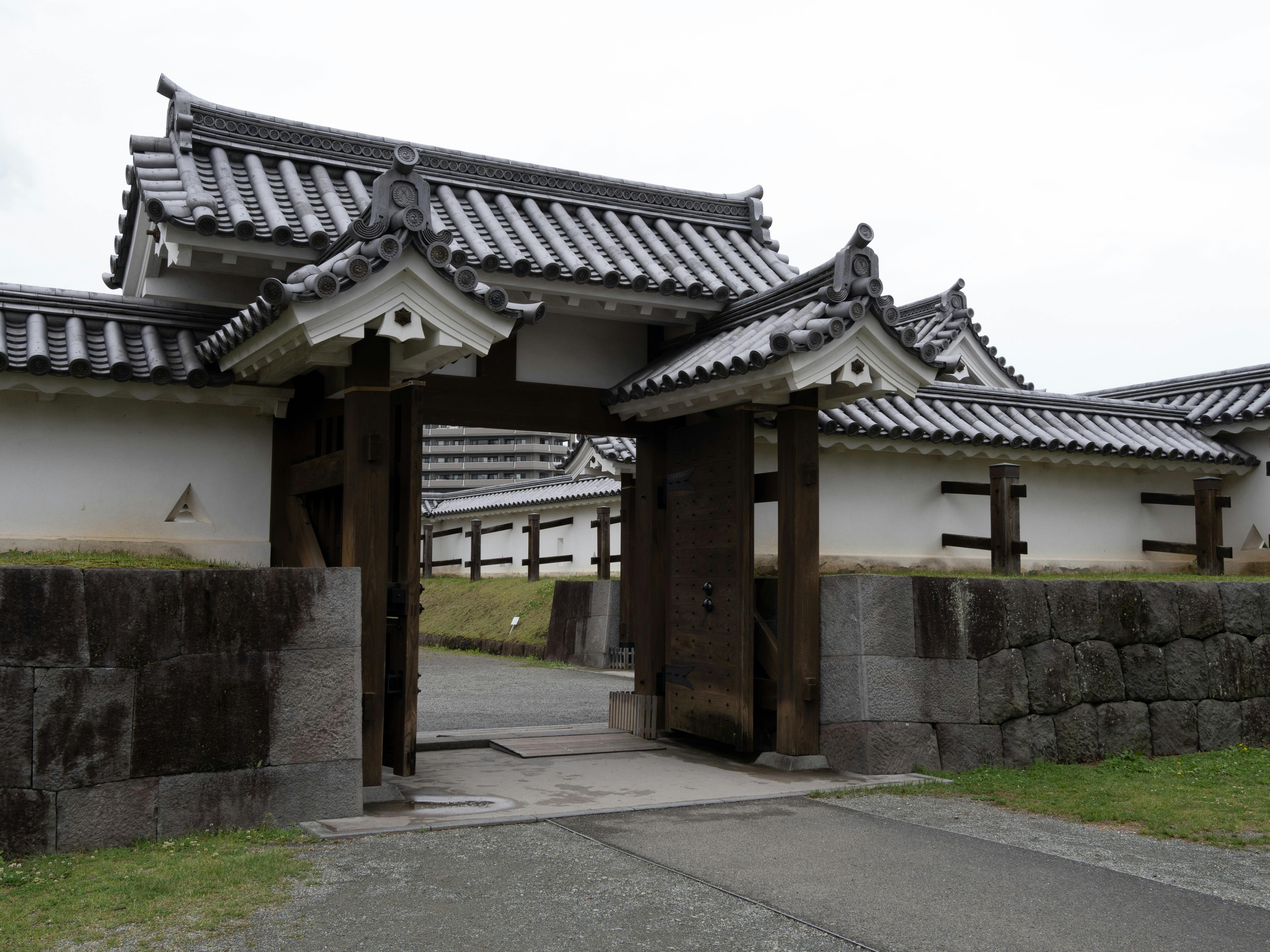
Kakunodate: Where Samurai Code Meets Weeping Cherry Elegance
The morning mist lifts slowly from the Hinokinai River as you step beneath the 350-year-old weeping cherry at the Aoyagi residence. It is 7:00 AM, and the only sounds are the crunch of gravel under your feet and the soft drip of dew from the tree's cascading branches—each one so heavy with pale pink blossoms that they touch the moss below like a waterfall frozen in time. You are in Kakunodate, the "Little Kyoto of Tohoku," a castle town founded in 1620 by the Satake clan, lords of the Kubota Domain. Unlike Kyoto's polished temples, this 47.8-hectare (118-acre) district preserves not religious sites but the everyday living compounds of the samurai class. Six of the original nine samurai houses remain open to the public, their earthen walls stretching for 1 kilometer (0.6 miles) along the Bukeyashiki (Samurai Quarters) street. Three hundred years of continuous residence by the same families—the Odano, the Kawarada, the Aoyagi—mean that you are not visiting a museum so much as walking through a living history where armor stands in closets and swords still hang on walls. This is Japan's most authentic samurai district, a place where the warrior's code of bushidō meets the delicate artistry of 400 weeping cherry trees.
Why Kakunodate Embodies Samurai Simplicity and Seasonal Devotion
The samurai were not merely warriors; they were the ruling class of the Edo period (1603–1868), bound by a code that demanded frugality, self-discipline, and aesthetic refinement. Kakunodate's architecture makes this visible. The Aoyagi House—home to the same samurai family for 350 years—features a thatched roof made of kaya grass, 45 centimeters (18 inches) thick, which requires replacement every 30 years in a community ritual. Inside, the zashiki (formal rooms) contain no gold leaf or elaborate paintings; instead, simple black-lacquer shelves display a single ceramic tea bowl, the philosophy of wabi-sabi (imperfect beauty) embedded in the grain. The Ishiguro House, built in 1860, preserves the first camera in Akita Prefecture—a wooden box device from 1870 that demonstrates how the samurai class adapted to the Meiji Restoration's modernization. But the deeper story is botanical: in 1865, a Kyoto scholar named Shukei Kondo gifted five weeping cherry saplings to a local doctor. Those saplings were grafted onto Edo-higan cherry rootstock, creating a distinct cultivar (Prunus pendula 'Kakunodate') that produces flowers twice the size of standard weeping cherries. Today, 400 of these trees line the samurai district, their canopies reaching 10 meters (33 feet) high and 15 meters (49 feet) wide, a living symbol of cultural exchange between Kyoto's refinement and Tohoku's resilience.
The Best Time to Experience Kakunodate
Kakunodate has two distinct peak seasons: cherry blossom spring and firelit winter. For the weeping cherries, target April 20 to May 5, with full bloom (mankai) typically April 25–30. During this window, temperatures average 8°C to 18°C (46°F–64°F). The best time for photography is 6:00 AM–8:00 AM and 3:30 PM–5:00 PM when the low sun backlights the petals. For autumn foliage, visit October 25–November 5, when the 200 maple trees in the samurai gardens turn crimson. Winter offers the Kakunodate Snow Lantern Festival (February 10–14), when 2,000 miniature snow kamtchin (lanterns) illuminate the district from 5:00 PM–8:00 PM—temperatures drop to -5°C (23°F). You should avoid May 3–5 (Golden Week) when domestic tourists flood the district; the main street becomes shoulder-to-shoulder, and accommodation prices triple..
Approximate Budget for a 7-Day Trip
This budget assumes a trip from Tokyo to Kakunodate via shinkansen, using Kakunodate as a base for 7 nights. Prices are in Japanese Yen (¥) and US Dollars ($) at ¥150 to $1. Accommodation includes traditional minshuku (guesthouses).
- Accommodation: ¥7,000–¥20,000 ($47–$133) per night. Budget: Minshuku Tazawako (¥7,000, shared bath). Mid-range: Hotel Folkloro Kakunodate (¥12,000, includes breakfast). Luxury: Kakunodate Miyako Onsen Ryokan (¥20,000, kaiseki dinner included).
- Food: ¥3,800 ($25) per day. Breakfast at accommodation (¥800). Lunch: Inaniwa udon thin noodles at Sato Yosuke Main Shop (¥1,200). Dinner: Kiritanpo-nabe rice stick hot pot at local izakaya (¥1,800).
- Transportation: ¥37,000 ($247) total. Round-trip shinkansen Tokyo to Kakunodate on Komachi (¥17,000 each way, 3.5 hours). Local buses to Tazawako and Nyuto Onsen (¥1,500/day). Rental bicycle (¥500/day).
- Attractions: ¥2,800 ($19) total. Aoyagi Samurai House (¥700, includes armor exhibition). Ishiguro House (¥500). Kakunodate Cherry Blossom Museum (¥600). Denshokan Museum (¥500). Nyuto Onsen day bath at Tsuru-no-Yu (¥500).
- Miscellaneous: ¥3,500 ($23). Kabazaiku cherry bark crafts (¥1,500 for a small tray), local sake from Akita Shuzo (¥1,000 tasting set), weeping cherry seedling souvenir (¥1,000).
- Total Estimated Budget for 7 Days: ¥95,000–¥140,000 ($633–$933) per person, excluding international flights.
7 Essential Kakunodate Experiences
- The Weeping Cherry Dawn Walk (6:00 AM–8:00 AM): Start at the Hinokinai River embankment, where 80 weeping cherries line the 1-kilometer path. Walk east toward the samurai district. The low-angle sunlight penetrates the blossoms, creating a pink glow on the earthen walls. By 8:30 AM, the tour buses arrive—leave before then.
- Visit the Aoyagi Samurai House (9:00 AM–4:30 PM, ¥700): Enter through the original gate, flanked by 300-year-old cedars. Inside, you can touch authentic armor from the Satake clan—a rare permission. The house's 6,000-volume library includes hand-copied medical texts from the 1700s. The garden's weeping cherry, planted in 1868, is the oldest in the district.
- Kabazaiku Cherry Bark Craft Workshop (¥3,000, 90 minutes): At the Sakurababa Square Crafts Center, master artisans teach you to wrap kabazaiku—cherry bark from the Yamazakura tree—onto a wooden box. The technique dates to 1780, when the Satake clan encouraged it as a samurai side-hustle during peacetime. Reservations required 24 hours in advance: +81-187-55-2205.
- Ishiguro House Secret Armory (¥500, 9:00 AM–5:00 PM): Behind a false wall in the kitchen, the Ishiguro family hid their weapons from Meiji officials who outlawed swords in 1876. The small room contains six katana, two naginata (polearms), and a matchlock rifle from the Boshin War (1868–1869). A volunteer guide (English available by request) will open the hidden door for you.
- Kakunodate Snow Lantern Festival (February 10–14, 5:00 PM–8:00 PM): The district transforms as 2,000 miniature kamtchin (snow domes with candles) line the samurai street. Locals serve free amazake (sweet fermented rice drink) from wooden stands. The temperature will be -5°C to -10°C (23°F–14°F)—wear insulated boots. No admission fee, but donations (¥500) are encouraged.
- Inaniwa Udon Making at Sato Yosuke (¥2,000, 60 minutes): This 300-year-old noodle shop, founded in 1712, offers morning classes (9:00 AM only). You knead, stretch, and cut the inaniwa udon—one of Japan's "Three Great Udon," distinguished by its 2-millimeter-thin width and 48-hour aging process. Eat your creation with a dipping sauce made from local Akita shoyu. Reservations mandatory: +81-187-55-4545.
- Nyuto Onsen Day Trip (40-minute bus, ¥500 bus fare): From Kakunodate Station, take the bus to Tsuru-no-Yu Onsen, a 300-year-old thatched-roof bathhouse on a milky sulfur spring. The women's bath has a spring-fed outdoor pool that flows directly into a stream. Day bathing ¥500, towels ¥200. Buses depart at 9:20 AM, 11:20 AM, 1:20 PM; the last return is 3:00 PM—do not miss it.
3 Hidden Gems Most Travelers Miss
- The Abandoned Kakunodate Castle Ruins (free, 24/7): Most tourists never climb the 15-minute path to the castle's honmaru (main bailey) behind the samurai district. At the summit (80 meters elevation), only foundation stones remain—but the view looks directly down onto the samurai houses arranged like a chessboard. In autumn, the maple canopy turns the ruins red. No lighting; bring a headlamp for dusk descents.
- The Kariyado Samurai Village (15 minutes by rental bicycle): While the main district has six open houses, the neighboring Kariyado neighborhood preserves 12 privately owned samurai residences that are not open to the public—but you can bicycle past them. The street is 300 meters long with original earthen walls, nagaya-mon (rowhouse-style gates), and a small shrine with a 400-year-old zelkova tree. Access: From Kakunodate Station, rent a bicycle (¥500/day, Hotel Folkloro) and ride 2 km west along Route 46.
- The Denshokan Museum's "Hidden" Ninja Exhibit (¥500, 9:00 AM–4:30 PM): This museum is famous for its samurai artifacts, but in the basement, a small room contains 21 original shinobi-no-mono (ninja) tools: grappling hooks, collapsible boats, and a breathing tube for underwater infiltration—all actually used by the Satake clan's scouts. No English labels; use Google Lens to translate the Japanese descriptions. Most visitors walk right past the basement stairs, which are hidden behind a curtain.
Cultural & Practical Tips
- Essential Samurai Phrases: To greet a shopkeeper in the samurai district, "Go-shusshin wa Kakunodate desu ka?" (Are you from Kakunodate?). When entering a house, remove shoes and say "O-jama shimasu" (I will be a bother/inconvenience).
- Footwear Etiquette in Samurai Houses: All six houses require removing shoes. Bring socks without holes—winter tatami is cold. The main street is gravel, so wear thick-soled walking shoes (Merrells, Keens) that are easy to take off. Do not wear heels; they damage the tatami.
- Cherry Blossom Bowing Etiquette: Do not shake branches to make petals fall. Locals consider this disrespectful to the trees' spirits (kodama). If you see a branch blocking the path, ask a volunteer gardener (ueya-san) to move it—they speak minimal English but understand pointing.
- Photography Permissions: At Aoyagi House, photos are allowed, but no tripods inside—the floor vibrations damage the foundation. At Ishiguro House, you must pay ¥200 extra for a "photography pass" to take pictures of the hidden armory. Flash photography is strictly prohibited; it accelerates the fading of the 200-year-old fusuma sliding door paintings.
- Winter Access Warning: From December 15 to March 15, the samurai district's heating is minimal (many houses use only kotatsu heated tables). Dress in thermal base layers, wool socks, and insulated boots. The Kakunodate Snow Lantern Festival has no indoor warming stations except the volunteer fire department's tea tent—bring disposable hand warmers from a convenience store.
- Local Specialty to Try: Miso-tsuki dango (¥200)—rice dumplings covered in sweetened miso paste, grilled over charcoal at the Matsumoto stall near the Hinokinai River bridge. The recipe dates to 1745 and uses the same miso fermentation techniques as the Satake clan's provisions. Available only April–May and October–November.
Conclusion: Travel with Reverence, Not Just a Photo Op
The samurai of Kakunodate built walls of earth and bamboo that have stood for 350 years. The weeping cherries they planted drop petals that last only one week. You will pass through this town in a matter of hours, perhaps days, but the lesson arrives slowly: that strength and fragility are not opposites but companions. When you walk beneath the 400 cherry trees, remember that each one was grafted by hand, tended by generations, and nearly lost during the American occupation's land reforms. A local doctor hid the saplings in his barn. A samurai's widow paid the taxes. Today, you reap the reward of their devotion. So slow down. Do not rush from house to house, ticking boxes. Sit on the Aoyagi porch for fifteen minutes. Watch the petals fall onto the moss. Feel the cool earthen wall against your back. That is the real samurai treasure—not armor or swords, but the patience to simply be present.