
Kurashiki Bikan: Where Willow-Lined Canals Meet White-Walled Storehouses
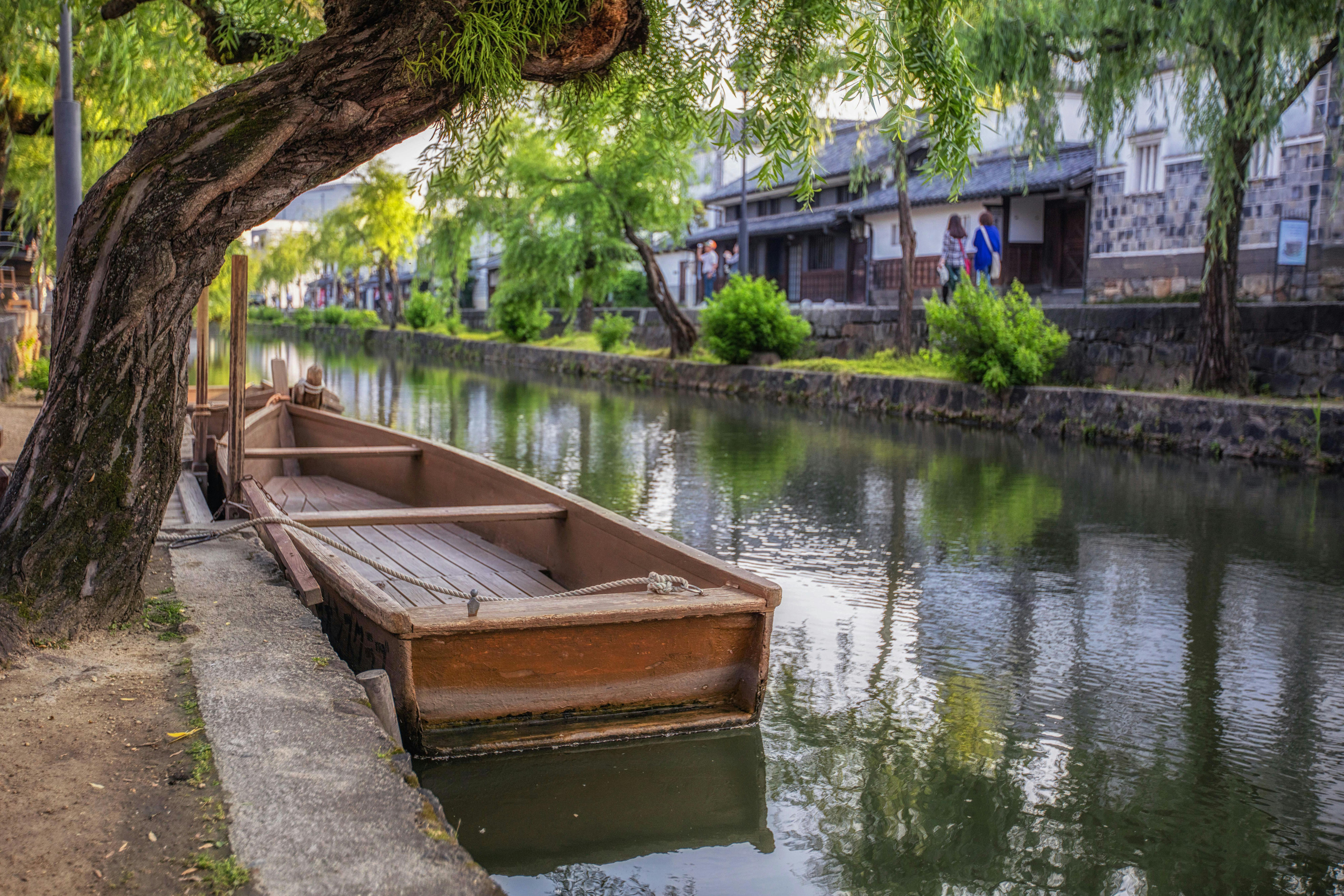
The wooden oar breaks the canal's glassy surface with a soft, rhythmic splash—a sound unchanged for three centuries. Your small boat glides past weeping willows whose branches brush the water, and you crane your neck upward at the namako-kabe walls: the distinctive white plaster with black square tiles that define Kurashiki's soul. This was once Japan's most important rice-trade hub, a city so vital to the shogunate that it was placed under direct government control [citation:4]. The very name "Kurashiki" means "storehouse town"—a nod to the countless kura that once lined these waterways, storing grain before shipment to Osaka and Edo [citation:4]. Today, those same storehouses have been reborn as chic boutiques, serene cafes, and world-class museums. But step onto the stone-paved paths at dawn, before the day-trippers arrive, and you will hear it: the quiet lapping of water against centuries-old foundations, the rustle of willows in the breeze, the soft footsteps of a shopkeeper opening her shutters. This is not a theme park. This is a living Edo-period town that refused to die.
Why Kurashiki Embodies the Merchant Spirit of Edo Japan
The Bikan Historical Quarter solved a puzzle faced by many historic districts: how to preserve architectural heritage without turning it into a lifeless museum. During the Edo Period (1603–1868), Kurashiki flourished as a regional trade hub for rice, the nation's most essential commodity. The shogunate recognized the city's importance and placed it under direct control, and the landscape you see today—the white-walled storehouses with their black kawara tiles—dates from this golden age of merchant prosperity [citation:4]. Each storehouse was designed with a specific function: thick plaster walls to regulate temperature and humidity, narrow windows to deter thieves, and canalside positioning for direct barge loading. After the Meiji Restoration, as rice trade declined, these buildings faced demolition. But visionary preservationists stepped in. The Ohara Museum of Art opened in 1930 as Japan's first private museum of Western art, setting a precedent for adaptive reuse [citation:4]. Today, the former storehouses contain everything from a Snoopy-themed bakery to a denim atelier, yet the facades remain untouched. The 1972 designation as a "Preservation District for Groups of Traditional Buildings" ensures that no modern structures intrude on the view corridors [citation:6]. When you stand on the arched stone bridge at sunset, you see exactly what a rice merchant saw in 1820—the same willows, the same white walls, the same water reflecting the fading sky.
The Best Time to Experience Kurashiki's Canal-Side Magic
The ideal windows to visit Kurashiki are mid-March through May and mid-September through November. During these months, average temperatures range from 12–22°C (54–72°F), with lower humidity than summer [citation:2]. The region's famous weeping cherry trees bloom in late March to early April, while autumn foliage peaks in late October through mid-November. For the most magical experience, arrive on a weekday morning between 7:30 and 8:30 AM, before the day-trip crowds from Hiroshima or Osaka descend. The canal boat rides begin at 9:30 AM, so this window allows you to photograph the empty stone paths [citation:1]. Evening is equally enchanting: from dusk until 10:00 PM, the "Ake-machi" lighting illuminates the white walls, casting warm reflections across the water [citation:5]. Avoid Golden Week (April 29–May 5), Obon week (August 13–16), and weekend afternoons from March to November, when the narrow streets become congested. Summer (June–August) brings intense humidity and rain (June is the wettest month, with 181mm of precipitation), while winter (December–February) is cold (4–10°C / 39–50°F) but blissfully uncrowded [citation:2]. For official information, consult: www.kurashiki-tabi.jp [citation:1].
Approximate Budget for a 7-Day Okayama & Kurashiki Trip
Kurashiki offers excellent value, especially when combined with nearby Okayama. These estimates are per person for mid-range travel (excluding international flights). Many travelers visit Kurashiki as a 1–2 night stay from a base in Okayama or Osaka [citation:5].
- Accommodation: ¥6,000–¥30,000 ($40–$200) per night. Budget: Hostels near Kurashiki Station from ¥4,000. Mid-range: Royal Park Hotel (10-minute walk from station) from ¥12,000 ($80) with onsen and sake tasting [citation:6]. Luxury: Ryori Ryokan Tsurugata (inside the historic quarter, formerly an Edo-period sugar storehouse) from ¥30,000–¥50,000 ($200–$340) [citation:3][citation:9].
- Food: ¥2,500–¥7,000 ($17–$47) per day. Breakfast: Convenience store (¥500). Lunch: Yamakou Udon's signature beef udon (¥1,000–¥1,500) [citation:5]. Dessert: Yuurin-an's famous pudding (¥600) and peach juice (¥800) [citation:6]. Dinner: Misokatsu Umenoki's oven-baked pork cutlet (¥2,000–¥3,000).
- Transportation: ¥170–¥6,000 ($1.10–$40) per day. From Kurashiki Station to Bikan Quarter: 15-minute walk or ¥170 bus to Ohara Bijutsukan stop [citation:4]. JR Setouchi Area Pass (7 days) ¥22,000 ($147) covers Okayama, Kurashiki, Hiroshima, and Miyajima. Local streetcar in Okayama: ¥100–¥210 per ride.
- Attractions: Canal Boat Ride: ¥500–¥700 ($3.40–$4.70) for adults, ¥250 for children (ages 5 through elementary school) [citation:1][citation:6]. Ohara Museum of Art: ¥1,300 (closed for renovations until at least April 2026) [citation:6]. Achi Shrine: Free. Ivy Square: Free entry. Morita Sake Brewery Tour: ¥1,500 (April–October only) [citation:6].
- Miscellaneous: ¥2,000–¥15,000 ($13–$100). Kimono rental: ¥3,000–¥8,000 for 2–3 hours [citation:6]. Denim purchases: from ¥10,000 for a shirt to ¥30,000+ for premium jeans. Exclusive MT washi tape from Tane: ¥500–¥2,000. Bizen-yaki pottery: ¥2,000–¥20,000.
Total estimated 7-day trip (per person, mid-range, including Okayama): $900 – $1,400 USD.
7 Essential Kurashiki Bikan Experiences
- Float Along the Canal at Sunset: The 500–700 yen boat ride lasts approximately 20 minutes, with departures every 30 minutes from 9:30 AM to 5:00 PM (closed the second Monday of each month March–November, and weekdays December–February) [citation:1][citation:6]. But the best slot is the last ride before sunset. Your boatman, often in traditional attire, poles the shallow boat under stone bridges and past the weeping willows. At dusk, the white walls of the former storehouses glow amber and pink, and the water becomes a mirror. Insider tip: Tickets sell out within an hour of opening—head straight to the Tourist Information Center first thing in the morning to book [citation:5].
- Climb the 200 Steps to Achi Shrine's Panoramic View: The roughly 200 stone steps up Mt. Tsurugata reward you with the single best view of the Bikan Quarter: a sea of black kawara tiles stretching to the horizon, punctuated by white namako-kabe walls and the green canopy of willows along the canal [citation:6]. The shrine itself is quiet and serene, but the true draw is the ancient Akebono wisteria tree, estimated to be 300–500 years old and designated a Natural Monument of Okayama Prefecture. It blooms spectacularly in mid-April [citation:6]. Visit early morning (7:00–8:00 AM) to have the viewpoint entirely to yourself before the midday heat and crowds.
- Tour Morita Brewery for Sake Tasting: Hidden on a side street away from the canal crowds, Morita Brewery offers an intimate, English-friendly tour (¥1,500) available only during the brewing "off season" (April–October) [citation:6]. Bud, the knowledgeable guide, explains the traditional methods: the polishing of rice, the cultivation of koji mold, the slow fermentation in cedar vats. The tour ends with a tasting of their signature sake varieties, plus a trendy yuzu sake that is dangerously drinkable. Insider tip: The hanging green cedar ball at the entrance signals that new sake is being brewed inside. When it turns brown, the sake is ready to drink [citation:6]. Book online in advance.
- Go Denim Shopping at the Birthplace of Japanese Jeans: Kojima, a district within Kurashiki, is where Japanese denim was born in the 1960s [citation:6]. Within the Bikan Quarter, you will find excellent outposts. Heart Made Base offers locally-made pieces and friendly service (look for the denim coin purse they may gift you). Kurashiki Denim Street is a playful stretch where even soft-serve ice cream and steamed buns are dyed indigo [citation:6]. For serious collectors, make the 20-minute trip to Kojima's Jeans Street, home to flagship stores of Momotaro Jeans and Betty Smith, plus the free Betty Smith Jeans Museum. Insider tip: Ask about provenance—not all denim sold on Denim Street is made in Japan, so check labels if authenticity matters to you [citation:6].
- Find Kurashiki-Exclusive Character Goods: The Bikan Quarter has a delightful secret: themed shops housed in traditional storehouses, selling items available nowhere else in Japan. Snoopy Chocolat, Miffy Sakura Bakery, and Rilakkuma no Yu all offer Kurashiki-exclusive products—think Snoopy in a denim jacket or Miffy surrounded by cherry blossoms [citation:5]. The lines can be long on weekends, so arrive early. Even if you are not a collector, the sight of a cartoon beagle peering out from a 200-year-old white-walled building is charming.
- Wear a Kimono Through the Stone-Paved Streets: Rent a kimono or yukata from Vasara at Ivy Square (open from 10:00 AM; returns required by late afternoon) [citation:6]. Basic packages start at ¥3,000, with more elaborate designs costing ¥5,000–¥8,000. Walking the historic quarter in traditional dress transforms the experience: the soft rustle of silk, the restricted steps, the feeling of moving through a living ukiyo-e print. The white walls and black tiles provide a stunning photographic backdrop. Insider tip: Book your rental online in advance for a small discount, and consider adding a matching handbag and hairpin for the full effect [citation:6].
- Eat the Life-Changing Pudding at Yuurin-an: Tucked behind a bamboo grove, this serene cafe serves what many claim is Japan's best pudding. Creamy, perfectly set, and inexplicably uplifting, it is served in an exquisite glass handcrafted by a local artist (the glass itself costs an eye-watering amount to purchase, but you can admire it while you eat) [citation:6]. Also try their neko daifuku—adorable cat-shaped mochi filled with sweet bean paste—and the refreshing peach juice. Insider tip: This is not a "grab and go" spot. The bamboo grove garden has outdoor seats where you can sit, slow down, and listen to the breeze. It is one of the few places in Kurashiki where you can truly escape the tourist noise [citation:5].
3 Hidden Gems Most Travelers Miss
- Ivy Square: The Red-Brick Cotton Mill: Most visitors walk right past this striking complex, assuming it is a hotel (it is, partially). Built in 1889 as Japan's first modern cotton spinning mill, the red-brick buildings are now a vibrant hub with a hotel, craft studios, a restaurant, and retail space [citation:6]. The ivy that covers the brick walls was planted to soften the industrial architecture, and today the green vines contrast beautifully with the historic quarter's white walls. Insider tip: Walk to the rear of the complex to see the preserved chimney and the small garden. In autumn (late November), the ivy turns brilliant red.
- Kurashiki Tane: The Original Washi Tape Store: Decorative masking tape (washi tape) has its roots in Kurashiki, and Tane is the place to buy it [citation:6]. Located on a side street off the main canal path, this small shop sells exclusive MT tape patterns that you cannot find anywhere else in Japan—designs inspired by the Bikan Quarter's white walls, black tiles, and weeping willows. The tapes are displayed on wooden spools, and the shopkeeper (who speaks limited English but is infinitely patient) will let you browse for as long as you like. Insider tip: Buy the "Kurashiki Bikan" limited-edition roll (¥500). It makes a perfect, lightweight souvenir.
- Denim Blue Ice Cream at Kurashiki Denim Street: The novelty of indigo-dyed soft serve is not the hidden gem. The hidden gem is where to eat it. Most tourists buy their blue ice cream and eat it on the crowded main street. Instead, walk 30 seconds to the small wooden deck overlooking the canal at the end of Denim Street. Sit on the bench, watch the willows sway, and dip your spoon into ice cream that tastes exactly like vanilla (the blue color is purely cosmetic). It is a small act of defiance against the crowds—and a perfect, absurdly joyful moment. Insider tip: The steamed buns on Denim Street are also dyed blue. The curry bun is surprisingly delicious.
Cultural & Practical Tips for Kurashiki Bikan
- Book Your Canal Boat Ticket Immediately Upon Arrival: The single most important piece of advice. Tickets for the 500–700 yen boat rides sell out within 1–2 hours of the ticket office opening (9:00 AM). Head to the Tourist Information Center near the canal first, buy your tickets, then explore [citation:5]. The boat ride itself is lovely, but missing it due to poor planning is a common traveler regret.
- "Sumimasen" (Soo-mee-mah-sen): This universal phrase means "excuse me" or "sorry." Use it to gently get a staff member's attention in shops or to navigate politely through crowded streets. "Arigato gozaimasu" (Ah-ree-gah-toh go-zahee-mahs) thanks a shopkeeper after a purchase. At the sake brewery, "Kanpai!" (Cheers!) is appreciated after the tasting.
- Photography Guidelines: Photography is permitted everywhere outdoors. The best spots: the arched stone bridge over the canal at sunset (arrive 30 minutes early to claim a spot), the top of Achi Shrine's stairs at 8:00 AM for clear, uncrowded shots of the rooftops, and Ivy Square's red-brick wall in late afternoon light. Flash is prohibited inside museums and some shops. Tripods are allowed outdoors but not on the narrow bridges where they obstruct foot traffic.
- Most Shops Open at 10:00 AM, Close by 6:00 PM: The Bikan Quarter is not a nightlife destination. Most shops open at 10:00 AM and close between 5:00 PM and 6:00 PM [citation:6]. The "Ake-machi" lighting turns on at dusk and lasts until 10:00 PM, but very few shops remain open. Plan your shopping for the morning and early afternoon, then enjoy the evening atmosphere for photography and a quiet dinner.
- Wear Comfortable Walking Shoes: The historic quarter's paths are a mix of stone paving, gravel, and cobblestones. Heels are a mistake. You will walk 10,000–15,000 steps easily, especially if you climb Achi Shrine's 200 steps. The walk from Kurashiki Station to the Bikan Quarter is 15 minutes—doable, but consider a taxi if you have luggage [citation:4].
- Stay Overnight to Experience the Magic: Kurashiki is a popular day trip from Osaka or Hiroshima, but it transforms after 5:00 PM when the day-trippers leave. The canal becomes quiet, the lighting turns on, and you can hear the water lap against the stone foundations. Book a room at the Ryori Ryokan Tsurugata (inside the historic quarter, housed in a former sugar storehouse) for an unforgettable experience [citation:3][citation:9].
- Learn About the Ohara Museum's Renovation: Japan's first private museum of Western art is currently closed for renovations until at least April 2026 [citation:6]. The Greek temple-style exterior is still visible, but the collection—including works by El Greco, Monet, and Matisse—is not accessible. Check the official website before planning a visit.
Conclusion: Travel With Presence, Not Just a Photograph
Kurashiki is beautiful in photographs—the white walls, the black tiles, the willows reflected in still water. But photographs cannot capture the sound of the canal at dawn, or the smell of cedar and miso drifting from a hidden restaurant, or the feeling of being the only person on the stone-paved path as the sun rises behind the storehouses. The merchants who built this city understood something we often forget: that beauty is not a backdrop for selfies. It is a lived experience, meant to be savored slowly, with all five senses. When you visit Kurashiki, do not rush. Stay overnight if you can. Climb the 200 steps to Achi Shrine. Sit on the bench at Denim Street and eat your blue ice cream while watching the willows sway. Let the quiet rhythm of the canal reset your internal clock. That is the deeper journey—not to check a historic district off a list, but to let it recalibrate your sense of time.