
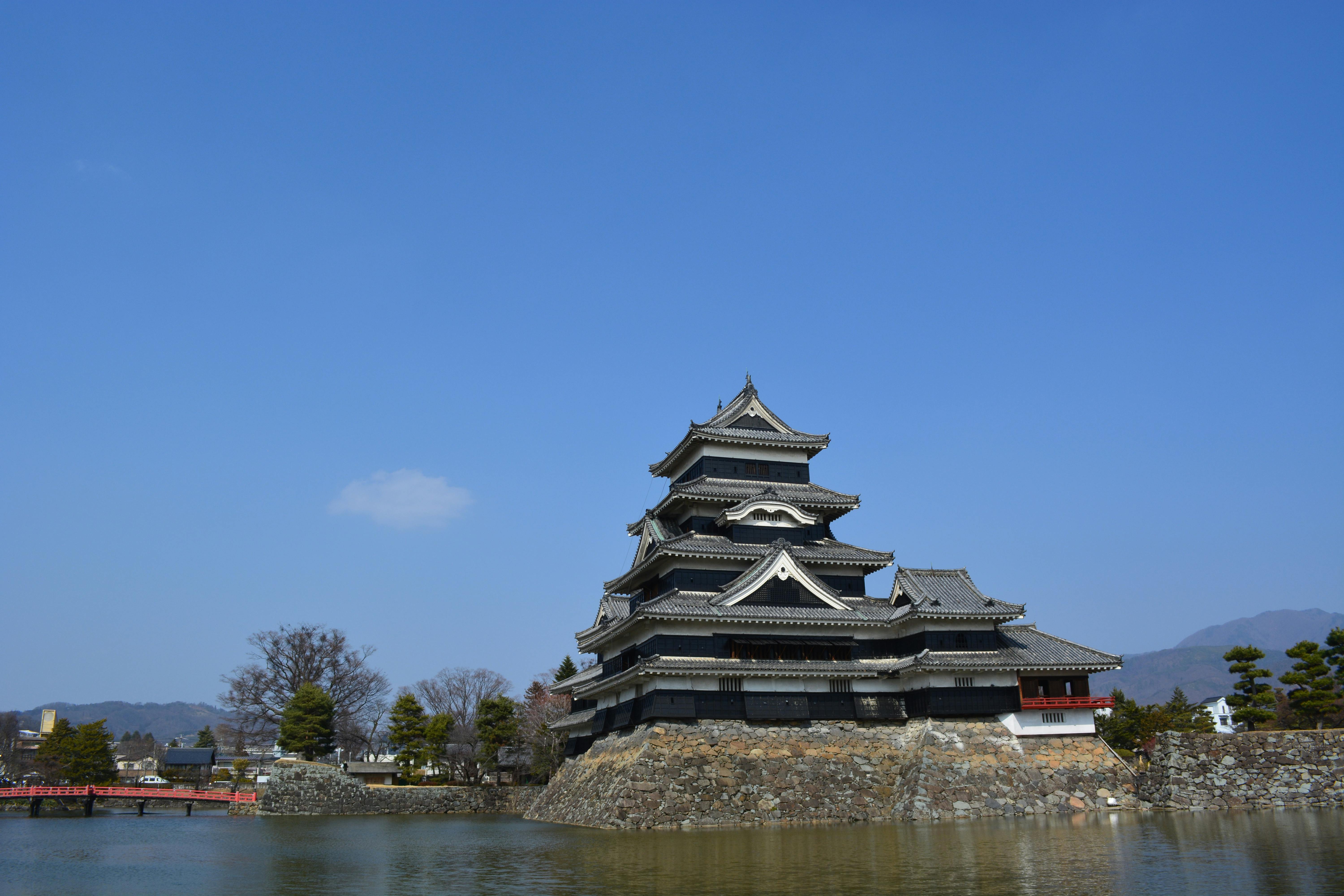
Matsumoto Castle: Where Samurai Shadows Meet Alpine Light
The first rays of sunrise strike the black wooden walls at precisely 5:47 AM in early summer—and for a fleeting moment, the six-story donjon appears to float between the mist rising from the Metoba River and the jagged peaks of the Northern Alps. You stand at the edge of the outer moat, your breath visible in the crisp morning air, watching as a single crane lifts from the water's surface. This is Matsumoto Castle, but locals call it Karasu-jo—the Crow Castle—for its wingspread silhouette and charcoal-dark siding that absorbs light rather than reflecting it. Built in 1594 during the Momoyama period, this fortress solved a defensive problem that plagued earlier Japanese castles: how to withstand musket fire while maintaining aesthetic grace . The answer rises before you: a five-tiered, six-story keep with walls of cypress and Japanese chestnut, its second-floor gunranjo (gun gallery) housing original matchlock rifles. Unlike the white-plastered Himeji, Matsumoto embraces darkness—a reminder that beauty and menace often wear the same face.
Why Matsumoto Castle Embodies Samurai Engineering Genius
While most Japanese castles succumbed to fire, war, or the Meiji Restoration's anti-feudal decrees, Matsumoto's original keep has stood for over 420 years. The castle's design solved a unique tactical problem: its location on the former Fukashi marshlands required innovative foundation engineering. Builders drove 30-meter-long pine pilings into the soft earth, then topped them with massive foundation stones—some weighing over three metric tons. The main donjon measures 16.36 meters wide by 15.24 meters deep, with walls that slope outward at a 10-degree angle to deflect cannonballs upward and away from the structure . The tower rises 29.6 meters (97 feet) from its stone base. What you cannot see from the outside is the interior's steep, nearly ladder-like staircases—with treads so worn by samurai sandals that they've been replaced six times over four centuries. The castle also features the oldest surviving tsukimi yagura (moon-viewing tower) in Japan, added in 1635, where feudal lords once composed poetry beneath the full autumn moon. This building did not just house warriors; it projected power while creating space for contemplation—a uniquely Japanese paradox.
The Best Time to Experience Matsumoto Castle
April brings a spectacle that draws photographers from across the globe: the "nighttime cherry blossom viewing" held for approximately ten days starting April 7, when 300 Somei-yoshino cherry trees illuminate alongside the black castle walls . For autumn colors, target October 20–November 5, when the castle grounds explode in crimson and gold, with daytime temperatures of 15°C to 23°C (59°F–73°F). The castle opens its gates at 8:30 AM and closes at 5:00 PM (last entry 4:30 PM) year-round . For the most dramatic photography, arrive at 7:00–7:30 AM when morning light strikes the black eastern facade—or return for the Winter Illumination from December 13 to February 15, 6:00 PM to 10:00 PM, when projection mapping transforms the castle into a canvas of dancing light (free admission) . Avoid weekends in August when temperatures exceed 30°C (86°F) with punishing humidity, and the narrow interior staircases become dangerously congested. Consult the official source before your visit: www.matsumoto-castle.jp/lang/ .
Approximate Budget for a 7-Day Trip
This budget assumes a solo traveler basing themselves in Matsumoto City for a week, mixing castle visits with day trips to nearby Kamikochi and the Japan Alps. Matsumoto remains notably more affordable than Tokyo or Kyoto, with lodging prices approximately 40% lower than the national average.
- Accommodation: ¥8,360–¥40,700 ($52–$257 USD) per night. Budget-friendly Alpico Plaza Hotel near the station costs ¥8,360 ($52); mid-range Hotel Buena Vista offers mountain views for ¥12,870 ($81); luxury ryokan Shoho (Utsukushigahara Onsen) runs ¥40,700 ($257) .
- Food: ¥3,500–¥6,000 ($22–$38) per day. Breakfast at a café: ¥600 ($4); soba lunch: ¥1,000–¥1,500 ($6–$9); dinner of basashi (raw horse meat) and local sake: ¥2,500–¥4,000 ($16–$25).
- Transportation: ¥8,000 ($50) for a 7-day local pass. The "Town Sneaker" loop bus costs ¥200 per ride or ¥500 for a day pass. A round-trip train to Kamikochi via Matsumoto Station costs ¥4,500 ($28) .
- Attractions: ¥700 ($4.40) for Matsumoto Castle entry; ¥800 ($5) for the Matsumoto City Museum of Art (Yayoi Kusama's polka-dot pumpkin sculpture); ¥1,000 ($6) for Daio Wasabi Farm tasting set .
- Miscellaneous: ¥2,000–¥4,000 ($13–$25) for handmade kokeshi dolls from Nawate Street or a bottle of Shinshu craft sake.
Total estimated 7-day budget (mid-range, excluding international flights): ¥132,000–¥285,000 ($840–$1,800 USD).
7 Essential Matsumoto Castle Experiences
- Ascend the Original Stairs of the Samurai: Remove your shoes before entering and climb the six-story donjon's near-vertical staircases. The treads angle at 45 degrees—designed deliberately to slow armored intruders. At the top (29.6 meters), press your palms against the ancient cypress pillars and gaze northwest toward the 3,000-meter peaks of the Northern Alps.
- Visit the Gunranjo's Matchlock Collection: On the third floor, 23 original tanegashima (matchlock rifles) sit in glass cases. Note the intricate silver inlays on the Shogunate's personal weapons—firearms transformed into art objects. The display rotates seasonally, but at least 15 pieces remain visible year-round .
- Photograph the Moon-Viewing Tower at Dusk: The tsukimi yajura on the castle's southwest corner was added in 1635 specifically for lunar contemplation. Stand near the red bridge at 6:30 PM on a September evening when the full moon rises directly behind the tower, casting a silver path across the moat.
- Stroll Nawate-dori, the "Frog Street": A 200-meter walking path along the Metoba River, this street earned its nickname because frogs (kaeru) symbolize "returning safe home" in Japanese. Browse 50+ shops selling frog-themed souvenirs, fresh oyaki (stuffed dumplings for ¥250–¥400), and antique kimono .
- Watch the Sunrise from the Eastern Moat: Arrive at the castle's main parking lot (¥300 for the public car park) by 6:45 AM . Stand facing the donjon as the sun crests the Hotaka range—the black walls turn deep purple, then indigo, then finally reveal their true charcoal hue at 7:15 AM.
- Tour the Former Kaichi School: One of Japan's oldest elementary schools (built 1876), this National Treasure blends Western and Japanese architecture just a 10-minute walk from the castle. The octagonal central tower and curved wooden staircases cost ¥400 entry—and offer a quiet contrast to the castle's martial energy.
- Experience a Kissa (Old Coffee Shop): At Coffee Kaeru on Nawate Street, order a "Castle Blend" for ¥600—roasted locally and served in a ceramic cup shaped like the donjon. The owner has photographed the castle on the first of every month since 1985; ask to see his 480-image archive.
3 Hidden Gems Most Travelers Miss
- The Underground Spring at Sannomaru Ruins: Most visitors never walk beyond the main keep, but head to the Sannomaru area (southwest corner of the grounds). Here, a natural spring bubbles up at a constant 14°C (57°F)—this was the castle's emergency water source during sieges. The stone channel still flows today, and locals fill bottles here for tea ceremony water. Access: Free, open 24/7, look for the small stone basin behind the pine grove.
- The Matsumoto Castle Taiko Drum Festival (July 25–27): For a single weekend each summer, 12 taiko groups play simultaneously from different castle towers. Arrive by 6:00 PM to claim a spot on the east lawn; the sound echoes off the black walls creating a sonic phenomenon called the "Drum Rainbow"—where overlapping rhythms produce phantom harmonics. Admission: Free .
- Nakamachi-dori's "Namako Wall" Houses at Golden Hour: A 5-minute walk southwest of the castle, Nakamachi-dori preserves a row of 10 merchant houses from the Edo period. Their black-lacquered, cross-hatched "namako" walls (seahorse pattern) were designed to resist fire. Visit between 4:00 and 5:00 PM when the low sun rakes across the textured plaster, revealing every brushstroke from 1825. Many houses now sell zori sandals and craft sake; the Matsumoto Sake Brewing Association offers tastings of three local brands for ¥1,000.
Cultural & Practical Tips
- Remove your shoes INSIDE the castle: Slippers are provided at the entrance, but wear thick socks—the wooden floors can be cold even in July, and the stairs' bare wood is slippery in thin stockings.
- Learn to say "Go-jo no o-mamori kudasai": Pronounced "Go-jo no oh-mah-moh-ree koo-dah-sigh." This phrase means "Please protect the castle tower"—a common local greeting used by castle staff when they bow to the donjon each morning at 8:15 AM.
- Arrive at 8:15 AM to watch the castle "wake up": Staff perform a 3-minute purification ritual at the main gate before opening, clapping twice and bowing to the tower. This Shinto tradition has occurred daily since 1973.
- No tripods on the moat bridges before 9:00 AM: The castle's security team enforces a strict ban on professional photography equipment at sunrise to prevent crowding. Handheld cameras only—this rule keeps the bridges clear for early-morning joggers and commuters.
- Beware the wasabi ice cream at Daio Wasabi Farm: Located 20 minutes north of Matsumoto, this farm serves soft serve with real grated wasabi. The heat hits mid-tongue, then the sweetness follows. A small cone costs ¥500—and you will either love it or never forget it .
- Carry cash to Nawate Street: Half of the frog-themed shops here do not accept credit cards. The nearest 7-Eleven ATM is a 7-minute walk east on Daimyo-cho Street.
- Visit on a Wednesday if possible: The castle receives 40% fewer visitors on Wednesdays (based on 2025 admission data). The two hours between open (8:30 AM) and 10:30 AM see the shortest wait times for the stair climb—typically under 5 minutes versus 20+ minutes on Saturdays.
Conclusion: Travel with Presence, Not Just Pictures
There is a tendency in the age of smartphone photography to see Matsumoto Castle as a prop—a dramatic black silhouette against a sky you intend to capture and then scroll past. But this tower has watched fourteen shogunates rise and fall. It has witnessed earthquakes, fires, and the Meiji government's order to dismantle all castles in 1872—a decree that Matsumoto's citizens evaded by purchasing their own fortress at auction for ¥2,350 (roughly ¥2.5 million today). They saved it because they loved it, not because they could monetize it. To walk the worn stairs of the black Crow Castle is to understand that preservation is not passive; it requires everyday acts of attention. So linger at the moon-viewing tower until the light fades. Put your phone away. Place your palm on the cypress pillar and feel 420 years of human history vibrating through the grain. This is not a destination you visit. It is a presence you enter.