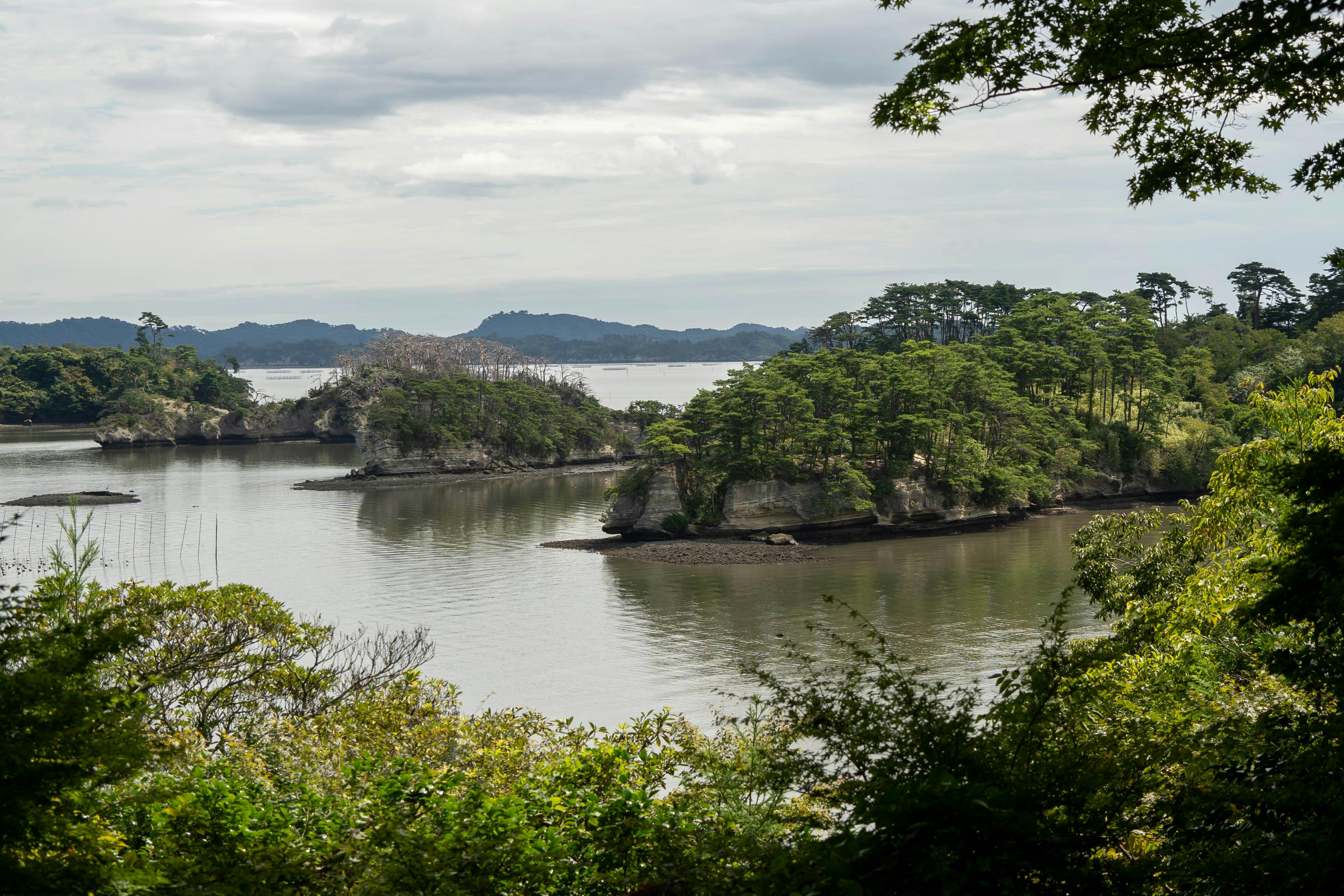
Matsushima Bay: Where Pine-Clad Isles Meet Zen Contemplation
The ferry glides silently through waters dotted with 260 pine-covered islands, each one a miniature universe of weathered rock and twisted branches sculpted by centuries of sea wind. It is 9:00 AM on Matsushima Bay, and the morning light—soft and diffuse—picks out white rock faces eroded into fantastic shapes: samurai helmets, guardian deities, even a bell-shaped island whose four sea caves ring when waves crash through them . This is Matsushima, long celebrated as one of Japan’s Three Views (
Nihon Sankei), a title it has held since the 17th century alongside Miyajima’s floating torii and Amanohashidate’s sandbar . Yet no photograph captures the feeling of drifting among these isles—the quiet plash of water against stone, the scent of salt and pine resin, the distant cry of black-tailed gulls circling the cliffs. Here, you understand why the haiku master Matsuo Bashō, upon seeing this bay, could only write:
“Matsushima ya / aa Matsushima ya / Matsushima ya”—a poem that admits the scene defies description .
Why Matsushima Bay Embodies Enduring Natural Harmony
The landscape before you is not merely beautiful—it is a living record of 7,000 years of Japanese history. The bay formed approximately 7,000 years ago during the early Jomon period, when post-ice age sea levels rose and submerged a forested valley, leaving only the hilltops visible as the islands you see today . Remarkably, the coastline has changed little since then. The bay measures just 10 kilometers from east to west and eight kilometers from north to south, but its small rivers have limited alluviation, preserving an environment that sustained human civilization for millennia . Evidence of this ancient relationship lies in the approximately 70 shell mounds discovered along the coast—including the nationally significant Satohama Shell Mound in Higashimatsushima—making Matsushima Bay one of Japan’s densest concentrations of Jomon period archaeological sites . The early inhabitants harvested salt here on an industrial scale, fueling trade across the Ou Mountains to Yamagata. This salt production may have inadvertently created today’s famous scenery: pollen analysis suggests that ancient deforestation for salt-making firewood allowed red pine forests, which thrive in thin soil, to become the dominant vegetation . In other words, the pine-covered islands celebrated by poets for centuries are themselves a monument to human adaptation—a problem solved not by conquering nature, but by living within its rhythms.
The Best Time to Experience Matsushima Bay
Each season transforms Matsushima Bay into a different masterpiece. For warm-weather cruising and island exploration, the period from
late June through late September offers average highs of
23°C to 27°C (73°F to 81°F) and comfortable sea breezes . August stands as the warmest month, averaging
26°C (79°F) during the day and
21°C (70°F) at night—ideal for longer boat tours and hiking the four great viewing points . For photographers seeking dramatic skies, autumn (October–November) brings crisp air and maple foliage, with October temperatures averaging
17°C to 21°C (63°F to 70°F) . Winter (December–February) offers the clearest views of distant mountains, with January lows of
0°C (32°F)—cold, but the islands’ silhouettes against snow-dusted peaks reward the hardy traveler . The optimal time of day for photography is
7:00–9:00 AM and
3:00–5:00 PM, when low-angle light creates sharp contrasts between pine silhouettes and water. Avoid the rainy season (mid-June to mid-July) and typhoon periods (September), when heavy rains and rough seas may cancel cruises . For official information on cruise schedules and seasonal events, consult:
www.matsushima-kanko.com/en/ .
Approximate Budget for a 7-Day Trip (Tokyo, Sendai & Matsushima)
Most travelers base themselves in Sendai (40 minutes from Matsushima) and visit the bay as a day trip . This budget assumes a 7-day Tokyo-Sendai-Matsushima itinerary for two people sharing accommodations. Prices in Japanese Yen (JPY) with USD equivalents.
- Accommodation in Tokyo (3 nights): ¥12,000–¥25,000 ($80–$170) per night for business hotels in Shinjuku or Tokyo Station area.
- Accommodation in Sendai (4 nights): ¥8,000–¥18,000 ($55–$125) per night. Budget hotels near Sendai Station from ¥8,000 ($55); mid-range options with breakfast included run ¥15,000 ($105).
- Food: ¥3,500–¥6,000 ($25–$40) per day.
- Breakfast (konbini or cafe): ¥500–¥1,000 ($3.50–$7).
- Lunch (seafood donburi or Matsushima specialty): ¥1,500–¥2,500 ($10–$17).
- Dinner (Sendai beef tongue or izakaya): ¥2,000–¥3,500 ($14–$24).
- Transportation:
- Tokyo to Sendai (Tohoku Shinkansen): ¥11,000–¥12,000 ($75–$82) one way, approximately 90 minutes .
- Sendai to Matsushima-Kaigan Station (JR Senseki Line): ¥580–¥840 ($4–$6) one way, 40 minutes .
- Local buses in Matsushima: ¥200–¥500 ($1.50–$3.50) per ride.
- Attractions:
- Matsushima Bay Cruise (50 minutes): ¥1,500 ($10.50) standard fare; discounted to ¥1,000 ($7) with advance purchase at train station or online .
- Zuiganji Temple: ¥700 ($5) for adults .
- Matsushima Rikyu observation facility: ¥600 ($4) for adults .
- Fukuura Island (red bridge and trails): ¥200 ($1.50) for bridge crossing.
- Miscellaneous: ¥2,000–¥3,500 ($14–$24). Fresh oysters (Matsushima’s specialty) cost ¥100–¥300 ($0.70–$2) per piece at harbor stalls . Hand-grilled sasakama (fish cake) experience: ¥300 ($2) at Abe Kamaboko . Kokeshi doll from local artisans: ¥800–¥3,000 ($5.50–$20).
Total Estimated 7-Day Budget (excluding international flights): ¥110,000 – ¥200,000 ($750 – $1,350) per person based on double occupancy.
7 Essential Matsushima Bay Experiences
- Cruise the Bay at First Light: Board the earliest cruise departure (8:30 AM) from Matsushima Pier for a 50-minute voyage through the archipelago . The morning light illuminates the white rock faces of Niōjima—named for its guardian-deity resemblance—Senganjima (Date Masamune’s favorite island), and Kanejima, whose four sea caves produce bell-like tones when waves strike them . Sit on the left side of the boat for optimal photography of the southern islands. The second-floor deck costs a small premium (¥300–¥500, or $2–$3.50) but offers unobstructed views .
- Walk the Fukuura Bridge to Fukuura Island: This 252-meter-long vermillion bridge connects the mainland to Fukuura Island, where a 1-kilometer walking trail winds past tide pools, ancient pines, and lookout points. The bridge’s name means “good fortune bay,” and local tradition holds that couples who cross it together will enjoy lasting happiness. Allow 45 minutes for the loop; visit at low tide to explore exposed rock formations where crabs and small fish shelter in natural pools. Admission: ¥200 ($1.50).
- Contemplate at Zuiganji Temple, Date Masamune’s Family Temple: Designated a National Treasure, Zuiganji was originally founded in 828 AD but rebuilt in 1609 by the powerful feudal lord Date Masamune . The main hall features intricate wood carvings and sliding doors adorned with gold leaf—most famously the “Peacock Room” (Kujaku no Ma), where images of the mythical bird spread across fusuma panels . Photography is prohibited inside, so arrive with patience to absorb the details: the calligraphy, the tea ceremony room, the stillness. The surrounding caves, carved into the rock face, once served as meditation spaces for monks. Open 8:30 AM–5:00 PM; admission ¥700 ($5) .
- Hike the Four Great Viewpoints (Matsushima Shidaikan): For centuries, travelers have judged Matsushima’s beauty from four distinct vantage points, each offering a different island composition . Saigyō Modoshi no Matsu Park (formerly Sokan Otakamori) provides the “Majestic View,” with 200-degree panorama of the eastern islands—a 10-minute walk from Matsushima-Kaigan Station. Ōtakamori (observatory), Tamonzan (Mount Tamon), and Ogidani complete the quartet. The parks are free and open 24 hours. Visit each during different lighting: morning at Saigyō Modoshi, afternoon at Tamonzan for sunlit southern isles.
- Hand-Grill Your Own Sasakama at Abe Kamaboko: Founded in 1935, this long-established shop offers a hands-on experience where you grill bamboo-leaf-shaped fish cake (sasakama) over an extra-large stove . For ¥300 ($2), you receive an uncooked kamaboko and three to five minutes at the grill, turning it until the surface blisters and browns. Freshly grilled sasakama—warm, smoky, and delicate—tastes twice as good as the packaged version. Open 9:00 AM–6:00 PM; located adjacent to the main shopping street .
- Sample Matsushima’s Legendary Oysters at the Harbor: The cold, nutrient-rich waters of Matsushima Bay produce some of Japan’s finest oysters, available fresh from autumn through early spring. Head to the harbor-side stalls near the cruise pier, where vendors grill oysters on the half-shell for ¥100–¥300 ($0.70–$2) each . For a full meal, order the “kaki don” (oyster rice bowl) at a nearby seafood restaurant—six to eight plump oysters simmered in savory broth over rice—for ¥1,500–¥2,500 ($10–$17). The peak oyster season runs October through March; summer visitors will find scallops and clams as alternatives.
- Climb the Observation Deck at Matsushima Rikyu: Opened in 2020, this modern tourist facility includes a rooftop observation deck offering an unprecedented panoramic view of the bay—particularly stunning at sunset . The deck includes coin-operated telescopes and interpretive panels identifying the major islands. Inside, find a tourist information center with English-speaking staff, a kokeshi doll-making workshop, and a BBQ area (reservation required). Admission: ¥600 ($4). Open 9:00 AM–6:00 PM; rooftop hours may vary seasonally .
3 Hidden Gems Most Travelers Miss
- Satohama Shell Mound (里浜貝塚): While tourists crowd the harbor, the Satohama Shell Mound in Higashimatsushima offers a glimpse into Matsushima’s ancient past. One of the largest Jomon-period shell mounds in Japan, this archaeological site documents 7,000 years of continuous habitation . The adjacent Jomon Village History Museum displays pottery, bone tools, and reconstructed pit dwellings. Access requires a 20-minute taxi from Matsushima-Kaigan Station (approx. ¥2,500, or $17); open 9:30 AM–5:00 PM, closed Mondays. Admission: ¥300 ($2). Most visitors overlook this site because it lacks the dramatic scenery of the bay—but for history enthusiasts, it’s essential.
- Entsū-in Temple’s Moss Garden: A five-minute walk from Zuiganji, this subtemple opened to the public only in recent years. Its moss garden—a sea of green velvet punctuated by stone lanterns and a thatched tea house—rivals Kyoto’s finest. The temple holds a thatched hermitage originally built for Sendai’s feudal lords to rest during pilgrimages. Open 9:00 AM–4:00 PM; admission ¥500 ($3.50). The quiet here, compared to Zuiganji’s crowds, allows genuine meditation. Visit after rain, when the moss glows emerald.
- Godai-do Hall at Sunset: Perched on a small peninsula west of the main harbor, this small wooden hall offers a framing of Matsushima Bay through its central window that has inspired painters for centuries. Unlike the four famous viewpoints, Godai-do sees few visitors, especially after 4:00 PM. The hall itself—rebuilt in 1604—is modest, but the view of pine islands arranged like a living scroll painting rewards the detour. Access requires a 15-minute walk from Matsushima-Kaigan Station along the western shore. Free admission, though donations appreciated.
Cultural & Practical Tips
- Etiquette at Sacred Sites: Zuiganji Temple prohibits photography inside all buildings. Remove shoes before entering the main hall (plastic bags provided). The stone caves adjacent to the temple are active meditation spaces—speak in whispers and do not enter roped-off areas. At Fukuura Bridge, refrain from shaking or swinging the railings; the structure is original and undergoes preservation.
- Cruise Strategy: The first cruise at 8:30 AM sees the smallest crowds . Purchase tickets at the Matsushima-Kaigan Station tourist desk (¥1,000, or $7) rather than the pier (¥1,500, or $10.50) . The 50-minute standard route passes the most photogenic islands. During rough weather (waves exceeding 1.5 meters), cruises cancel without advance notice—call 022-354-2618 to confirm .
- Local Phrases for Navigation:
- "Kuruzu wa nan-ji desu ka?" (koo-roo-zoo wah nahn-jee dess kah) — “What time is the cruise departure?”
- "Oosutaa wa doko de tabete masu ka?" (oh-soo-tah wah doh-koh deh tah-beh-teh mah-soo kah) — “Where can I eat oysters?”
- "Zuiganji e no michi wa dochira desu ka?" (zoo-ee-gahn-jee eh noh mee-chee wah doh-chee-rah dess kah) — “Which way to Zuiganji Temple?”
- Photography Guidelines: The best light for island photography occurs within two hours of sunrise and sunset. At Saigyō Modoshi Park, arrive by 6:30 AM in summer or 4:30 PM in winter for golden-hour illumination on the eastern islands. Drone flying is prohibited in Matsushima Bay without special permit from the Matsushima Tourism Association. Respect signs marking no-photography zones at temples.
- Getting There from Tokyo: Take the Tohoku Shinkansen from Tokyo Station to Sendai Station (90 minutes, ¥11,000–¥12,000 or $75–$82) . Switch to the JR Senseki Line for Matsushima-Kaigan Station (40 minutes, ¥580–¥840 or $4–$6) . The journey from Tokyo Station to Matsushima Pier totals approximately 2.5 hours. Consider activating a Japan Rail Pass if also visiting other regions—the round trip alone nearly justifies a 7-day pass.
- Weather Awareness: Matsushima receives significant rainfall in September (approximately 168 mm, the wettest month) . Carry a folding umbrella and waterproof footwear during autumn visits. Winter winds can make exposed viewpoints dangerously cold; wind chill at Saigyō Modoshi Park in January can feel below freezing even with sunny skies. Check the Japan Meteorological Agency’s marine forecast before planning a cruise day.
- Oyster Season Etiquette: Oyster stalls operate on an honor-system tray return. After eating, return your shells and tray to the vendor’s designated bin—do not discard in public trash cans, where the smell attracts wildlife. Grilled oysters are served extremely hot; wait 60 seconds before eating. Shellfish allergies: Matsushima’s water is rich with crustaceans; if allergic, avoid the harbor area where shellfish particles become airborne during grilling.
Conclusion: Travel with Wonder, Not Just Checklists
The haiku master Matsuo Bashō came to Matsushima and, for the only time in his travel journal, admitted he could not write about what he saw . Some landscapes resist description because they are not singular—they are accumulations: of 260 islands, 7,000 years of human history, four seasons of changing light, and a cultural tradition of reverence that stretches back to the Jomon people who first harvested salt from these shores. When you stand at Saigyō Modoshi Park or drift past Senganjima, do not rush to photograph or check the island off a list. Notice the way the pines have bent against the prevailing wind for centuries. Listen to the water slapping against white rock faces that were ancient when Kyoto was still a swamp. Recognize that Matsushima’s beauty is not in any single island but in the relationship between them—the empty spaces, the silences, the gaps where imagination fills what description cannot. Travel here not to conquer the view, but to let it conquer you. That, after all, is what it means to stand before one of Japan’s Three Views.
