
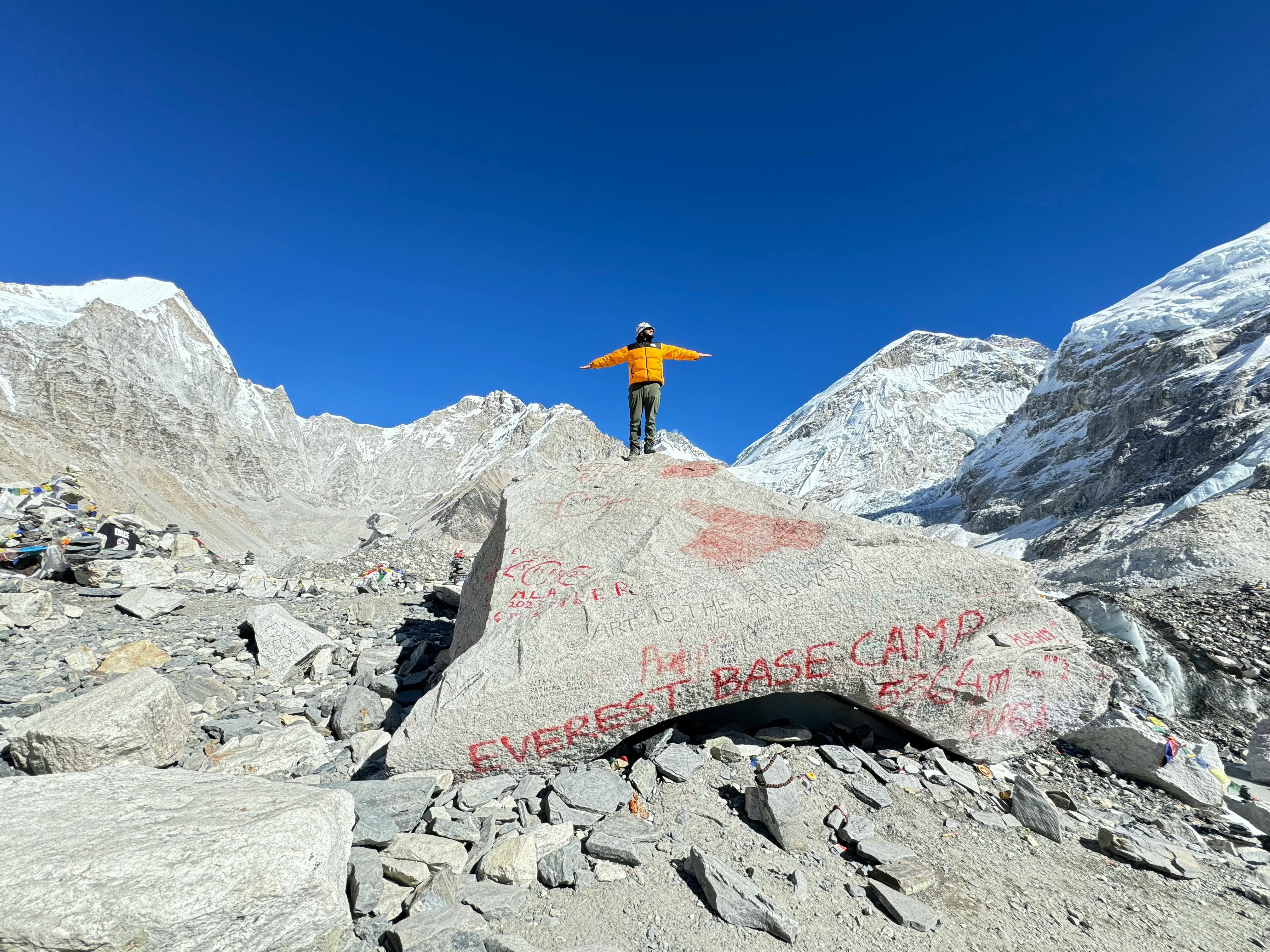
Mount Everest Base Camp: Where Himalayan Silence Meets Sherpa Spirit
The first light of dawn bleeds gold across the Khumbu Glacier—5,364 meters (17,598 feet) above sea level—where your breath crystallizes in the thin air and prayer flags snap like distant gunfire against an impossibly blue sky. You stand at the foot of the world's highest mountain, surrounded by the rumble of shifting ice and the soft murmur of Tibetan chants carried on the wind from Tengboche Monastery, 12 kilometers distant. The trail beneath your boots—worn smooth by decades of dreamers—leads past turquoise glacial ponds and ancient moraines sculpted by glaciers that have flowed here for 12,000 years. This is not merely a destination; it is a threshold where human ambition bows to geological time, where every step whispers a story of courage, culture, and the enduring pull of the vertical world. Mount Everest Base Camp matters because it reminds us that some journeys transform not just where we go, but who we become.
Why Mount Everest Base Camp Embodies Human Resilience
Since Sir Edmund Hillary and Tenzing Norgay first summited Everest in 1953, the Base Camp has served as both launchpad and sanctuary—a 5,364-meter (17,598-foot) staging ground where logistics meet legend. The Khumbu region, homeland of the Sherpa people for over 400 years, solved a profound human need: to test limits while honoring place. Engineering marvels like the Hillary Bridge—a 120-meter suspension span over the Dudh Koshi River—and the carefully graded trails carved by local crews enable access without compromising the landscape's integrity. Sagarmatha National Park, established in 1976 and designated a UNESCO World Heritage Site in 1979, protects 1,148 square kilometers of alpine wilderness while supporting sustainable trekking infrastructure. The Base Camp itself is not a permanent structure but a seasonal assembly of expedition tents, a testament to adaptability in extreme environments. Every teahouse along the route—from Phakding's riverside lodges to Gorak Shep's wind-scoured shelters—represents a community's commitment to hospitality at altitude, where oxygen levels are 50% lower than at sea level and temperatures can plummet to –25°C (–13°F) overnight. This is resilience written in stone, snow, and spirit.
The Best Time to Experience Mount Everest Base Camp
For optimal conditions, target two precise windows: March 15–May 20 or September 25–November 10. During spring, daytime temperatures at Base Camp range from 8°C to 18°C (46°F to 64°F), with nights averaging –10°C to –5°C (14°F to 23°F); autumn offers similar days but colder nights, –15°C to –8°C (5°F to 18°F). Aim to reach Kala Patthar viewpoint between 5:30–7:00 AM for sunrise illuminating Everest's summit in alpenglow. Avoid June 1–August 31 (monsoon season brings heavy rain, leeches, and zero visibility) and December 15–January 31 (extreme cold, –30°C/–22°F nights, and potential route closures). The Nepal Tourism Board coordinates trail maintenance and safety updates year-round.. Note: Since April 2023, all trekkers must hire a licensed guide—a rule that enhances safety while supporting local livelihoods.
Approximate Budget for a 7-Day Trip
Pricing reflects mid-range independent trekking with a licensed guide, based on 2026 rates from Kathmandu-based operators and teahouse associations. Costs assume shared accommodation, three daily meals, and standard permit fees; luxury upgrades or private rooms increase expenses by 40–60%.
-
• Accommodation: $8–$20 per night (basic teahouse in Namche Bazaar or Dingboche; prices rise with altitude)
• Food: $30 per day (breakfast $6: Tibetan bread, porridge, tea; lunch $10: dal bhat, momos, pasta; dinner $14: sherpa stew, grilled fish, apple pie)
• Transportation: Kathmandu–Lukla round-trip flight $380; local jeep transfers $25; porter tips $15/day recommended
• Attractions: Sagarmatha National Park Permit $30; Khumbu Rural Municipality Permit $20; Tengboche Monastery donation $5–10
• Miscellaneous: Water purification tablets $8; souvenir thangka painting $25–60; emergency oxygen rental $40/day
Total estimated budget: $1,150–$1,420 USD
7 Essential Mount Everest Base Camp Experiences
- Summit Kala Patthar at dawn: Depart Gorak Shep by 4:30 AM; the 1.5-hour ascent rewards you with a 360° panorama of Everest, Lhotse, and Nuptse bathed in first light—bring a headlamp and insulated gloves.
- Walk the Khumbu Glacier: From Base Camp, traverse the icy moraine toward the Icefall; wear crampons if venturing beyond the marked zone, and never approach seracs without a guide.
- Attend evening prayers at Tengboche Monastery: Arrive by 4:00 PM to witness monks in crimson robes chanting amid thangka-lined walls; the aroma of juniper incense and butter lamps creates a transcendent atmosphere.
- Acclimatize in Namche Bazaar: Spend two nights at 3,440 meters (11,286 feet); hike to the Everest View Hotel (3,880 m) for coffee with a vista, then explore the Sherpa Museum's climbing artifacts.
- Cross the Hillary Bridge: Feel the sway of this 120-meter suspension span over the Dudh Koshi River; hold the handrails firmly and pause midway to photograph the turquoise rapids below.
- Share chiya with a Sherpa family: In Phortse or Pangboche, accept an invitation for sweet milk tea; listen to stories of high-altitude life while warming your hands around a clay cup.
- Watch the sunset from Dingboche: At 4,410 meters (14,469 feet), the valley glows amber as Ama Dablam's peak catches the last rays—ideal for silhouette photography with a 24–70mm lens.
3 Hidden Gems Most Travelers Miss
-
• Phortse Village: A 45-minute detour from the main trail near Pangboche; this traditional Sherpa settlement offers unobstructed views of Khangtaiga and Ama Dablam. Access: Follow the signpost east of the Imja Khola bridge; best visited 2:00–4:00 PM for soft light. Insider tip: Arrange a homestay through the Phortse Community Lodge (contact via Namche Bazaar tourist office) for authentic cultural immersion.
• Gokyo Lakes via Renjo La Pass: A 3-day side trek from Dole featuring five turquoise glacial lakes and a 5,360-meter pass with fewer crowds than EBC. Access: Hire a guide in Namche; permits included in Sagarmatha fee. Insider tip: Visit in late October when rhododendron forests turn crimson and the lakes freeze into sculptural ice formations.
• Chhukung Valley's Icefall: A dramatic amphitheater of peaks reachable via a 3-hour acclimatization hike from Dingboche. Access: Follow the trail past the Imja Tsho lake; no extra permit required. Insider tip: Go at low tide (early morning) to safely explore the glacier's edge and photograph blue ice caves—always carry a satellite messenger.
Cultural & Practical Tips
-
• Greet locals with "Namaste" (nah-mah-stay), palms pressed at chest level; it conveys respect and opens doors to genuine connection.
• Walk clockwise around stupas, mani walls, and prayer wheels; never step over offerings or point your feet at sacred objects.
• Photography etiquette: Always ask permission before photographing people, especially monks; a $1–2 tip is appreciated for portraits.
• Weather preparedness: Layer clothing in moisture-wicking merino wool; carry a –20°C (–4°F) sleeping bag even in peak season.
• Altitude safety: Ascend no more than 300–500 meters (1,000–1,600 feet) per day above 3,000 meters; drink 4–5 liters of water daily and recognize AMS symptoms (headache, nausea).
• Pack light: Porters carry a maximum of 20 kg (44 lbs); use a 40–50L backpack with rain cover and broken-in boots.
• Leave no trace: Carry out all non-biodegradable waste; use teahouse toilets where available, and avoid single-use plastics.
Conclusion: Travel with Reverence, Not Just Records
Mount Everest Base Camp is not a checkbox—it is a conversation between earth and sky, between visitor and valley. When you stand where glaciers carve time and Sherpa wisdom guides every step, the impulse to rush fades; what remains is the quiet discipline of presence. Choose to tread lightly: support local teahouses, hire community-based guides, and carry out more than you bring in. Let your footprints be temporary, but your respect enduring. For in the silence between prayer flags and the whisper of wind over ice, you discover that the greatest summit is not measured in meters, but in moments of humility, connection, and awe. Slow down. Breathe deep. Let the mountain change you.