
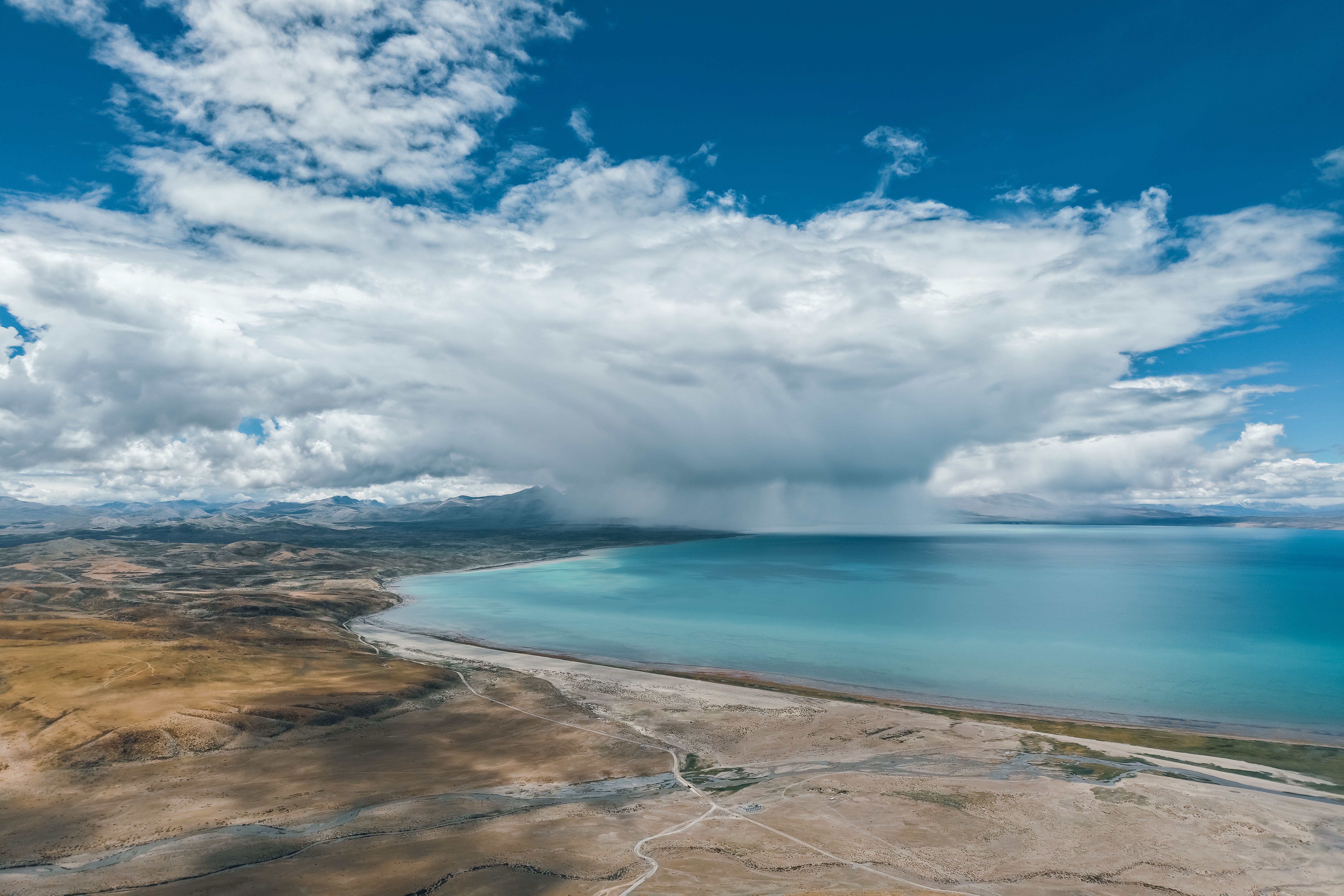
Namtso Lake: Where Sacred Waters Meet Sky Kingdom Peaks
The first light of dawn ignites Nyainqêntanglha's snow-capped summits, casting rose-gold reflections across Namtso Lake's crystalline surface—you stand at 4,718 meters (15,479 feet) above sea level, where the air tastes of glacial minerals and wild juniper, and the silence is broken only by the gentle lap of saline waves against weathered limestone shores. This sacred lake, spanning 1,920 square kilometers with a maximum depth of 120 meters (394 feet), was formed by tectonic uplift during the Himalayan orogeny over 2 million years ago. For Tibetan Buddhists, Namtso (gNam mtsho, "Heavenly Lake") is not merely water but a living deity—the consort of Mount Nyainqêntanglha, whose peaks guard the northern horizon like ancient sentinels. The lake's distinctive turquoise hue shifts with altitude, light angle, and mineral content, creating a living canvas that has inspired pilgrims for centuries. Here, on the roof of the world where the Changtang grasslands meet towering peaks, you witness more than geological grandeur—you encounter a spiritual landscape where earth, water, and sky converge in timeless harmony.
Why Namtso Lake Embodies Tibetan Sacred Geography
Namtso Lake represents more than natural beauty—it embodies the profound integration of landscape and spirituality that defines Tibetan cosmology. Revered since the Bon religion's pre-Buddhist era (prior to 7th century AD), the lake was later incorporated into Vajrayana Buddhism as one of Tibet's three holy lakes, alongside Manasarovar and Yamdrok. Its sacred status solved a fundamental human need: providing a tangible connection between the earthly realm and celestial deities, where pilgrims could perform rituals to accumulate merit and seek blessings.
The lake's geological formation reflects extraordinary planetary forces: situated in a fault-bounded basin created by the collision of Indian and Eurasian plates, Namtso's saline composition (approximately 1.7% salinity) results from mineral accumulation over millennia with no outlet to flush dissolved solids. Its elevation—4,718 meters—makes it one of the world's highest large lakes, creating an extreme environment where only specialized flora and fauna thrive. The surrounding Nyainqêntanglha range, with peaks exceeding 7,000 meters, acts as a natural barrier that shields the lake from monsoon moisture, creating the crisp, clear atmosphere that produces its legendary visibility.
Designated a National Nature Reserve in 1993 and part of the Changtang UNESCO Biosphere Reserve, Namtso balances preservation with pilgrimage access. Traditional practices remain vibrant: during the Year of the Sheep in the Tibetan calendar, devotees complete the 90-kilometer kora (circumambulation) around the lake—a journey believed to erase lifetimes of negative karma. This continuity solves a modern conservation dilemma: how to protect fragile alpine ecosystems while honoring sacred cultural practices. The result is a dynamic spiritual landscape where ancient devotion meets contemporary stewardship—a testament to humanity's capacity to revere, rather than exploit, the natural world.
The Best Time to Experience Namtso Lake
Timing transforms your Namtso encounter from challenging to transcendent. The optimal window spans June 1 through September 25, when daytime temperatures range 5–18°C (41–64°F) and the access road from Lhasa remains clear of snow and landslides. For photographers chasing the legendary mirror effect—where the lake's glassy surface perfectly reflects Nyainqêntanglha's peaks—arrive between 6:00–8:00 AM when wind speeds typically drop below 8 km/h and atmospheric conditions align.
July and August deliver peak accessibility: wildflowers bloom in surrounding meadows, migratory birds populate the shoreline, and daylight extends until 8:30 PM. September offers crisp air, golden grasslands, and fewer visitors, with temperatures cooling to 0–12°C (32–54°F). Early June presents dramatic snow-capped peaks but occasional road closures due to late-season avalanches; late September risks early snowfall that can block high passes.
Avoid the first week of October (China's National Day holiday) when domestic tourism surges create crowded viewpoints and limited accommodation. Winter access (November–May) is extremely limited: the highway frequently closes due to heavy snow, and temperatures plummet to -20 to 5°C (-4 to 41°F) with wind chills exceeding -35°C. The lake is accessible year-round with no entrance fee; visitor facilities operate 8:00 AM–6:00 PM (June–September) and 9:00 AM–4:00 PM (October–May).
Approximate Budget for a 7-Day Trip
Pricing for Namtso Lake and surrounding Tibet reflects the region's high-altitude logistics—moderate costs with excellent value for spiritual and natural immersion. The following breakdown assumes mid-range travel preferences with comfortable lodging in Lhasa or Damxung County and authentic local dining. Prices quoted in Chinese Yuan (¥) with approximate USD equivalents. • Accommodation: ¥350–¥700 ($49–$98) per night for mid-range guesthouses in Damxung; budget homestays with local families ¥180–¥350 ($25–$49); upscale eco-lodges near lake ¥800–¥1,300 ($112–$182) • Food: ¥140–¥260 ($20–$36) per day (breakfast ¥25–¥40 for tsampa porridge and butter tea, lunch ¥45–¥80 for thenthuk noodles, dinner ¥70–¥140 for yak meat stew and momo dumplings) • Transportation: Shared minibus Lhasa to Damxung ¥100–150 ($14–21) one-way; private vehicle hire ¥500–800/day ($70–112); local taxi short trips ¥40–60 ($6–8) • Attractions: Namtso Lake viewpoint free; Tashi Dor Island boat transfer ¥120 ($17); Yangpachen Hot Springs ¥50 ($7); traditional pilgrimage guide ¥200–400 ($28–56) for full-day service • Miscellaneous: Thermal jacket rental ¥110/day ($15) for high-altitude visits; handmade prayer flags ¥30/set ($4); local butter tea souvenirs ¥40–120 ($6–17); Tibet Travel Permit processing ¥150–300 ($21–42) Total estimated cost for 7 days: ¥6,500–¥10,200 ($910–$1,430)6 Essential Namtso Lake Experiences
- Witness Sunrise at the Main Viewing Platform: Arrive by 5:30 AM to secure a position at the designated photography platform on the lake's southeastern shore. The 10-minute walk from the parking area follows a gravel path with minimal elevation gain. When conditions align, the lake's surface becomes a perfect mirror for Nyainqêntanglha—a phenomenon locals call namkha gyatso (sky-ocean unity). Bring a tripod; summit temperatures average 12°C cooler than valley floors.
- Visit Tashi Dor Island's Meditation Caves: Accessible via a short boat transfer (¥120/$17) from the eastern shore, this sacred islet features natural caves where Guru Rinpoche (Padmasambhava) is believed to have meditated in the 8th century. The 45-minute visit reveals ancient rock carvings and prayer flags fluttering above turquoise waters. Best visited between 10:00 AM–2:00 PM when light illuminates cave interiors. Wear sturdy shoes for uneven stone steps.
- Walk the Lakeshore Pilgrimage Path: This 2-kilometer section of the full 90-km kora follows the water's edge, offering intimate perspectives of mineral-stained rock formations and wildflower meadows. The 60-minute walk reveals migratory birds (bar-headed geese, black-necked cranes) and, with luck, Tibetan wild asses grazing on distant slopes. Best visited between 8:00–10:00 AM when light enhances the water's color variations. Trailhead marked near the main parking area.
- Photograph the Salt Formations at Western Shore: The lake's western edge features dramatic salt crust formations created by evaporation cycles, creating geometric patterns against turquoise water. Position yourself at the pullout 3 km west of main viewpoint; arrive by 4:00 PM for side-lighting that enhances texture. Use a polarizing filter to reduce glare on the water; shutter speed 1/250s freezes wave motion.
- Experience a Traditional Butter Tea Ceremony: At a family-run guesthouse near the lake's southern shore, hosts offer authentic po cha (salted butter tea) prepared using centuries-old techniques. The 30-minute experience includes explanation of tea's cultural significance and opportunities to try homemade khapse (fried pastries). Visit between 3:00–5:00 PM for the most authentic atmosphere; cost ¥35 ($5) includes unlimited refills.
- Stargaze from the Alpine Meadow: After sunset, the high-altitude air (low humidity, minimal light pollution) reveals the Milky Way with stunning clarity. Join the optional evening program (July–August, 9:00 PM, ¥50/$7) where local guides share Tibetan star legends while you observe through portable telescopes. Dress in layers—temperatures drop rapidly after dark. The meadow is accessible via the same road; last return transport departs at 9:30 PM.
3 Hidden Gems Most Travelers Miss
- North Shore Wildflower Meadow: While 90% of visitors photograph from the southeastern viewpoint, the lake's northern shore offers secluded meadows blooming with rare alpine species like Tibetan blue poppy and snow lotus from late June to mid-July. Access: Park at the unmarked pullout 5 km north of main viewpoint; follow the faint trail descending 30 meters to the water's edge. Open daylight hours; no facilities. Insider tip: Visit on weekday mornings to avoid small tour groups; bring binoculars for spotting Tibetan foxes on distant slopes.
- Glacial Stream Confluence Point: Located 4 km southeast of the main lake, this lesser-known spot where glacial meltwater meets Namtso creates mesmerizing patterns of turquoise, emerald, and milky-white water. The 15-minute walk from the roadside follows a rocky path with moderate elevation gain. Visit between 11:00 AM–1:00 PM when sunlight penetrates the water to reveal mineral striations. No signage—ask local drivers for "chu sumdrel" (three waters meeting).
- Traditional Felt-Making Workshop: A family-operated tent 2 km south of the main shore offers demonstrations of Tibetan nambu (wool felt) creation using techniques unchanged for centuries. Access requires advance arrangement via guesthouses in Damxung; sessions depart at 2:00 PM, lasting 50 minutes, cost ¥80 ($11) including tea. Limited to four visitors per session; request booking 24 hours ahead. This intimate experience reveals textile traditions and nomadic craftsmanship rarely seen by tourists.
Cultural & Practical Tips
- Respect Sacred Protocols: Namtso remains a deeply sacred site for Tibetan Buddhists. Never throw objects into the lake, remove stones, or speak loudly at pilgrimage sites—these actions violate local customs and park regulations. Photography is permitted everywhere except inside certain meditation caves (marked with signs).
- Essential Tibetan Phrases: Learn these pronunciations: Tashi delek (tah-shee deh-lek) = Hello/blessings; Thukje che (took-jay chay) = Thank you; Kalu (kah-loo) = Please; Khamsang du (kahm-sahng doo) = Goodbye. Even basic attempts are warmly appreciated.
- Altitude & Health Prep: At 4,718 meters, altitude sickness can affect sensitive individuals. Spend 2–3 days acclimatizing in Lhasa (3,650m) before ascending; stay hydrated, avoid alcohol initially, and recognize symptoms: headache, nausea, dizziness. Carry diamox (acetazolamide) if prone to altitude issues; consult a physician before travel.
- Permit Requirements: Foreign visitors require a Tibet Travel Permit in addition to a Chinese visa. Arrange through a licensed travel agency 15–20 days before arrival; permits are checked at airport, train station, and lake entrances. Carry photocopies alongside originals.
- Weather Adaptation: Namtso's high-altitude climate features intense UV radiation, dry air, and significant temperature swings. Use SPF 50+ sunscreen, wear UV-protection sunglasses, and pack windproof layers. Even in summer, mornings and evenings require thermal clothing.
- Environmental Stewardship: Namtso lies within a fragile alpine ecosystem. Pack out all trash, stay on designated paths to protect vegetation, and avoid disturbing wildlife. Use reusable water bottles; filling stations available at visitor centers.
- Dietary Considerations: Tibetan cuisine features barley, yak, and dairy prominently. Vegetarian options exist but are limited—request soja (vegetable) dishes when ordering. Try local specialties: shapaley (meat-filled bread), gyuma (blood sausage), and po cha (salted butter tea).
Conclusion: Travel with Reverence, Not Just Curiosity
Namtso Lake invites more than observation—it calls for reverent presence. As you stand above this high-altitude mirror, remember that every ripple on its surface reflects not just snow-capped peaks but millennia of geological patience, and every whispered prayer from a pilgrim carries wisdom about living in balance with extreme environments. This lake endures not because it is untouched, but because generations chose to tread lightly upon its shores.
Visit Namtso not to conquer a viewpoint, but to listen—to the wind through alpine grasses, to the stories embedded in pilgrimage traditions, to the quiet reminder that Earth's most profound beauty often lies in stillness, not spectacle. Support community-based tourism by purchasing crafts directly from artisans, choosing locally owned guesthouses, and learning a few words of Tibetan. Leave only footprints that vanish with the next mountain breeze; carry home not just photographs, but a deeper commitment to preserving places where the planetary and the personal still converse.
In an era of rapid extraction, Namtso stands as a testament to restraint—a mirror reflecting not just sky, but our capacity for wonder. Slow down. Breathe the thin, mineral-scented air. Let the lake's stillness recalibrate your sense of time. For in that pause, you may hear what pilgrims have felt for centuries: the gentle reminder that some boundaries—between earth and sky, past and present, self and wilderness—are meant not to be crossed, but honored.