
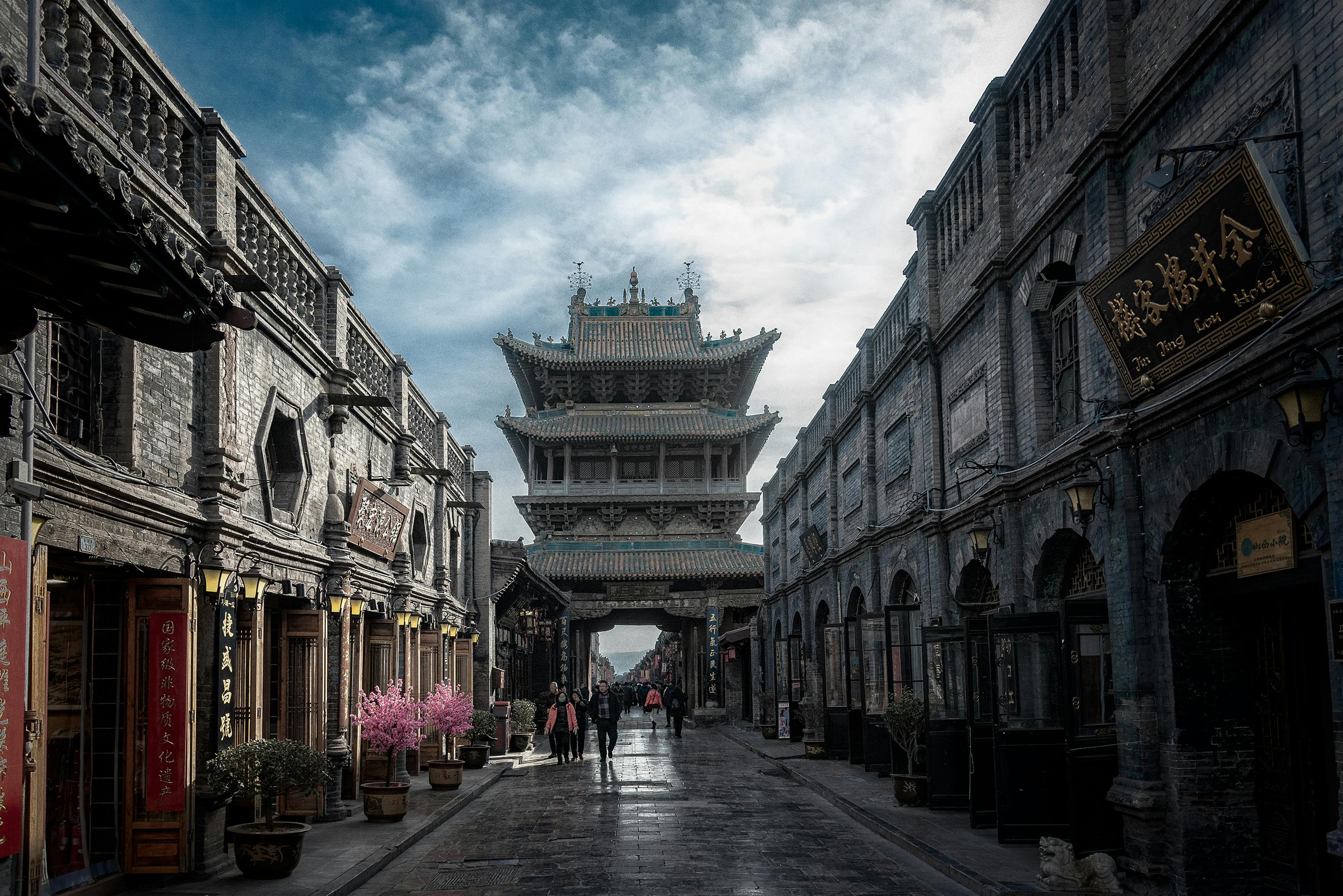
Pingyao Ancient City: Where Ming Dynasty Streets Meet Timeless Commerce
Golden hour bathes the 6-kilometer city wall—12 meters (39 feet) high, 3–6 meters (10–20 feet) thick—in amber light, where the scent of aged timber and roasted sesame mingles with the crisp Shanxi air. You walk the cobblestone streets of Pingyao Ancient City, founded in 827 BCE and preserved in Ming-Qing splendor since 1370, where red lanterns sway above courtyard gates and the distant clink of abacus beads echoes from the Rishengchang Exchange Shop, China's first bank, established in 1823. Prayer flags flutter atop watchtowers; the rhythmic tap of a cobbler's hammer blends with the murmur of vendors selling lacquerware and aged vinegar. This is not merely a walled town; it is a living museum where every gray-brick façade and carved wooden lintel binds imperial commerce to modern curiosity. Pingyao matters because it preserves a rare chapter of human history: when merchant ingenuity built financial systems that shaped a nation, all within walls that have stood for seven centuries.
Why Pingyao Ancient City Embodies Merchant Legacy
Founded in 827 BCE during the Western Zhou Dynasty and fortified in 1370 under the Ming Dynasty, Pingyao Ancient City solved a profound economic need: to create a secure, standardized hub for interprovincial trade and banking. The complex spans 2.25 square kilometers within its 6.16-kilometer perimeter wall, featuring 300+ preserved Ming-Qing courtyard residences, 37 protected heritage sites, and the groundbreaking Rishengchang Exchange Shop—pioneer of China's draft banking system, which transferred silver across 1,200 kilometers without physical transport. Engineering marvels include the city's rammed-earth core wall, reinforced with brick and lime mortar to withstand seismic activity, and the sophisticated drainage system that channels rainwater through stone gutters into underground cisterns. UNESCO designated Pingyao a World Heritage Site in 1997, recognizing its unparalleled preservation of Han Chinese urban planning from the 14th–20th centuries. Today, conservation teams use traditional materials—gray brick, wood joinery, and mineral pigments—to restore structures without compromising authenticity. This is merchant legacy written in brick and beam—a testament to how commerce, culture, and community can build enduring beauty.
The Best Time to Experience Pingyao Ancient City
For optimal conditions, target two precise windows: April 18–May 31 or September 12–October 25. During spring, daytime temperatures in Pingyao range from 14°C to 26°C (57°F to 79°F), with nights averaging 5°C to 14°C (41°F to 57°F); autumn offers crisp days (12°C–24°C / 54°F–75°F) and cooler nights (2°C to 11°C / 36°F to 52°F). Aim to arrive at the city gates between 7:30–9:00 AM for soft light on gray-brick façades and minimal crowds on the ancient walls. Avoid November 1–March 31 (extreme cold, –12°C/10°F nights, potential snow closures, and reduced opening hours) and June 1–August 31 (peak heat up to 34°C/93°F, high humidity, and dense tour groups that limit access to courtyard museums).. Note: Since 2022, visitor flow to the city walls is managed via 45-minute entry slots—book online 48 hours in advance to secure sunrise access.
Approximate Budget for a 7-Day Trip
Pricing reflects mid-range independent travel with local guide services, based on 2026 rates from Pingyao-based operators and guesthouse associations. Costs assume shared accommodation, three daily meals, and standard attraction fees; private tours or luxury courtyard upgrades increase expenses by 40–70%.
-
• Accommodation: ¥220–¥580 per night (traditional courtyard guesthouse within ancient city walls; prices rise for heritage suites with antique furnishings)
• Food: ¥95 per day (breakfast ¥20: congee, steamed buns, pickled vegetables; lunch ¥35: knife-cut noodles, pingyao braised beef, stir-fried mountain greens; dinner ¥40: Shanxi vinegar-braised pork, wheat dumplings, hawthorn candy)
• Transportation: Taiyuan Airport–Pingyao high-speed train ¥35; city electric cart rental ¥40/day; taxi to nearby Shuanglin Temple ¥50 round-trip
• Attractions: Pingyao Ancient City pass ¥130 (includes walls, Rishengchang, County Office); "Encore Pingyao" immersive show ¥280; Shuanglin Temple ¥35
• Miscellaneous: Lacquerware souvenir ¥50–150; traditional costume photo session ¥80; portable fan ¥25
Total estimated budget: ¥3,280–¥4,920 CNY ($455–$685 USD)
7 Essential Pingyao Ancient City Experiences
- Walk the ancient city walls at sunrise: Arrive by 7:00 AM at the North Gate; the 6.16-kilometer rampart offers panoramic views of gray-tiled rooftops—bring a wide-angle lens and wear non-slip shoes for the stone steps.
- Explore Rishengchang Exchange Shop: Step inside China's first bank (est. 1823); examine the original abacus, secret code ledgers, and vaulted silver storage—allow 30 minutes to appreciate the ingenuity of draft banking.
- Photograph lantern-lit streets at dusk: Return to Ming-Qing Street at 6:30 PM; the glow of red lanterns against gray brick creates magical ambiance—ideal for long-exposure shots with a tripod.
- Attend the County Government Office reenactment: Watch actors portray Ming-era judicial proceedings at 10:30 AM daily; the ornate yamen courtyard and period costumes offer immersive historical context.
- Stay in a heritage courtyard guesthouse: Choose a restored residence with wooden lattice windows and heated kang beds; wake to the scent of jasmine tea and the sound of courtyard birds.
- Sample pingyao braised beef: Visit a century-old butcher shop on West Street; the tender, five-spice-marinated beef is best enjoyed warm with aged Shanxi vinegar—ask for a tasting sample before purchasing.
- Watch "Encore Pingyao" immersive theater: Book the 8:00 PM show in the purpose-built arena outside the west wall; the 90-minute performance blends dance, projection, and audience movement to tell Pingyao's merchant story.
3 Hidden Gems Most Travelers Miss
-
• Qingxu Temple's Secret Garden: A tranquil Taoist temple tucked behind East Street, featuring a 400-year-old ginkgo tree and stone-carved meditation niches. Access: Enter via the unmarked lane beside the lacquerware shop; open 8:00 AM–5:00 PM. Best visited 3:00–5:00 PM for dappled light through ancient branches. Insider tip: Bring a small offering of fruit; the resident caretaker may share stories of temple rituals if approached respectfully.
• Ancient Coin Museum in Merchant Courtyard: A privately run collection housed in a restored 18th-century residence, displaying 2,000+ coins from Zhou Dynasty spades to Qing silver ingots. Access: Request entry via your guesthouse host; donation-based (¥20 suggested). Insider tip: Visit Tuesday or Thursday mornings when the owner demonstrates traditional coin-casting techniques using clay molds.
• South Gate Night Photography Walk: A quiet 1-km stretch of wall accessible after 8:00 PM, where lantern reflections on the moat create mirror-like compositions. Access: Exit via the South Gate ticket checkpoint; bring a headlamp for safe footing. Insider tip: Go on moonless nights for starry-sky shots above the illuminated walls—use a 14–24mm lens and 30-second exposure with remote shutter.
Cultural & Practical Tips
-
• Greet locals with "Nǐ hǎo" (nee how), meaning "hello"; a slight bow conveys added respect, especially with elders.
• Photography etiquette: Flash is prohibited inside historic courtyards to protect aged pigments; use natural light or a fast lens (f/1.8 or wider).
• Dress modestly: Cover shoulders and knees when visiting temples; remove hats indoors as a sign of reverence.
• Footwear matters: Cobblestone streets are uneven; wear comfortable, non-slip shoes for extended walking.
• Language tip: Learn "Xièxie" (shyeh-shyeh) for "thank you"; carrying a translation app helps navigate menus and directions.
• Cash preference: Many small vendors accept only WeChat Pay or cash; carry ¥200–300 in small bills for souvenirs and snacks.
• Leave no trace: Pack out all non-biodegradable waste; use designated site toilets, and avoid touching carved woodwork to preserve delicate surfaces.
Conclusion: Travel with Reverence, Not Just Records
Pingyao Ancient City is not a checklist of photo ops—it is a living dialogue between past and present. When you stand where 700 years of merchant wisdom echo through courtyard gates and sunlight illuminates the hands of artisans who built a financial revolution, the impulse to rush dissolves; what remains is the quiet discipline of presence. Choose to tread lightly: support family-run guesthouses, hire local Shanxi guides, and carry out more than you bring in. Let your footprints be temporary, but your respect enduring. For in the silence between abacus click and lantern glow, you discover that the greatest journey is not measured in sites visited, but in moments of humility, connection, and awe. Slow down. Trace the grain of a Ming-era door latch. Let the ancient stones change you.