
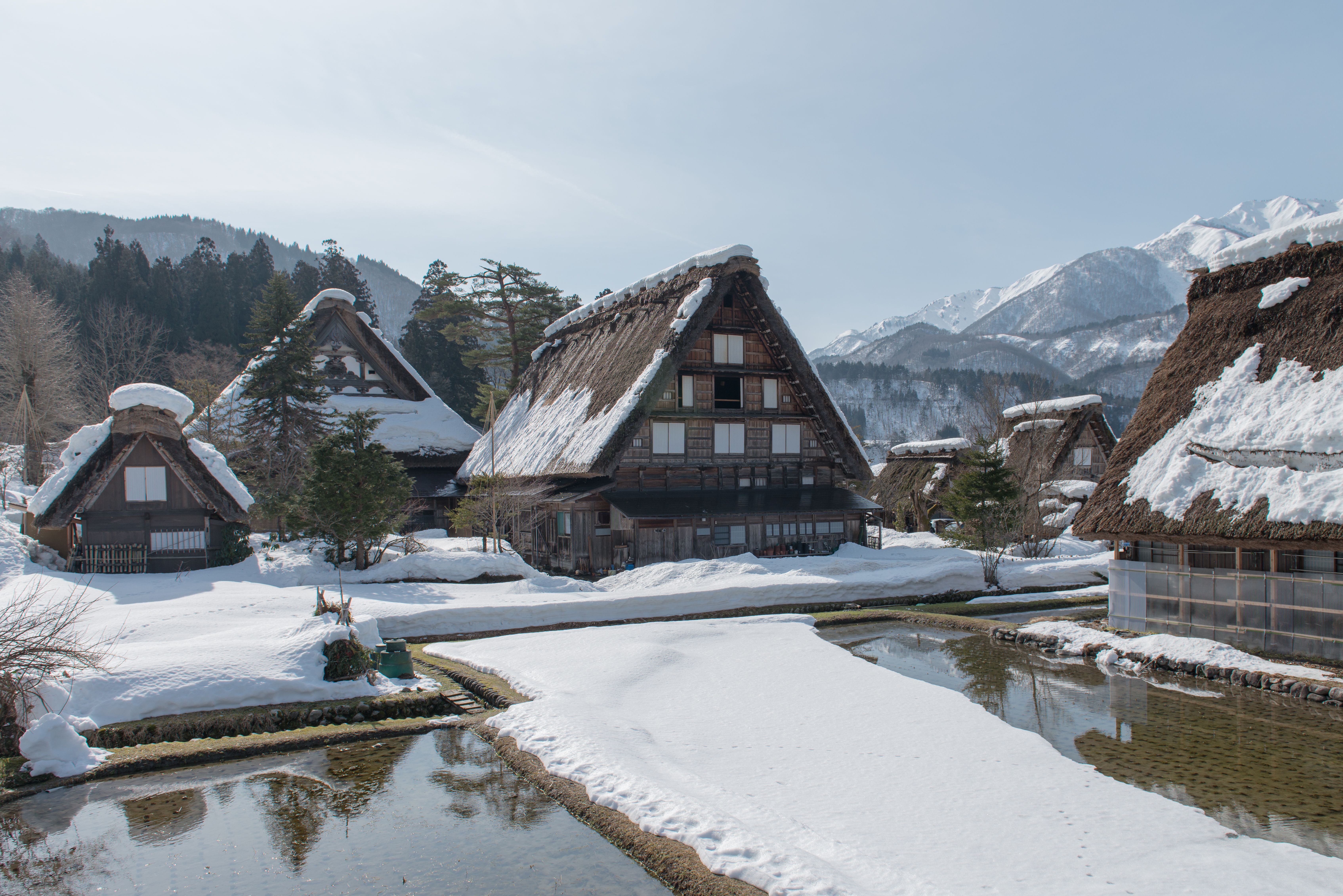
Shirakawa-go: Where Snow Prayers Meet Thatched Wisdom
The first flakes of December descend silently onto roofs angled like hands clasped in prayer—a 60-degree pitch designed not by modern architects but by generations of farmers who understood that snow, if respected, becomes a blanket rather than a burden. You stand at the Shiroyama Observation Deck at 4:30 PM, watching as twenty-three of the 59 remaining gassho-zukuri farmhouses in Ogimachi village begin to glow from within, their shoji screens diffusing amber light across two meters of accumulated snow . This is Shirakawa-go, a UNESCO World Heritage site since 1995 , where the Shogawa River divides a valley so isolated that its architectural tradition survived unchanged for over 300 years . Unlike the curated museums of Kyoto, these houses still smoke from central irori hearths—fires that have burned continuously in some families for two centuries. The Japanese call this place Nihon no furusato (Japan's hometown), a landscape that solves the problem of how to live gracefully in a region receiving over 13 meters of annual snowfall: by building not against nature, but in prayerful conversation with it.
Why Shirakawa-go Embodies Architectural Harmony with Nature
The gassho-zukuri style—literally "constructed like hands in prayer"—emerged from necessity rather than aesthetics. During the Edo period (1603–1868), wealthy merchant families like the Wada clan built these structures without nails, using only wooden joinery and ropes of twisted cedar bark . The steep 60-degree thatched roofs solve a critical engineering problem: allowing heavy snow to slide off before accumulating beyond 1.5 meters, preventing collapse while creating natural attic insulation. Each roof requires 5,000 bundles of thatch, weighs approximately 20 metric tons, and must be replaced every 30 to 40 years at a cost of $230,000–$240,000 USD per house . The multi-story design (three to five levels) served dual purposes: lower floors housed extended families of up to 25 people, while upper attic spaces, exposed to consistent temperatures and humidity from the hearth below, became ideal silkworm cultivation chambers during the 19th-century silk boom . The Wada House, the village's largest gassho structure built around 1800 and designated an Important Cultural Property, spans 24 by 13 meters and still contains the original hearth that has never been extinguished—a living museum where fire, smoke, wood, and snow dance a 200-year-old ballet .
The Best Time to Experience Shirakawa-go
The village reveals its most iconic face during the winter illumination events—January 12, 18, 25, and February 1, 2026, from 5:30 PM to 7:30 PM . Daytime temperatures range from -1°C to 5°C (30°F–41°F), with nighttime lows dropping well below freezing. For the classic postcard shot of snow-blanketed rooftops, arrive between December 20 and February 15, when snow depth typically exceeds two meters . Autumn foliage photographers should target October 20–November 5, with daytime temperatures at 10°C–18°C (50°F–64°F). The cheapest month for accommodation is June ($117 per night), while May commands peak prices ($700) due to Golden Week crowds . Avoid the December 29–January 3 New Year's week when the village becomes impassable with both snow and holiday tour groups, and avoid April 29–May 7 (Golden Week 2026) when private vehicles clog the narrow access road. For illumination events, entry requires advance reservation—no exceptions . Access information is available from the official tourism association: www.shirakawa-go.gr.jp .
Approximate Budget for a 7-Day Trip
This budget assumes a solo traveler or couple basing themselves in Takayama or Kanazawa (where accommodation is more affordable and available) and taking a day trip to Shirakawa-go, as overnight stays within the village are extremely limited (only 59 gassho houses, many of which book 6 months in advance). All figures in Japanese Yen (¥) with USD equivalents in parentheses.
- Accommodation: ¥8,000–¥80,000 ($53–$533 USD) per night. Budget: Guest House Kei from ¥23,250 ($155) ; Mid-range: Hirase Onsen Guesthouse (whole-building rental) at ¥66,500–¥80,000 ($443–$533) for up to four guests ; Weekday no-meal stays at ¥12,000 ($80) per adult . Takayama base hotels: ¥8,000–¥15,000 ($53–$100).
- Food: ¥3,500–¥6,000 ($23–$40) per day. Breakfast at lodge: ¥1,000 ($7); Gohei-mochi (grilled rice skewer with walnut-miso glaze) street snack: ¥400–¥600 ($3–$4) ; Soba noodle lunch in village: ¥1,200–¥1,500 ($8–$10); Hoba-miso (miso grilled on magnolia leaf) dinner in Takayama: ¥2,500–¥3,500 ($17–$23).
- Transportation: ¥6,400 ($43) round-trip from Takayama via Nohi Bus (50 minutes each way) ; ¥6,000 ($40) round-trip from Kanazawa (75 minutes) ; ¥10,000 ($67) from Nagoya (3 hours with transfer).
- Attractions: ¥300 ($2) for Wada House entry ; ¥800 ($5.30) for Gassho-zukuri Minkaen outdoor museum (nine relocated houses) ; Free observation from Shiroyama Viewpoint ; ¥3,000–¥5,000 ($20–$33) per person for guided walking tour (1.5–2 hours; minimum two participants required) .
- Miscellaneous: ¥2,000–¥4,000 ($13–$27) for handmade sarubobo dolls (¥800–¥1,500 each), local kurohatsu (black rice vinegar), or fermented soy sauce pickles.
Total estimated 7-day budget (mid-range, basing in Takayama, excluding international flights): ¥136,000–¥275,000 ($900–$1,830 USD).
7 Essential Shirakawa-go Experiences
- Photograph the "Two Villages" from Shiroyama Viewpoint: Climb the 15-minute path or take the shuttle bus (¥200 each way) to the observation deck. The classic shot comes at civil twilight—20 minutes after sunset during winter illumination (approximately 5:50–6:10 PM)—when the sky retains indigo depth while house lights create a constellation below. Use a tripod; handheld shots at 1/15 second will blur.
- Enter the Wada House's Perpetual Hearth: For ¥300, step into the largest gassho house in Shirakawa-go, built around 1800 . Remove your shoes and feel the tatami mats still warm from the irori (sunken hearth) that has burned for over two centuries—the smoke rises through a ceiling opening, naturally drying the thatch above and preventing rot. The second-floor silk-winding room offers eye-level views of the roof's interior joinery, assembled without nails.
- Walk the Rice Paddy Reflections in November: Arrive before 7:30 AM in late October or early November, when the harvested paddies hold still water. From the eastern edge of Ogimachi, look back toward the Shiroyama hillside—the gassho roofs reflect perfectly upside down, creating the "mirror village" effect that appears on half of Shirakawa-go's tourism posters. This phenomenon lasts only 45 minutes after sunrise before wind ripples the water.
- Experience a Guided Walking Tour with a Local Elder: The Shirakawa-go Tourist Association offers 1.5 to 2-hour guided walks for ¥3,000–¥5,000 per person (price decreases with group size; minimum two participants) . Your guide—often a retired farmer who grew up in a gassho house—will point out details invisible to tourists: the direction each house faces (always south to maximize winter sun), the mizukiri bamboo gutters that prevent ice dams, and the secret family shrines tucked between houses. Reservations required three days in advance by phone at 05769-6-1013.
- Warm Your Hands at Myozenji's Hearth and Eat Ondeng: Myozenji Temple's ke (house) is the second-largest gassho structure in the village. In winter, its hearth serves ondeng—a local version of oden (fish cakes and daikon simmered for hours in soy broth). For ¥600, receive a wooden bowl of the dark, smoky broth and a skewer of konnyaku that has absorbed the hearth's aromatic woodfire essence. The temple also displays Edo-period Buddhist scrolls that were hidden in the attic during the Meiji-era anti-Buddhist persecutions (1868–1873).
- Visit the Gassho-zukuri Minkaen Open-Air Museum at Dusk: Unlike the village's lived-in houses, this relocated collection of nine structures allows interior access after dark during winter illumination dates. Enter the 18th-century Shimizu House and climb to its third floor—here, you'll see the original silkworm racks suspended from rafters, and the windows frame the snow-heavy roofs of neighboring houses. Entry: ¥800. Open 9:00 AM–4:00 PM (extended to 7:00 PM on illumination days).
- Taste Doburoku (Unrefined Sake) at the Doburoku Museum: Housed in a 200-year-old gassho building, this small museum explains the region's unique doburoku brewing tradition—a cloudy, sweet, unfiltered sake that is technically illegal elsewhere in Japan but permitted here as a cultural exception. For ¥500, sample three varieties: the standard white, a winter-only batch fermented with snowmelt, and a rare aged version that has mellowed for five years in cedar barrels.
3 Hidden Gems Most Travelers Miss
- The Underground Spring at Kanda House's Back Garden: Wada House gets the crowds, but Kanda House (a 5-minute walk northeast) offers what no guidebook mentions: a natural spring that bubbles up at a constant 10°C (50°F) behind the main building. Local families still fill plastic bottles here for shincha (new tea) brewing, and in winter, the spring creates a pocket of melted snow while everything else remains frozen—a microclimate phenomenon caused by geothermal warmth from the hot springs below. Access: walk past Kanda House's entrance (¥300 entry not required for the spring), continue 30 meters along the unpaved path; look for the small stone basin covered by a wooden lid. Open 24/7, free.
- The "Shoji Code" of Ogimachi's Southern Lane: On the southern edge of the village, away from the bus terminal, a single unpaved lane contains four gassho houses with unusual shoji screen patterns. The density of the wooden lattice increases with each house—a subtle Edo-period signaling system that told traveling merchants which families had silkworm cocoons to sell (dense lattices = high inventory). Most tourists walk past without noticing, but at 8:00 AM, when the low sun rakes across the screens, the different patterns become starkly visible. Access: from the Deai Bridge, walk south toward the Shogawa River for 200 meters; the lane is marked only by a single stone lantern. No entry fee, but respect residents' privacy.
- The Pre-Dawn Bakery at Nodaniya (Winter Only): Between December 15 and February 28, a family in a converted gassha house opens their kitchen from 5:30–7:00 AM to sell kuri-an-pan—steamed buns filled with chestnut and red bean paste, baked in the embers of their hearth. The address is not published; you find it by following the smell of roasting chestnuts (from the intersection near Myozenji, walk north until you see a single red lantern hung at chest height). Each bun costs ¥300, and the family makes only 50 per morning—they sell out by 6:45 AM. The experience of eating one while snow falls around you and the rest of the village still sleeps is, according to locals, the "real Shirakawa-go."
Cultural & Practical Tips
- Reservations are non-negotiable for winter illumination: On the four 2026 light-up dates (January 12, 18, 25, February 1), the village enforces a strict reservation system . Visitors without pre-booked accommodation within the village or a confirmed seat on an authorized tour bus are not permitted entry during event hours (5:30–7:30 PM). Same-day visits are impossible; you must book through the official tourism site at least one month in advance.
- Learn "Yuki ga fureba, ureshii" : Pronounced "Yoo-kee gah foo-reh-bah, oo-reh-shee-ee." This phrase means "When snow falls, I am happy"—a local greeting that makes villagers smile. Use it after a heavy snowfall (which locals experience as normal, not as a crisis). The opposite phrase— yuki wa taihen (snow is tough)—is considered bad luck and never spoken.
- Carry ¥10,000–¥15,000 in cash: At least 40% of village shops, all hearth-food stalls, and the Wada House entry fee accept cash only. The only ATM is at the Shirakawa-go Post Office (open 9:00 AM–4:00 PM weekdays, closed weekends), and it frequently runs out of cash on illumination days.
- Wear crampons or slip-on ice grips from December to March: The village paths are plowed, but compacted snow turns to polished ice by 10:00 AM. Every winter, the tourist association reports 30–40 injuries from slips. Rent ice grips at the bus terminal information desk for ¥500—a non-negotiable expense if you value your tailbone.
- Photography etiquette: No drones, no tripods on the main bridge: Flying drones is illegal throughout the World Heritage zone and carries a fine of up to ¥500,000 ($3,300). Tripods are banned on the Deai Bridge (the red suspension bridge) from 9:00 AM–5:00 PM because they block foot traffic—use a monopod or handheld stabilizer instead. The ban is enforced by village volunteers who stand at both ends of the bridge during peak hours.
- Learn to read the roof-thatch replacement markers: Look at the thatch ridge of any gassho house. If you see a bundle of rice straw tied at the eastern end, that roof was replaced within the last five years. If the straw has weathered to gray and the tie is loose, the roof is over 25 years old and due for replacement soon—the family is likely seeking donations (¥10,000–¥50,000 contributions are common from former residents who moved to cities). Contributing grants you a small wooden plaque with your name, displayed inside the house.
- Visit on a Monday or Tuesday in November for empty streets: According to 2025 visitor data, Shirakawa-go receives 80% of its weekly visitors between Thursday and Sunday. The quietest hours are 7:00–9:00 AM on Monday and Tuesday mornings in November (after the autumn foliage peak but before winter illumination bookings begin). During these windows, you can have Shiroyama Viewpoint entirely to yourself—something impossible during any daylight hour from December to February.
Conclusion: Travel with Reverence, Not Just a Lens
There is a temptation in the age of Instagram to treat Shirakawa-go as a prop—a snow-globe village to be photographed, filtered, and scrolled past. But the gassho roofs that rise from this valley are not architecture; they are the accumulated decisions of three hundred winters. Each bamboo water gutter, each south-facing doorway, each hearth positioned precisely ten tatami mats from the northern wall—these are not design choices but survival strategies, refined by generations who understood that comfort comes not from conquering nature but from learning its rhythms. To walk the icy paths of Ogimachi is to understand that preservation is not passive; it requires constant labor, constant expense, constant attention to the thatch that must be replaced every three decades at the cost of a suburban house. So put down your phone. Warm your hands at the Wada family's hearth. Thank the snow for its weight—for without it, these roofs would have no reason to pray. And when you leave, carry not just photographs, but the knowledge that some places matter not because they are beautiful, but because they are true.