Summer Palace: Where Imperial Serenity Meets Masterful Landscape Design
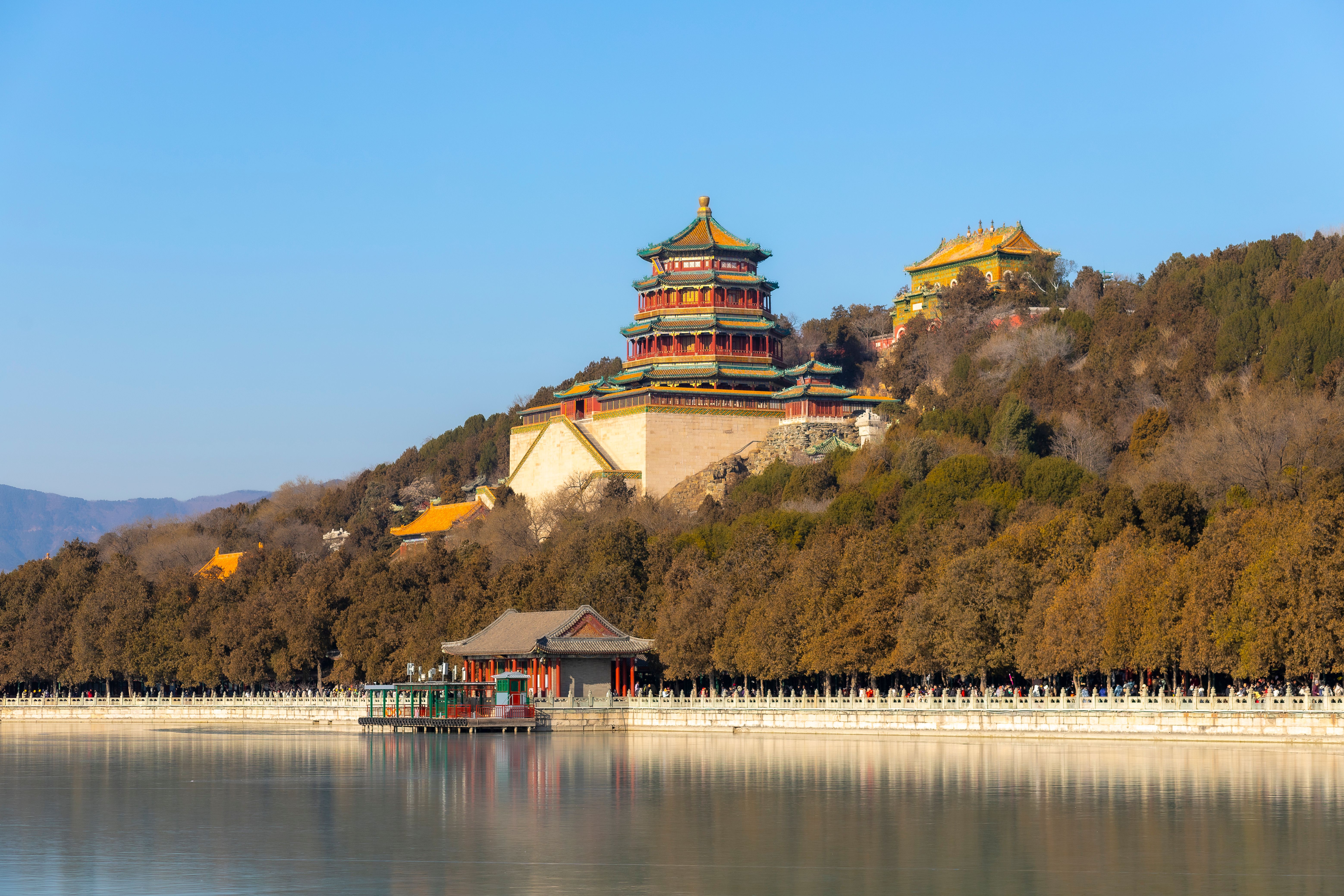
Summer Palace: Where Imperial Grandeur Meets Classical Garden Harmony
I stepped through the East Palace Gate at 7:30 AM, and the chaos of Beijing instantly melted away. The Hall of Benevolence and Longevity rose ahead, its yellow-glazed tiles glowing in the morning light. I'd paid 30 RMB for my entry ticket and followed the crowd towards the lake, passing through the Garden of Virtue and Harmony, where the 21-metre Grand Theatre Tower still stands. The Long Corridor appeared next—728 metres of covered walkway, its beams decorated with over 14,000 paintings of flowers, birds, and scenes from Chinese mythology . I walked its entire length, watching the morning light shift across the painted panels. This is the Summer Palace, the largest and best-preserved imperial garden in China, a UNESCO World Heritage site that has survived war, fire, and revolution. My honest criticism: the crowds are relentless on weekends and the site is vast—you'll walk more than you expect. But when you stand at the top of the Tower of Buddhist Incense and look down at Kunming Lake, the effort is forgotten.
Why the Summer Palace Matters
The Summer Palace began life in 1750 as the Garden of Clear Ripples, built by Emperor Qianlong as a birthday gift for his mother. It took 14 years to complete, and the design was a masterpiece of integration—Kunming Lake was modelled on Hangzhou's West Lake, and the gardens blended natural scenery with man-made structures in perfect harmony . In 1860, the Anglo-French Allied Forces burned it to the ground. Empress Dowager Cixi rebuilt it in 1888 using funds embezzled from the Imperial Navy, renaming it Yiheyuan—the "Garden of Nurtured Harmony" . It was damaged again in 1900 during the Boxer Rebellion, then restored once more. Today, it's a symbol of resilience and a living museum of Qing Dynasty royal life, housing over 40,000 relics and 3,000 ancient buildings . The UNESCO designation in 1998 called it "an outstanding expression of the creative art of Chinese landscape garden design" . My honest criticism: the history can feel sanitised, and the scale can be overwhelming. But the architecture is spectacular, and the Long Corridor is one of the most beautiful walkways in the world.
The Best Time to Experience the Summer Palace
Weekday mornings, between 7:30 AM and 10 AM, are the golden window. The palace opens at 6 AM in peak season, and arriving early means you'll beat the tour groups and have the Long Corridor largely to yourself . The palace is open daily from 6 AM to 8 PM in peak season (April to October) and 6:30 AM to 7 PM in winter, with last entry 30 minutes before closing . Peak season admission is 30 RMB, off-season is 20 RMB . Spring (April to June) offers blooming flowers and mild temperatures, ranging from 15°C to 25°C (59°F to 77°F). Autumn (September to October) is equally good, with crisp air and golden light. Summer is hot and humid, but the lake breeze offers some relief. Winter is cold and quiet, but the snow-covered rooftops are spectacular. Avoid weekends and Chinese public holidays.
Approximate Budget for a 7-Day Trip
My total for a week in Beijing came to roughly 3,500 RMB (480 USD). A visit to the Summer Palace is affordable.
- Accommodation: 200-600 RMB per night in Beijing. Staying near the city centre is convenient, but the Haidian area offers budget options starting at 200 RMB.
- Food: 100-200 RMB daily. There are a few restaurants inside the palace, but they're overpriced. Eat in the city before you visit.
- Transport: Metro Line 4 to Beigongmen Station costs about 5 RMB from most parts of the city. A taxi from the city centre costs 30-60 RMB.
- Attractions: Entry costs 30 RMB in peak season and 20 RMB in off-season. The boat ride on Kunming Lake costs 20-40 RMB.
- Miscellaneous: A power bank, comfortable shoes, and a light jacket for the lake breeze.
Total for 7 days: Approximately 3,500 RMB (480 USD). The most overpriced thing is the food inside the palace—a simple meal costs double what it does in the city. Eat before you go.
Essential Summer Palace Experiences
- Walk the Entire Long Corridor: This is the heart of the palace. The 728-metre covered walkway runs along the northern shore of Kunming Lake, connecting the East Palace Gate to the western end of the lake. The beams are decorated with over 14,000 paintings of flowers, birds, and scenes from Chinese mythology, all preserved and restored over centuries . Take your time—each panel tells a story.
- Climb the Tower of Buddhist Incense: The three-tiered octagonal pavilion sits at the centre of Longevity Hill and is the palace's most iconic structure. The climb is steep, but the view from the top—panoramic views of Kunming Lake and the surrounding Beijing suburbs—is the best in the palace . The tower houses a gilded statue of a bodhisattva and is a masterpiece of Qing architecture.
- Take a Boat Ride on Kunming Lake: The lake covers three quarters of the palace's 3-square-kilometre area . The boat ride offers a different perspective on the Long Corridor, the Tower of Buddhist Incense, and the Seventeen-Arch Bridge. The ride is short but peaceful, and the reflections of the buildings in the water are a photographer's dream.
- Cross the Seventeen-Arch Bridge: This is the longest bridge in the palace, spanning the lake to connect the mainland to South Lake Island. The bridge is a classic of Chinese garden design, with its 17 arches and its stone lions. The view of the bridge from the lake is one of the most photographed spots in the palace.
- Explore the Back Lake and Four Great Regions: Most visitors stick to the front of Longevity Hill and miss the quieter, more atmospheric back section. The Four Great Regions is a Tibetan-style building complex that feels like a different world, and the Back Lake is a peaceful green corridor with weeping willows . The Garden of Harmonious Interests, at the eastern end of the Back Lake, is a miniature masterpiece of Jiangnan garden design .
Skip the Suzhou Street if you're short on time. The recreated market street at the foot of Longevity Hill's back slope is pleasant, but it's a tourist attraction, not a historical site. The real magic is in the Long Corridor and the Tower of Buddhist Incense.
Hidden Gems Most Travelers Miss
- The Garden of Harmonious Interests: Tucked away at the eastern end of the Back Lake, this is a self-contained classical Jiangnan garden with a quiet pond, a covered bridge, and a pavilion. It's often overlooked by tourists rushing to the main sights .
- The Marble Boat: This is a mock stone boat built in 1755 and later rebuilt by Empress Dowager Cixi. It's a whimsical structure that floats on Kunming Lake, and it's a fun photo spot .
- The Bronze Ox: On the eastern shore of Kunming Lake, a life-sized bronze ox gazes across the water. It was placed here in 1755 to control flooding, and it's a unique piece of Qing-era sculpture .
- The Long Corridor at Sunset: The corridor is most beautiful in the late afternoon, when the low sun casts long shadows through the wooden beams and the painted panels glow. Most tourists have left by this time, and you'll have the walkway almost to yourself.
Overrated gem: The souvenir shops near the East Palace Gate. They sell the same mass-produced keychains, fans, and postcards you can find anywhere in Beijing, at inflated prices. The real treasure is the palace itself—the Long Corridor, the lake, the tower.
Cultural & Practical Tips
- Take the metro to Beigongmen Station: It's the most convenient way to reach the palace. Exit D leads directly to the North Gate. If you want to start at the East Palace Gate, take Bus 332 or 394.
- Wear comfortable shoes: The palace is vast—you'll walk at least 15,000 steps. The paths are uneven, so sneakers are the best option.
- Bring a power bank: Your phone's camera will be in constant use. There are few charging stations in the palace.
- Common tourist mistake: Visiting on a weekend. The crowds can be thick on Saturdays and Sundays. Visit on a weekday morning for the best experience.
- Common tourist mistake: Rushing through the palace. The Long Corridor alone takes 30 minutes to walk, and the Tower of Buddhist Incense deserves time. Allow at least 3 hours for a proper visit .
- Check the weather before you go: The view from the Tower of Buddhist Incense is best on clear days. Hazy or rainy days will obscure the view.
- Combine with the Old Summer Palace: The Old Summer Palace (Yuanmingyuan) is a 15-minute taxi ride away and offers a different, more ruined experience of the same historical period.
Essential Visitor Information
Location & Access: The Summer Palace is at 19 Xinjian Gongmen Road, Haidian District, Beijing, about 15 kilometres northwest of the city centre . Option 1: Metro Line 4 to Beigongmen Station (North Gate) or Xiyuan Station (East Gate). Option 2: Bus routes 332, 394, 718, and 808 stop near the palace. Option 3: Taxi from the city centre costs 30-60 RMB.
Tickets & Booking: Peak season (April to October) costs 30 RMB; off-season (November to March) costs 20 RMB. Students and seniors get discounts with valid ID. Tickets can be purchased on-site, and no advance booking is required.
Operating Hours: Peak season: 6 AM to 8 PM, last entry at 7:30 PM. Off-season: 6:30 AM to 7 PM, last entry at 6:30 PM .
Visit Duration: Minimum time is 3 hours for the highlights route. Recommended time is 4-5 hours for a full exploration of the palace, including the Back Lake and the Four Great Regions.
Family Suitability: Children are welcome. The palace is stroller-accessible on the main paths, and the boat ride on Kunming Lake is a hit with kids. The Long Corridor is a fun walk for all ages.
Timing: Best season is spring and autumn for comfortable temperatures and blooming flowers. Best time of day is weekday mornings (7:30-10 AM) for fewer crowds and soft light. The late afternoon is best for the Long Corridor's painted panels.
Highlights: The Long Corridor. The Tower of Buddhist Incense. Kunming Lake and the boat ride. The Seventeen-Arch Bridge. The Four Great Regions. The Garden of Harmonious Interests.
Nearby & Day Trip: The Old Summer Palace (Yuanmingyuan) is a 15-minute taxi ride away. The Fragrant Hills Park is a 20-minute taxi ride. The Beijing Botanical Garden is a 15-minute taxi ride.
Conclusion: Travel with Wonder, Not Just Photos
The Summer Palace is a survivor. It has been burned, looted, rebuilt, and restored. It has watched dynasties fall, wars rage, and revolution transform the country. Today, it's a peaceful oasis on the edge of Beijing, a place where the Long Corridor still stretches along the lake, the Tower of Buddhist Incense still rises above the hill, and the Seventeen-Arch Bridge still spans the water. The crowds can be overwhelming, the food is overpriced, and the scale is exhausting. But when you stand at the top of the tower and look down at the lake, the effort is forgotten. The Summer Palace is a masterpiece of Chinese garden design, and it's a testament to the resilience of Chinese culture. Arrive early, walk the Long Corridor, and take a moment to appreciate the view. The palace has been here for over 250 years. It will be here long after you've posted your photo.
Post a Comment