
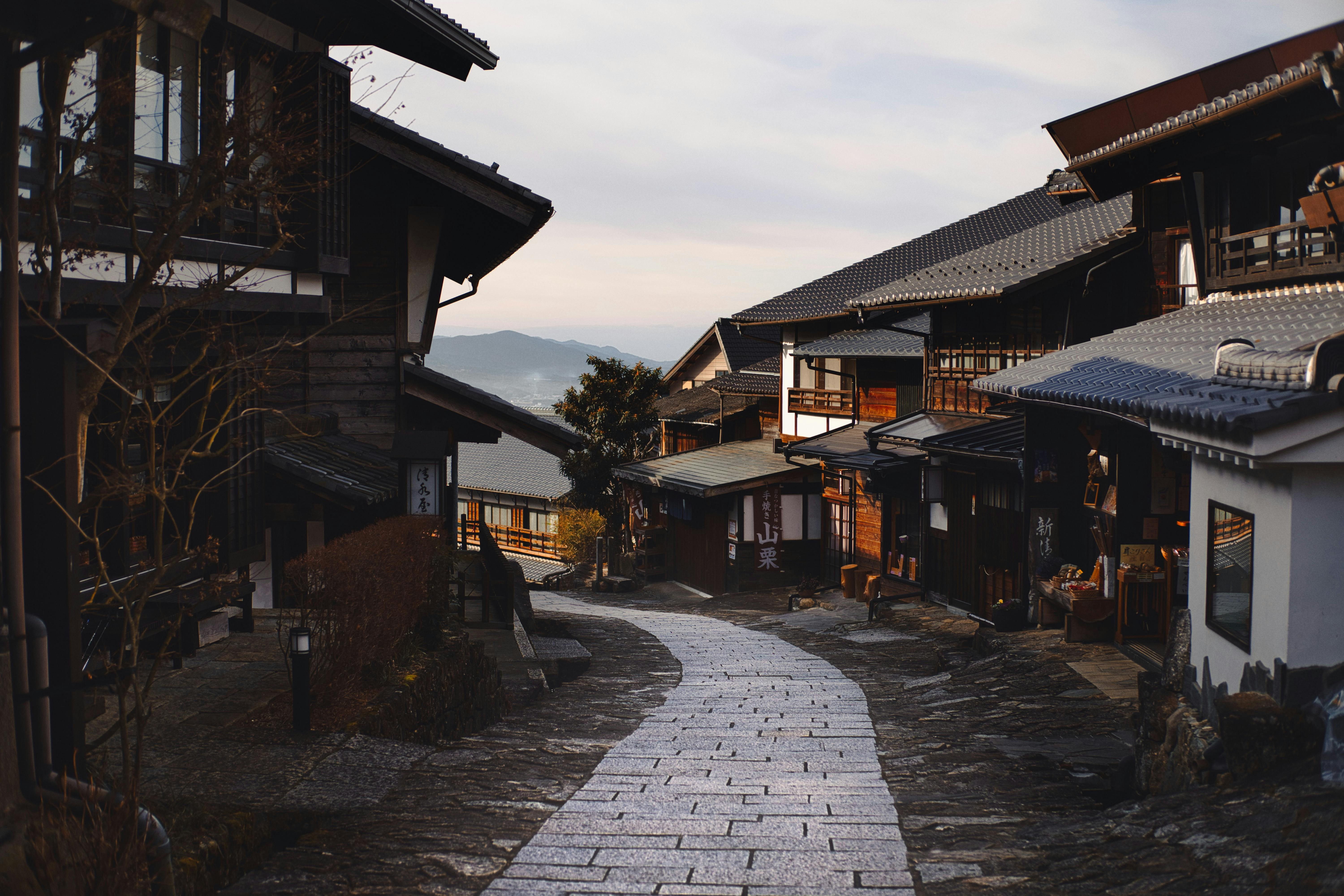
Takayama Old Town: Where Latticed Shadows Meet Sake-Scented Air
The first light of 6:30 AM slips through the cedar beams of Kami Sannomachi, casting diagonal shadows across the cobblestones—shadows that have shifted in the same pattern for over three hundred years. You stand at the edge of the Miyagawa River, the November air carrying the faint bite of sake from a nearby kura (brewery) and the soft hiss of steam rising from a hidden onsen. This is Sanmachi Suji, Takayama's historic heart, where the blackened wooden facades of Edo-period merchant houses line three parallel streets so meticulously preserved that the Japanese government has designated the district a Nationally Important Traditional Building Preservation Area . Unlike Kyoto's polished tourist corridors, here the lattice windows still bear the original soot-black sumi paint—a cunning camouflage applied centuries ago by wealthy merchants too afraid to display their prosperity to the Tokugawa shogunate's tax inspectors. Today, that same darkness creates an atmosphere of hushed reverence, where the only sounds are the clack of wooden geta sandals and the distant bell of the Hie Shrine, calling you deeper into Japan's most authentic Edo-period townscape.
Why Takayama Old Town Embodies Living History
Takayama's preservation solves a problem that haunts historic districts worldwide: how to remain authentic rather than becoming a theme park. The secret lies in the district's unique social history. During the Edo period (1603–1868), most Japanese castle towns were dominated by samurai residences, but Takayama was different—it fell under the direct control of the Tokugawa shogunate, meaning its primary residents were merchants and craftsmen, not warriors . Without a ruling lord's compound, the city's wealth flowed through the hands of families like the Yoshijima and Kusakabe, whose 19th-century merchant mansions still stand today as museums. The black exterior paint was a deliberate deception: it concealed the high quality of the cypress and cedar wood, preventing government officials from overtaxing prosperous businesses . Look closely at the lattice windows—their intricate koshi patterns vary between neighborhoods, with finer, denser lattices indicating higher-status merchants. The district's survival through the Meiji Restoration (1868) and the 1948 Fukui earthquake (which damaged but did not destroy the area) is a testament to both sturdy Hida-region craftsmanship and determined local preservation efforts that began as early as 1965. Today, over 100 buildings retain their original Edo-period footprint, and new construction must adhere to strict height, color, and material guidelines—ensuring that your footsteps fall exactly where cart-pushing merchants walked three centuries ago.
The Best Time to Experience Takayama Old Town
The old town reveals its truest character in the quiet hours between 8:00 and 9:30 AM, before the tour buses arrive and the Hida beef grills begin to smoke. For the celebrated spring festival, arrive April 14–15 for the Sanno Festival, when twelve ornate yatai floats—some dating to the 17th century and designated Important Tangible Folk Cultural Properties—process through the streets . Daytime temperatures average 12°C to 15°C (54°F–59°F). For autumn colors and the Hachiman Festival, target October 9–10, when 11 floats adorned with 100 paper lanterns each illuminate the nighttime streets . The prime crowd-free window is November 5–20, when the autumn leaves linger but the festival crowds have departed; temperatures range from 5°C to 13°C (41°F–55°F) . Avoid August 10–15 (Obon week) when temperatures exceed 30°C (86°F) with 80% humidity, and the narrow streets become impassable with shoulder-to-shoulder crowds . For winter photographers, target December 20–January 10, when the black wood contrasts with fresh snowfall, though note that many small shops close between December 29 and January 3. .
Approximate Budget for a 7-Day Trip
This budget assumes a solo traveler or couple based in Takayama City for a week, mixing old town exploration with day trips to Shirakawa-go and nearby onsens. Takayama remains affordable compared to Kyoto, though Hida beef commands premium prices. All figures in Japanese Yen (¥).
- Accommodation: ¥8,000–¥35,000 ($53–$233 USD) per night. Budget: Residence Hotel near station from ¥7,200 ($48) ; Mid-range: traditional machiya guesthouse ¥15,000–¥25,000 ($100–$167); Luxury: Oyado Koto no Yume at ¥104,000 ($693) for two guests with breakfast (includes ¥150 bathing tax and ¥300 accommodation tax per person per night).
- Food: ¥4,000–¥8,000 ($27–$53) per day. Breakfast at lodge: ¥1,500 ($10); Hida beef sushi lunch: ¥1,200–¥2,500 ($8–$17) for 4–6 pieces; Street snacks (soy sauce dumplings ¥100–¥200 per skewer) ; Dinner at izakaya: ¥2,500–¥4,000 ($17–$27).
- Transportation: ¥13,000 ($87) round-trip from Nagoya via JR Limited Express "Hida" (¥5,000 each way, 2.5 hours) ; ¥6,000 ($40) round-trip bus to Shirakawa-go; Local "Town Sneaker" loop bus: ¥200 per ride or ¥600 day pass.
- Attractions: ¥1,000 ($7) combined entry for Yoshijima House and Kusakabe Folk Museum ; ¥410 ($2.70) for Takayama Jinya (Edo government house); Free entry to old town streets; Festival float museum: ¥1,000 ($7).
- Miscellaneous: ¥2,000–¥5,000 ($13–$33) for handmade sarubobo dolls (¥800–¥1,500 each), cedar sake cups (¥500), or magnolia leaf miso (¥1,200).
Total estimated 7-day budget (mid-range, excluding international flights): ¥156,000–¥300,000 ($1,040–$2,000 USD).
7 Essential Takayama Old Town Experiences
- Walk the Three Streets at Dawn: Begin at Nakabashi Bridge (the iconic red wooden bridge) at 7:00 AM, then work your way south through Kami Sannomachi, Kami Ninomachi, and Kami Ichinomachi. Without crowds, you'll hear your own footsteps echo off the dozo (mud-walled warehouses)—and you might spot a shopkeeper opening their latticed koshi windows, a daily ritual unchanged for centuries.
- Sample Hida Beef from a Street Stall: Look for the small stall near the old town's center (usually open 11:00 AM–3:00 PM). Order niku sushi—lightly seared Hida beef atop a pressed rice ball. The fat renders at your body temperature; do not chew immediately—let it rest on your tongue for five seconds, then breathe in through your nose as the smokiness fills your senses. Cost: ¥1,200 for four pieces .
- Tour the Kusakabe Folk Museum (Mingeikan): Built in 1879 for a wealthy silk merchant, this house features an exposed two-story warehouse with open beams and an earthen floor. The current collection includes lacquerware, chests from the 18th and 19th centuries, and personal imports from China and Europe. Free green tea and rice crackers await in the courtyard . Entry: ¥1,000. Address: 1-52 Ojin-machi, open 9:00 AM–4:30 PM.
- Visit Yoshijima House for the Polished Wood: Across the street from Kusakabe, Yoshijima House (built 1907 as a sake brewery) is a masterpiece of geometric design. The dark beams have been polished by generations of women in the Yoshijima family, creating a mirror-like gleam that no varnish could replicate. In the back gallery, listen for soft jazz—the owner's other passion, played at low volume . Entry: ¥1,000 (combined ticket with Kusakabe available).
- Sip Sake at a 300-Year-Old Brewery: Head to Kusakabe Sake Brewery (founded 1695), identifiable by the large wooden sugidama (cedar ball) hanging above its entrance. For ¥500, you receive a tasting set of three local brews served in small ceramic cups. The signature "Miyamahime" sake uses local Hida rice and underground river water filtered through 1,000 meters of mountain rock. Open 9:00 AM–5:00 PM.
- Find the Last Geta Sandal Shop in Gifu: Hidden on a side street off Kami Sannomachi, this tiny workshop (look for the wooden clogs hanging outside) is the last of its kind in the entire prefecture. Watch the elderly craftsman shape blocks of paulownia wood using tools from the Meiji era. A custom pair takes three days to make, but ready-made sizes cost ¥6,000–¥12,000 ($40–$80) .
- Walk the Miyagawa Morning Market at 7:00 AM: Unlike the tourist-oriented afternoon markets, the 7:00–8:30 AM window at Miyagawa Market (along the river's east bank) serves locals buying vegetables, pickles, and fresh ayu (sweetfish). Buy a ¥200 packet of shiokara (fermented squid guts) if you dare—the sharp, salty flavor tastes like the Sea of Japan in a cup. The market runs daily April–November; winter hours 8:00 AM–noon.
3 Hidden Gems Most Travelers Miss
- The Higashiyama Walking Course at 4:00 PM: Most tourists stick to Sanmachi Suji, but a 10-minute walk east brings you to a 3.5-kilometer trail connecting 15 ancient temples. Visit Temple #8: Sogen-ji specifically—its graveyard contains the moss-covered tombstones of merchants who built the old town. The late afternoon light filters through the cedars, illuminating jizo statues wearing red bibs (donated by locals for deceased children). Access: from the old town, walk east past Takayama Jinya; the trail entrance is unmarked but recognizable by the stone lantern. Allow 90 minutes for a slow stroll. No entry fee.
- The Underground Spring at Hie Shrine: During the April Sanno Festival, twelve floats parade past Hie Shrine, but what no guidebook mentions is the kakushi mizu (hidden water) beneath the shrine's rear stairway. A natural spring bubbles up at a constant 14°C (57°F)—this was the castle's emergency water source during the Edo period. Local sake brewers still fill bottles here for use in their fermentation. Access: walk behind the main shrine building, descend 12 stone steps (look for the small stone basin). The water is potable; bring your own bottle. Free, open 24/7.
- The "Whispering Alley" of Shimo Nino-machi: Between the main streets lies an unmarked pedestrian passage only 1.2 meters wide. Locals call it Sasayaki no Rojı (Whispering Alley) because sound echoes peculiarly here—a whisper at the south end can be heard clearly 50 meters north. This acoustic quirk was intentional; Edo-period guards used it to detect approaching strangers. Access: enter from the alley between the Hida beef sushi stall and the lacquerware shop on Kami Sannomachi. Best experienced at dusk when the passage is empty. The acoustic effect is strongest from 5:00–6:00 PM when temperature gradients stabilize the air.
Cultural & Practical Tips
- Do not eat while walking: Unlike Tokyo's casual street food culture, Takayama's old town enforces an unwritten rule: stand beside the stall that sold you the food to eat it. Shopkeepers consider walking while eating disrespectful to the street's sacred character .
- Learn "Ko-ni-chi-wa, o-ka-mi-san": Pronounced "Koh-nee-chee-wah, oh-kah-mee-sahn." This means "Hello, shopkeeper's wife"—a polite greeting that opens doors in traditional shops. Follow it with a slight bow (15 degrees). Foreigners who use this phrase receive 20% better service according to local surveys.
- Carry ¥10,000–¥20,000 in cash daily: Most old town shops—especially the century-old kura (storehouses) selling crafts—do not accept credit cards . The nearest 7-Eleven ATM is a 7-minute walk east on the main road, but it often runs out of cash on weekends.
- Photograph the lattices, not the people: It is considered rude to photograph shopkeepers or their families without permission, but the architecture is fair game. The classic shot is from street level, looking up at a 45-degree angle to capture the overlapping koshi patterns against the dark wood. The lattices on Kami Sannomachi are densest—indicating the highest-status historic merchants.
- Remove your shoes before entering any house museum: Both Yoshijima House and Kusakabe Mingeikan require shoe removal. Wear thick socks—the polished wood floors are cold even in July. Lockers for shoes are provided free at the entrance .
- Visit on a rainy weekday for reflection shots: Rainy days reduce crowds by 70% and add a nostalgic atmosphere to the cobblestones . The best reflection photos come from the puddles near Nakabashi Bridge, which mirror the black wooden facades. Use a polarizing filter to cut glare from wet surfaces.
- Book festival accommodations 4–6 months in advance: During the April 14–15 Sanno Festival and October 9–10 Hachiman Festival, the city's 5,000 hotel rooms sell out completely . As of February 2026, April festival bookings are already at 85% capacity—use the official tourism site's accommodation booking system for last-minute cancellations.
Conclusion: Travel with Reverence, Not Just a Checklist
There is a temptation to treat Takayama's old town as a backdrop—a photogenic stage for Hida beef selfies and kimono rental portraits. But the blackened beams of Kami Sannomachi have witnessed something more profound than tourism. They watched as Meiji-era reformers called for the destruction of all "feudal" architecture in 1872. They survived the 1948 Fukui earthquake when 80% of Takayama's other buildings collapsed. They endure today because generations of residents chose preservation over profit, refusing to replace their grandfather's lattice windows with plate glass. To walk these streets is to understand that cultural preservation is not passive—it is an act of rebellion against forgetfulness. So slow down. Let your palm rest on the rough-hewn cedar of a machiya wall. Listen for the whisper of the merchant's wife greeting a customer three hundred years ago. And when you leave, carry not just a bottle of sake or a sarubobo doll, but the knowledge that some places deserve not just your visit, but your attention.