
Terracotta Army: Where Ancient Imperial Power Meets Timeless Artistic Mastery
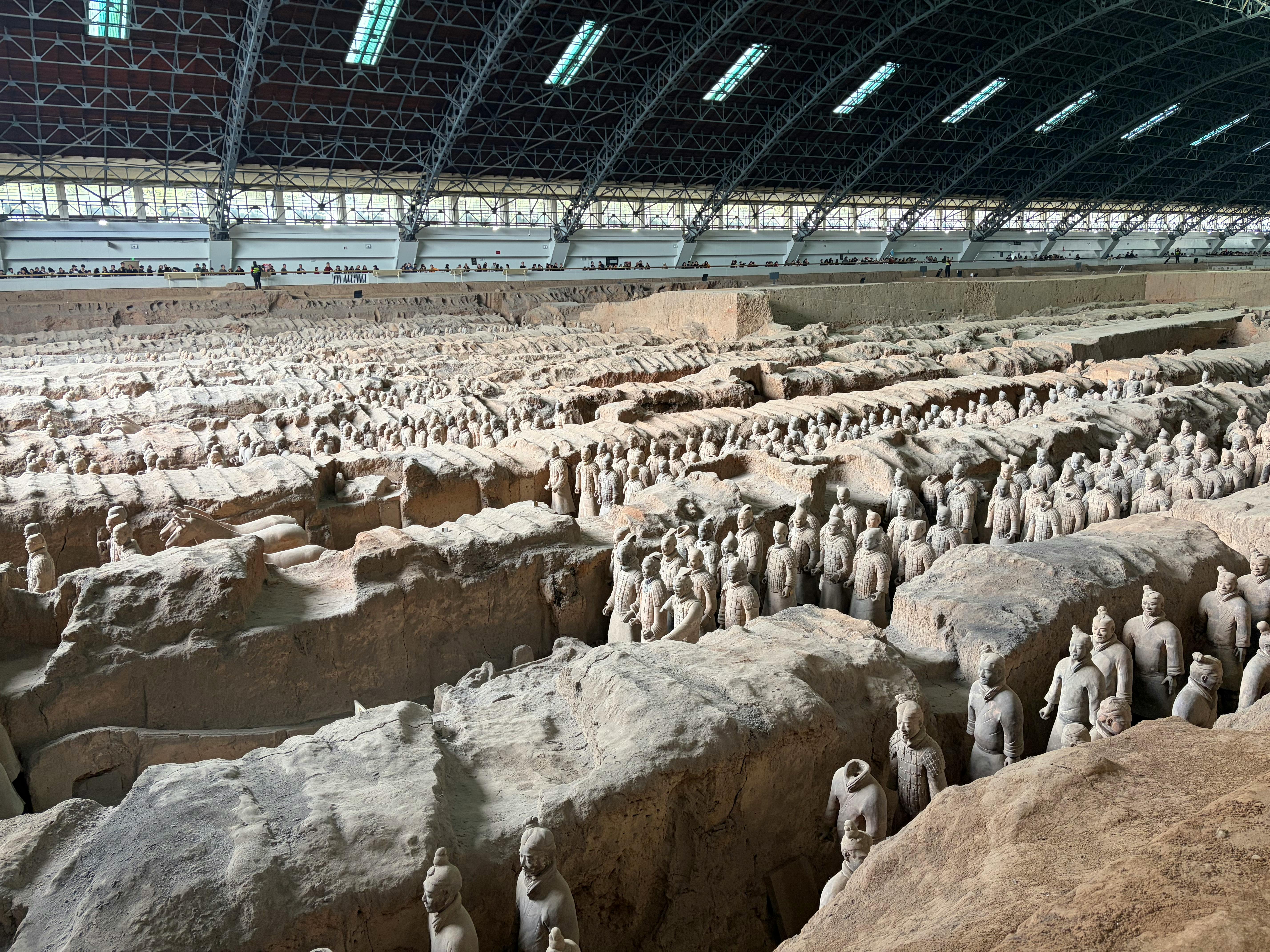
Golden hour filters through the vast protective hangar of Pit 1 as late afternoon light illuminates ranks of life-size terracotta warriors—each standing 1.8 to 1.9 meters tall, each with uniquely carved facial features, each frozen in eternal guard duty for over 2,200 years. You hear the hushed whispers of visitors moving along elevated walkways, the soft click of cameras capturing details that have survived dynasties and earthquakes, and the distant murmur of guides explaining how 8,000 soldiers, 130 chariots, and 520 horses were crafted by 700,000 artisans to accompany China's first emperor into the afterlife. This is not merely an archaeological site; it is a UNESCO World Heritage treasure, a subterranean army that embodies the ambition of Qin Shi Huang and the artistic genius of ancient Chinese craftsmanship—a testament to human creativity that continues to awe modern visitors beneath the loess plateau of Shaanxi Province. Standing before the silent ranks, you feel the profound weight of history—and the enduring responsibility to preserve this irreplaceable window into imperial China for generations yet to come.
Why the Terracotta Army Embodies Imperial Vision
Constructed between 246 and 208 BCE under the direction of Qin Shi Huang, the Terracotta Army was engineered to solve a singular spiritual need: to create an eternal protective force that could safeguard the emperor's soul in the afterlife while demonstrating his absolute authority over life and death. The complex's scale defies comprehension: three excavation pits covering 22,780 square meters house over 8,000 life-size warriors, each crafted using modular production techniques—heads, torsos, arms, and legs molded separately then assembled; facial features hand-carved individually so no two warriors share identical expressions; original polychrome paint applied in vibrant reds, blues, and greens (now largely faded due to oxidation upon exposure to air). Engineering precision defines the burial system: warriors were arranged in precise military formation—infantry in the front ranks, chariots and cavalry in the rear, command officers in Pit 3's headquarters; the 5-meter-deep pits were reinforced with wooden beams and covered with reed mats then earth to preserve the figures; drainage channels prevent flooding in Xi'an's continental climate. The army fulfilled its purpose so completely that it remained hidden for 2,200 years until local farmers discovered it in 1974; today, its preservation alongside ongoing archaeological research creates a unique dialogue between ancient imperial ambition and modern conservation science, proving that monumental artistry can transcend time when intentional stewardship honors both discovery and protection.
The Best Time to Experience the Terracotta Army
For optimal conditions, target April 10–May 28 or September 15–October 30, when daytime temperatures range 16–26°C (61–79°F) with low humidity and clear skies that enhance visibility of the warriors' intricate details. Arrive at the museum entrance on Lintong District between 8:30–9:45 AM when the site opens, morning light filters through the hangar skylights, and crowds are light enough for contemplative viewing before tour groups converge around 10:30 AM. Avoid July 8–August 26, when temperatures reach 30–37°C (86–99°F) with high humidity that makes the 40-kilometer journey from Xi'an uncomfortable, and October 1–7 (National Day holiday), when domestic tourism peaks and visitor numbers exceed 30,000 daily. Winter visits (December–February) offer crowd-free exploration but require preparation for temperatures averaging -2–8°C (28–46°F) and occasional fog that may delay transportation. Entry fees: ¥120 ($17) peak season (March–November), ¥90 ($12) off-peak (December–February); combined tickets with Qin Shi Huang Mausoleum ¥150 ($21). For real-time opening hours, exhibition updates, and conservation news, consult the official resource: www.bmy.com.cn. Note: the museum operates daily 8:30 AM–5:30 PM (peak) / 8:30 AM–5:00 PM (off-peak); last entry is one hour prior. Photography without flash is permitted in public areas; tripods require advance permission.
Approximate Budget for a 7-Day Trip
Pricing methodology reflects mid-range travel with authentic local experiences, excluding international flights. Costs quoted in Chinese Yuan (CNY/¥) with USD equivalents (¥7.2 ≈ $1 USD).
-
• Accommodation: ¥320–¥750 ($44–$104) per night for a boutique hotel or upscale guesthouse in Xi'an city center, within 30 minutes' drive of the Terracotta Army
• Food: ¥145 ($20) per day: breakfast ¥25 ($3.50) for roujiamo (Chinese hamburger) and soy milk at a local vendor; lunch ¥52 ($7) for biangbiang noodles or dumplings at a traditional eatery; dinner ¥68 ($9.50) for Shaanxi cuisine like lamb stew or cold noodles with jasmine tea
• Transportation: Tourist bus Line 5 from Xi'an Railway Station ¥7 ($1); taxi from city center to museum ¥120–¥180 ($17–$25); metro single-ride fares ¥2–¥6 ($0.30–$0.80); 7-day transportation card deposit ¥20 ($3)
• Attractions: Terracotta Army entry ¥120 ($17) peak / ¥90 ($12) off-peak; Qin Shi Huang Mausoleum ¥30 ($4); Xi'an City Wall cycling ¥45 ($6); Muslim Quarter food tour ¥60 ($8); Tang Dynasty show ¥180 ($25)
• Miscellaneous: Official museum guidebook ¥40–¥100 ($5.50–$14); terracotta warrior replica souvenir ¥50–¥150 ($7–$21); traditional calligraphy experience ¥75 ($10); travel insurance ¥45 ($6)
Total estimated budget: ¥6,200–¥9,400 ($860–$1,305) for one person
6 Essential Terracotta Army Experiences
- Explore Pit 1 at Opening Time: Enter the largest excavation hall (14,260 square meters) at 8:45 AM to experience the awe-inspiring scale of ~6,000 warriors arranged in battle formation. Walk the elevated walkway slowly, pausing to observe the varying ranks—infantry in front, chariots behind, commanders at the rear. Morning light through skylights enhances details; allow 45–60 minutes for this experience.
- Study Individual Warrior Details: Focus on the unique facial features, hairstyles, and armor patterns that distinguish each figure. Use binoculars or a telephoto lens to examine hand-carved expressions—some warriors appear youthful, others weathered; some wear stern expressions, others gentle smiles. Best observed between 9:00–10:30 AM when lighting is optimal.
- Visit Pit 2's Diverse Units: Explore this 6,000-square-meter pit containing cavalry, archers, and charioteers in dynamic combat positions. Notice the kneeling archers' intricate armor details and the horses' muscular anatomy. Allow 30 minutes; photography permitted without flash.
- Photograph the Command Center (Pit 3): Enter the smallest pit (520 square meters) housing 68 high-ranking officers and a war chariot. Position yourself at the viewing platform to capture the hierarchical arrangement that reveals Qin military organization. Visit during late morning when natural light illuminates the officers' detailed uniforms.
- Explore the Exhibition Hall: Located near the main pits, this museum displays original polychrome fragments, bronze weapons, and conservation techniques. Allow 30 minutes to understand how artisans applied vibrant paints that oxidized upon excavation; interactive displays explain ongoing preservation research.
- Witness Conservation Work (Seasonal): Check www.bmy.com.cn for public viewing sessions of the on-site conservation laboratory. When available, observe specialists cleaning warriors or analyzing pigments—a rare glimpse into the science protecting this heritage. Typically offered weekday afternoons 2:00–4:00 PM with advance registration.
3 Hidden Gems Most Travelers Miss
-
• Qin Shi Huang Mausoleum Park: Located 1.5 kilometers from the warrior pits, this 56-square-kilometer complex contains the emperor's unexcavated tomb mound (76 meters tall) and surrounding burial pits. Access via shuttle bus from the main museum (¥10 round-trip); open daily 8:30 AM–5:00 PM. Insider tip: Climb the viewing platform for panoramic views of the entire necropolis—a perspective that reveals the monumental scale of Qin's afterlife vision.
• Local Farmer's Market Near Lintong: Instead of returning directly to Xi'an, explore the small market outside the museum complex where vendors sell handmade terracotta replicas, local persimmons, and traditional Shaanxi snacks. Visit between 3:00–4:30 PM when artisans demonstrate pottery techniques; bring small cash (¥20–50) to support local craftspeople.
• Early Morning Tai Chi at Museum Plaza: At 7:00 AM, local residents gather in the plaza before opening for synchronized tai chi and qigong. Observe respectfully from the periphery; many practitioners welcome quiet visitors who ask permission before photographing. Best experienced on clear weekday mornings when mist rises gently from the surrounding fields.
Cultural & Practical Tips
-
• Photography etiquette: Handheld photography permitted throughout public areas; flash and tripods require advance permission from management. Always ask before photographing conservation staff or other visitors.
• Local phrases: Learn "Zhèlǐ zhēn zhuàngguān" (jurr-lee jen jwang-gwan = this place is magnificent) and "Xièxie" (SHYEH-shyeh = thank you). Pronounce with level tones; museum staff appreciate cultural effort.
• Footwear matters: You'll walk 3–5 kilometers on paved pathways and elevated walkways; wear comfortable, closed-toe shoes with good grip—surfaces can be slippery when humid.
• Weather preparedness: Xi'an's air quality fluctuates; download the AirVisual app. The museum hangars are climate-controlled; carry a light jacket for temperature shifts between outdoor plazas and indoor exhibition spaces.
• Crowd navigation: The site is busiest Friday–Sunday afternoons; visit weekday mornings (8:30–10:00 AM) for quieter exploration. During peak hours, start with Pit 3 then work backward to avoid main tour group flows.
• Transportation planning: Tourist bus Line 5 departs Xi'an Railway Station hourly 7:00 AM–7:00 PM (¥7, 60 minutes); taxis cost ¥120–¥180 each way. Allow 90 minutes round-trip travel time from city center.
• Respectful observation: Remember: these are cultural relics, not mere statues. Speak softly in exhibition halls, never touch the warriors or barriers, and follow all posted conservation guidelines to help preserve this irreplaceable heritage.
Conclusion: Travel with Reverence, Not Just Curiosity
The Terracotta Army does not surrender its ancient wisdom to hurried observation. To truly engage with this subterranean legacy, slow your gaze—linger where clay faces reveal individual humanity; pause to feel the cool air of the excavation hall; listen for the echo of centuries in the silence between warrior ranks. Your visit becomes an act of cultural stewardship when you choose mindful presence over passive tourism, when you honor the artisans' craftsmanship by respecting preservation protocols, when you carry home not just photos but a deeper appreciation for humanity's enduring quest to transcend mortality through art. This army has preserved its power to awe through two millennia because each generation recognized its value beyond spectacle. As you depart beneath the museum's protective roof, let your final intention be this: we are temporary witnesses to a dialogue between earth and eternity. Travel with reverence—not just to see, but to understand; not just to visit, but to honor.