
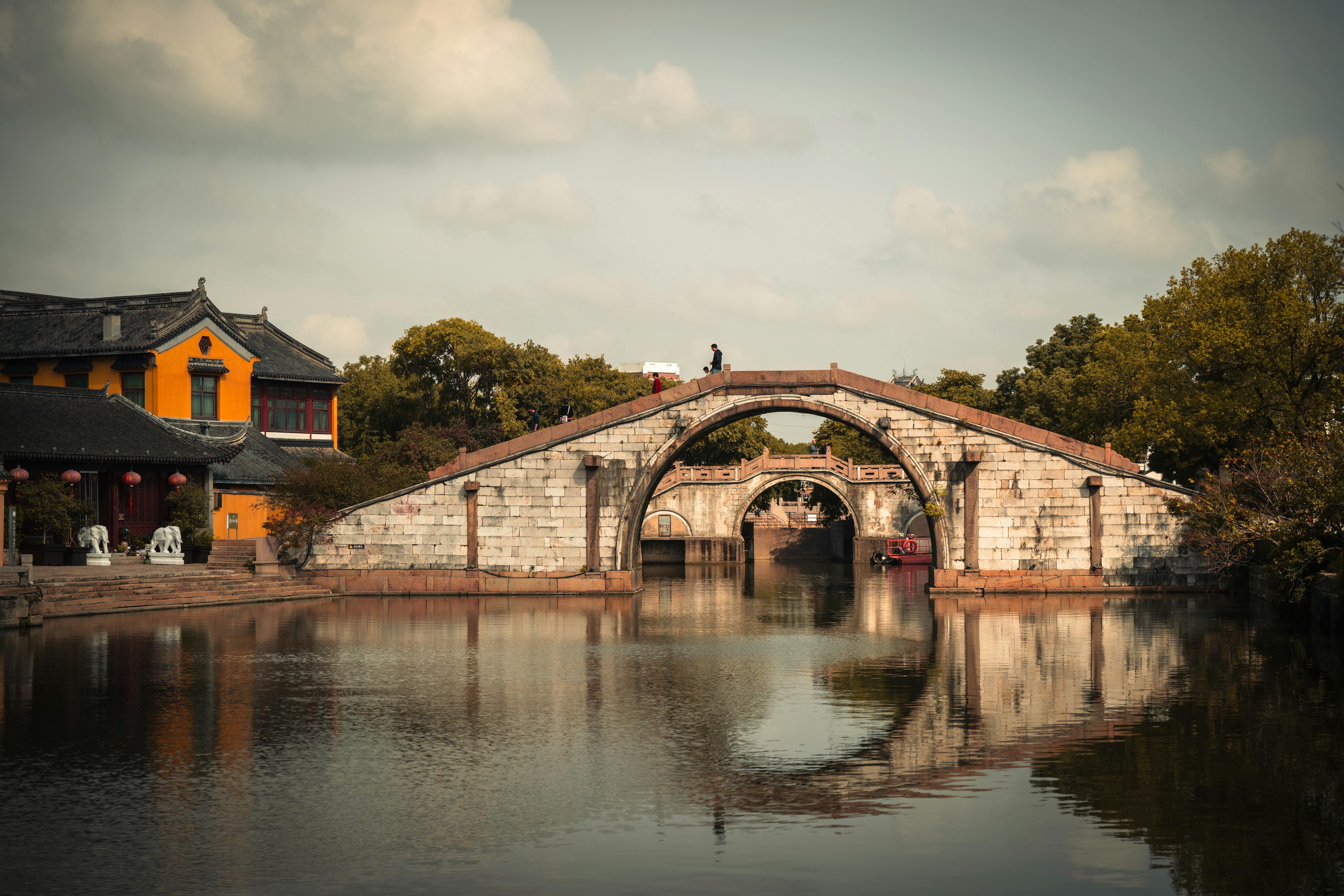
Zhujiajiao Water Town: Where Ancient Canal Life Meets Timeless Jiangnan Serenity
Morning mist curls across the 1.2-kilometer network of canals as golden light bathes the weathered stone arches of Fangsheng Bridge—72 meters long, 5.8 meters wide, and standing since 1571—while traditional whitewashed houses with black-tiled roofs reflect in the gentle currents below. You hear the soft lap of wooden punt poles against canal walls, the distant chatter of vendors selling zongzi (sticky rice dumplings) from waterside stalls, and the rhythmic clack of mahjong tiles from an open teahouse window where elders gather beneath paper lanterns that have illuminated this water town for over 1,700 years. This is not merely a historic district; it is a 47-square-kilometer living museum of Jiangnan culture, a UNESCO-recognized heritage site where Ming and Qing dynasty architecture frames a way of life that has flowed along these waterways since the Three Kingdoms period. Standing on the ancient stone steps where laundry was once washed and boats once docked, you feel the profound continuity of a place designed around water—and the enduring responsibility to preserve this irreplaceable example of traditional Chinese canal-town life for generations yet to come.
Why Zhujiajiao Embodies Jiangnan Water Town Heritage
Established during the Three Kingdoms period (220–280 AD) and flourishing under Ming and Qing rule, Zhujiajiao was engineered to solve a singular geographic need: to create a thriving commercial hub where waterways could facilitate trade, transportation, and daily life in the fertile Yangtze River Delta. The town's layout follows precise hydrological principles: the central Cao Gang Canal—1.2 kilometers long and 15–30 meters wide—serves as the main artery, branching into 12 smaller waterways that connect 36 ancient stone bridges; the whitewashed, black-tiled houses are built directly on canal banks with stone foundations extending 2–3 meters below water level to prevent erosion; the distinctive "horse-head" gables (stepped rooflines) were designed to prevent fire spread between densely packed wooden structures. Architectural craftsmanship defines the ensemble: Fangsheng Bridge's five arches were constructed using interlocking granite blocks without mortar, a technique that has withstood centuries of seasonal flooding; the Kezhi Garden's 3,000-square-meter layout employs classical Jiangnan design principles—rockeries mimicking mountains, ponds mirroring sky, and winding paths creating the illusion of greater space. The town fulfilled its purpose so completely that by the 19th century it had become "the Venice of Shanghai," a bustling market for rice, silk, and handicrafts; today, its preservation alongside sustainable tourism creates a unique cultural dialogue where ancient waterways still support traditional boat traffic while welcoming visitors seeking authentic Jiangnan heritage.
The Best Time to Experience Zhujiajiao
For optimal conditions, target April 5–May 23 or September 10–October 26, when daytime temperatures range 15–24°C (59–75°F) with moderate humidity and clear skies that enhance reflections of traditional architecture on canal waters. Arrive at the main entrance near Kezhi Garden between 8:00–9:30 AM when morning light filters through willow branches, mist rises gently from the water, and crowds are light enough for contemplative exploration before tour groups converge around 10:30 AM. Avoid July 8–August 25, when temperatures reach 30–36°C (86–97°F) with humidity exceeding 85% that makes waterside walking uncomfortably warm, and October 1–7 (National Day holiday), when domestic tourism peaks and visitor numbers exceed 25,000 daily. Winter visits (December–February) offer atmospheric fog-draped canals but require preparation for temperatures averaging 3–9°C (37–48°F) and reduced boat service. Entry to Zhujiajiao is free; combined tickets for attractions ¥60–¥120 ($8–$17).. Note: the town is accessible 24 hours, but most attractions operate 8:00 AM–5:00 PM; evening illumination of bridges begins at 6:30 PM year-round.
Approximate Budget for a 7-Day Trip
Pricing methodology reflects mid-range travel with authentic local experiences, excluding international flights. Costs quoted in Chinese Yuan (CNY/¥) with USD equivalents (¥7.2 ≈ $1 USD).
-
• Accommodation: ¥380–¥820 ($53–$114) per night for a boutique canal-side guesthouse or restored traditional inn in Zhujiajiao, within walking distance of main attractions
• Food: ¥165 ($23) per day: breakfast ¥28 ($4) for shengjianbao (pan-fried dumplings) and sweet soy milk at a waterside vendor; lunch ¥58 ($8) for zongzi or noodle soup at a traditional eatery; dinner ¥79 ($11) for local specialties like braised pork, river fish, or seasonal vegetables with jasmine tea
• Transportation: Metro Line 17 to Zhujiajiao Station ¥7 ($1); shuttle bus from station to town entrance ¥5 ($0.70); DiDi ride from Shanghai city center ¥180–¥240 ($25–$33); traditional punt boat ride ¥80–¥150 ($11–$21) for 30–60 minutes
• Attractions: Zhujiajiao entry: free; Kezhi Garden ¥30 ($4); Fangsheng Bridge access: free; Traditional Folk Culture Museum ¥20 ($3); Clan Temple visit ¥15 ($2); combined ticket ¥60–¥120 ($8–$17)
• Miscellaneous: Handcrafted silk fan souvenir ¥50–¥140 ($7–$19); traditional tea set ¥70–¥200 ($10–$28); calligraphy experience ¥80 ($11); travel insurance ¥48 ($7)
Total estimated budget: ¥6,800–¥10,200 ($945–$1,420) for one person
6 Essential Zhujiajiao Experiences
- Walk Fangsheng Bridge at Sunrise: Arrive at the iconic five-arch stone bridge by 7:45 AM to experience it in soft morning light before crowds gather. The 72-meter span offers panoramic views of canal life—fishermen casting nets, laundry being rinsed on stone steps, and traditional boats gliding beneath. Photograph the bridge's reflection in still water; use a polarizing filter to reduce glare and deepen sky tones.
- Cruise the Canals by Traditional Punt: Board a wooden punt at the main dock (¥80–¥150, 30–60 minutes) for a waterside perspective of Zhujiajiao's heritage architecture. Request the route passing under Fangsheng Bridge and along the quieter northern canals; the gentle rocking motion and soft lap of water against wood create a meditative journey through history.
- Explore Kezhi Garden's Classical Design: Enter this 3,000-square-meter Ming dynasty garden (¥30 entry, open 8:00 AM–5:00 PM) to experience Jiangnan landscape philosophy: rockeries mimicking mountains, ponds mirroring sky, and winding paths creating the illusion of greater space. Allow 45 minutes; best visited weekday mornings to avoid crowds.
- Photograph Traditional Architecture Details: Focus on the distinctive "horse-head" gables, carved wooden lattice windows, and stone doorframes featuring auspicious symbols. Visit between 10:00 AM–12:00 PM when sidelight accentuates relief carvings; use a macro lens to capture weathered textures that tell stories of centuries past.
- Sample Waterside Street Food: Discover family-run stalls along the canal selling zongzi (sticky rice dumplings), ding gao (sweet rice cake), and freshly brewed Longjing tea. Visit around 11:00 AM when vendors prepare lunch specialties; budget ¥20–40 per person for authentic local flavors.
- Experience Traditional Tea in a Canal-Side Teahouse: Reserve a window table at a waterside café (¥40–¥80 for tea and pastry) overlooking the canal. Sip jasmine oolong while watching wooden boats glide by and willow branches dip in the water; the serene atmosphere offers a peaceful pause from exploration.
3 Hidden Gems Most Travelers Miss
-
• Northern Canal Residential Lane: Tucked behind the main tourist route, a quiet alleyway along the northern canal reveals authentic daily life: residents hanging laundry, elders playing chess beneath persimmon trees, and traditional courtyard gardens. Access via the path near the Traditional Folk Culture Museum; visit weekday mornings 9:00–10:30 AM when activity is most visible. Insider tip: Bring a small gift of tea to share—it's a traditional gesture that opens conversations about neighborhood history.
• Ancient Well Courtyard: Behind an unmarked door near Lane 128, a restored courtyard houses a 400-year-old stone well still used by local families. Access requires polite inquiry at the corner tea shop; open Tuesday–Saturday 10:00 AM–3:00 PM. A resident elder occasionally shares stories about the well's history and traditional water customs—a profound glimpse into living heritage.
• Early Morning Tai Chi by the Canal: At 6:30 AM, local practitioners gather on the stone embankment near Fangsheng Bridge for synchronized tai chi and qigong. Join respectfully from the periphery; many elders welcome quiet observers who ask permission before photographing. Best experienced on clear weekday mornings when mist rises gently from the water.
Cultural & Practical Tips
-
• Respectful photography: Handheld photography permitted in public areas; always ask before photographing residents, especially elders or inside private courtyards. Respect privacy—many canal-side homes remain inhabited by local families.
• Local phrases: Learn "Zhèlǐ zhēn měi" (jurr-lee jen may = this place is beautiful) and "Xièxie" (SHYEH-shyeh = thank you). Pronounce with level tones; vendors appreciate cultural effort and may share stories about the town's history.
• Footwear matters: You'll walk 4–7 kilometers on uneven stone pathways, wooden bridges, and canal-side steps; wear comfortable, closed-toe shoes with good grip—surfaces become slippery after rain or morning dew.
• Weather preparedness: Shanghai's air quality fluctuates; download the AirVisual app. The waterside location offers minimal shelter—carry a compact umbrella for sudden showers; layer clothing for temperature shifts between sunlit canals and shaded alleyways.
• Boat ride etiquette: Traditional punt boats accommodate 4–6 passengers; agree on price and duration before boarding. Tip the boatman ¥10–20 for exceptional service or storytelling about local history.
• Residential etiquette: Remember: Zhujiajiao remains a living community. Speak softly in residential sections, avoid blocking doorways, and never enter gated courtyards without invitation. Support local businesses by purchasing directly from artisans.
• Payment preparedness: Most venues accept mobile payments (WeChat Pay, Alipay); carry some cash (¥100–200) for small vendors or traditional markets that may not have card terminals.
Conclusion: Travel with Reverence, Not Just Observation
Zhujiajiao does not surrender its watery soul to hurried glances. To truly engage with this living heritage, slow your step—linger where stone bridges frame canal reflections; pause to feel the cool smoothness of a centuries-old threshold beneath your palm; listen for the whisper of history in the gentle lap of water against ancient walls. Your visit becomes an act of cultural stewardship when you choose mindful presence over passive tourism, when you honor the town's living residential character by respecting boundaries, when you carry home not just photos but a deeper appreciation for the delicate balance between preservation and progress. This water town has maintained its authentic spirit through centuries of change because each generation recognized its value beyond spectacle. As you depart beneath the willow branches, let your final intention be this: we are temporary guests in a dialogue between water and stone. Travel with reverence—not just to see, but to protect; not just to visit, but to honor.