
Yangtze River Cruise: Where Ancient Gorges Meet Modern Wonder
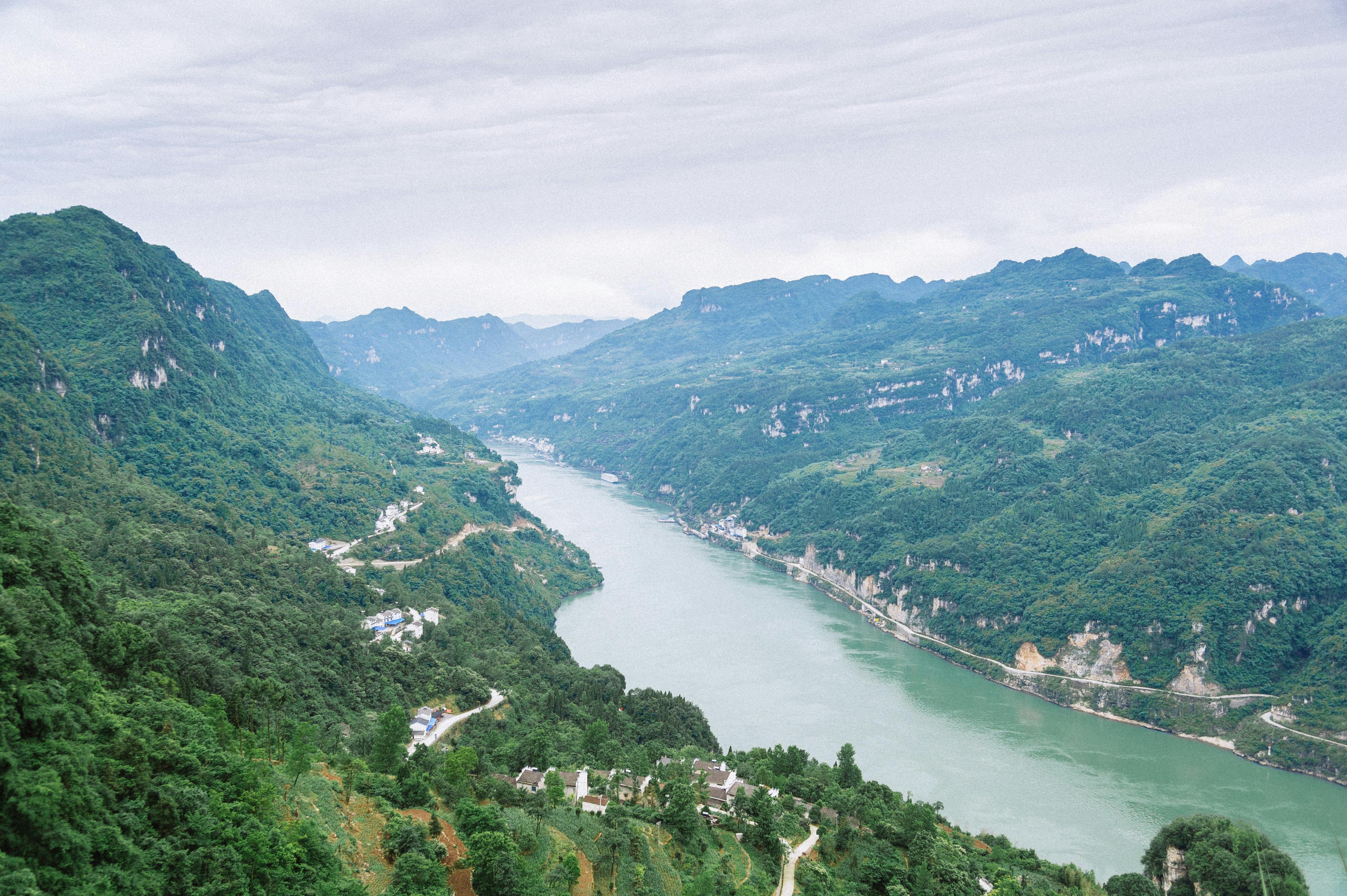
Dawn breaks over the Yangtze as your cruise ship glides silently through the Qutang Gorge—the narrowest stretch of the Three Gorges, where limestone cliffs rise 800 meters (2,625 feet) on either side, creating a canyon just 150 meters (492 feet) wide. The gentle chug of the engine blends with the distant call of gibbons echoing through mist-shrouded peaks, while the scent of river water and wild jasmine drifts across the deck. Here, aboard a Yangtze River cruise between Chongqing and Yichang, you traverse one of the world's most dramatic waterways—a 6,300-kilometer (3,915-mile) artery that has carried traders, poets, and emperors for over 3,000 years. Today's four-day journey compresses millennia of history into a single voyage: passing ancient plank roads carved into cliff faces, Buddhist temples perched on precarious ledges, and the monumental Three Gorges Dam, humanity's largest hydroelectric project. This isn't merely transportation; it's a floating classroom where China's past and present converge, offering travelers a rare opportunity to witness a civilization's relationship with its greatest river.
Why Yangtze River Cruise Embodies Cultural Convergence
The Yangtze River cruise represents a unique solution to a fundamental travel challenge: how to experience China's most dramatic landscapes and deepest cultural heritage without the exhaustion of overland travel. Since the first tourist vessels navigated the Three Gorges in the 1980s, this journey has evolved into a sophisticated floating resort experience that solves the need for accessible, immersive exploration of one of Earth's most complex river systems.
Modern cruise ships—like the 110-meter-long (361-foot) Century Voyager or the 130-meter (427-foot) Victoria Sabrina—carry 200-500 passengers in cabins ranging from 22-square-meter (237-square-foot) standards to 65-square-meter (700-square-foot) presidential suites. These vessels feature stabilizer systems that minimize roll in the Yangtze's occasional choppy stretches, while advanced wastewater treatment plants ensure zero discharge into the river—a critical consideration for preserving water quality for 400 million people who depend on the Yangtze basin.
Beyond comfort, the cruise format addresses a deeper need: contextualizing China's rapid modernization within its ancient landscape. As your ship passes the Three Gorges Dam's five-tier ship lock—each chamber 280 meters long, 34 meters wide, and 5 meters deep—you witness engineering that allows 10,000-ton cargo vessels to bypass the 113-meter (371-foot) elevation change. Minutes later, you'll dock at Shibaozhai Pagoda, a 12-story wooden structure built in 1760 that clings to a solitary rock pillar without a single nail. This juxtaposition—ancient craftsmanship alongside contemporary engineering—creates a narrative impossible to replicate through any other travel format.
The cruise also solves logistical challenges: with meals, accommodations, transportation, and guided excursions included, travelers access remote cultural sites like the Lesser Three Gorges or Fengdu Ghost City without navigating complex public transit. For international visitors, onboard English-speaking guides and curated shore programs demystify regional customs, transforming potential barriers into meaningful connections. The Yangtze cruise doesn't just show you China; it helps you understand how geography, history, and ambition have shaped a civilization.
The Best Time to Experience Yangtze River Cruise
Timing your Yangtze River cruise dramatically impacts both scenery and comfort. The absolute golden window arrives between 7:00 AM and 9:00 AM daily—when morning mist softens the gorge walls, lighting is ideal for photography, and wildlife like gibbons and kingfishers are most active.
For seasonal planning, target these precise date ranges:
Spring (March 20–May 15): Temperatures range 14-24°C (57-75°F) with blooming azaleas and rapeseed fields framing the riverbanks. Water levels stabilize after winter drawdown, revealing dramatic rock formations and ancient inscriptions normally submerged.
Autumn (September 18–November 10): Ideal conditions at 16-26°C (61-79°F) with crystal-clear skies and golden foliage. This season offers the best visibility for photographing the Three Gorges' limestone cliffs and the Three Gorges Dam's full 2,335-meter (7,661-foot) span.
Winter (December 1–February 10): Cooler at 6-15°C (43-59°F) but uncrowded; the reservoir's winter drawdown exposes archaeological sites and ancient plank roads—a rare opportunity for history enthusiasts willing to bundle up.
Avoid Chinese National Holiday week (October 1-7) when cruise occupancy reaches 100% and prices surge 40%, and summer peak (July 15-August 25) when temperatures reach 28-36°C (82-97°F) with humidity exceeding 85%, creating hazy conditions that obscure mountain views.
For current schedules, cabin availability, and shore excursion updates, consult the official resource: www.yangtze-river-cruises.com
Approximate Budget for a 7-Day Trip
Embarking on a Yangtze River cruise fits varied travel budgets, with China offering exceptional value for multi-day river journeys. The following breakdown reflects mid-range preferences for a 4-day cruise (Chongqing to Yichang) plus 3 days of pre/post-cruise exploration, with prices in Chinese Yuan (RMB/¥) and approximate USD/EUR equivalents based on current exchange rates.
Accommodation (per night):
- Cruise standard cabin: ¥800-1,500 ($110-205 / €100-190) per person, all-inclusive
- Cruise balcony suite: ¥2,000-4,000 ($275-550 / €250-500) per person
- Pre-cruise hotel (Chongqing downtown): ¥400-800 ($55-110 / €50-100)
Food (per day):
- Cruise meals: Included in fare (buffet breakfast, lunch, dinner with Sichuan/international options)
- Pre-cruise breakfast: ¥20-40 ($3-5 / €2.50-5.50) — soy milk, baozi, congee
- Pre-cruise lunch: ¥40-70 ($5-10 / €5-9) — Chongqing noodles, hot-and-sour soup
- Pre-cruise dinner: ¥80-150 ($11-20 / €10-19) — Sichuan hot pot, mapo tofu
Transportation:
- Chongqing airport to cruise terminal transfer: ¥150-250 ($20-34 / €19-32)
- Yichang cruise terminal to airport transfer: ¥120-200 ($16-27 / €15-25)
- Local taxi in Chongqing: ¥15-30 ($2-4 / €1.90-3.80) per ride
- High-speed train extension (Chongqing-Chengdu): ¥150-200 ($20-27 / €19-25)
Attractions & Excursions:
- Cruise shore excursions: Most included; premium options ¥200-400 ($27-55 / €25-50)
- Three Gorges Dam visitor center: ¥105 ($14.50 / €13.30) if not included
- Fengdu Ghost City entrance: ¥80 ($11 / €10)
- Shibaozhai Pagoda access: Included with cruise
Miscellaneous:
- Onboard spa treatments: ¥200-600 ($27-82 / €25-76)
- Professional photography package: ¥300-500 ($41-68 / €38-63)
- Souvenirs (Sichuan tea, embroidery): ¥100-500 ($14-68 / €13-63)
Total estimated cost for 7 days (mid-range cruise + land): ¥12,000-22,000 ($1,650-3,025 / €1,520-2,795)
7 Essential Yangtze River Cruise Experiences
- Witness Qutang Gorge at Sunrise: Position yourself on the upper deck by 6:45 AM as your ship enters the Qutang Gorge—the shortest but most dramatic of the Three Gorges. At just 8 kilometers (5 miles) long with cliffs rising 800 meters (2,625 feet), this stretch creates a canyon so narrow the sky appears as a thin ribbon. Bring a wide-angle lens to capture the 150-meter-wide (492-foot) channel framed by misty limestone. Listen for the distinctive echo of your ship's horn bouncing between cliffs—a sound that has guided river travelers for millennia.
- Explore Shibaozhai Pagoda's Architectural Marvel: During your shore excursion, climb the 12-story wooden pagoda built in 1760 that clings to a solitary 50-meter-tall (164-foot) rock pillar without a single nail. Each of the 258 steps reveals intricate carvings and Buddhist statues; pause at the seventh floor for panoramic views of the Yangtze curving around the isolated peak. Visit at 10:00 AM when morning light illuminates the red-painted eaves against blue sky.
- Experience the Three Gorges Dam Ship Lock: Most cruises include transit through the dam's five-stage ship lock—a 1,600-meter-long (5,249-foot) system that raises or lowers vessels 113 meters (371 feet). Stand on the upper deck at 2:00 PM when your ship enters the first chamber; watch as 120,000 cubic meters of water fill or empty each 280-meter-long (919-foot) chamber over 40 minutes. The engineering precision—water levels matching within centimeters—creates a mesmerizing ballet of hydraulics and steel.
- Photograph Wu Gorge's Twelve Peaks: During afternoon transit through Wu Gorge, position yourself on the port side with a telephoto lens to capture the legendary Twelve Peaks—limestone spires named after mythological maidens. The most famous, Goddess Peak, rises 922 meters (3,025 feet) and is best photographed at 3:30 PM when side lighting accentuates its contours. Use a polarizing filter to reduce river glare and enhance the contrast between white cliffs and emerald water.
- Attend the Captain's Welcome Dinner: Most premium cruises host a formal dinner on the first evening featuring Sichuan specialties and live traditional music. Arrive at 7:00 PM in smart-casual attire to enjoy dishes like tea-smoked duck, mapo tofu, and Yangtze river fish prepared by onboard chefs. The evening often includes a brief cultural performance—face-changing opera or guzheng music—providing context for the landscapes you'll explore tomorrow.
- Walk the Lesser Three Gorges by Sampan: During the optional excursion to Lesser Three Gorges, transfer to a small wooden sampan for an intimate journey through narrow tributaries inaccessible to large ships. Paddle beneath overhanging vegetation, spot wild macaques on cliff ledges, and listen to your guide explain local Tujia minority customs. This 90-minute experience (typically 9:00-10:30 AM) offers the quietest, most immersive perspective on the Yangtze ecosystem.
- Stargaze from the Upper Deck at Night: After dinner, return to the upper deck around 9:00 PM when artificial lights dim. Away from city glow, the Yangtze corridor reveals astonishing star fields; on clear autumn nights, the Milky Way arches directly over the gorge walls. Bring a red-light flashlight to preserve night vision, and listen for the gentle lap of water against the hull—a meditative soundtrack to China's ancient river.
3 Hidden Gems Most Travelers Miss
- White Emperor City at Dawn: While most cruise excursions visit White Emperor City (Baidicheng) mid-morning, request early access (6:30 AM) through your cruise concierge (advance notice required; no additional fee on premium lines). This hilltop temple complex, where poet Li Bai composed famous verses in 759 AD, offers unparalleled photography conditions: morning mist swirling around 1,200-year-old stone tablets, soft light on the red-painted pavilions, and zero crowds. Insider tip: Climb to the highest observation platform for panoramic views of the Qutang Gorge entrance—visible only from this vantage point.
- Shennong Stream's Suspension Bridge: Most passengers experience Shennong Stream via motorized boat; instead, ask your guide about the optional 30-minute hike to the ancient suspension bridge (access requires moderate fitness; contact cruise excursion desk 24 hours ahead). This 150-year-old wooden bridge, strung with iron chains and planks, spans a 40-meter-deep (131-foot) gorge with water so clear you can count fish below. Visit at 11:00 AM when sunlight penetrates the canopy, creating ethereal light beams. The bridge remains in active use by local farmers—a living connection to pre-cruise river life.
- Fengdu Ghost City's Back Path: While tour groups follow the main route through Fengdu's underworld-themed temples, request the "scholar's path" from your guide (available Tuesday/Thursday; limited to 10 guests). This lesser-marked trail winds through bamboo groves to a secluded meditation pavilion where Ming Dynasty scholars once composed poetry. The path reveals stone carvings depicting Buddhist parables rarely seen by tourists, plus a natural spring considered sacred for 800 years. Access requires asking at the visitor center upon arrival; wear sturdy shoes for uneven stone steps.
Cultural & Practical Tips
- Photography etiquette: Always ask permission before photographing local residents, especially in rural shore excursion villages. Drone usage requires advance authorization from cruise staff and Chinese aviation authorities (permit process takes 7-10 days; contact cruise line pre-departure). Avoid photographing military or dam security installations.
- Local phrases: Master these Mandarin expressions: "Yángzǐ Jiāng" (yahng-dzuh jyahng) for Yangtze River, "Sānxiá" (san-shyah) for Three Gorges, "Xièxie" (shyeh-shyeh) for thank you, and "Zhè ge duōshǎo qián?" (juh guh dwor-shaow chyen) for "How much is this?" Crew and guides appreciate visitors who acknowledge cultural context.
- Weather preparedness: The Yangtze corridor's microclimate creates sudden fog banks, especially in gorges. Carry a lightweight rain shell year-round. Summer humidity (80-90%) makes temperatures feel 4-6°C hotter; winter dampness penetrates clothing—layer with moisture-wicking base layers and a windproof outer shell.
- Footwear essentials: Shore excursions involve walking on uneven stone paths, wooden boardwalks, and steep staircases (Shibaozhai Pagoda alone has 258 steps). Wear closed-toe shoes with aggressive tread; surfaces become slippery when wet. Avoid sandals or smooth-soled shoes.
- Respectful engagement: Many shore sites remain active cultural or religious spaces. Remove hats and speak quietly in temples; follow guide instructions about photography restrictions. When visiting rural villages, a nod or "nǐ hǎo" (nee how) is welcomed; avoid intrusive questioning about personal lives.
- Motion considerations: While modern cruise ships feature stabilizers, the Yangtze can experience choppy conditions, especially in narrow gorges during afternoon winds. If prone to motion sensitivity, request a mid-ship cabin (less roll) and carry non-drowsy motion remedies. Most ships have medical staff onboard for assistance.
- Connectivity planning: Cellular signal varies dramatically through gorges; download offline maps, translation apps, and entertainment pre-cruise. Premium ships offer Wi-Fi packages (¥200-400/$27-55/€25-50 for voyage), but speeds may be limited in remote stretches. Embrace the digital detox as part of the experience.
Conclusion: Travel with River Reverence, Not Just Itinerary Completion
The Yangtze River cruise invites more than sightseeing—it demands reflection on humanity's relationship with water, time, and progress. As your ship glides through gorges that inspired poets for 3,000 years, remember that every bend in the river carries stories of emperors, rebels, merchants, and farmers whose lives were shaped by this mighty waterway. Your cruise fare directly supports river conservation efforts, cultural preservation projects, and sustainable tourism initiatives that protect this irreplaceable landscape.
Responsible visitation means honoring the Yangtze's dual identity: both natural wonder and working river that sustains 400 million people. Resist the urge to rush from photo opportunity to photo opportunity; instead, pause on the upper deck at dusk and listen to the river's rhythm—a sound unchanged since the first boatmen navigated these waters. Carry forward the lesson the Yangtze teaches: that true travel isn't about collecting destinations, but about deepening understanding. Let the river's timeless flow inspire you to slow down, observe thoughtfully, and become an advocate for preserving the world's great waterways. In an era of climate uncertainty, the Yangtze's enduring presence offers both warning and hope—a reminder that wisdom, like water, flows best when we learn to listen.